Loading subject page…


320,103 views

Video Summary: What Is Hydrolysis of Atp
Every second, a typical human cell breaks down and rebuilds approximately 10 million ATP molecules to power essential life processes. Hydrolysis ATP is the fundamental energy-releasing reaction where adenosine triphosphate breaks down into ADP and inorganic phosphate, driving everything from muscle contractions during a marathon to neurotransmitter release in your brain. Understanding what is hydrolysis of ATP reveals how cells efficiently harness chemical energy for survival. Watch the full video on JoVE Coach to master this concept with expert-led visuals and step-by-step explanations.
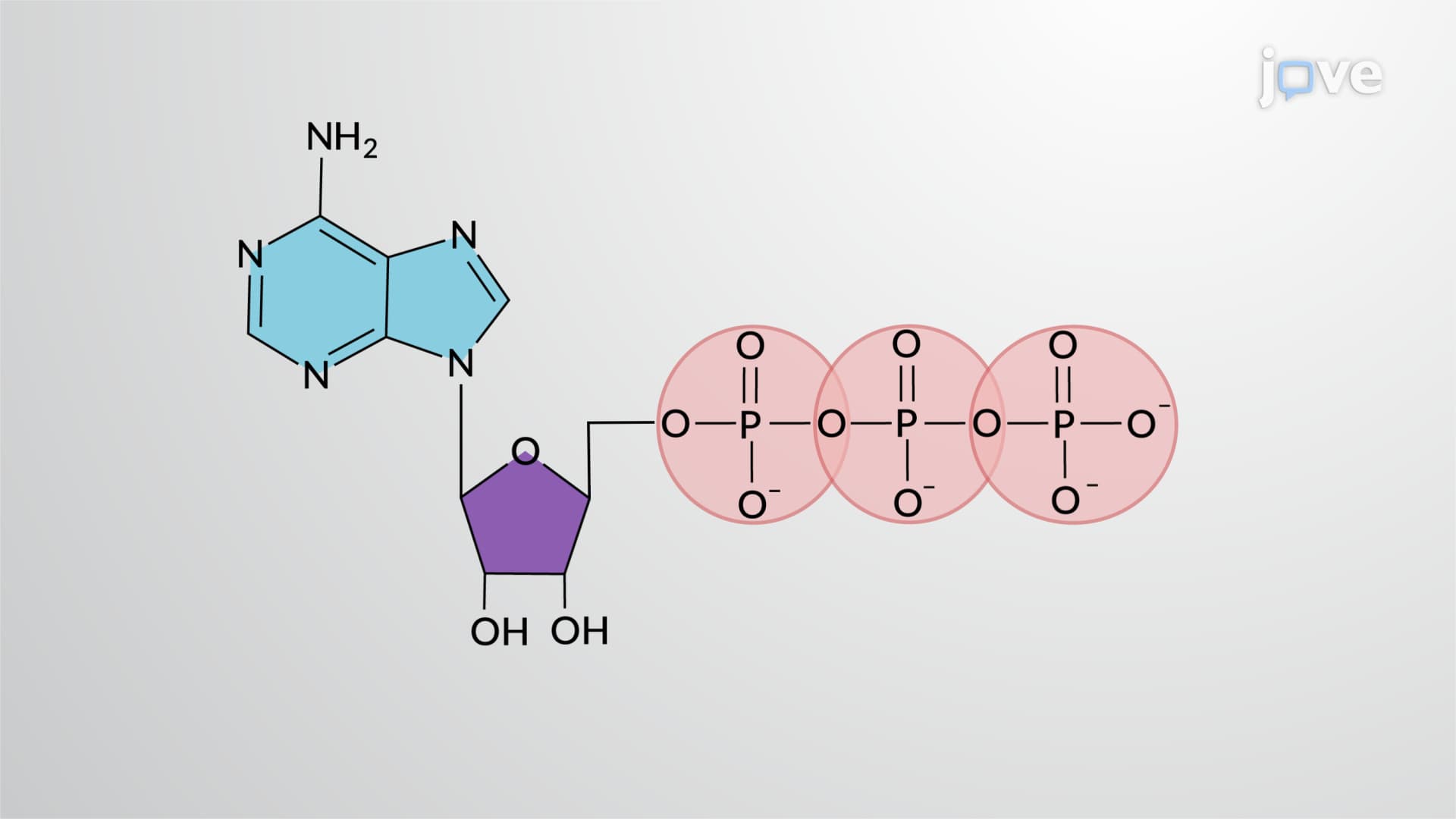
Hydrolysis of ATP represents one of biochemistry's most fundamental energy-releasing reactions. When water molecules attack ATP's terminal phosphate bond, the molecule splits into adenosine diphosphate (ADP) and inorganic phosphate (Pi), releasing approximately 7.3 kcal/mol of free energy under standard physiological conditions. This exergonic reaction drives virtually every energy-requiring process in living cells, from the sodium-potassium pumps maintaining nerve impulses to the myosin motors powering muscle contractions in athletes competing in the Boston Marathon.
The negative Gibbs free energy change (ΔG = -7.3 kcal/mol) makes ATP hydrolysis thermodynamically favorable, meaning it occurs spontaneously under cellular conditions. This energy release becomes even more significant when considering cellular ATP concentrations, which typically range from 1-10 millimolar. The reaction's favorability stems from several factors: relief of electrostatic repulsion between negatively charged phosphate groups, increased resonance stabilization of products, and enhanced hydration of ADP and Pi compared to ATP.
ATP hydrolysis powers diverse cellular processes through energy coupling mechanisms. During active transport, cells use ATP hydrolysis to drive substances against concentration gradients-such as calcium pumps in cardiac muscle cells removing calcium ions after each heartbeat. In biosynthesis, ATP hydrolysis provides energy for forming complex molecules like proteins and nucleic acids. The universality of this mechanism explains why ATP dysfunction underlies numerous metabolic disorders, including mitochondrial diseases that affect energy production in patients treated at institutions like the Mayo Clinic.
Understanding ATP hydrolysis proves essential for students preparing for the MCAT, AP Biology exams, and college biochemistry courses. The concept frequently appears in questions about cellular respiration, muscle physiology, and metabolic pathways. Research applications include drug development targeting ATPases-enzymes that catalyze ATP hydrolysis-such as proton pump inhibitors used to treat gastric acid disorders. Additionally, ATP hydrolysis serves as a biomarker in clinical diagnostics, helping physicians assess cellular energy status in conditions ranging from heart failure to cancer.
Related Micro-courses