Loading subject page…


304,922 views


Video Summary: What Is Incomplete Dominance
Ever wonder why some roses come in pink when their parents are red and white? Incomplete dominance explains this fascinating genetic phenomenon where offspring display a blended phenotype rather than following Mendel's classic dominant-recessive pattern. Unlike typical Mendelian inheritance, snapdragons bred from red and white parents produce pink flowers in the first generation. Watch the full video on JoVE Coach to master this concept with expert-led visuals and step-by-step explanations.
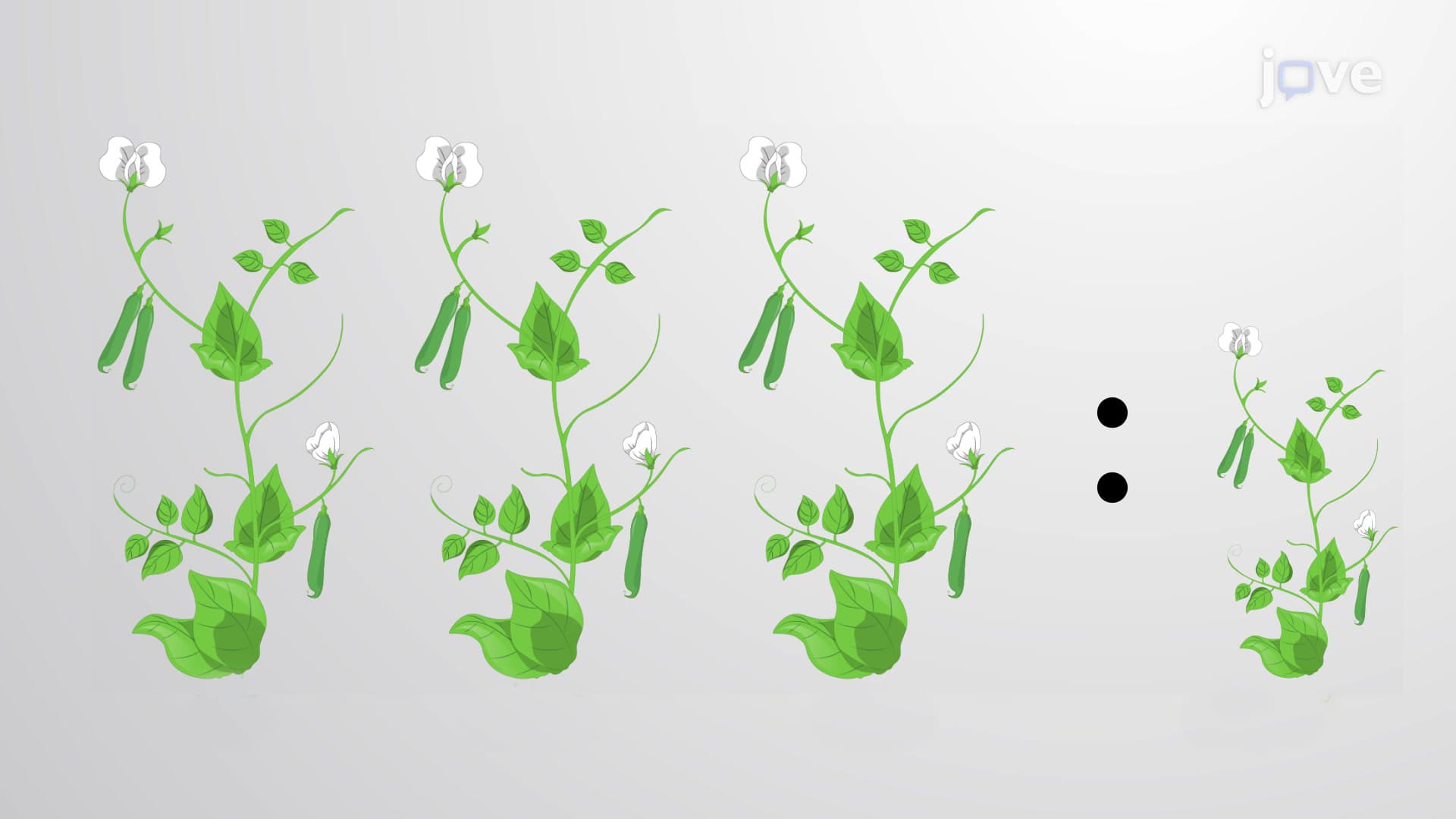
Incomplete dominance represents a fundamental departure from Gregor Mendel's classical inheritance patterns. While Mendel's pea plant experiments demonstrated clear dominant and recessive relationships, many genetic traits don't follow this black-and-white pattern. In incomplete dominance, heterozygous individuals express a phenotype that appears as a blend or intermediate form between the two homozygous parent phenotypes.
The incomplete dominance definition stems from insufficient protein production by a single functional allele. When one allele produces a functional protein and another produces no protein (or non-functional protein), the heterozygote may not produce enough functional protein to achieve the full dominant phenotype. This results in an intermediate expression level, creating the characteristic blended appearance.
For example, in snapdragons, the red flower allele (C^R) codes for enzymes producing red pigment, while the white flower allele (C^W) produces no pigment. Heterozygous plants (C^R C^W) produce only half the normal amount of red pigment, resulting in pink flowers-a perfect illustration of what is incomplete dominance in detail.
Understanding incomplete dominance basics requires recognizing that genotypic and phenotypic ratios remain identical. In a typical F1 × F1 cross involving incomplete dominance:
This 1:2:1 ratio appears consistently because the heterozygous phenotype is distinguishable from both homozygous phenotypes, unlike complete dominance where heterozygotes resemble the dominant homozygote.
Incomplete dominance concepts appear frequently in American agriculture and medicine. Andalusian chickens demonstrate this pattern with black, white, and blue (gray) feather colors. In human genetics, familial hypercholesterolemia shows incomplete dominance-heterozygotes have moderately elevated cholesterol levels between normal homozygotes and severely affected homozygotes.
Plant breeders utilize incomplete dominance principles to develop new flower varieties and agricultural crops. Understanding these patterns helps predict outcomes in selective breeding programs, making this concept essential for students pursuing careers in genetics, agriculture, or biotechnology fields.
Related Micro-courses