Loading subject page…


304,921 views

Video Summary: What Is Pedigree Analysis
Did you know that Huntington's disease affects approximately 30,000 Americans, yet geneticists can predict who will develop it decades before symptoms appear? Pedigree analysis makes this possible by tracking inheritance patterns through family trees, revealing how genetic traits pass from parents to children across generations. This powerful tool helps genetic counselors at institutions like Stanford Medicine identify carriers of conditions like cystic fibrosis and sickle cell disease. Watch the full video on JoVE Coach to master this concept with expert-led visuals and step-by-step explanations.
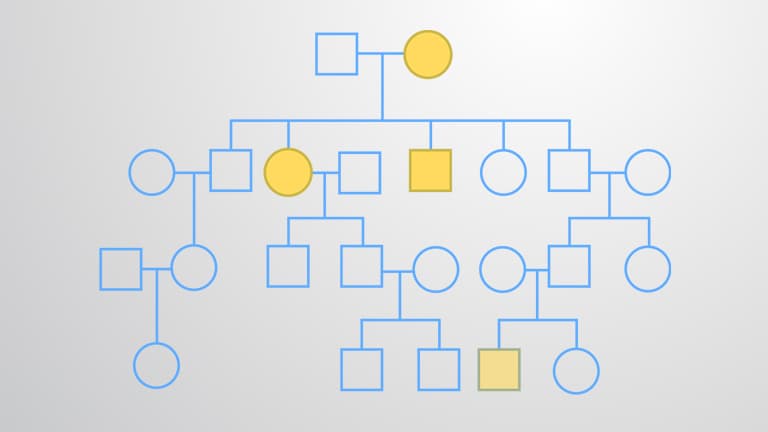
Pedigree analysis represents one of genetics' most practical applications, transforming abstract Mendelian principles into real-world family health insights. At its core, this method creates visual family trees that track specific traits across multiple generations, enabling geneticists to determine how genetic conditions are inherited and predict future risks.
The foundation of any pedigree rests on standardized symbols: squares represent males, circles represent females, and horizontal lines connect mating pairs while vertical lines show parent-child relationships. Shaded or filled symbols indicate individuals expressing the trait of interest, while carriers of recessive alleles are often shown with half-shaded symbols or dots within the shape.
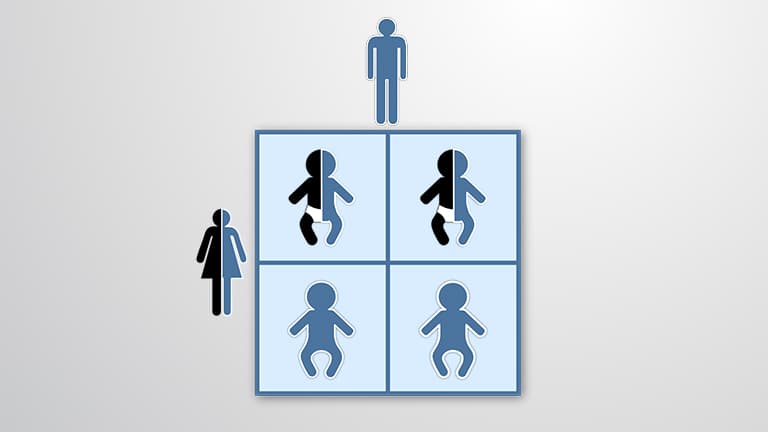
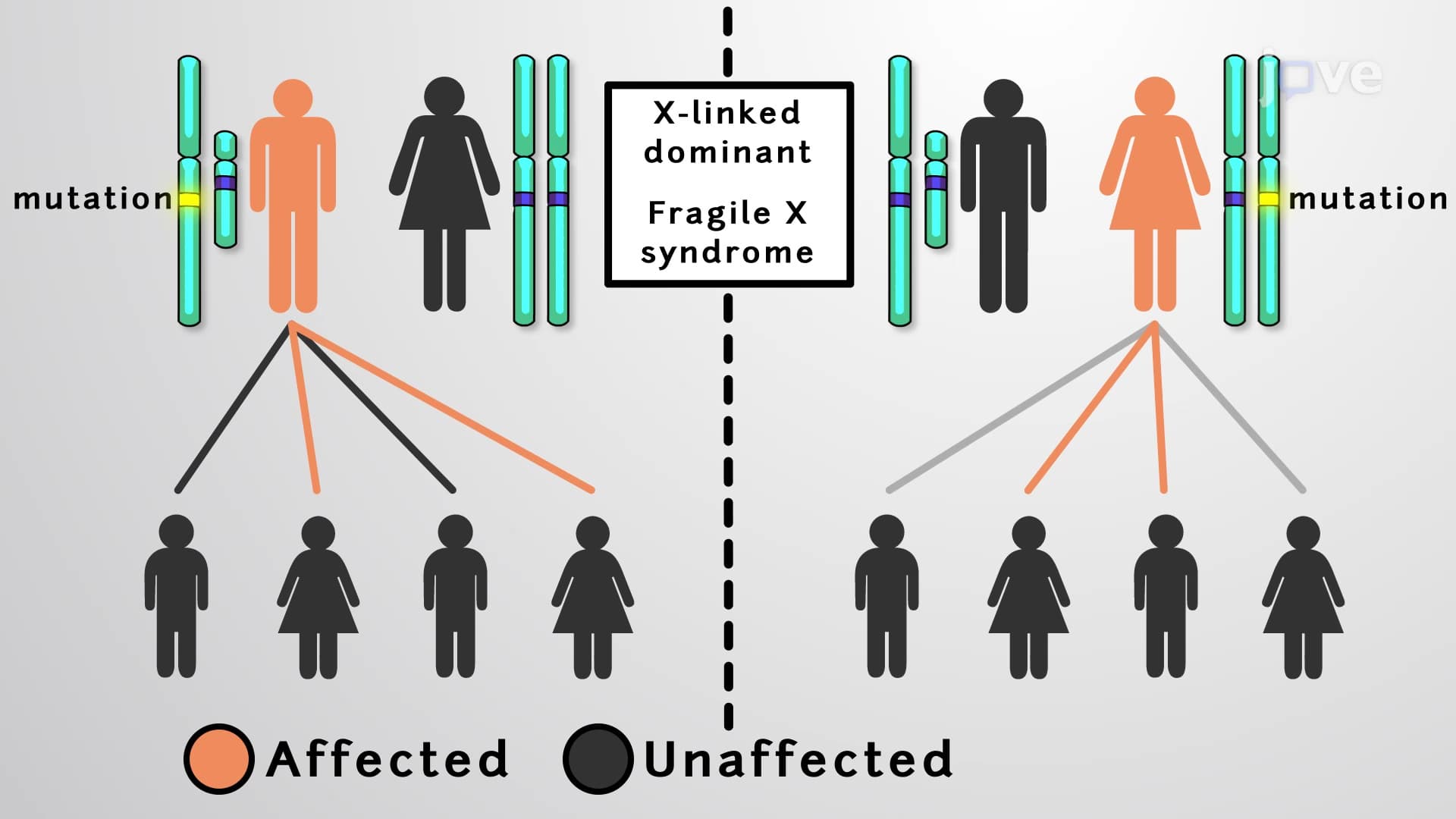
Different genetic conditions follow distinct inheritance patterns that become apparent through pedigree analysis. Autosomal dominant disorders like Huntington's disease typically appear in every generation, affecting males and females equally, with each affected parent having a 50% chance of passing the condition to each child. The Huntington's Disease Society of America estimates that children of affected parents face this exact probability.
Autosomal recessive conditions like cystic fibrosis present differently, often skipping generations and appearing when two carrier parents each contribute a recessive allele. The Cystic Fibrosis Foundation reports that approximately 1 in 25 Americans carries the CF gene mutation, making carrier screening through pedigree analysis particularly valuable for family planning.
X-linked recessive disorders such as hemophilia A demonstrate the most distinctive patterns, predominantly affecting males while allowing carrier females to pass the condition to their sons. The National Hemophilia Foundation notes that this pattern reflects males' vulnerability due to having only one X chromosome.
Pedigree analysis extends far beyond academic exercises, serving as a cornerstone of genetic counseling at major medical centers like Johns Hopkins and Mayo Clinic. Genetic counselors use these charts to assess disease risk, guide reproductive decisions, and recommend appropriate screening tests.
In the era of personalized medicine, pedigree analysis helps identify families who would benefit from genetic testing for conditions like BRCA1/BRCA2 mutations associated with breast and ovarian cancer. The American Cancer Society emphasizes how family history analysis guides testing recommendations and preventive care strategies.
For students preparing for the AP Biology exam or MCAT, understanding pedigree analysis proves essential. The College Board frequently includes pedigree interpretation questions that test students' ability to determine inheritance patterns and calculate genetic probabilities using real-world scenarios.
Related Micro-courses