Loading video…


 7 Concepts
 117.4K views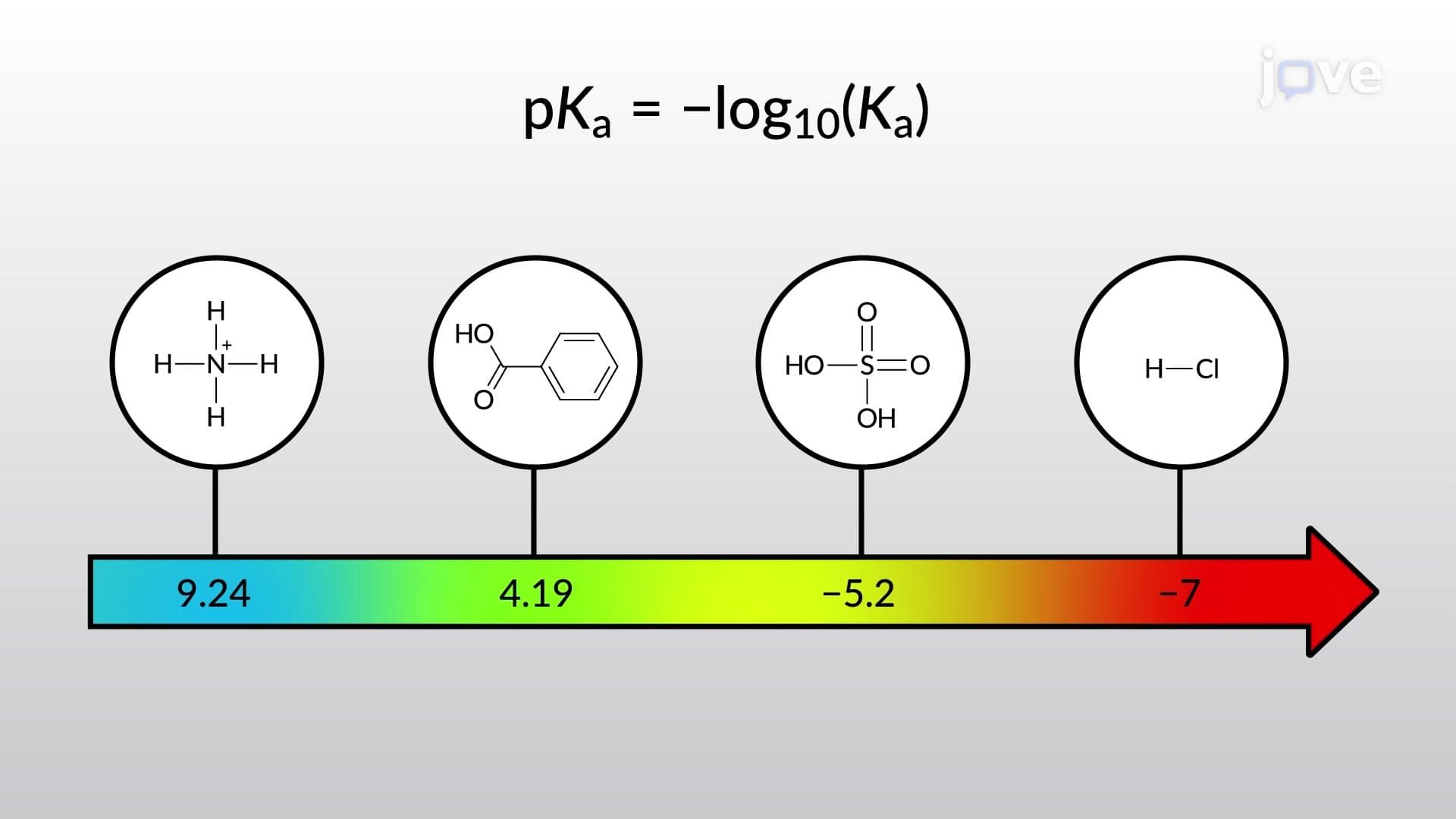

Video Summary: Acid and Bases Ka Pka Explained
Ever wonder why stomach acid can dissolve metal while orange juice only gives you a tart taste? The secret lies in understanding acid bases ka pka values that quantify acid strength. For instance, hydrochloric acid in your stomach has a pKa of -7, making it incredibly strong, while citric acid in oranges has a pKa around 3. These numerical scales help chemists predict everything from drug absorption rates to industrial chemical reactions. Watch the full video on JoVE Coach to master this concept with expert-led visuals and step-by-step explanations.
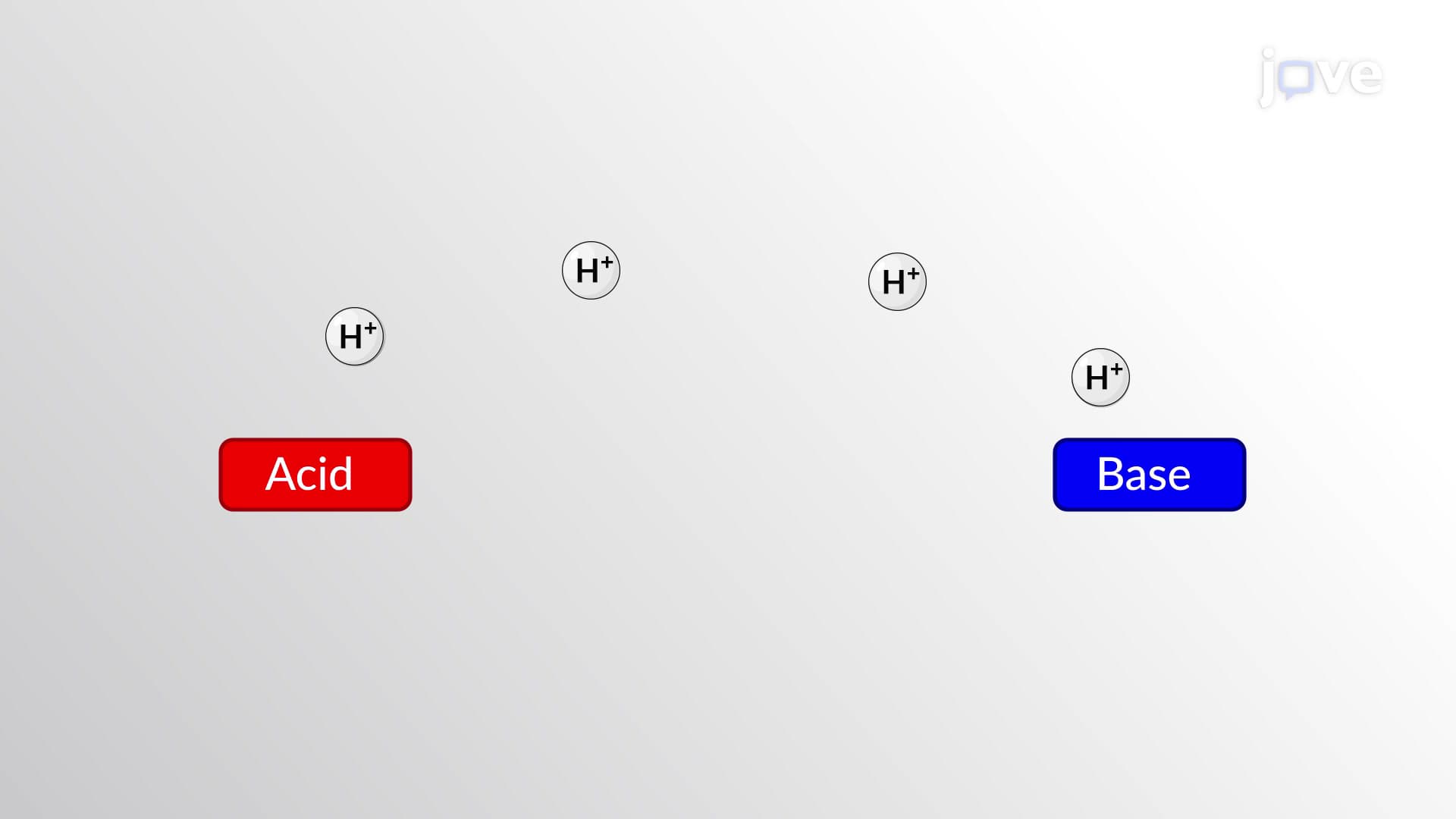
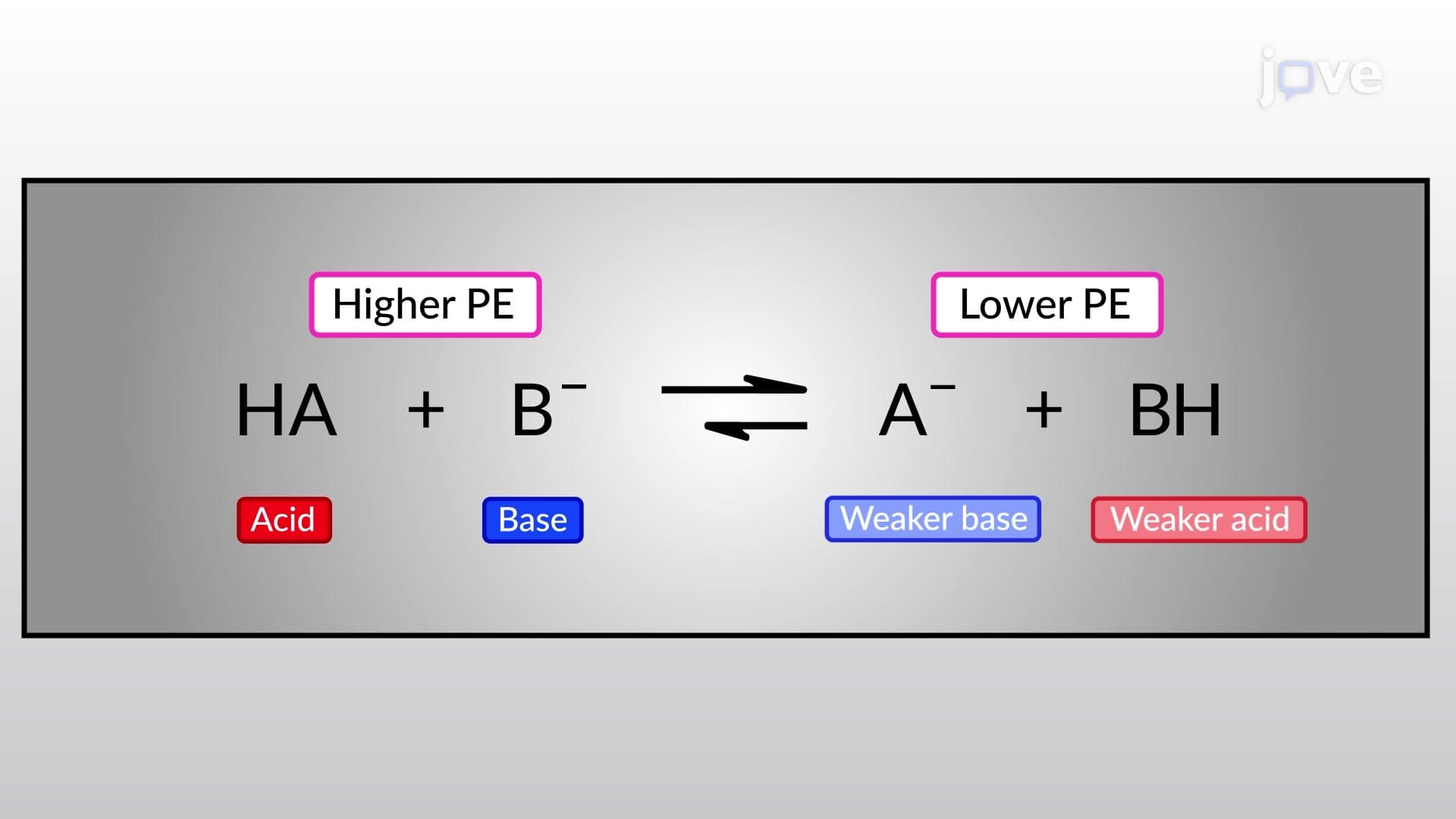
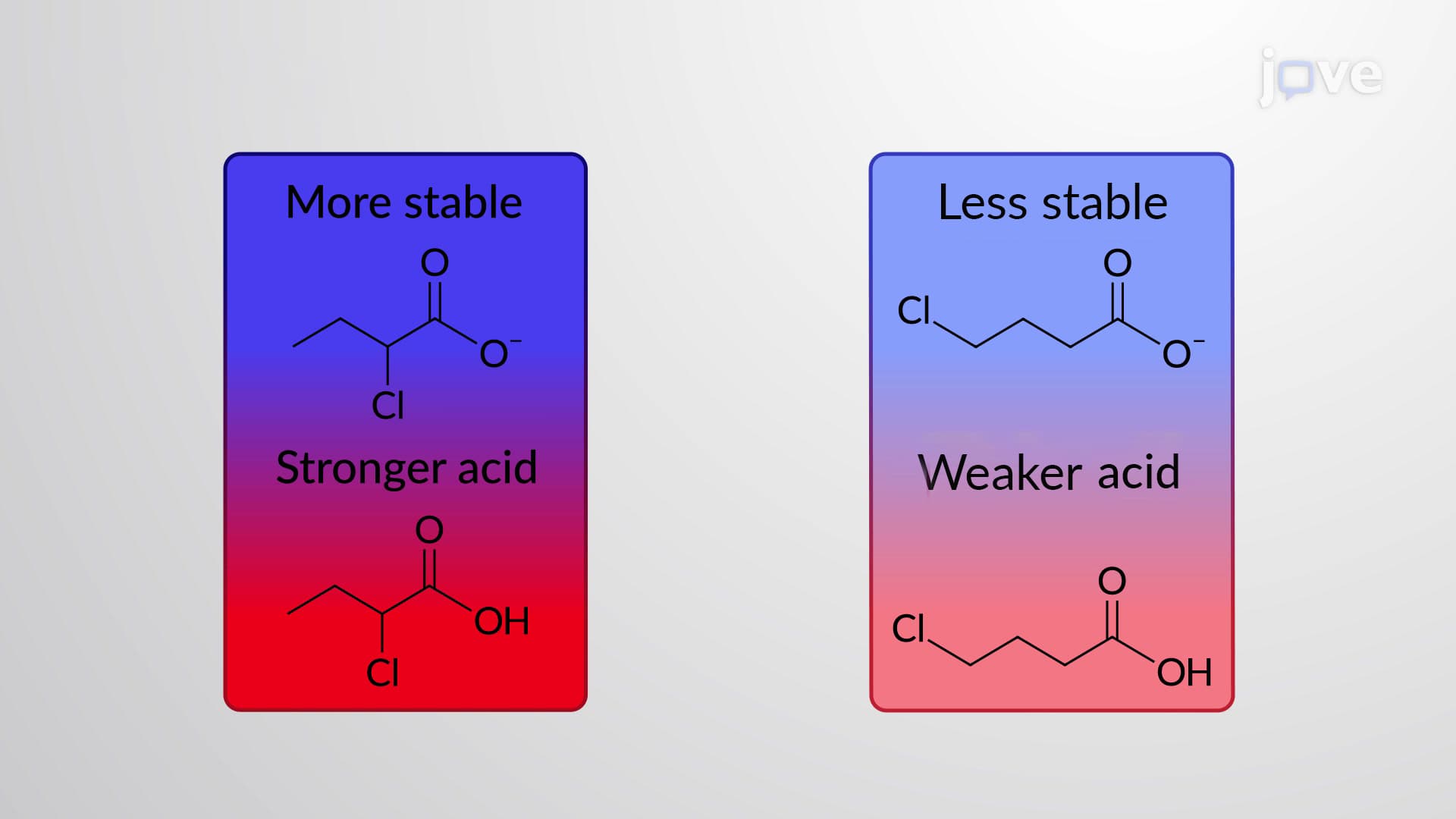
When acids dissolve in water, they don't all behave the same way. Strong acids like hydrochloric acid (used in steel production) completely ionize, while weak acids like acetic acid (vinegar) only partially dissociate. This fundamental difference drives the need for quantitative measures of acid strength.
The acid dissociation constant (Ka) provides a numerical way to compare acid strengths. For any acid HA in water: Ka = [H3O+][A-]/[HA]. Strong acids have large Ka values (often > 1), while weak acids have small Ka values (typically < 0.01). For example, nitric acid has a Ka of approximately 24, while formic acid has a Ka of 1.8 × 10^-4.
Since Ka values span many orders of magnitude, chemists use pKa = -log(Ka) for convenience. This logarithmic scale makes comparisons easier. Strong acids have negative or very low pKa values, while weak acids have positive pKa values. Sulfuric acid's first dissociation has a pKa of -3, while carbonic acid has a pKa of 6.4.
Understanding pKa proves crucial for AP Chemistry students tackling acid-base equilibrium problems. Medical students preparing for the MCAT encounter pKa in amino acid chemistry and drug pharmacokinetics. For instance, aspirin's pKa of 3.5 determines its absorption in the stomach versus intestines. Environmental chemistry students use pKa to predict acid rain effects, while biochemistry students apply these concepts to understand enzyme function and cellular pH regulation.
College chemistry courses frequently test pKa calculations, requiring students to convert between Ka and pKa, predict dominant species at different pH values, and design buffer systems. These skills prove essential for advanced coursework in organic chemistry, biochemistry, and physical chemistry.
Related Micro-courses