Loading subject page…


161,501 views

Video Summary: Acid Catalyzed Hydration of Alkenes Explained
Ever wonder why adding water to vegetable oil doesn't create alcohol, but petroleum refineries can convert alkenes into valuable alcohols used in everything from hand sanitizer to fuel additives? Acid catalyzed hydration of alkenes transforms simple hydrocarbons into alcohols through a fascinating three-step mechanism involving carbocation intermediates. For example, ExxonMobil uses this process to produce isopropanol from propene at their Texas refineries. The Acid Catalyzed Hydration of Alkenes Explained reveals how hydronium ions catalyze this essential industrial reaction. Watch the full video on JoVE Coach to master this concept with expert-led visuals and step-by-step explanations.
The acid catalyzed hydration of alkenes represents one of organic chemistry's most important addition reactions, converting simple alkenes into valuable alcohols through a predictable three-step mechanism. Unlike direct water addition, which fails due to thermodynamic unfavorability, the presence of strong acids like sulfuric acid makes this transformation highly efficient and industrially viable.
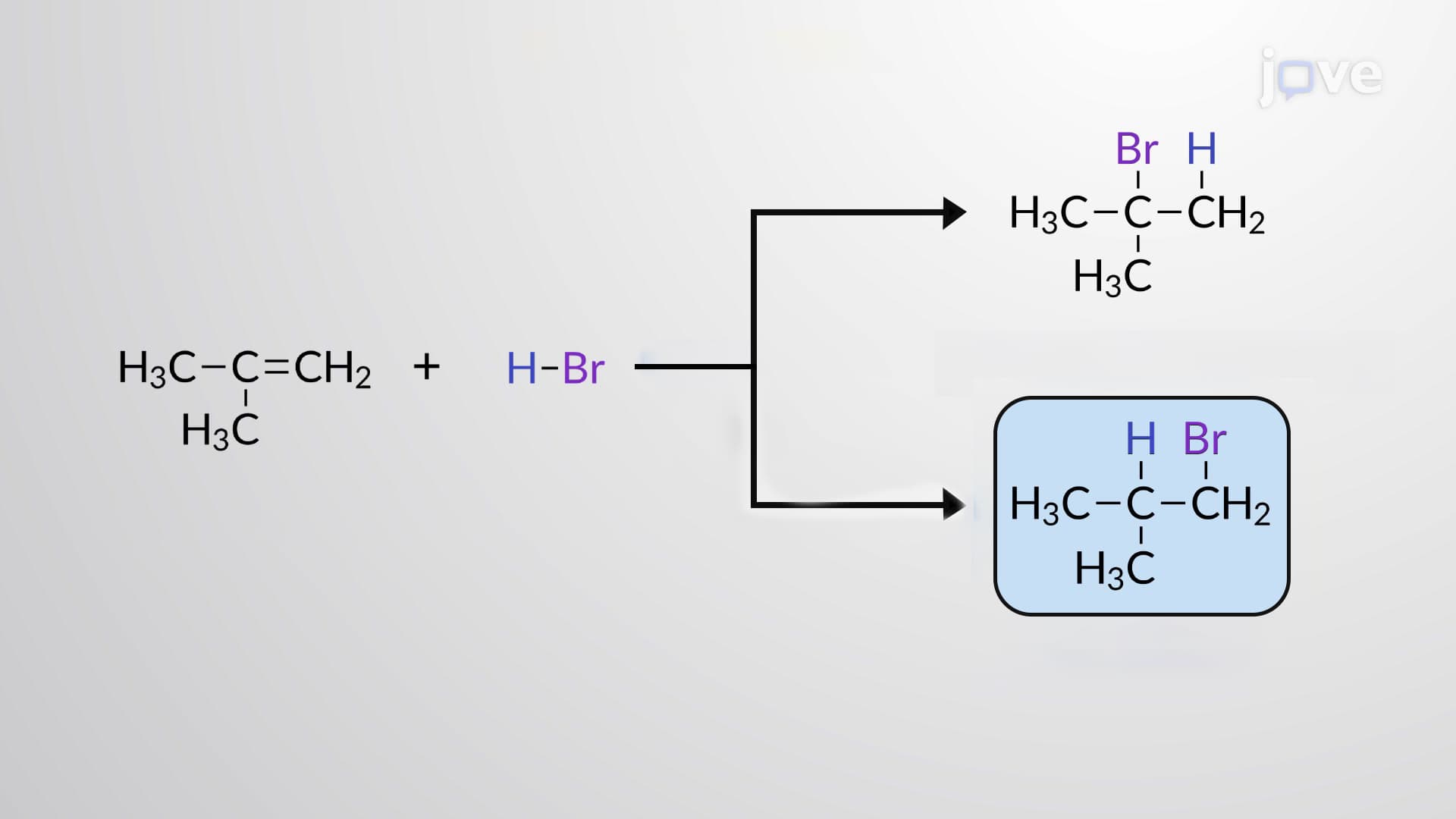
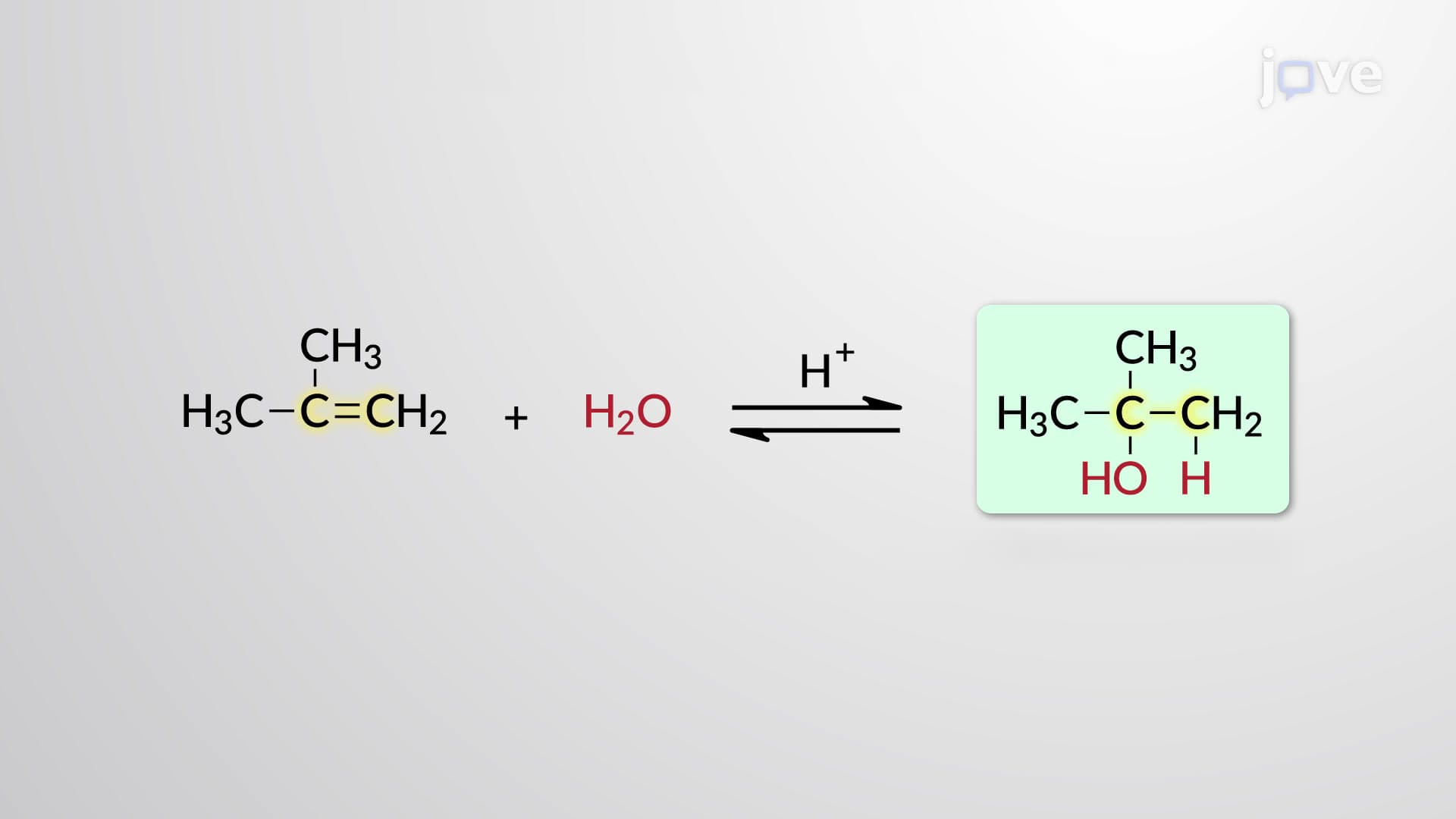
The reaction proceeds through a well-defined pathway beginning with protonation of the alkene's less substituted carbon by hydronium ion (H3O+). This crucial first step follows Markovnikov's rule, creating the most stable carbocation intermediate possible. For example, when 2-methylpropene undergoes hydration, the hydrogen adds to the terminal carbon, generating a tertiary carbocation rather than a less stable primary one.
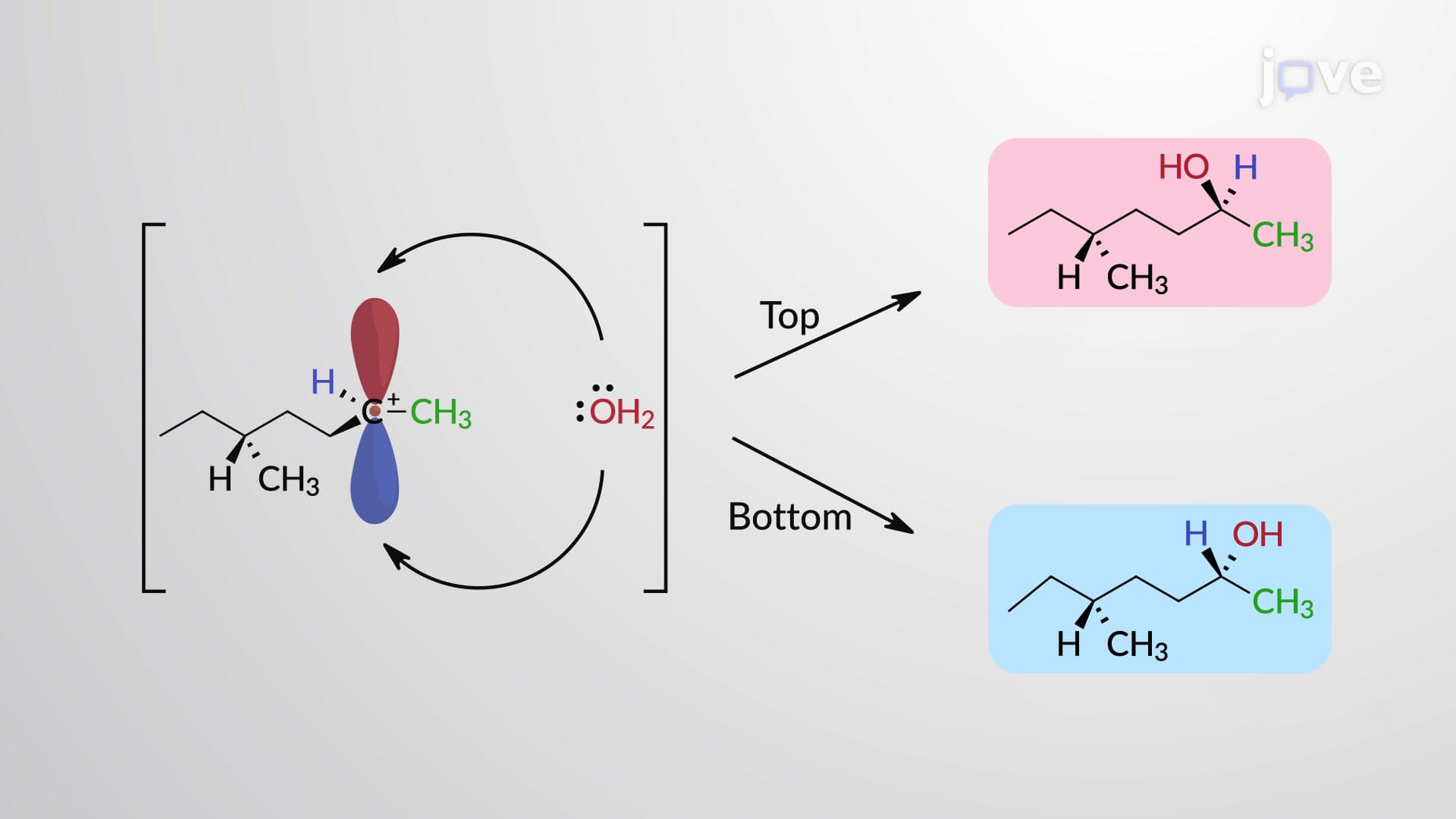
Water molecules then act as nucleophiles, attacking the positively charged carbon center to form an oxonium ion intermediate. The high concentration of water drives this step forward rapidly. Finally, another water molecule deprotonates the oxonium ion, yielding the alcohol product and regenerating the hydronium catalyst-hence the term "acid-catalyzed."
Major US petrochemical companies like Chevron and Phillips 66 utilize acid-catalyzed hydration to produce billions of pounds of alcohols annually. These alcohols serve as feedstocks for plastics, pharmaceuticals, and fuel additives. The reaction's reversibility allows manufacturers to control product distribution through careful manipulation of conditions.
Le Chatelier's principle governs this equilibrium beautifully. Dilute acid solutions (high water concentration) favor alcohol formation, while concentrated acids promote alkene formation through dehydration. Temperature control provides additional leverage-lower temperatures favor the exothermic hydration reaction, while higher temperatures drive the reverse dehydration process.
AP Chemistry and college organic chemistry courses emphasize the thermodynamic principles underlying this reaction. The negative enthalpy change reflects bond formation's exothermic nature, while the negative entropy change results from two molecules combining into one. At low temperatures, the favorable enthalpy term dominates, making ΔG negative and favoring alcohol formation. Higher temperatures amplify the unfavorable entropy term, reversing the equilibrium toward alkene formation.
Related Micro-courses