Loading video…


 15 Concepts
 161.5K views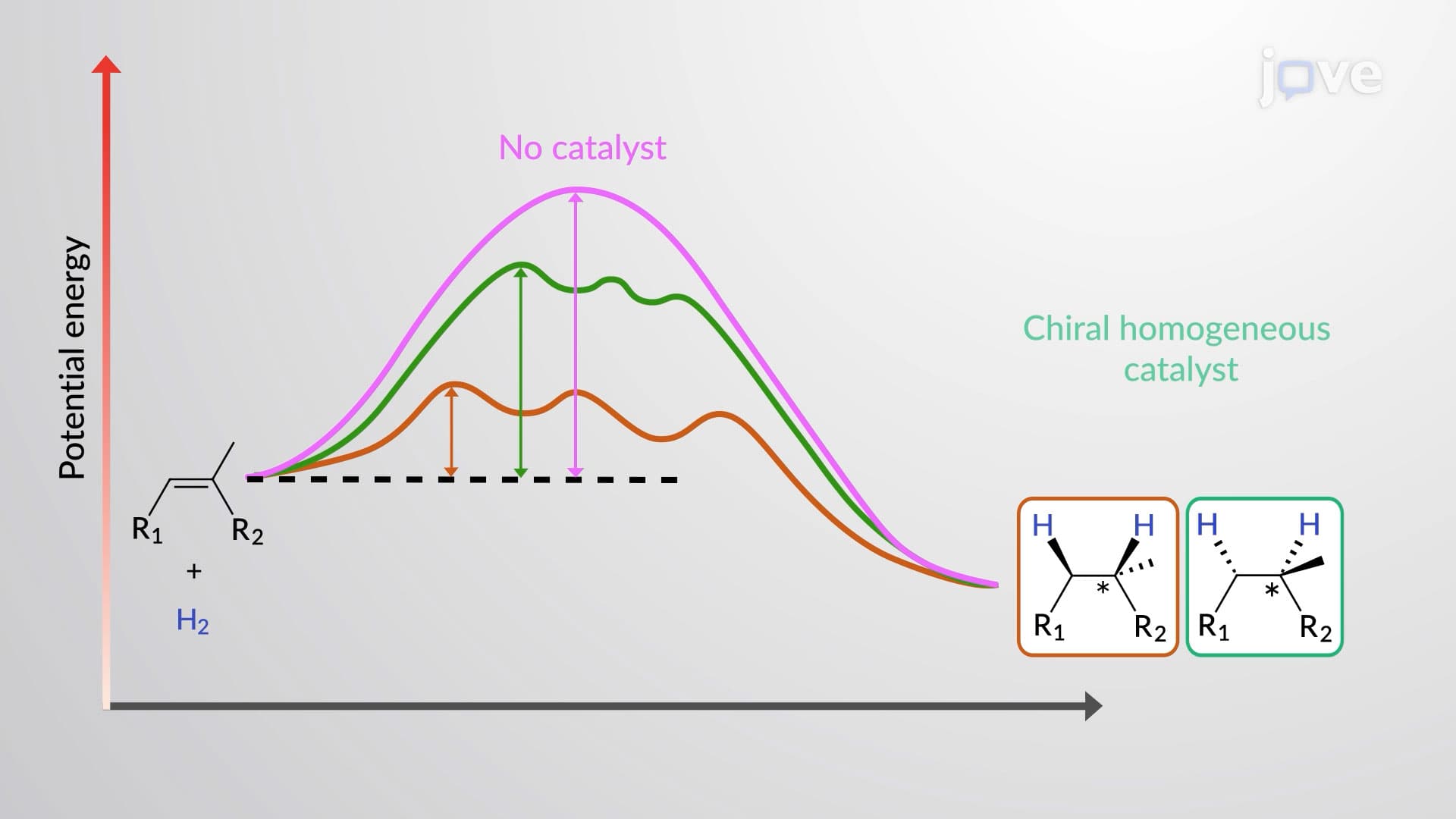

Video Summary: Reduction of Alkenes Asymmetric Catalytic Hydrogenation Explained
Ever wondered how pharmaceutical companies produce medications with 98% purity of a single mirror-image molecule? The reduction alkenes asymmetric catalytic process makes this possible by selectively creating one enantiomer over another. This sophisticated technique uses chiral metal catalysts to convert alkenes into alkanes with remarkable precision, enabling the production of drugs like (S)-naproxen, a common anti-inflammatory found in US pharmacies. Watch the full video on JoVE Coach to master this concept with expert-led visuals and step-by-step explanations.
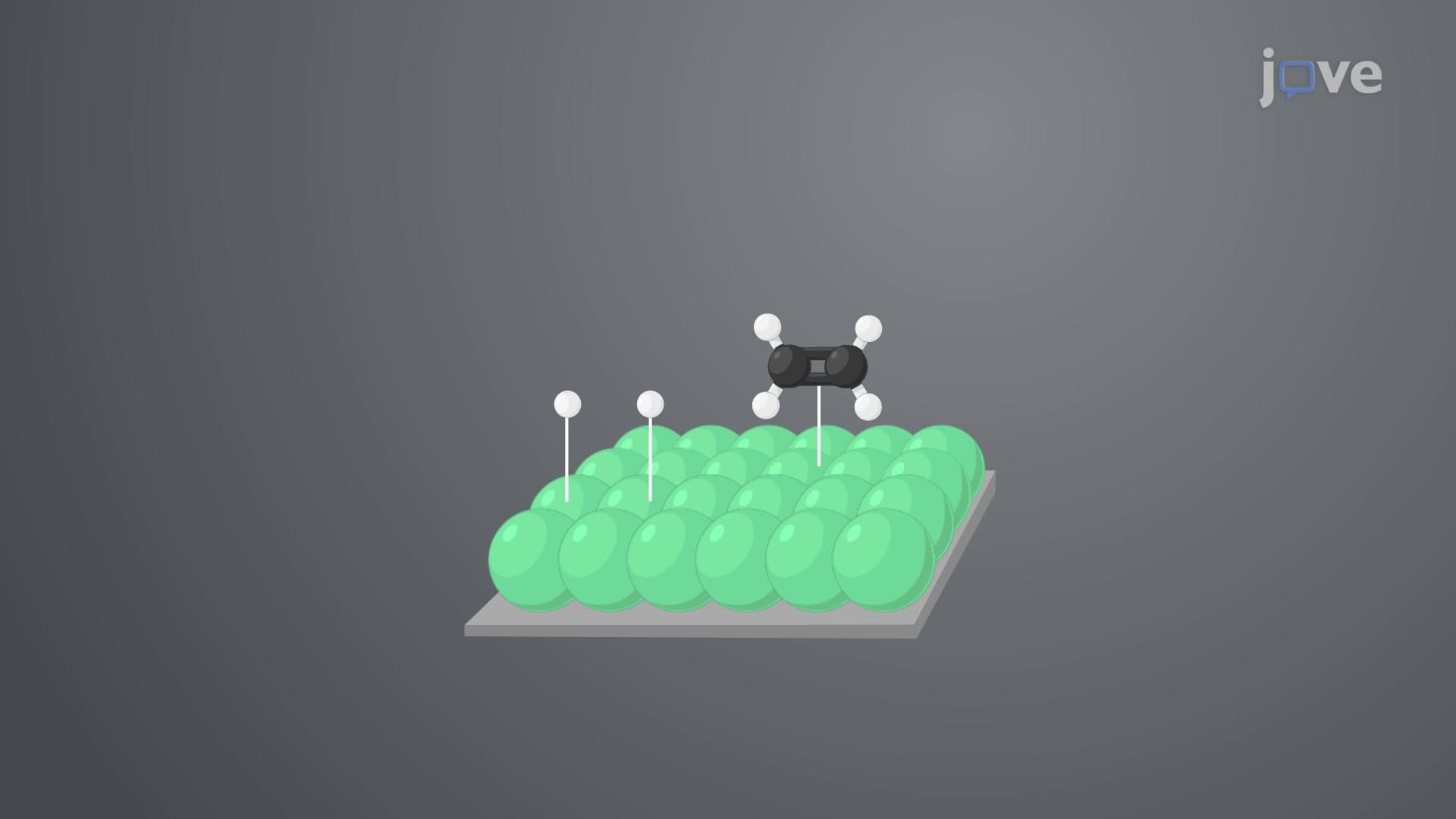
Asymmetric catalytic hydrogenation represents one of the most elegant solutions in modern organic chemistry for producing enantiomerically pure compounds. Unlike traditional hydrogenation that yields racemic mixtures, this advanced technique employs chiral catalysts to favor the formation of one enantiomer over its mirror image, achieving enantiomeric excesses often exceeding 95%.
The success of asymmetric hydrogenation relies on sophisticated catalyst design. Ruthenium and rhodium complexes coordinated to chiral phosphine ligands create asymmetric environments around the metal center. BINAP (2,2'-bis(diphenylphosphino)-1,1'-binaphthyl) serves as the archetypal chiral ligand, deriving its chirality from restricted rotation around the binaphthyl backbone rather than from traditional chiral centers. This axial chirality creates a three-dimensional pocket that discriminates between the two faces of an approaching alkene substrate.
The chelating nature of diphosphine ligands ensures stable catalyst geometry while maintaining the chiral environment necessary for selective enantiomer formation. Students preparing for AP Chemistry or college organic chemistry courses should recognize that the catalyst doesn't change the thermodynamics of the reaction but dramatically alters the kinetics by providing different activation energies for the formation of each enantiomer.
Pharmaceutical manufacturing extensively utilizes asymmetric hydrogenation for drug synthesis. The production of (S)-naproxen, marketed under brand names like Aleve in the United States, demonstrates the commercial viability of this technology. The process achieves over 98% enantiomeric excess, ensuring consistent therapeutic efficacy while minimizing potential side effects from the undesired (R)-enantiomer.
Critical to successful asymmetric hydrogenation is the presence of coordinating functional groups near the target double bond. These groups-such as hydroxyl, ester, or amide functionalities-serve as anchor points for substrate binding to the chiral catalyst. This requirement explains the selective reduction of geraniol's double bond closest to the hydroxyl group, while the more distant alkene remains unreacted.
For MCAT preparation and advanced placement chemistry exams, students should master predicting which alkenes undergo preferential reduction based on substrate structure. Understanding the relationship between catalyst chirality and product stereochemistry becomes crucial for mechanism-based problems. College organic chemistry midterms frequently test the ability to identify suitable substrates for asymmetric hydrogenation and predict major enantiomeric products based on catalyst configuration.
Related Micro-courses