Loading subject page…


161,501 views

Video Summary: Regioselectivity and Stereochemistry of Hydroboration Explained
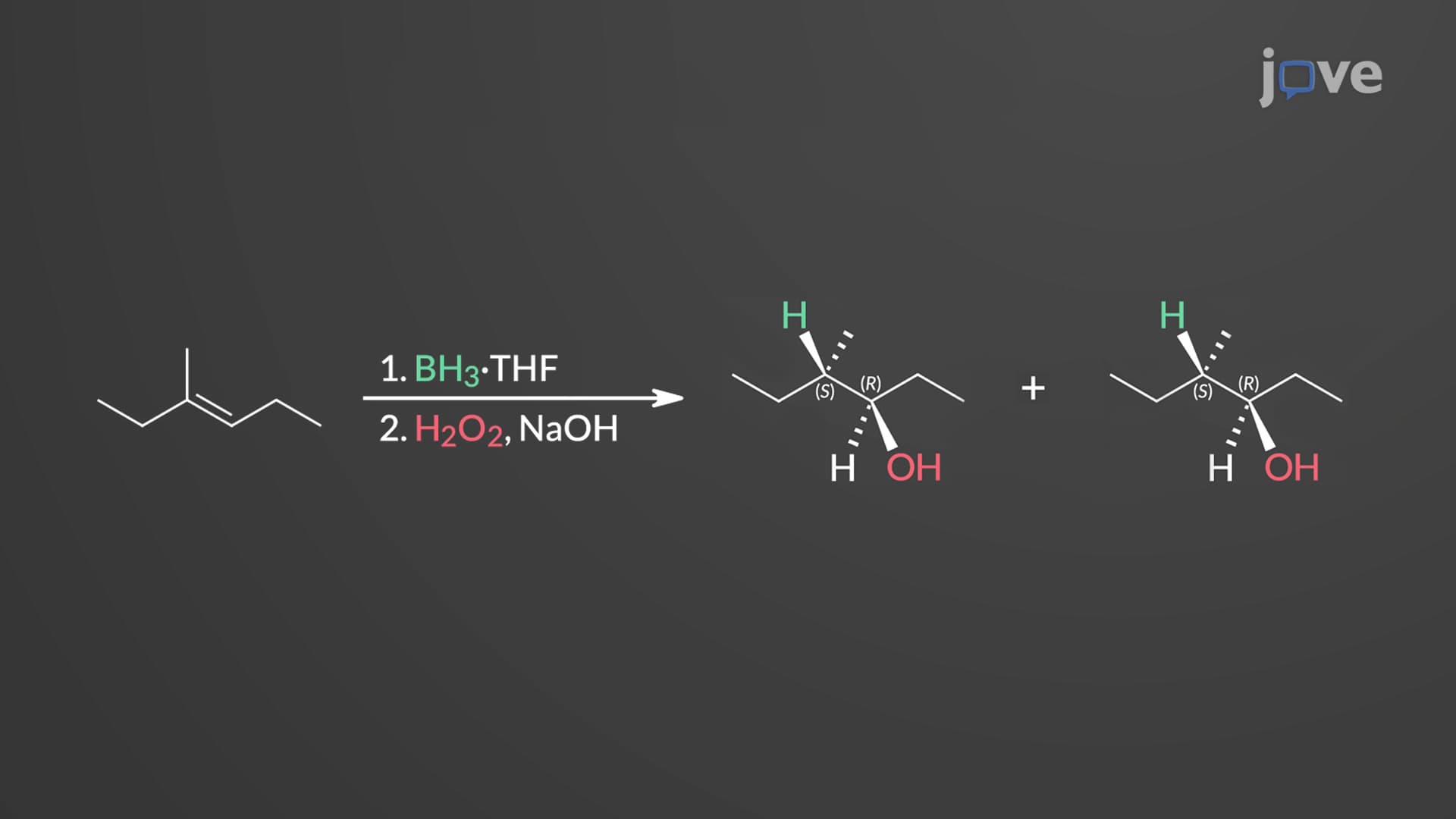
Ever wonder why pharmaceutical companies can create specific mirror-image molecules? The regioselectivity stereochemistry hydroboration mechanism reveals how chemists control exactly where atoms attach to molecules. This anti-Markovnikov reaction is crucial in synthesizing medications like ibuprofen at major US pharmaceutical companies such as Pfizer and Johnson & Johnson. Understanding Regioselectivity And Stereochemistry of Hydroboration Explained helps predict which of multiple possible products will actually form in the lab. Watch the full video on JoVE Coach to master this concept with expert-led visuals and step-by-step explanations.
The hydroboration-oxidation reaction stands as one of organic chemistry's most predictable and useful transformations. Unlike many organic reactions that produce mixtures of products, this two-step process delivers specific regiochemical and stereochemical outcomes with remarkable consistency. This selectivity makes it invaluable in pharmaceutical manufacturing, where producing the wrong stereoisomer can mean the difference between a life-saving drug and a toxic compound.
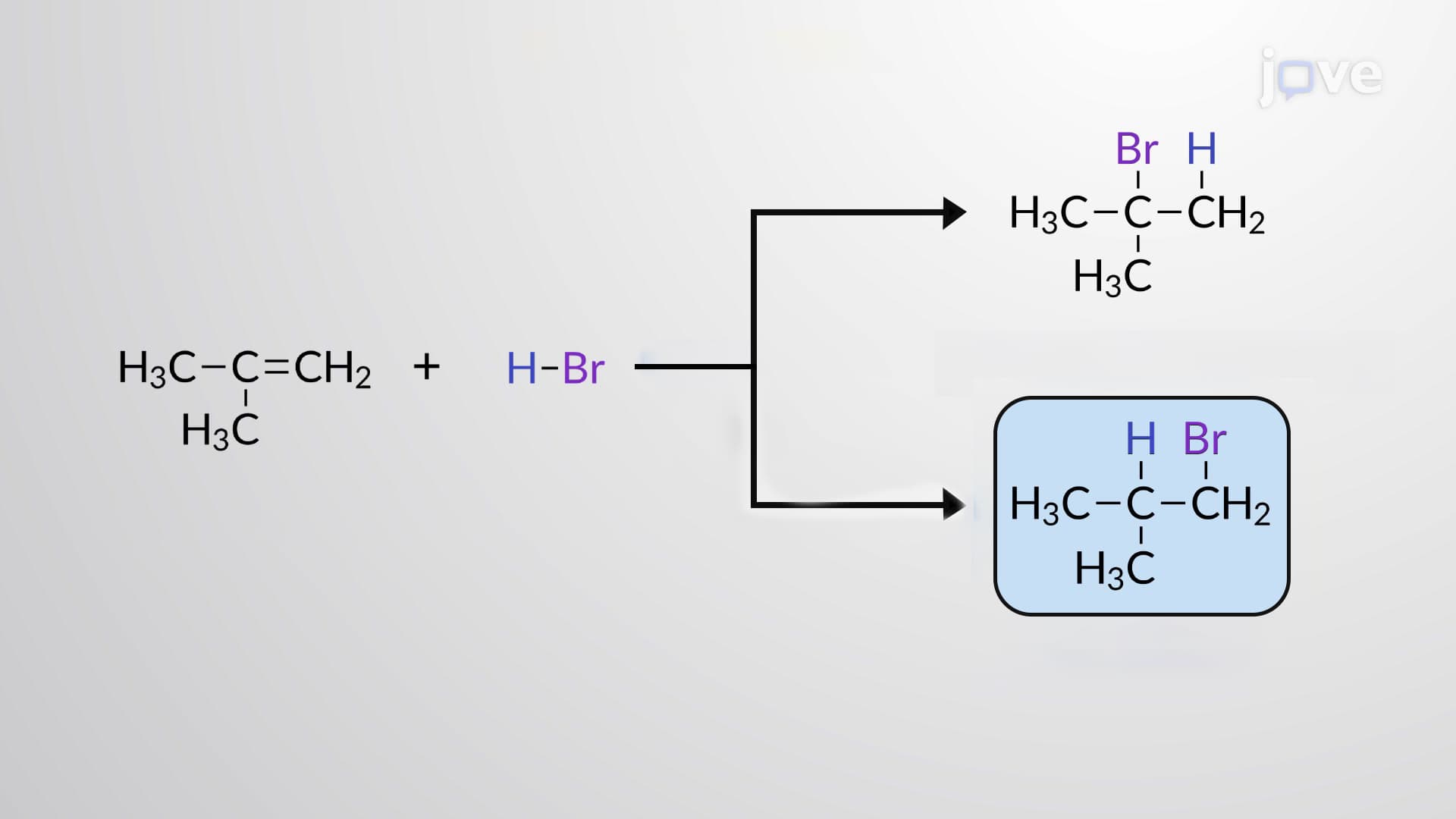
The regioselectivity of hydroboration defies Markovnikov's rule, which typically governs alkene addition reactions. Instead of hydrogen adding to the less substituted carbon (Markovnikov), hydroboration places hydrogen on the more substituted carbon. This anti-Markovnikov orientation results from two competing factors working in harmony.
Steric considerations favor placing the bulky BH2 group at the less crowded, less substituted carbon atom. This positioning minimizes repulsion between the incoming borane and existing alkyl substituents. Simultaneously, electronic factors stabilize the transition state when the more substituted carbon develops partial positive character, as more substituted carbocations are inherently more stable due to hyperconjugation and inductive effects.
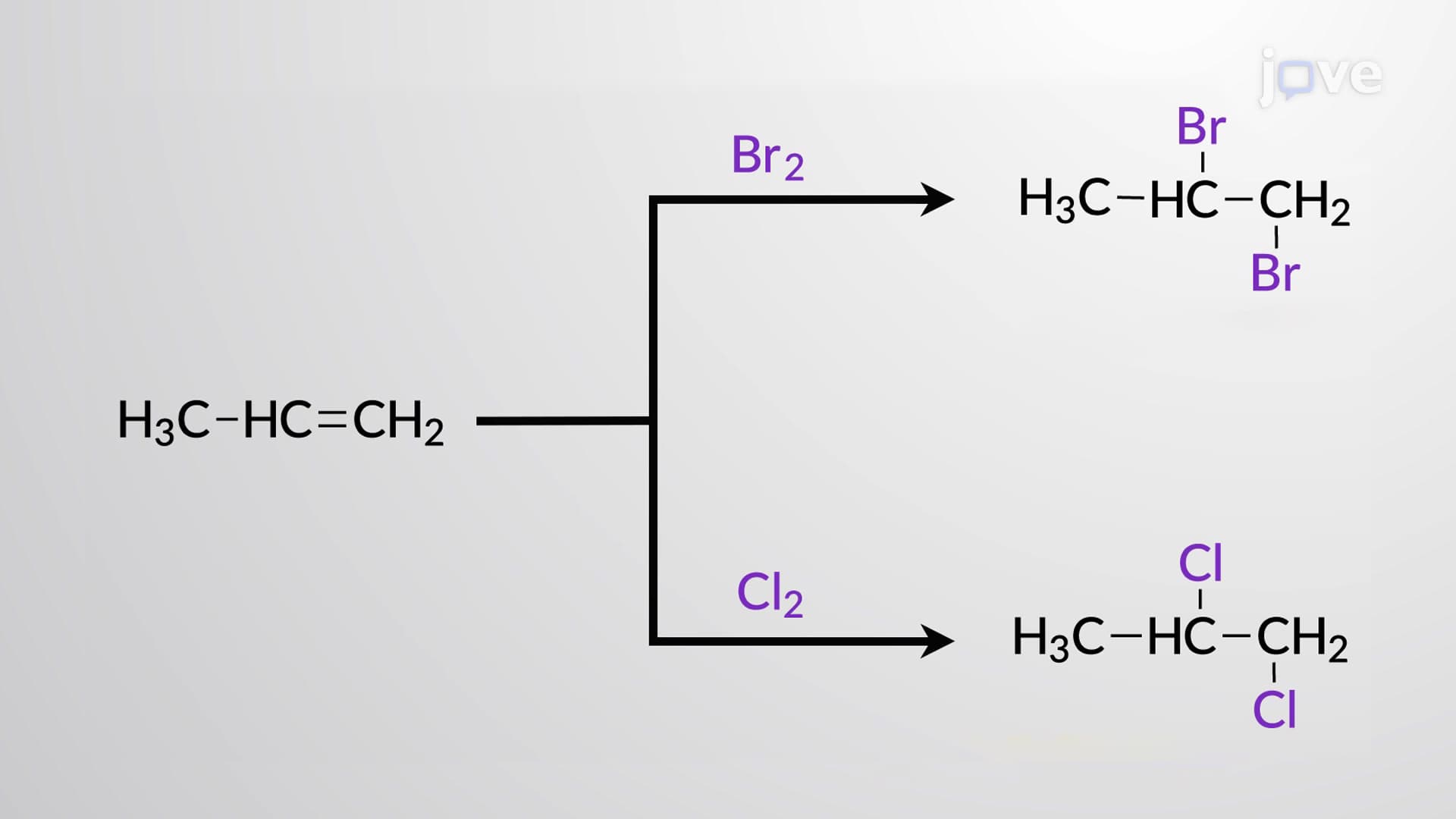
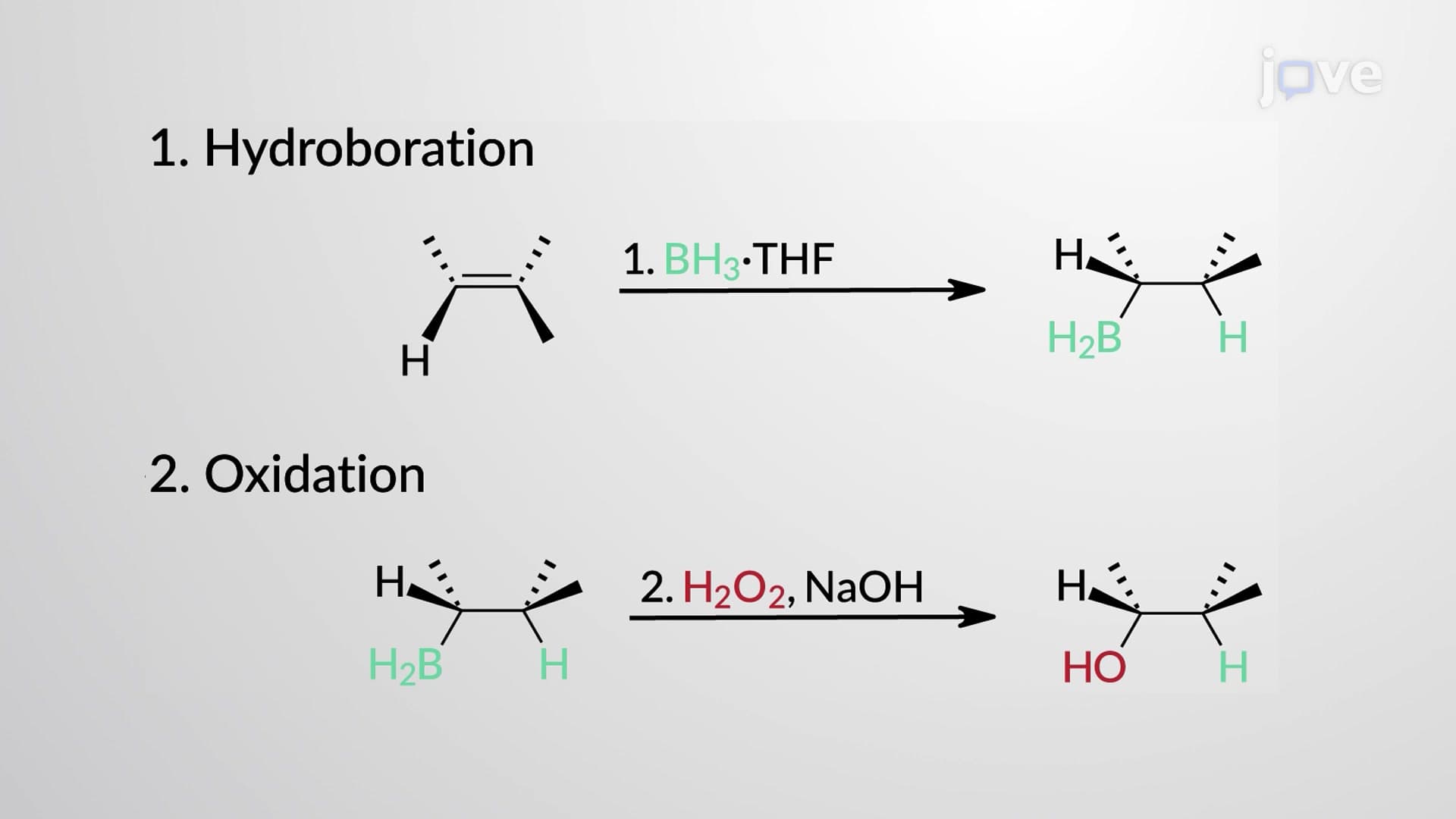
The stereochemical precision of hydroboration stems from its concerted mechanism. The reaction proceeds through a four-membered cyclic transition state where boron and hydrogen add simultaneously to the same face of the alkene double bond. This syn addition contrasts sharply with anti addition patterns seen in halogenation reactions.
This stereospecificity proves crucial when working with cyclic alkenes or alkenes that can produce chiral centers. For students preparing for the MCAT or AP Chemistry exams, understanding that syn addition limits the possible stereoisomeric products is essential for predicting reaction outcomes correctly.
The oxidation step using hydrogen peroxide and hydroxide maintains the stereochemical integrity established during hydroboration. As each alkyl group migrates from boron to oxygen, it retains its original configuration. This retention mechanism ensures that the final alcohol product reflects the initial syn addition stereochemistry.
In pharmaceutical applications, companies like Merck utilize this predictable stereochemistry to synthesize specific enantiomers of drug molecules. The ability to control stereochemistry is particularly important given that different enantiomers can have vastly different biological activities-a principle tragically demonstrated by the thalidomide case in the 1960s.
Related Micro-courses