Loading video…


 25 Concepts
 147.9K views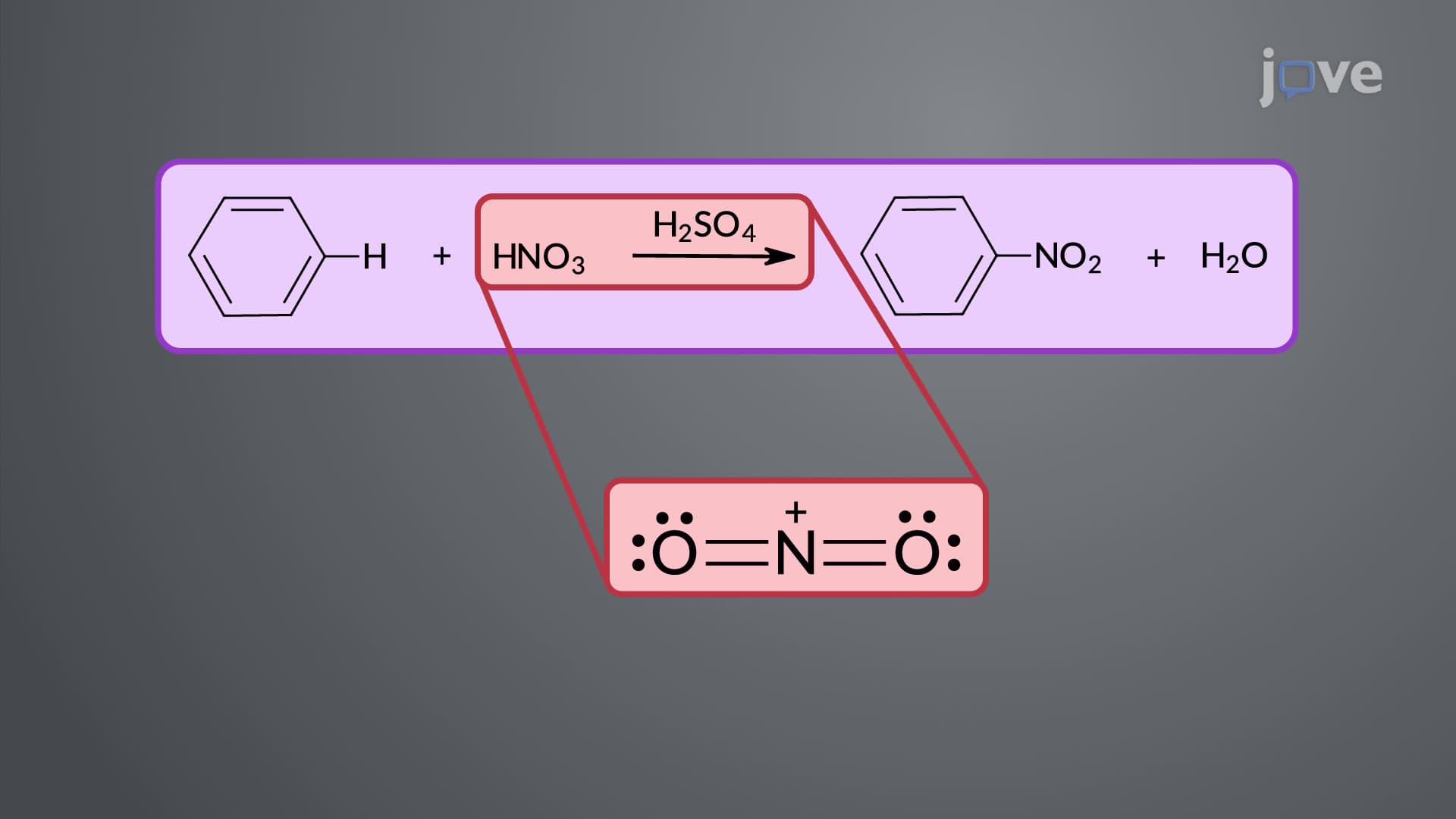

Video Summary: Electrophilic Aromatic Substitution Nitration of Benzene Explained
Ever wonder how aspirin and other life-saving pharmaceuticals are synthesized? The electrophilic aromatic substitution nitration process is fundamental to creating countless drugs manufactured by companies like Pfizer and Johnson & Johnson. This reaction transforms simple benzene into nitrobenzene using concentrated nitric and sulfuric acids, proceeding through a nitronium ion intermediate that attacks benzene's electron-rich ring. The resulting nitrobenzene serves as a crucial building block for producing aniline-based pharmaceuticals and dyes. Watch the full video on JoVE Coach to master this concept with expert-led visuals and step-by-step explanations.
Electrophilic aromatic substitution represents one of the most important reaction classes in organic chemistry, with nitration serving as the quintessential example. This reaction demonstrates how benzene's aromatic stability can be temporarily disrupted to introduce new functional groups while ultimately restoring the aromatic system.
The process begins with the formation of a powerful electrophile-the nitronium ion (NO2+). This occurs when concentrated sulfuric acid protonates nitric acid's hydroxyl group, creating a conjugate acid that subsequently loses water. The resulting nitronium ion possesses a formal positive charge on nitrogen, making it highly electrophilic and capable of attacking benzene's π-electron system.
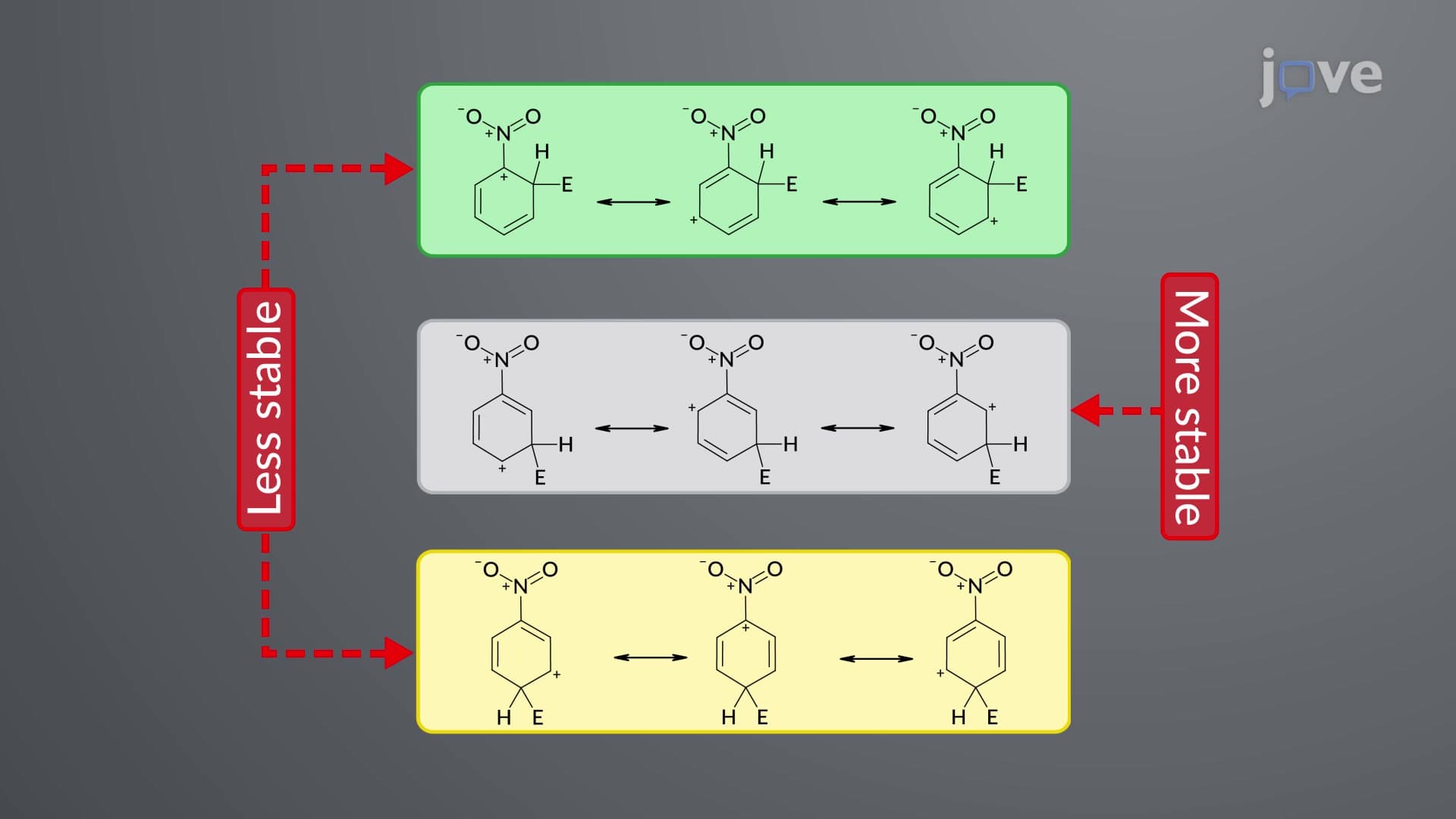
When the nitronium ion approaches benzene, it attacks the electron-rich aromatic ring, forming a carbocation intermediate known as an arenium ion or sigma complex. This intermediate is stabilized through resonance, with the positive charge delocalized across three carbon atoms in the ring. The temporary loss of aromaticity is compensated by this resonance stabilization, making the intermediate sufficiently stable to exist long enough for the reaction to proceed.
Students preparing for the MCAT or AP Chemistry exams should note that drawing accurate resonance structures for the arenium ion is crucial for demonstrating understanding of this mechanism. The final step involves deprotonation of the arenium ion by a base (often the bisulfate ion), which restores aromaticity and yields nitrobenzene.
This reaction holds tremendous importance in both industrial chemistry and academic settings. Major pharmaceutical companies rely on nitration reactions to produce precursors for drugs like acetaminophen and various antibiotics. In academic contexts, this reaction frequently appears on college organic chemistry exams and serves as a foundation for understanding more complex aromatic substitution patterns.
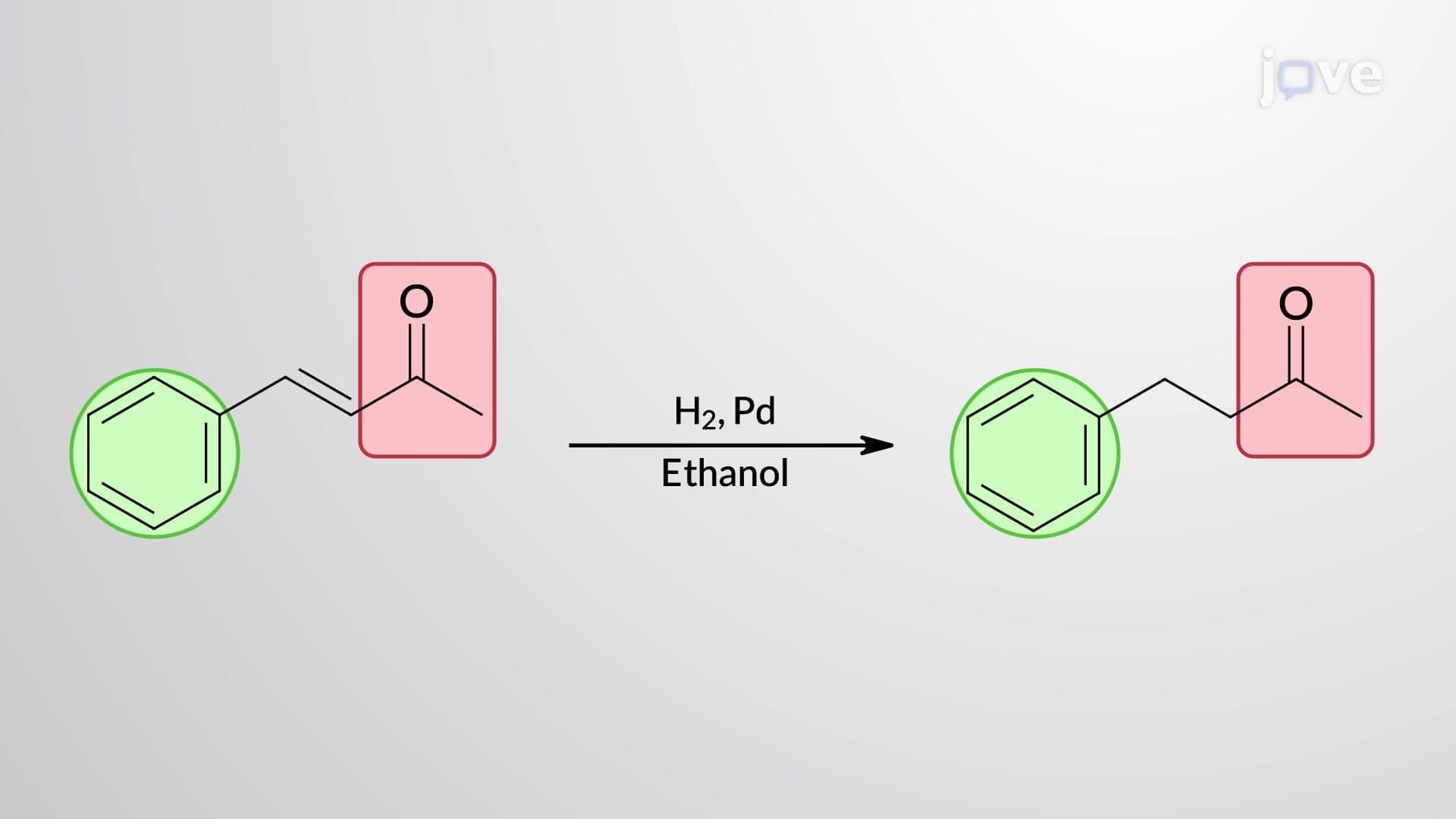
The nitro group in nitrobenzene can be readily reduced to an amino group, creating aniline-a compound essential for dye manufacture and pharmaceutical synthesis. This transformation can occur through catalytic hydrogenation using palladium or platinum catalysts, or through reduction with metals like iron or zinc in acidic conditions. When using metal-acid reduction, the initially formed amine exists as a salt that requires treatment with strong base to liberate the free amine.
Related Micro-courses