Loading video…


 25 Concepts
 147.9K views


Video Summary: Hydrolysis of Chlorobenzene to Phenol Explained
Ever wondered how industrial manufacturers transform simple chlorobenzene into phenol for aspirin production? The hydrolysis of chlorobenzene to phenol represents one of organic chemistry's most fascinating transformations, requiring extreme conditions that seem to defy normal chemical behavior. This process, crucial in pharmaceutical manufacturing across companies like Bayer in the US, demonstrates how seemingly unreactive compounds can undergo dramatic changes under the right conditions. Watch the full video on JoVE Coach to master this concept with expert-led visuals and step-by-step explanations.
The transformation of chlorobenzene to phenol represents a cornerstone reaction in industrial organic chemistry, particularly relevant for students preparing for AP Chemistry or college-level organic chemistry courses. Unlike typical nucleophilic substitution reactions, this process requires extraordinary conditions due to the unique electronic properties of aromatic systems.
The Dow process revolutionized phenol production in the United States, enabling large-scale manufacturing for pharmaceutical and polymer industries. Operating at 350°C under high pressure with dilute aqueous sodium hydroxide, this method overcomes the inherent unreactivity of unactivated halobenzenes. Students encountering this in MCAT preparation should note that the extreme conditions are necessary because the benzene ring's electron density makes it resistant to nucleophilic attack under normal circumstances.
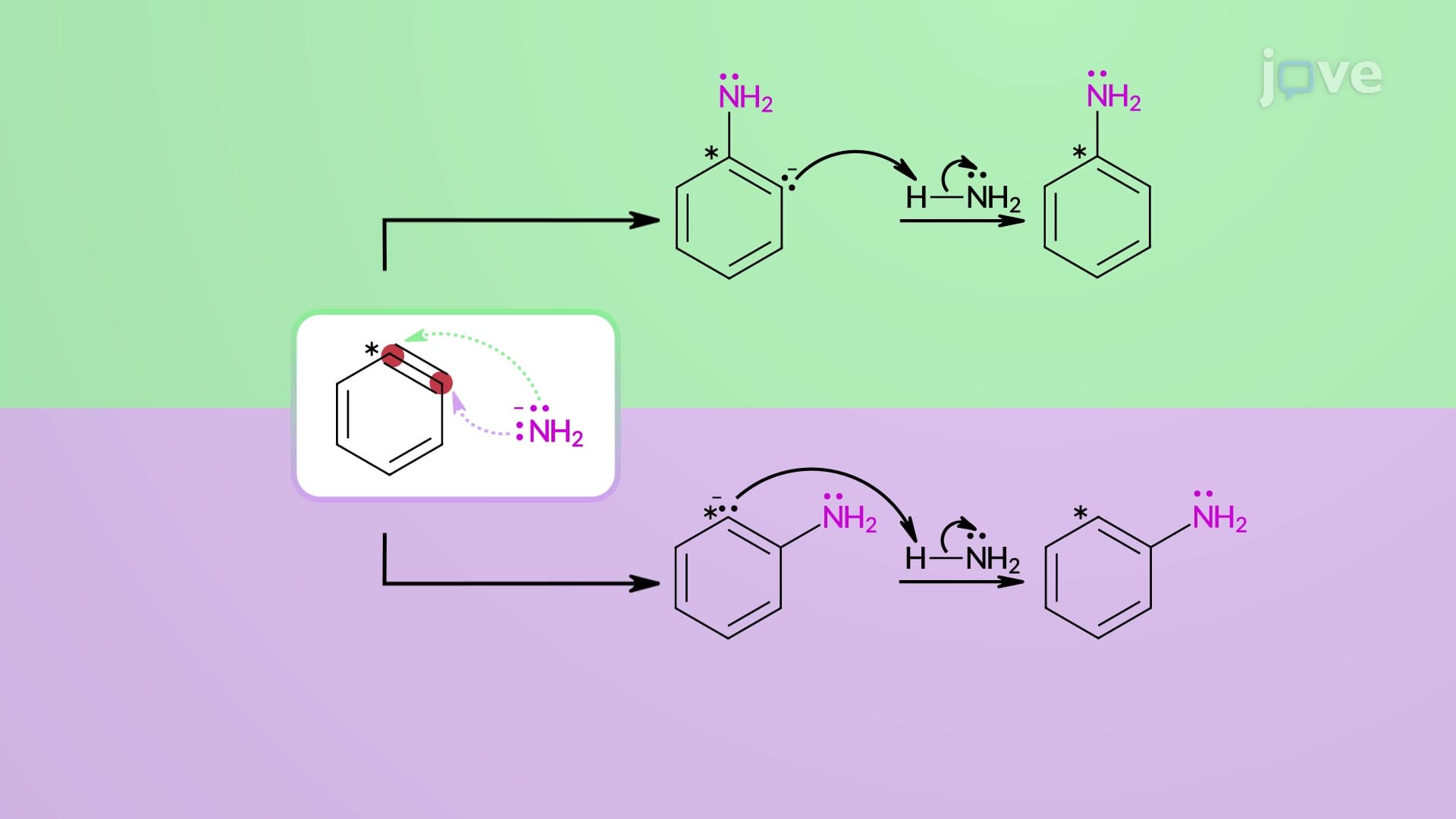
The reaction proceeds through a fascinating two-step elimination-addition mechanism that challenges traditional substitution patterns. The hydroxide ion first abstracts a proton adjacent to the chlorine atom, creating a carbanion that destabilizes the aromatic system. This leads to chloride elimination, forming the highly strained benzyne intermediate-a species so reactive it immediately reacts with available nucleophiles. College students studying for organic chemistry exams should recognize that benzyne's triple-bond character within the aromatic ring creates exceptional reactivity.
The benzyne intermediate rapidly reacts with hydroxide ions in the aqueous medium, forming sodium phenoxide. Subsequent acidification protonates the phenoxide oxygen, yielding phenol as the final product. This final step demonstrates acid-base chemistry principles frequently tested on standardized exams, making it an excellent example for students preparing for chemistry placement tests at US universities.
Understanding this reaction provides insight into how pharmaceutical companies like Pfizer and Johnson & Johnson source phenol for aspirin synthesis, connecting classroom chemistry to real-world applications students encounter in their daily lives.
Related Micro-courses