Loading subject page…

- Organic Chemistry
- Reactions of Aromatic Compounds
- meta-Directing Deactivators: –NO2, –CN, –CHO, –CO2R, –COR, –CO2H
Micro-course: Reactions of Aromatic Compounds
147,905 views
Learn key concepts and earn your certificate.




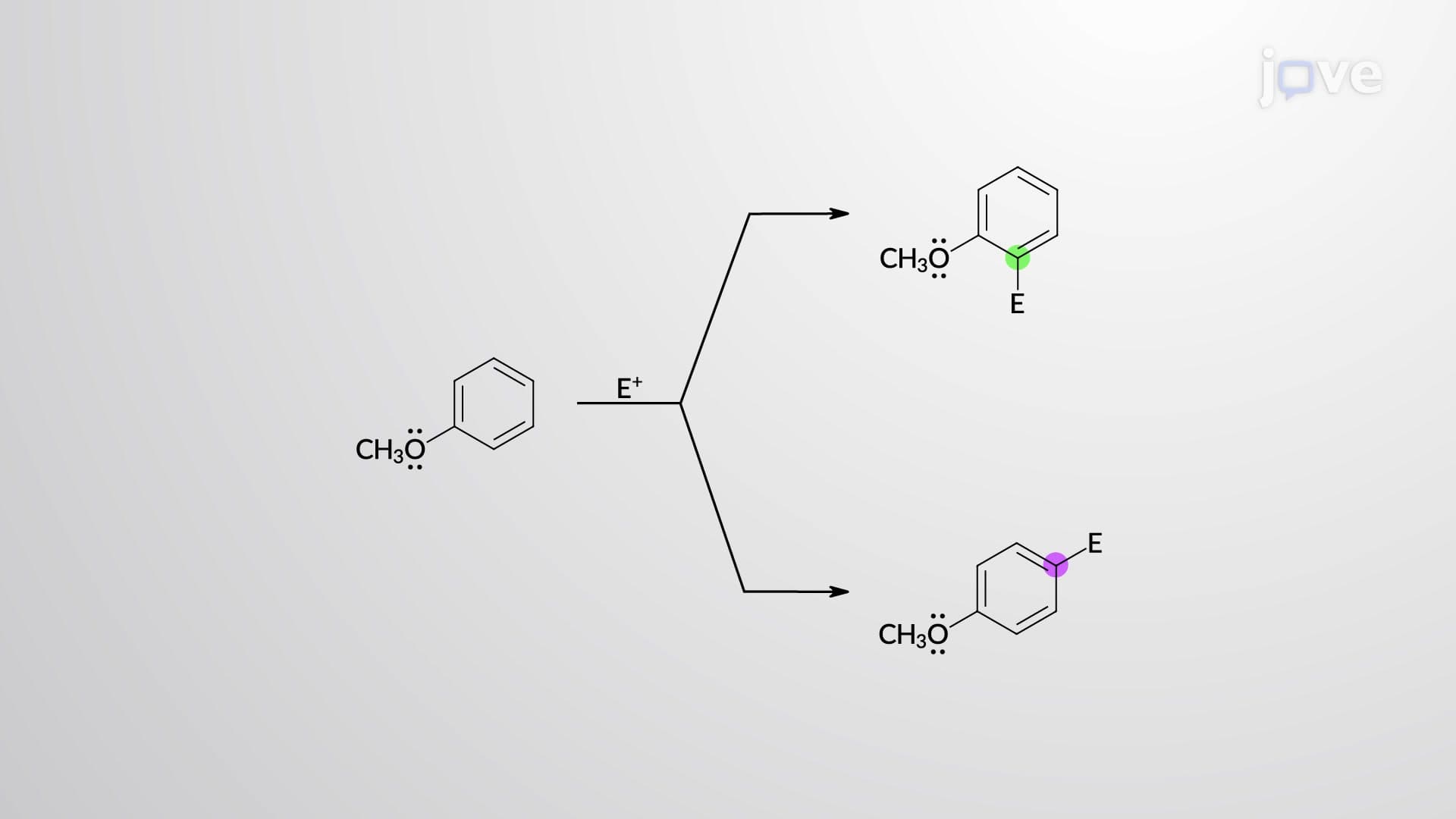
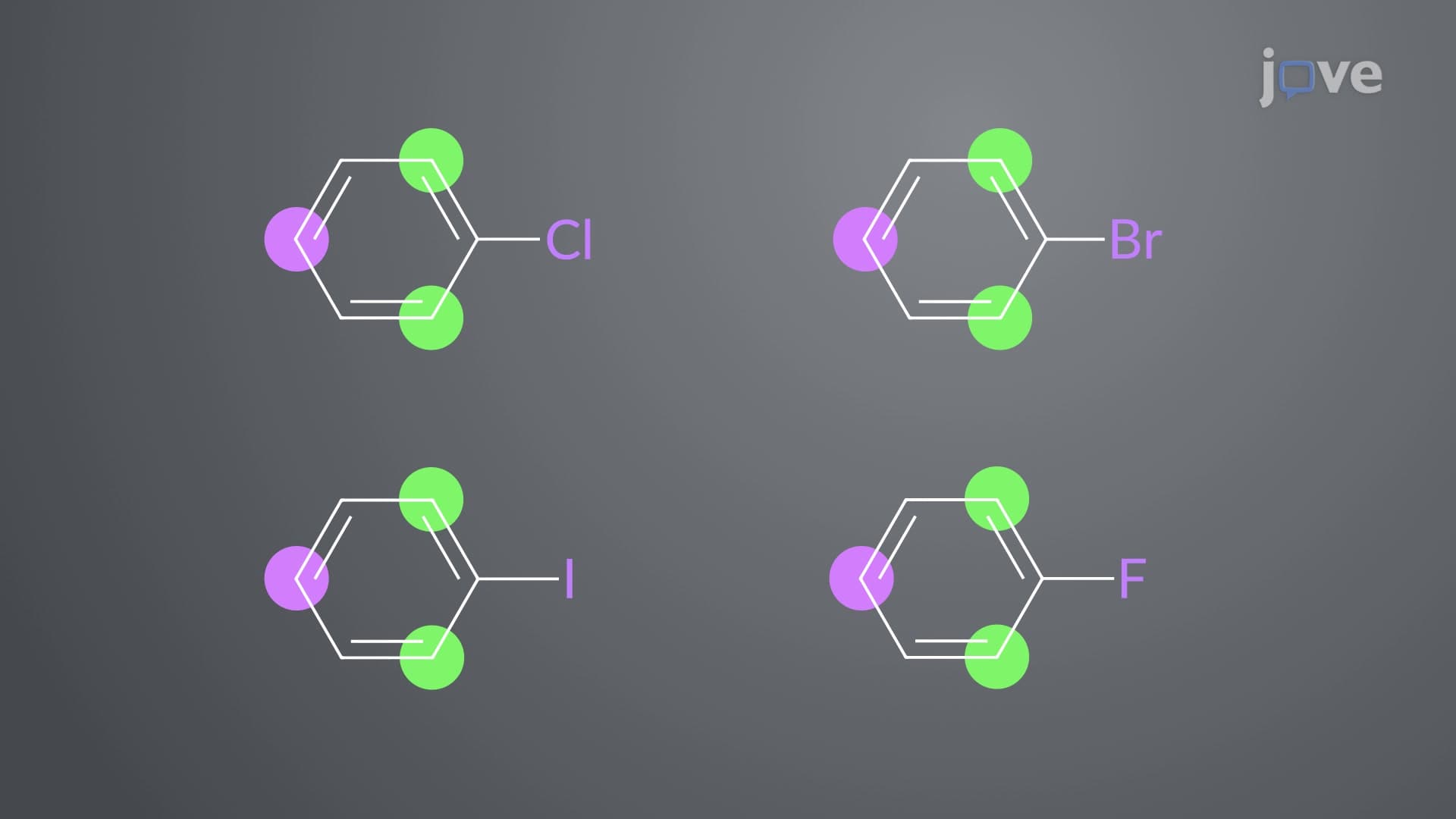
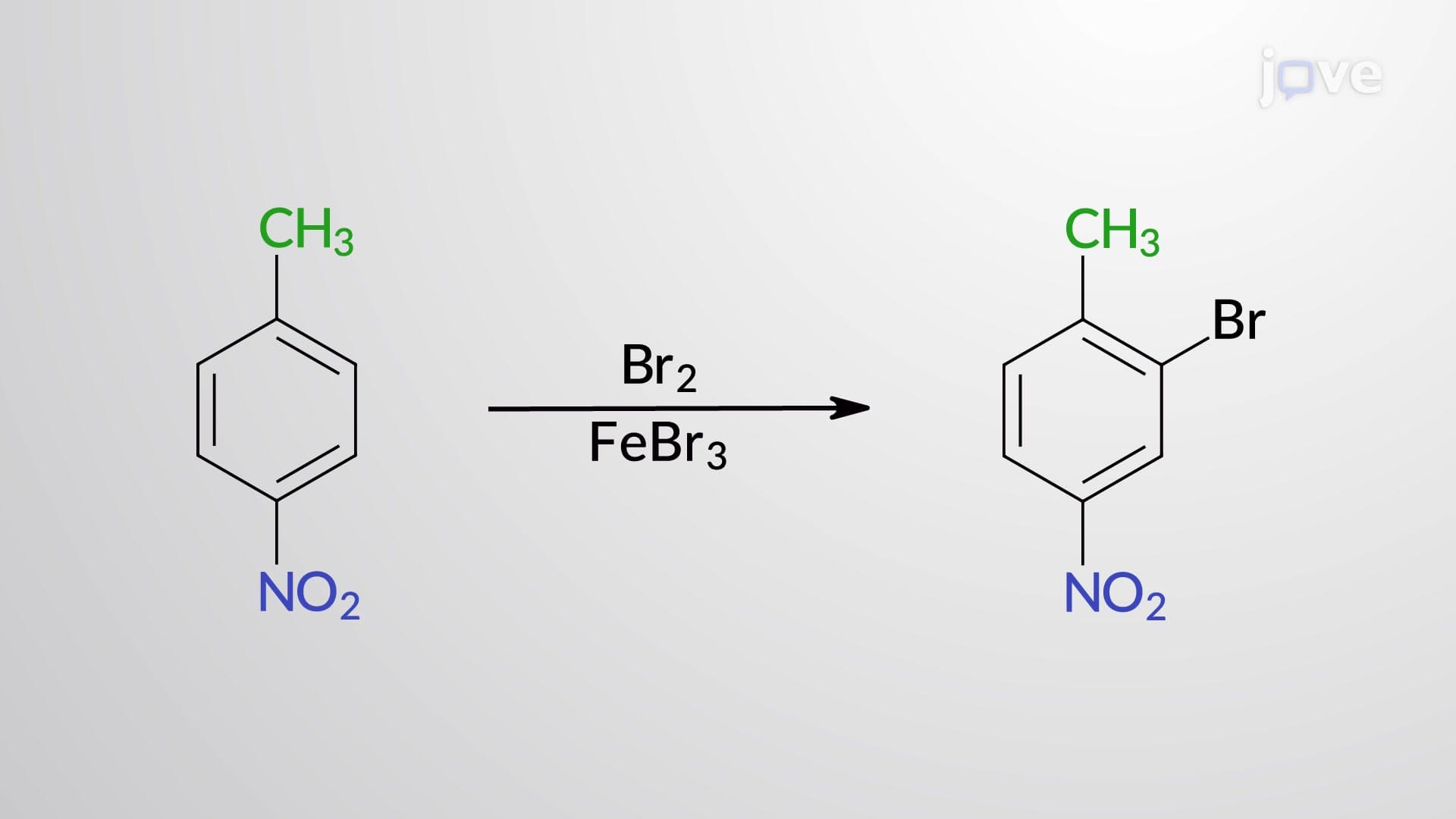
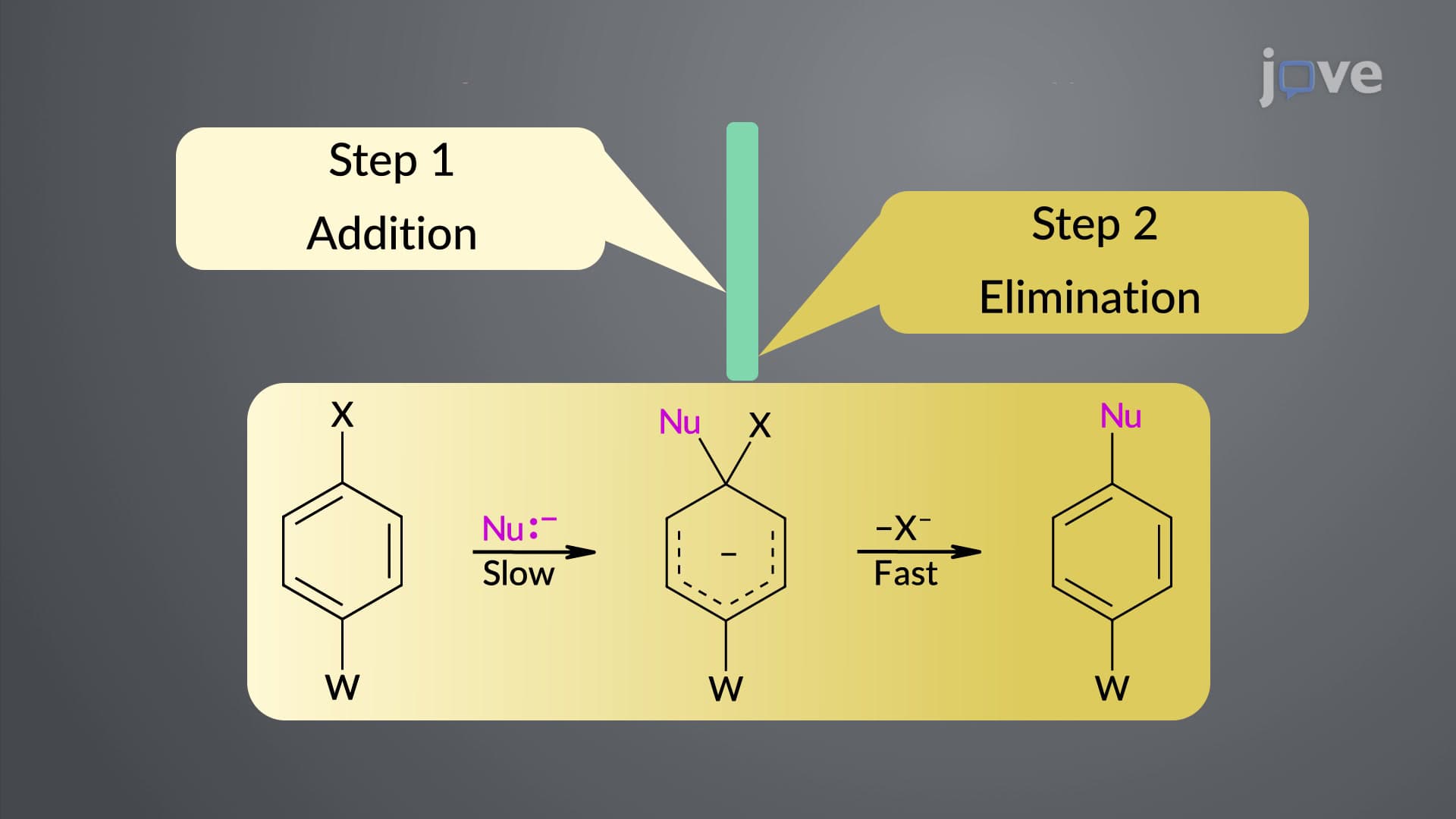



meta-Directing Deactivators: –NO2, –CN, –CHO, –CO2R, –COR, –CO2H

00:00
01:13
Video Summary: Meta Directing Deactivators No2 Cn Explained
Ever wonder why pharmaceutical companies struggle to modify certain drug compounds? Meta directing deactivators NO2 make aromatic rings less reactive, slowing down chemical modifications crucial in drug development. For instance, when Merck chemists work with nitrobenzene derivatives in their New Jersey facilities, reactions proceed much slower than with unsubstituted benzene due to the deactivating nitro group. Meta Directing Deactivators NO2 CN Explained reveals how electron-withdrawing groups like nitro and cyano create this resistance by destabilizing carbocation intermediates. Watch the full video on JoVE Coach to master this concept with expert-led visuals and step-by-step explanations.
- Understand how Meta Directing Deactivators NO2 CN Explained demonstrates the dual nature of electron-withdrawing groups as both deactivators and meta directors
- Identify the structural features that make NO2 and CN groups electron-withdrawing through resonance and inductive effects
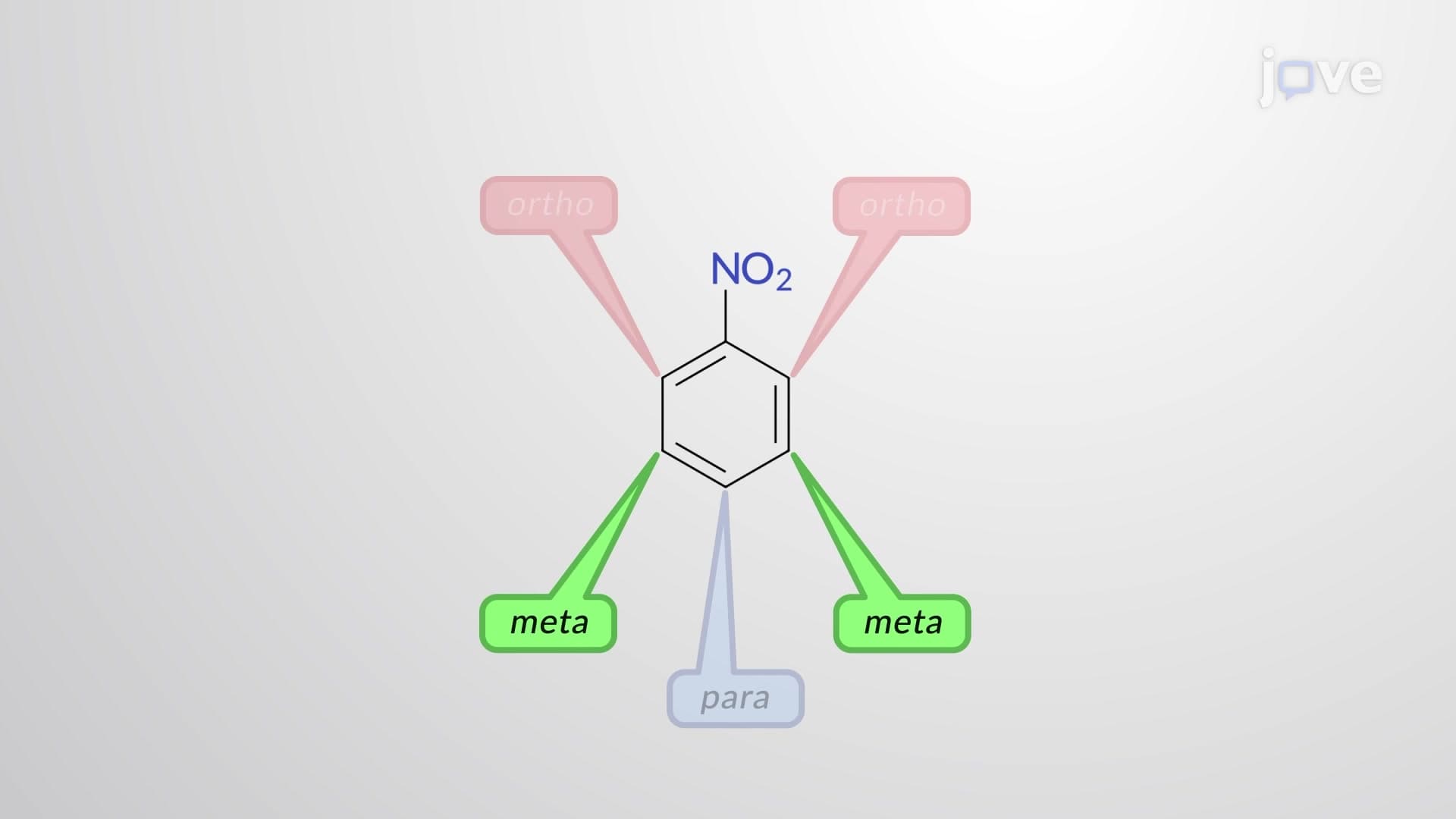
- Analyze why deactivation occurs more strongly at ortho and para positions compared to meta positions
- Compare the reaction rates of electrophilic aromatic substitution between benzene and nitrobenzene derivatives
- Evaluate carbocation stability patterns formed during electrophilic substitution with deactivating groups
- Apply knowledge of transition state energy barriers to predict reaction outcomes in substituted benzenes
- Recognize the relationship between electron density withdrawal and increased activation energy requirements
- Explore how resonance structures explain the regioselectivity observed in meta-directed reactions
Understanding Meta Directing Deactivators NO2 CN Explained
Meta directing deactivators represent a fascinating paradox in organic chemistry: groups that simultaneously slow down reactions while directing incoming electrophiles to specific positions. The nitro group (NO2) and cyano group (CN) exemplify this behavior perfectly, making them essential concepts for students preparing for AP Chemistry exams and college organic chemistry courses.
Electron Withdrawal Mechanisms and Ring Deactivation
The deactivating power of NO2 and CN groups stems from their strong electron-withdrawing nature through both resonance and inductive effects. When attached to a benzene ring, these groups pull electron density away from the aromatic system, creating an electron-deficient environment. This electron withdrawal occurs through the pi-electron system via resonance, where the nitrogen in NO2 and carbon in CN can accept electron pairs from the benzene ring.
Students often encounter this concept in MCAT preparation, where understanding electron flow becomes crucial for predicting reaction mechanisms. The withdrawal of electrons increases the energy required for electrophilic attack, similar to how removing lubricant makes mechanical systems harder to operate.
Carbocation Stability and Reaction Kinetics
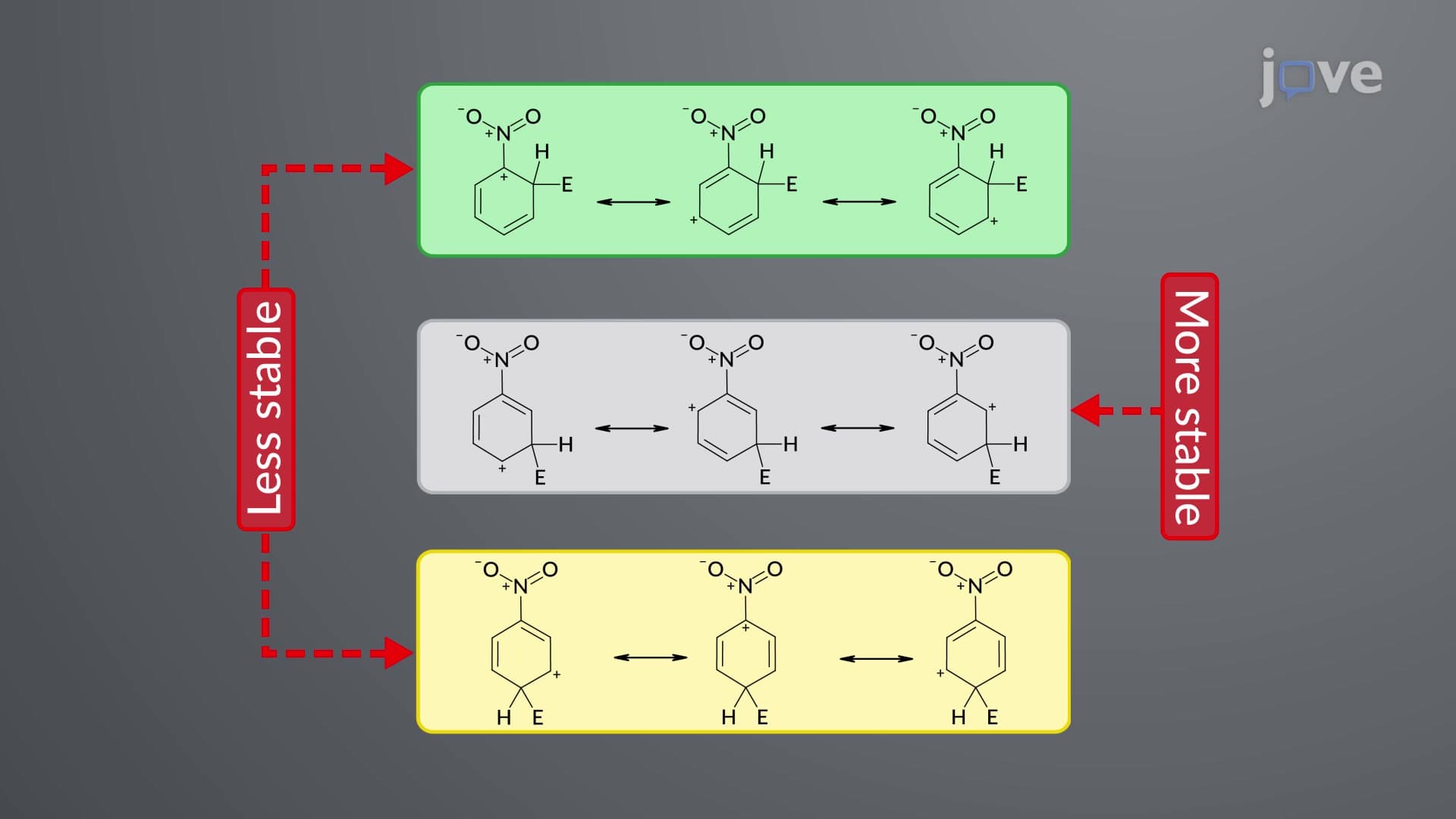
During electrophilic aromatic substitution, the rate-determining step involves forming a carbocation intermediate (arenium ion). Meta directing deactivators destabilize these intermediates by withdrawing electrons, particularly at ortho and para positions where resonance structures place positive charge directly adjacent to the electron-withdrawing group.
College students studying for organic chemistry midterms should note that while all positions become deactivated, the meta position experiences less destabilization. This creates a kinetic preference for meta substitution, even though the overall reaction rate remains slower than benzene. Think of it like traffic flow: all lanes move slower during construction, but one lane (meta) moves slightly faster than others (ortho/para).
Practical Applications and Exam Relevance
Understanding deactivating groups proves essential in pharmaceutical synthesis and industrial chemistry. Major US pharmaceutical companies like Pfizer and Johnson & Johnson regularly encounter these principles when synthesizing complex drug molecules containing nitro or cyano substituents. For students taking standardized tests, recognizing deactivating group patterns helps predict product distributions and relative reaction rates-skills directly tested on AP Chemistry free-response questions and college organic chemistry exams.
Frequently Asked Questions
Meta directing deactivators NO2 CN are electron-withdrawing groups that simultaneously decrease the reactivity of benzene rings while directing new substituents to the meta position. They work by pulling electron density away from the aromatic system through resonance and inductive effects. This makes electrophilic substitution reactions slower but more selective for meta products.
MCAT questions often test your ability to predict reaction outcomes and relative rates when deactivating groups are present. AP Chemistry exams may ask you to explain why certain substitution patterns occur or compare reaction rates between substituted and unsubstituted benzenes. Practice identifying electron-withdrawing groups and predicting their directing effects.
These concepts form the foundation for understanding aromatic chemistry mechanisms and predicting synthetic outcomes. Most college midterms include problems requiring you to predict major products when multiple substituents are present. Understanding deactivation helps explain reaction selectivity and synthetic strategy.
Pharmaceutical companies use these principles when synthesizing medications containing aromatic rings with nitro or cyano groups. For example, some blood pressure medications and antibiotics require careful control of substitution patterns during manufacturing at facilities across states like New Jersey, California, and North Carolina.
Not at all! While the concepts involve electron movement, they follow predictable patterns that high school students can master. Start with understanding that electron-withdrawing groups make reactions slower and direct to meta positions. The detailed mechanisms become clearer with practice and visual aids.
Create comparison charts showing activating versus deactivating groups, practice drawing resonance structures, and work through plenty of prediction problems. Focus on recognizing common deactivating groups (NO2, CN, SO3H, COR) and their effects on reaction rates and regioselectivity.
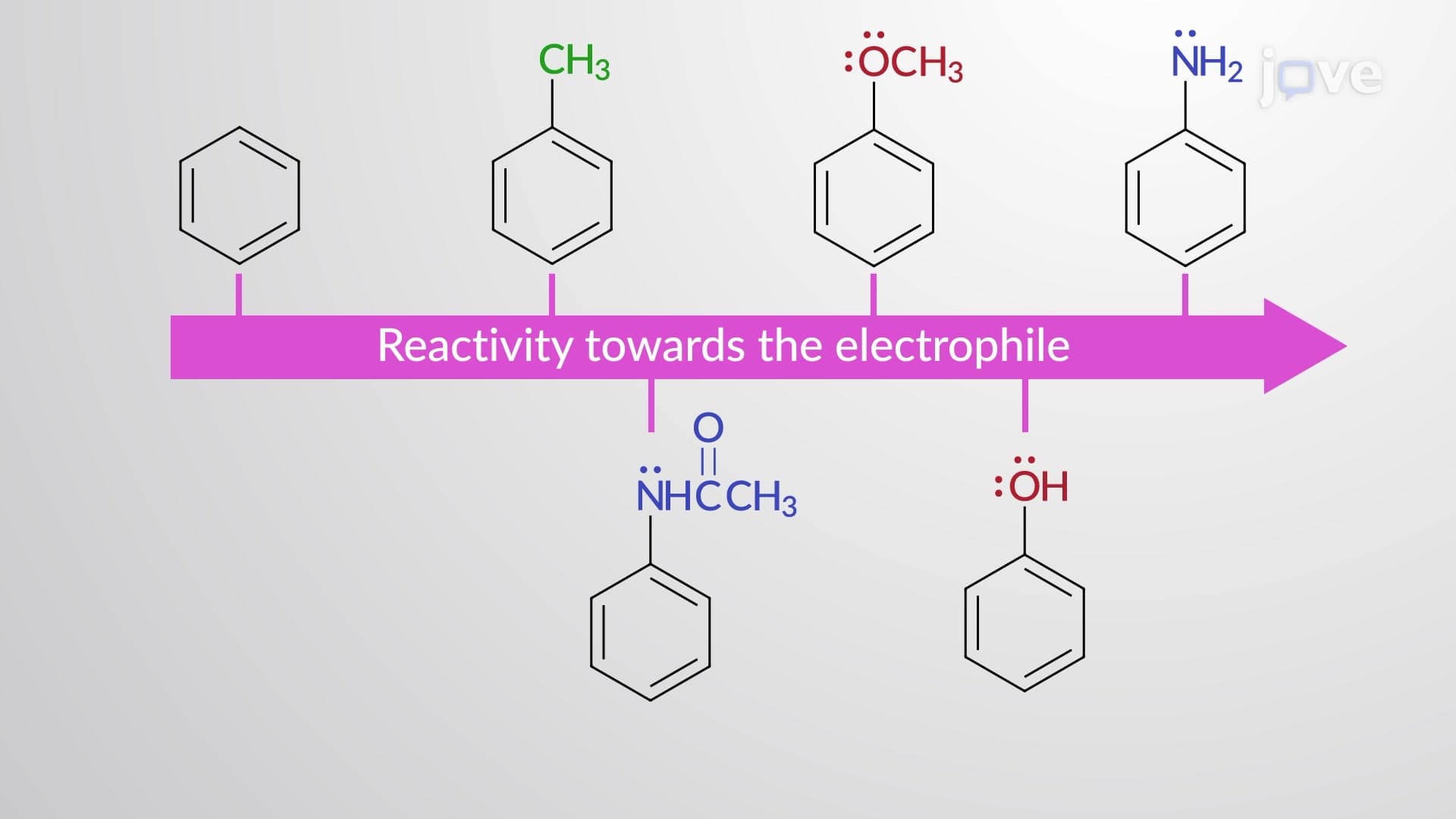
Use the electron flow rule: electron-donating groups (like NH2, OH, alkyl) are ortho/para directing activators, while electron-withdrawing groups (like NO2, CN, COR) are meta directing deactivators. The exception is halogens, which are deactivating but ortho/para directing due to lone pair donation.
Progress to multi-substituted benzene reactions, Friedel-Crafts limitations with deactivating groups, and synthetic strategy problems involving multiple aromatic substitutions. These advanced topics build directly on deactivation principles and appear frequently in upper-level organic chemistry courses.
Understanding how these groups affect carbocation stability prepares you for more complex mechanisms involving aromatic intermediates. This knowledge becomes essential for pharmaceutical chemistry, materials science, and graduate-level synthetic organic chemistry courses offered at universities nationwide.
Related Micro-courses