Loading video…


 25 Concepts
 147.9K views

Video Summary: Nucleophilic Aromatic Substitution of Aryldiazonium Explained
Ever wonder how pharmaceutical companies create precise molecular structures when fluorine won't directly bond to benzene rings? Nucleophilic aromatic substitution aryldiazonium reactions solve this challenge by using diazonium salts as versatile intermediates. The Schiemann reaction, for example, allows chemists at companies like Pfizer to introduce fluorine atoms into drug molecules safely and efficiently. Nucleophilic Aromatic Substitution of Aryldiazonium Explained reveals how nitrogen's departure drives these transformations, enabling the synthesis of diverse substituted aromatics. Watch the full video on JoVE Coach to master this concept with expert-led visuals and step-by-step explanations.
Nucleophilic aromatic substitution aryldiazonium represents one of organic chemistry's most elegant solutions to a fundamental challenge: how to introduce diverse substituents onto aromatic rings when direct methods fail or prove inefficient. Unlike traditional electrophilic aromatic substitution, this mechanism leverages the exceptional leaving group ability of nitrogen gas to drive substitution reactions forward.
The process begins with aryldiazonium salt formation from primary aromatic amines and nitrous acid under acidic conditions. These salts, while relatively unstable, serve as powerful synthetic intermediates because the diazonium group (-N2+) readily departs as nitrogen gas-a thermodynamically favorable process that provides significant driving force for the overall reaction.
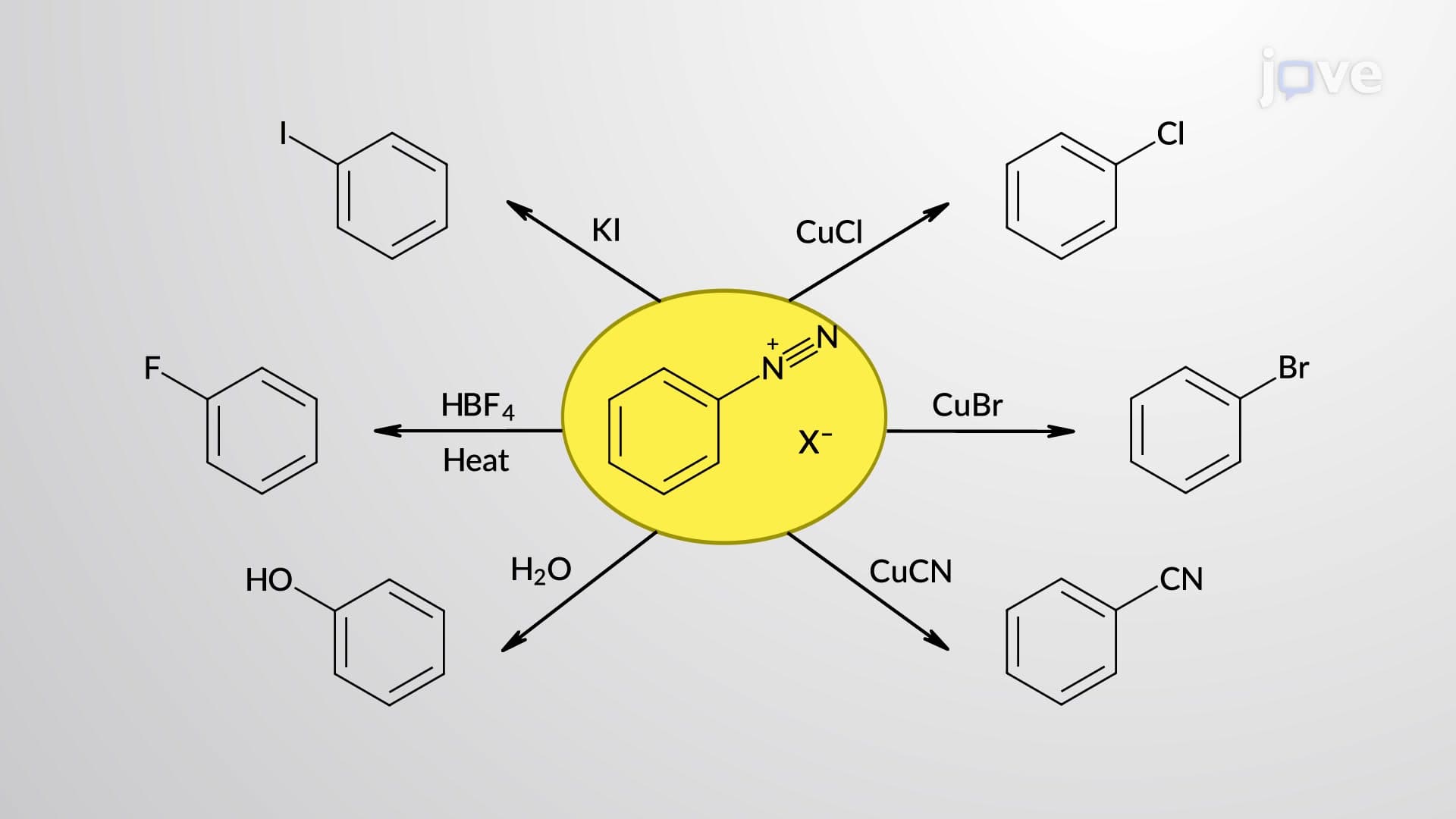
Named after Swiss chemist Traugott Sandmeyer, this reaction family enables the introduction of chlorine, bromine, and cyanide groups through copper(I) catalysis. In pharmaceutical research at institutions like Johns Hopkins or companies such as Merck, chemists routinely employ Sandmeyer conditions to install these functional groups with high selectivity and yield.
The mechanism involves single-electron transfer from copper(I) to the diazonium salt, generating aryl radicals that subsequently combine with halide or cyanide nucleophiles. This radical pathway explains why copper catalysis proves essential-other metals cannot facilitate the necessary electron transfer as effectively.
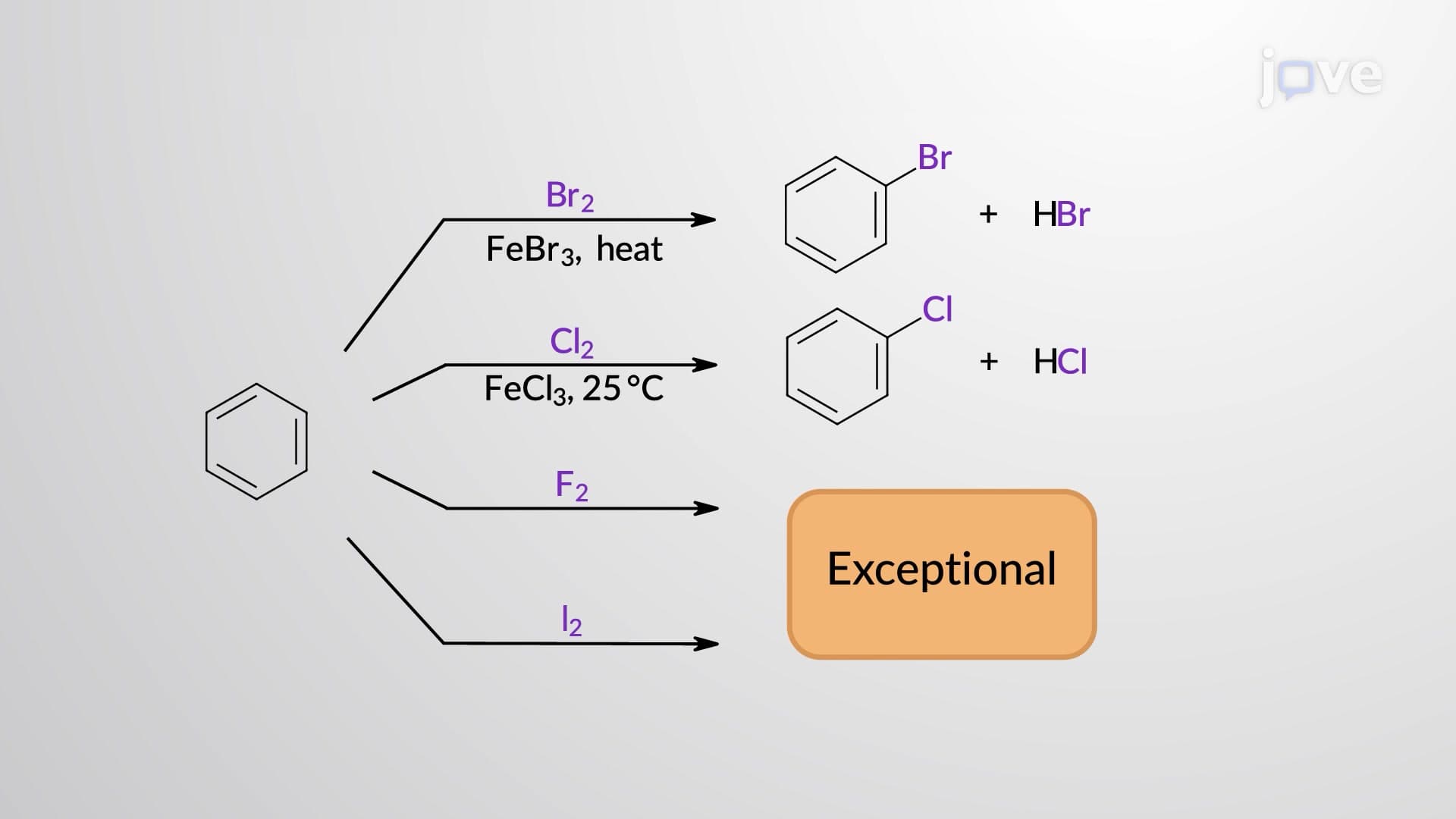
The Schiemann reaction addresses fluorination challenges by treating diazonium salts with fluoroboric acid (HBF4) followed by thermal decomposition. This method proves invaluable in pharmaceutical development, where fluorinated compounds often exhibit enhanced metabolic stability and bioavailability. Direct fluorination of aromatics remains problematic due to fluorine's extreme reactivity, making the Schiemann approach indispensable.
For iodine incorporation, simple treatment with potassium iodide suffices, offering significant advantages over direct iodination methods that require harsh conditions and often produce poor yields. This reaction finds applications in developing iodinated contrast agents used in medical imaging across US hospitals.
Treating aryldiazonium salts with water or dilute acid generates phenols-compounds crucial in polymer chemistry and pharmaceutical synthesis. This transformation provides access to hydroxyl-substituted aromatics that serve as building blocks for materials like polycarbonates and phenolic resins manufactured by companies such as Dow Chemical.
Students preparing for AP Chemistry or organic chemistry courses at universities like UC Berkeley will encounter these reactions as examples of how synthetic chemists overcome inherent reactivity limitations through creative intermediate formation.
Related Micro-courses