Loading subject page…


147,911 views


Video Summary: Reduction of Benzene to Cyclohexane Explained
Why does benzene resist hydrogenation while regular alkenes react easily under mild conditions? The reduction of benzene to cyclohexane requires extreme conditions-100 atmospheres of pressure and 150°C with nickel catalysts-making it crucial for industrial processes like producing cyclohexane for nylon manufacturing at companies like DuPont. This resistance stems from benzene's unique resonance stabilization, requiring three moles of hydrogen to completely transform the aromatic ring. Understanding the reduction of benzene to cyclohexane explained reveals fundamental principles of organic reactivity and stability. Watch the full video on JoVE Coach to master this concept with expert-led visuals and step-by-step explanations.
The reduction of benzene to cyclohexane represents one of the most challenging hydrogenation reactions in organic chemistry. Unlike simple alkenes that readily undergo hydrogenation under mild conditions (room temperature, atmospheric pressure), benzene's aromatic system resists reduction due to its exceptional stability from resonance delocalization. This resistance makes the transformation industrially significant yet mechanistically complex.
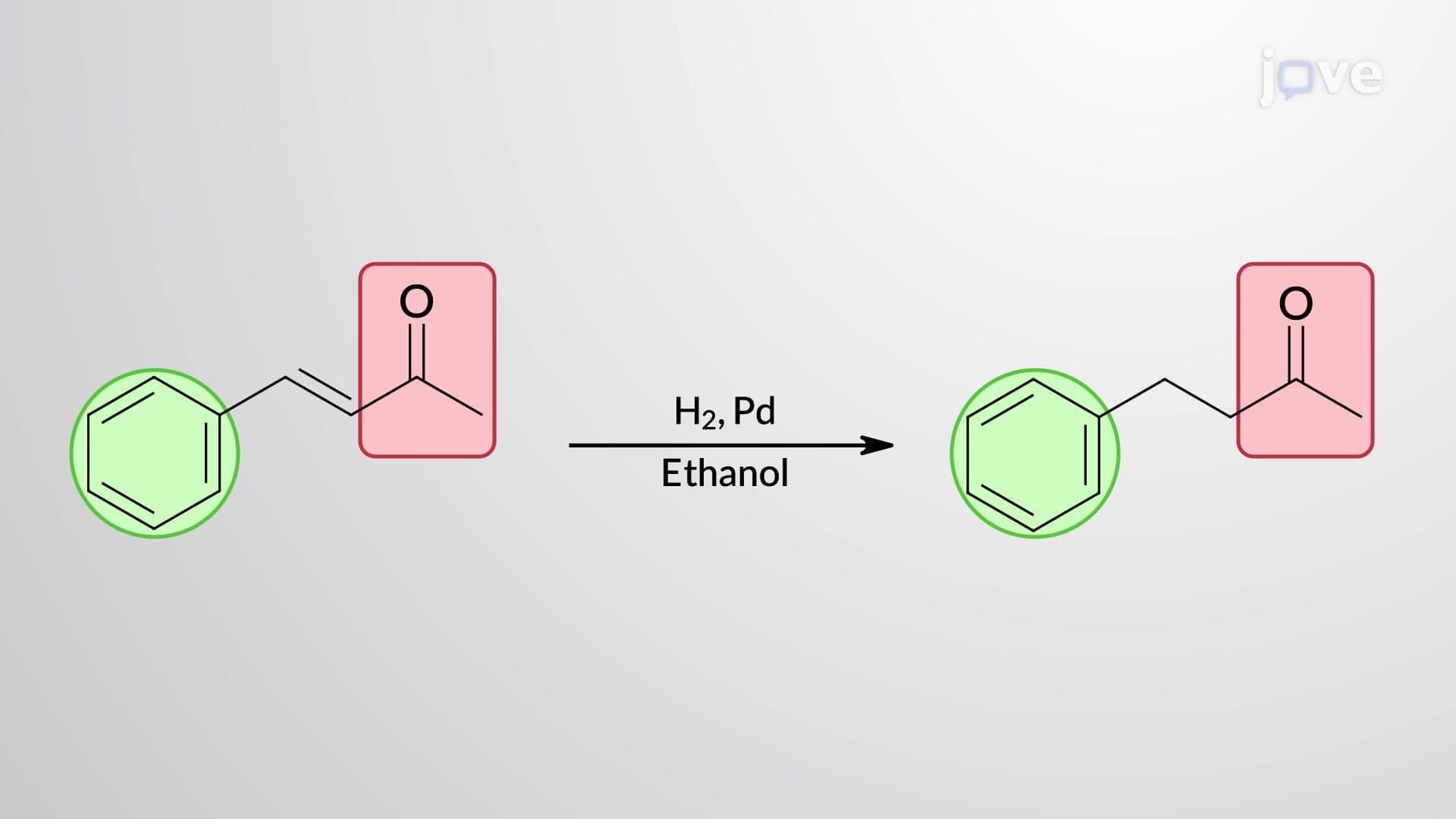
Benzene's reluctance to undergo hydrogenation stems from its resonance stabilization energy of approximately 36 kcal/mol. This delocalization energy must be overcome before hydrogenation can proceed, making the first hydrogen addition endothermic-a stark contrast to exothermic alkene hydrogenations. The energy barrier explains why standard hydrogenation conditions (palladium catalyst, 1 atm H2, room temperature) successfully reduce alkenes but leave benzene rings untouched, as demonstrated in stilbene hydrogenation where only the alkene double bond reacts.
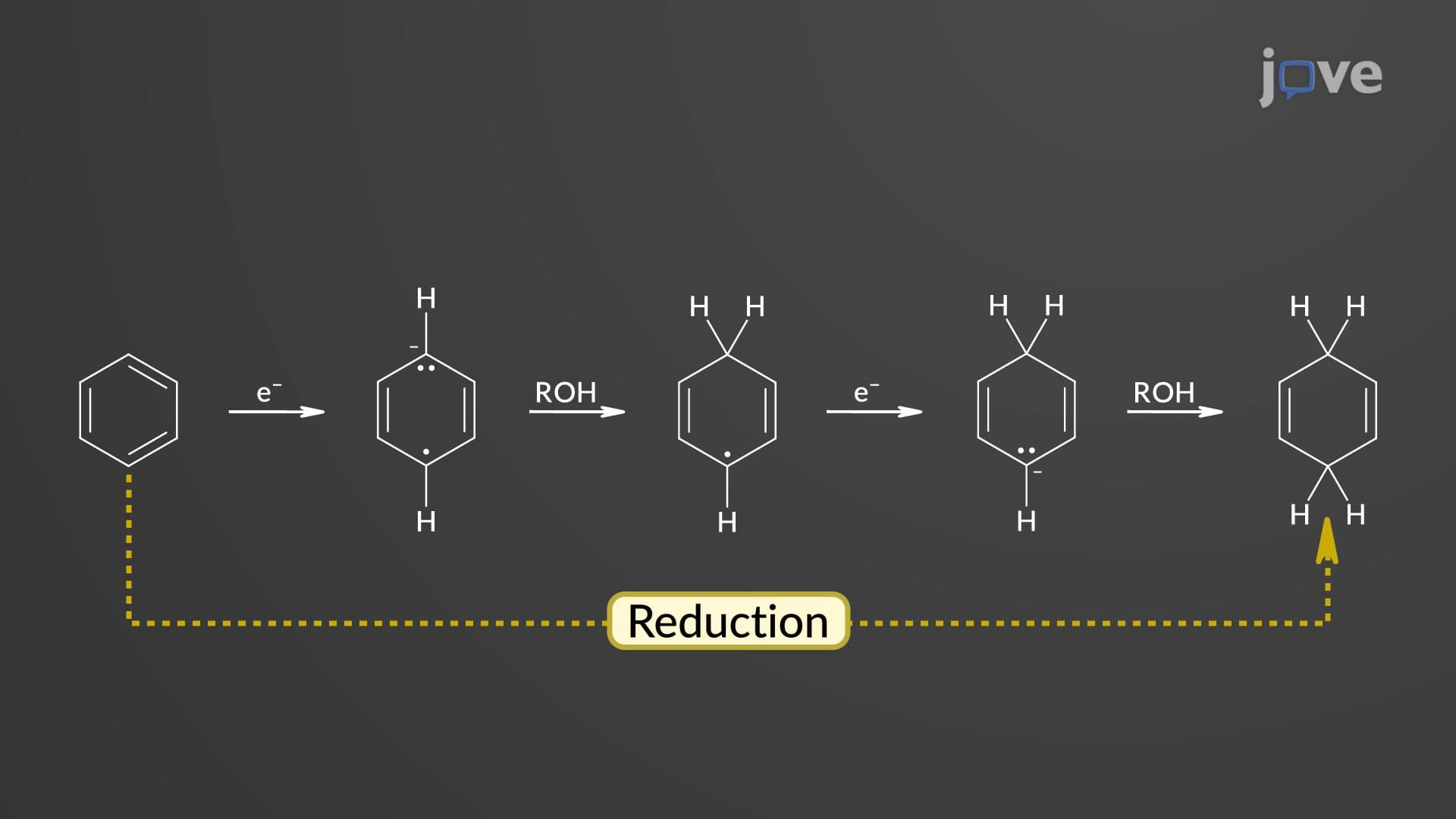
Complete benzene reduction requires harsh conditions: nickel catalyst, 100 atmospheres of hydrogen pressure, and temperatures around 150°C. These extreme parameters overcome the thermodynamic barrier and drive the reaction forward. The process consumes three moles of hydrogen per mole of benzene, following the stoichiometry: C6H6 + 3H2 → C6H12. Students preparing for AP Chemistry or college organic chemistry exams should recognize these conditions as diagnostic for aromatic hydrogenation versus alkene reduction.
The benzene-to-cyclohexane conversion plays a crucial role in the US petrochemical industry. Major companies like ExxonMobil and Chevron Phillips utilize this reaction to produce cyclohexane, a key intermediate for nylon-6,6 production. Cyclohexane serves as a precursor to adipic acid and caprolactam, essential components in polyamide synthesis. This industrial context frequently appears in MCAT organic chemistry questions and college-level chemical engineering courses, highlighting the reaction's practical importance beyond academic study.
Related Micro-courses