Loading video…


 20 Concepts
 256.6K views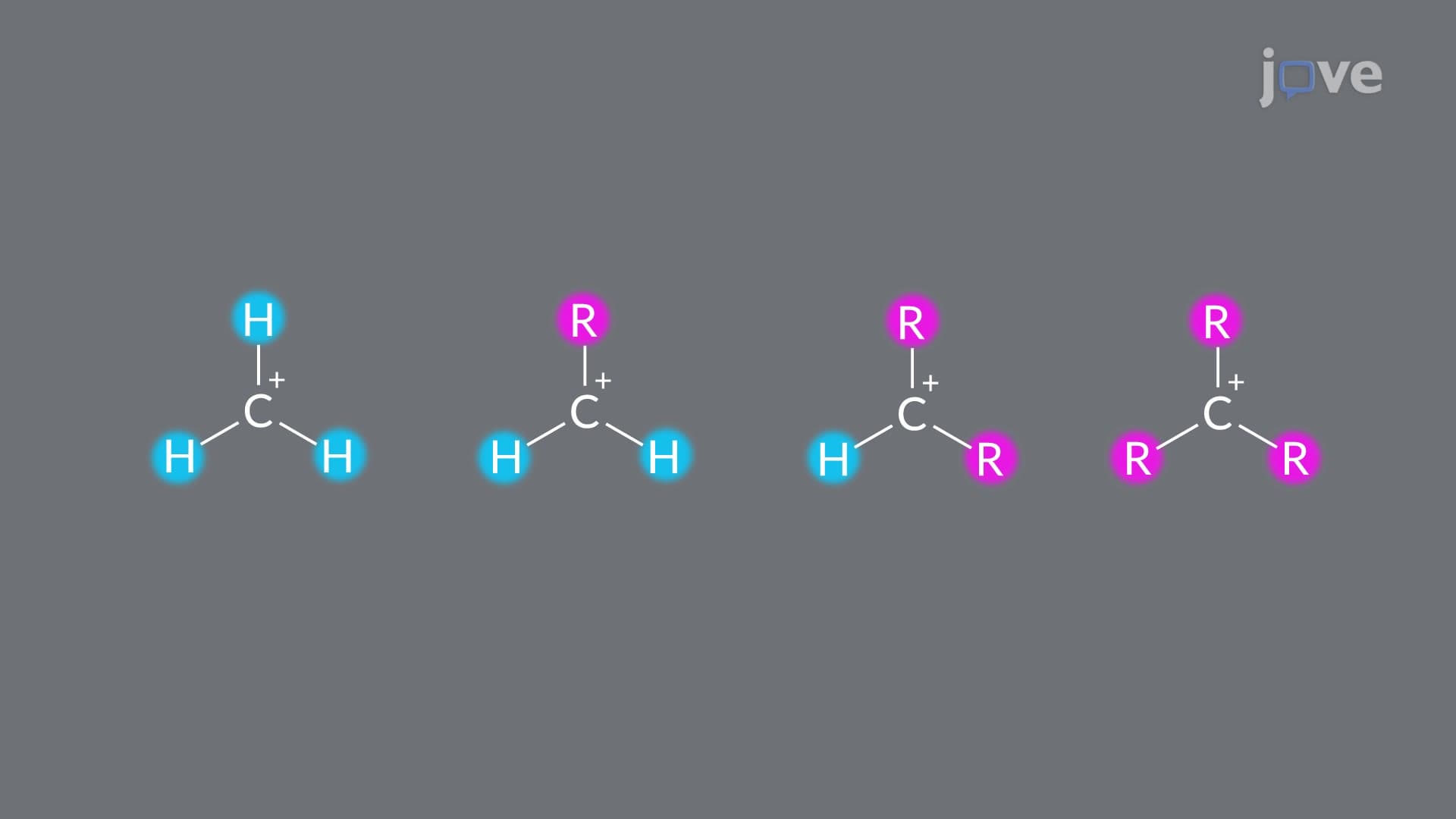

Video Summary: What are Carbocations
Ever wonder why some chemical reactions happen faster than others? Carbocations are positively charged carbon atoms that form during nucleophilic substitution reactions when leaving groups depart with electron pairs. These electron-deficient species are crucial in understanding reaction mechanisms taught in AP Chemistry and college organic chemistry courses across the US. Their stability determines reaction pathways in pharmaceutical synthesis at companies like Pfizer and Merck. Watch the full video on JoVE Coach to master this concept with expert-led visuals and step-by-step explanations.
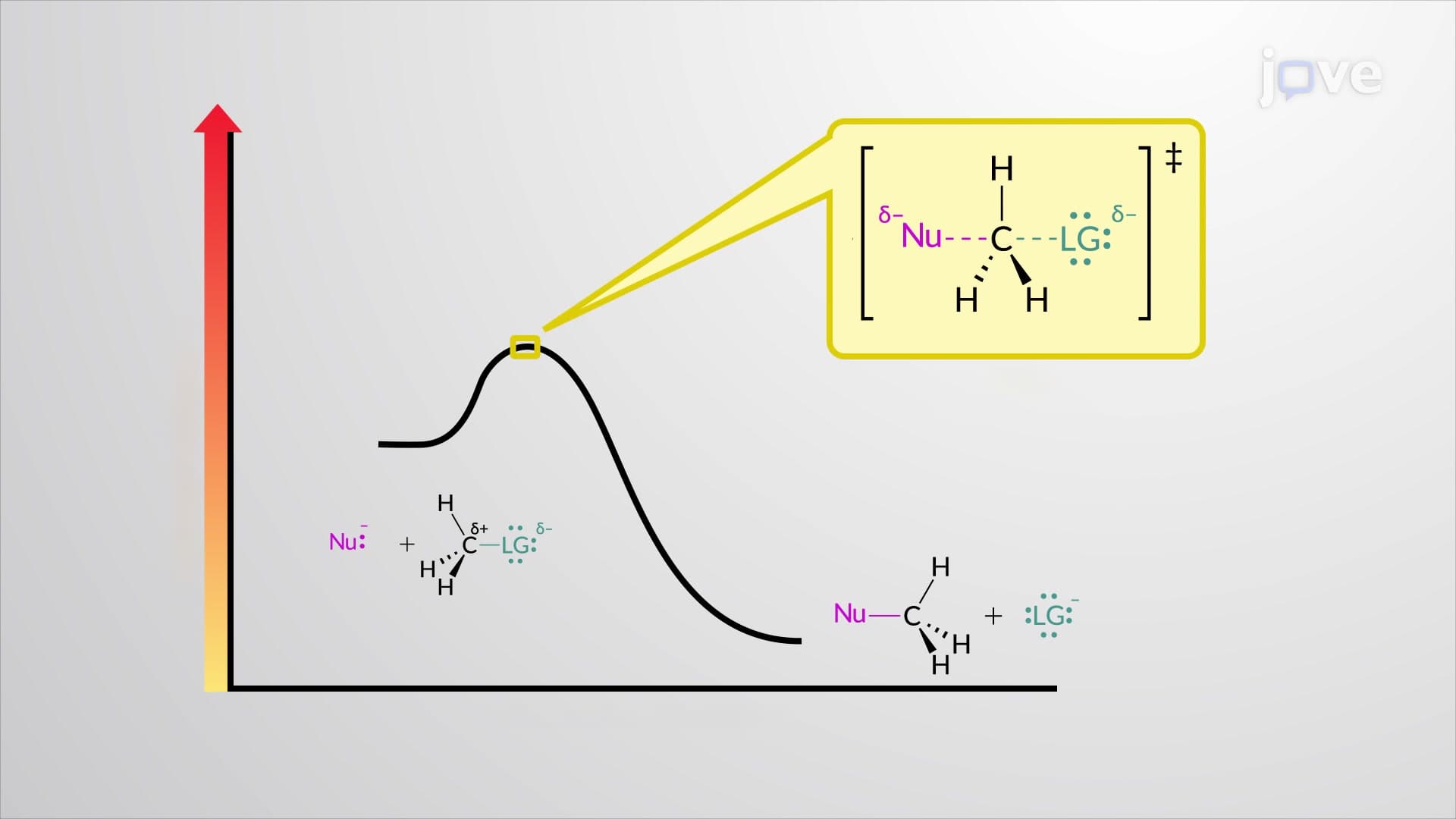
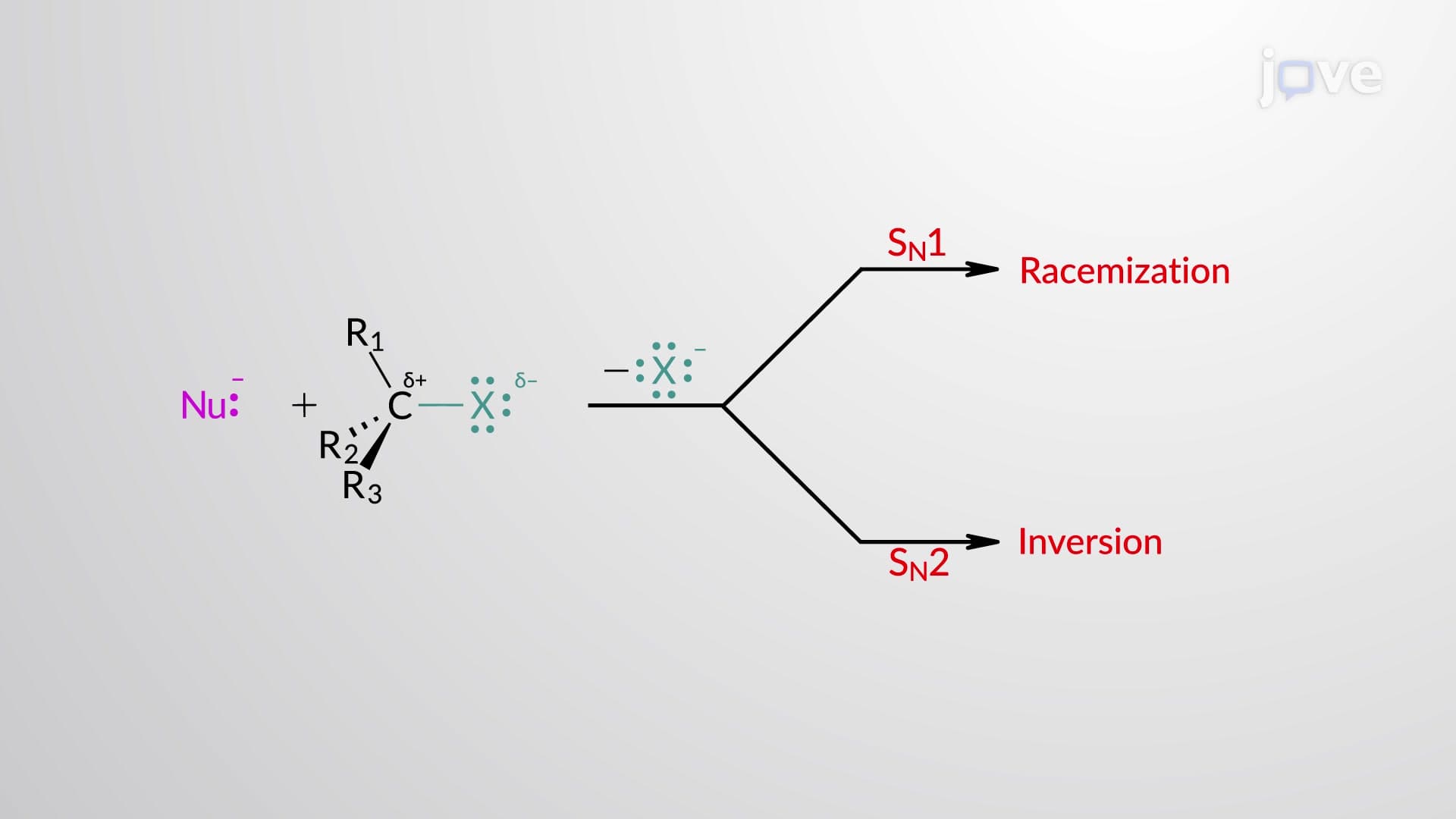
Carbocations represent one of the most important reactive intermediates in organic chemistry. These positively charged carbon species form when a leaving group departs with both electrons from a covalent bond, leaving behind an electron-deficient carbon atom. This process, known as heterolytic cleavage, creates a highly reactive intermediate that plays a crucial role in many organic reactions studied in AP Chemistry and undergraduate organic chemistry courses.
The geometry of carbocations is distinctly different from neutral carbon atoms. With only six electrons surrounding the central carbon (three bonding pairs), carbocations adopt a trigonal planar geometry with bond angles of 120 degrees. The carbon undergoes sp2 hybridization, leaving an empty p orbital perpendicular to the molecular plane. This vacant orbital makes carbocations powerful electrophiles, readily accepting electron pairs from nucleophiles.
Carbocations are classified based on the number of carbon atoms directly attached to the positively charged carbon center. Primary carbocations have one alkyl group attached, secondary have two, and tertiary have three alkyl groups. This classification system is fundamental to predicting reaction mechanisms and outcomes on standardized tests like the MCAT.
The stability order follows the pattern: tertiary > secondary > primary > methyl. This trend results from two key stabilizing effects. The inductive effect occurs when electron-releasing alkyl groups donate electron density through sigma bonds, helping to disperse the positive charge. More alkyl substituents provide greater stabilization through this electron-donating mechanism.
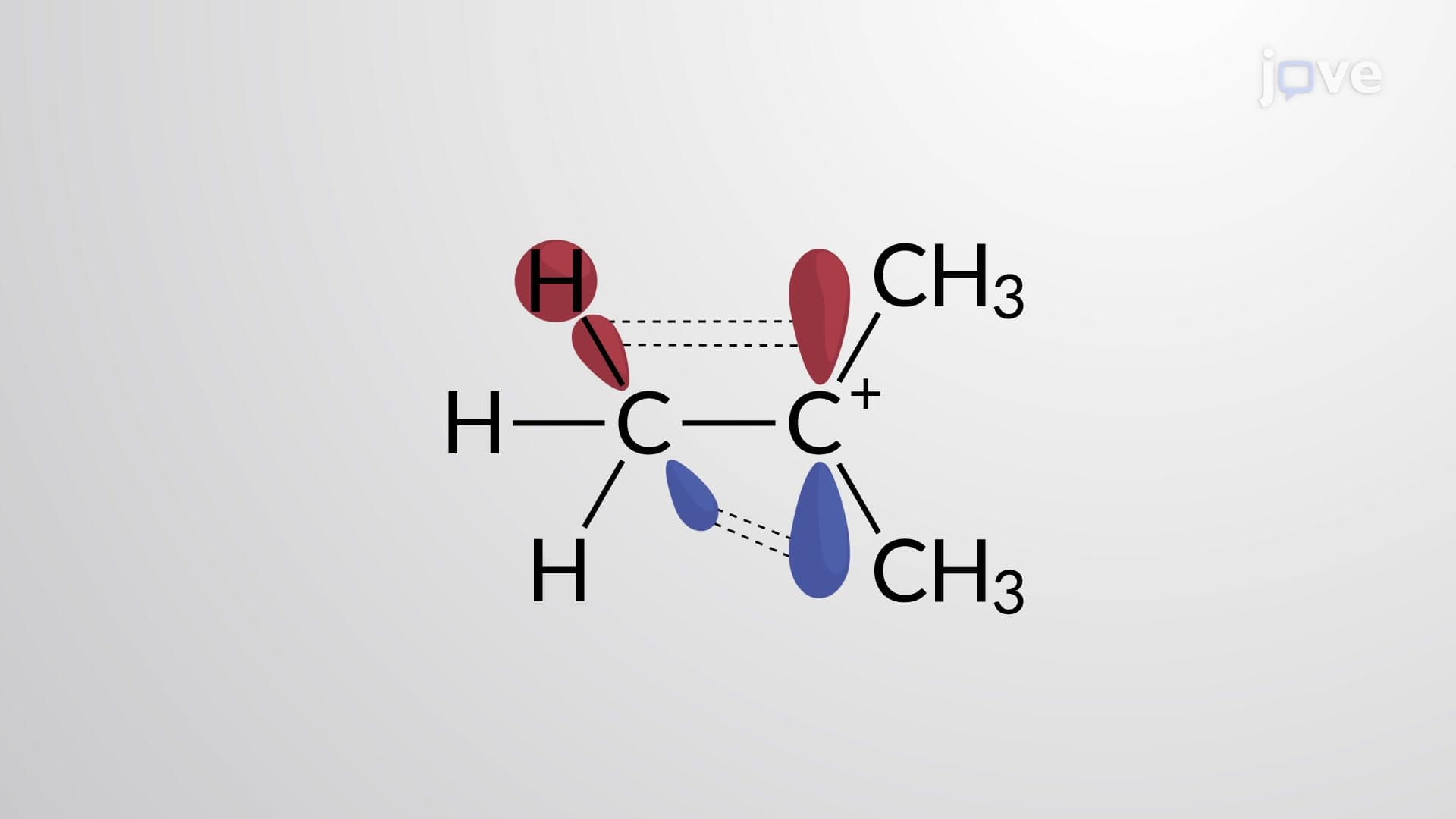
Hyperconjugation provides additional stabilization beyond simple inductive effects. This phenomenon involves the overlap between filled C-H sigma orbitals of adjacent alkyl groups and the empty p orbital of the carbocation. The more C-H bonds available for hyperconjugation, the greater the stabilization. Tertiary carbocations benefit from nine potential hyperconjugative interactions, while primary carbocations have only three.
This concept frequently appears in organic chemistry exams at universities like Harvard, MIT, and Stanford, where students must predict which carbocation intermediates are most likely to form during reaction mechanisms. Understanding hyperconjugation helps explain why tertiary carbocations form readily while primary carbocations are typically avoided in favor of alternative reaction pathways.
Carbocation stability principles guide pharmaceutical synthesis strategies. Companies like Johnson & Johnson utilize these concepts when designing synthetic routes for drug compounds, choosing reaction conditions that favor stable carbocation intermediates. In academic settings, carbocation problems commonly appear on AP Chemistry exams, college organic chemistry midterms, and MCAT practice tests, making mastery essential for pre-medical students.
Related Micro-courses