Loading video…


 20 Concepts
 256.6K views

Video Summary: What Is Sn2 Reaction Transition State
Ever wondered why some molecules react instantly while others barely budge under identical conditions? The sn2 reaction transition state holds the key to understanding reaction speed in organic chemistry. Picture a pharmaceutical company in New Jersey synthesizing life-saving medications-the efficiency of their SN2 reactions directly impacts drug production rates and costs. What is Sn2 reaction transition state becomes crucial knowledge for predicting which molecular structures will react fastest. Watch the full video on JoVE Coach to master this concept with expert-led visuals and step-by-step explanations.
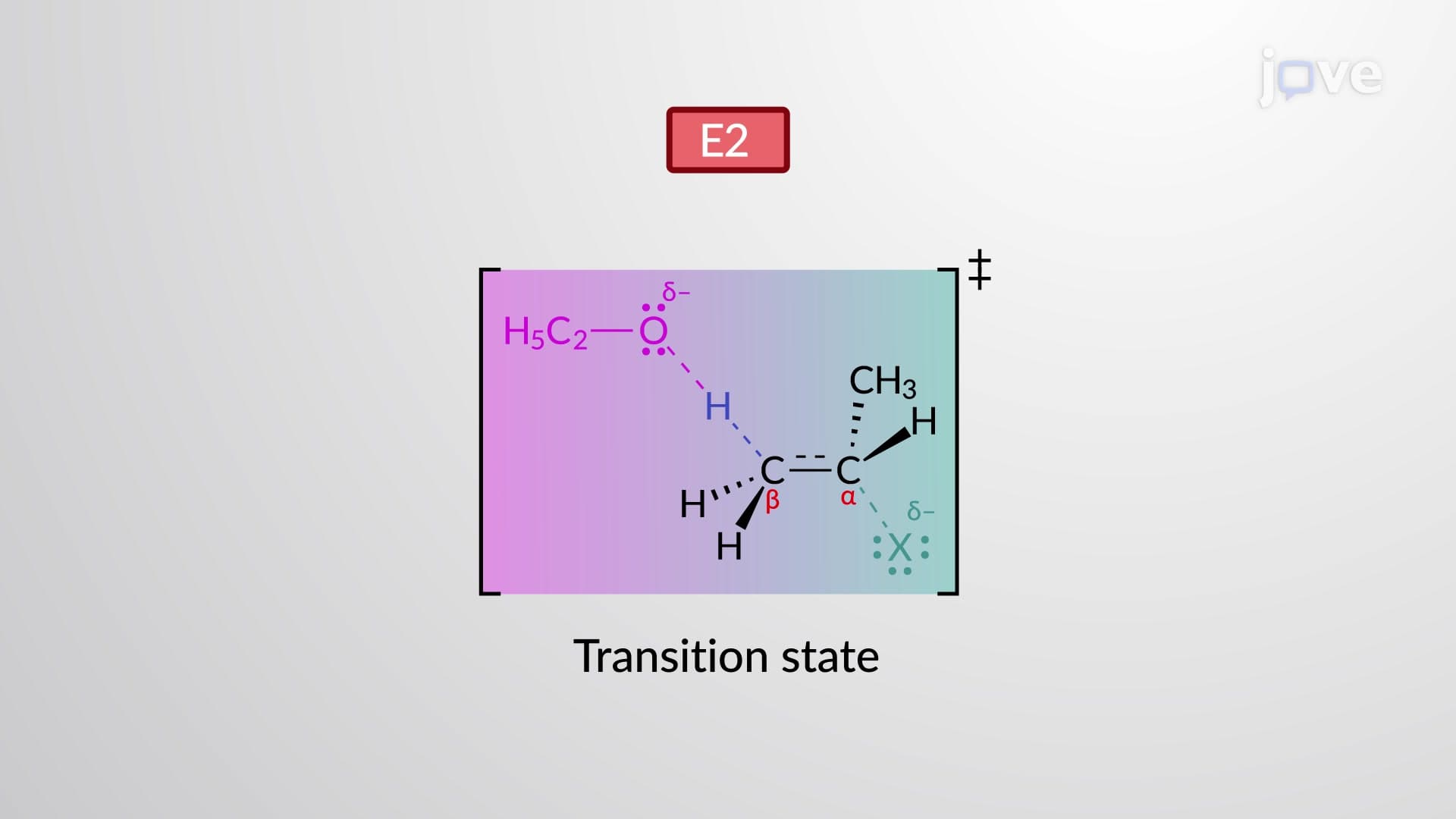
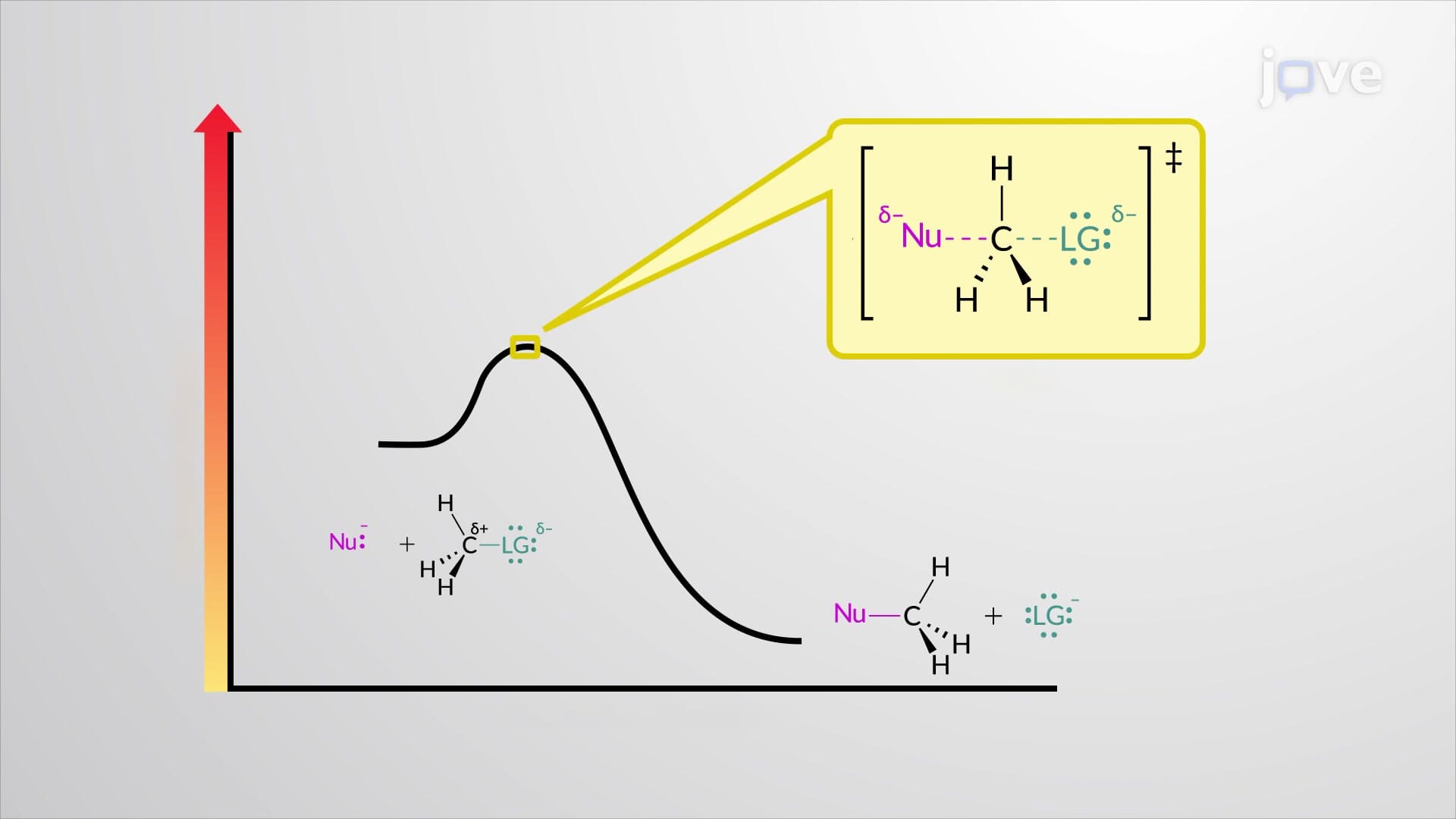
The sn2 reaction transition state represents a fleeting, high-energy molecular arrangement that occurs during bimolecular nucleophilic substitution reactions. Unlike stable intermediates, this transition state cannot be isolated or observed directly-it exists for mere femtoseconds as the reaction progresses from reactants to products.
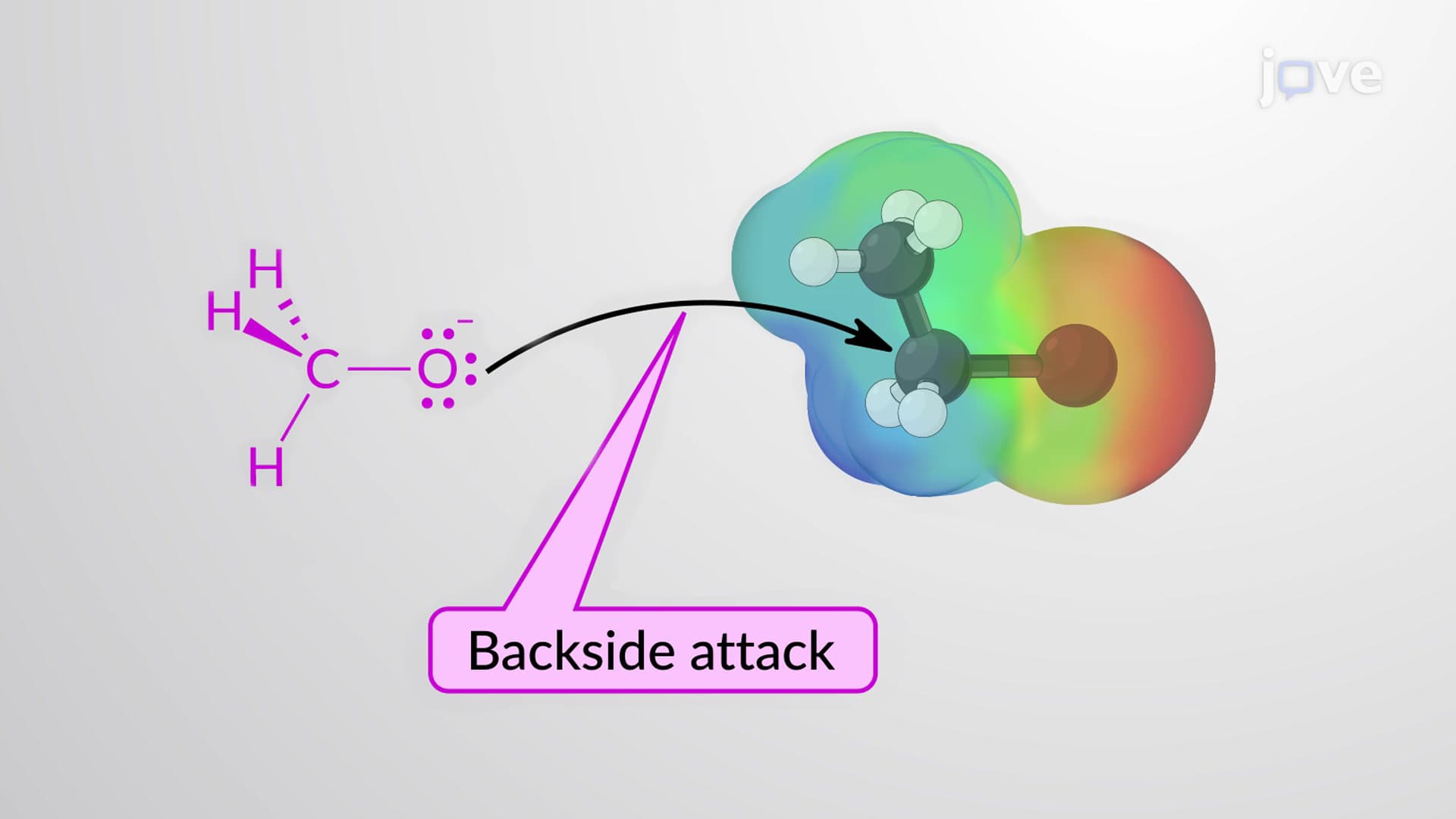
The geometry is remarkably specific: a trigonal bipyramidal arrangement where the electrophilic carbon simultaneously interacts with five groups. The three substituents occupy equatorial positions in a planar configuration, while the incoming nucleophile and departing leaving group position themselves at axial locations, exactly 180 degrees apart. This creates a crowded, unstable structure representing the reaction's highest energy point.
The energy required to reach this transition state directly determines the activation energy barrier. Higher transition state energies correlate with larger activation energies, resulting in slower reaction rates according to the Arrhenius equation. This principle explains why pharmaceutical companies carefully select substrates-a drug synthesis requiring SN2 reactions will proceed much faster with primary alkyl halides than with more substituted alternatives.
For students preparing for the MCAT or AP Chemistry exams, remember that transition state energy governs reaction kinetics, not thermodynamics. Even highly favorable reactions (negative ΔG) can proceed slowly if the transition state energy is prohibitively high.
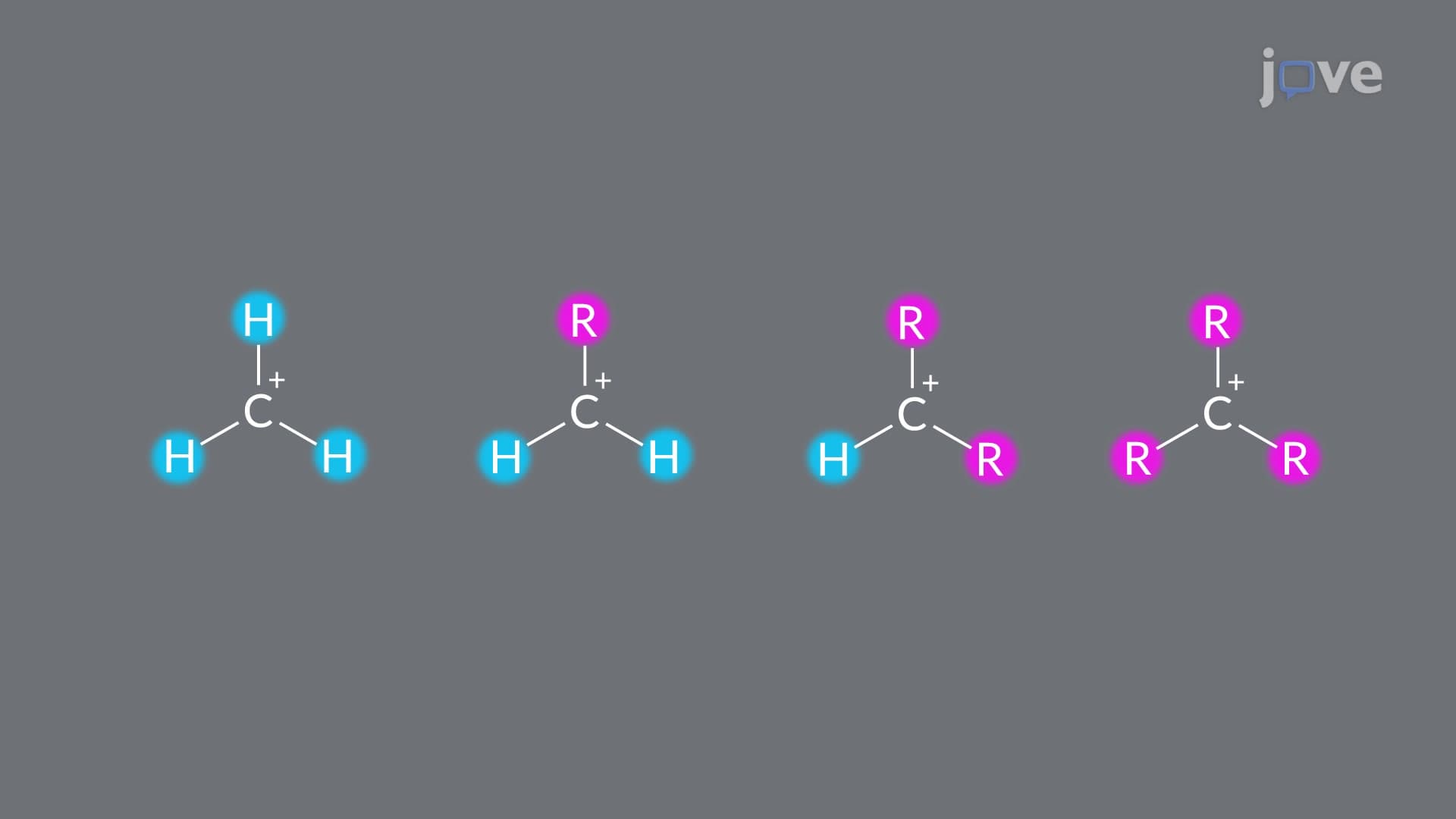
Steric hindrance dramatically influences SN2 transition state accessibility. Methyl halides and primary halides present minimal crowding, allowing nucleophiles to approach the electrophilic carbon with relative ease. The van der Waals repulsion between substituents and the incoming nucleophile remains manageable, facilitating rapid reaction rates.
Secondary halides introduce significant complications. Two bulky groups create substantial steric congestion in the transition state, dramatically slowing reaction rates. Industrial organic chemists often avoid secondary substrates in SN2-dependent syntheses for this reason.
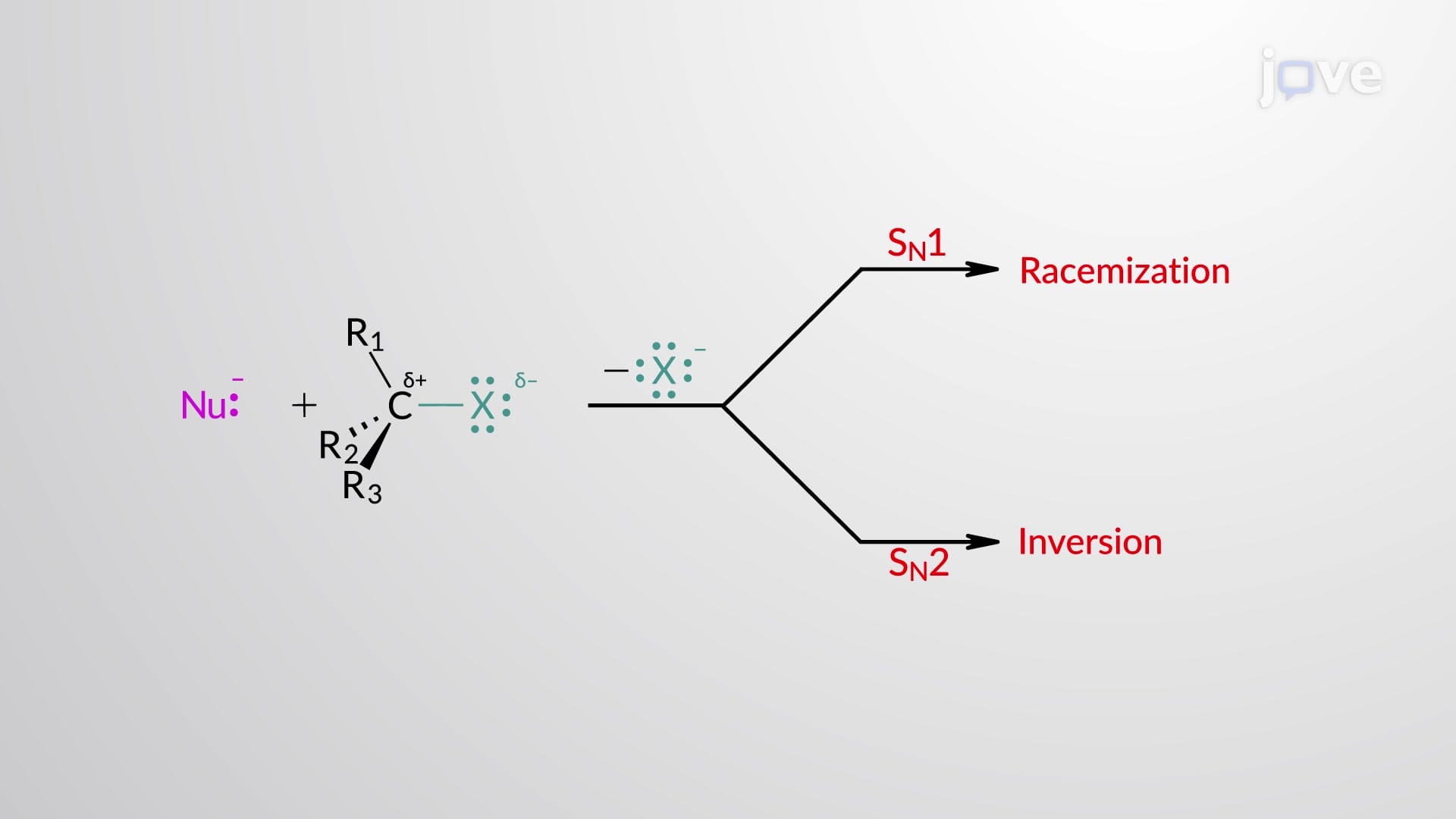
Tertiary halides represent the extreme case-three bulky substituents create such severe crowding that SN2 reactions become essentially impossible. The nucleophile cannot effectively approach the backside of the electrophilic carbon, making alternative mechanisms (like SN1) more favorable.
Understanding these patterns proves crucial for college organic chemistry courses and standardized exams, where predicting reaction feasibility based on substrate structure appears frequently.
Related Micro-courses