Loading subject page…

- Pharmacokinetics and Pharmacodynamics
- Biostatistics: Introduction
- Accuracy and Errors in Hypothesis Testing
Micro-course: Biostatistics: Introduction
11,950 views
Learn key concepts and earn your certificate.





Accuracy and Errors in Hypothesis Testing


00:00
01:13
Video Summary: What are Accuracy and Errors
Did you know that even FDA-approved medical devices can have accuracy errors that affect patient outcomes? Understanding accuracy errors becomes crucial when analyzing data from clinical trials, laboratory experiments, or standardized tests like the SAT. These statistical concepts of What are Accuracy And Errors form the foundation for evaluating research validity and measurement reliability in fields ranging from psychology to pharmaceutical testing. Watch the full video on JoVE Coach to master this concept with expert-led visuals and step-by-step explanations.
- Understand What are Accuracy And Errors and distinguish between Type I and Type II errors in hypothesis testing
- Identify the difference between accuracy (closeness to true value) and precision (reproducibility of measurements)
- Analyze how alpha levels (0.05) and beta levels (0.2) determine error probabilities in statistical studies
- Compare systematic errors versus random errors and their impact on research validity
- Evaluate statistical power requirements (minimum 80%) for meaningful hypothesis testing
- Apply accuracy and error concepts to interpret results from laboratory experiments and clinical trials
- Recognize how effect size influences the likelihood of detecting true differences between populations
- Explore real-world implications of measurement errors in fields like medicine, psychology, and quality control
Understanding What are Accuracy And Errors in Statistical Context
The foundation of reliable scientific research rests on understanding measurement quality and decision-making errors. When researchers conduct studies-whether testing a new diabetes medication or analyzing SAT score improvements-they must grapple with two fundamental concepts: how close their measurements are to reality (accuracy) and what mistakes they might make when drawing conclusions (statistical errors).
Type I and Type II Errors: The Two Faces of Statistical Mistakes
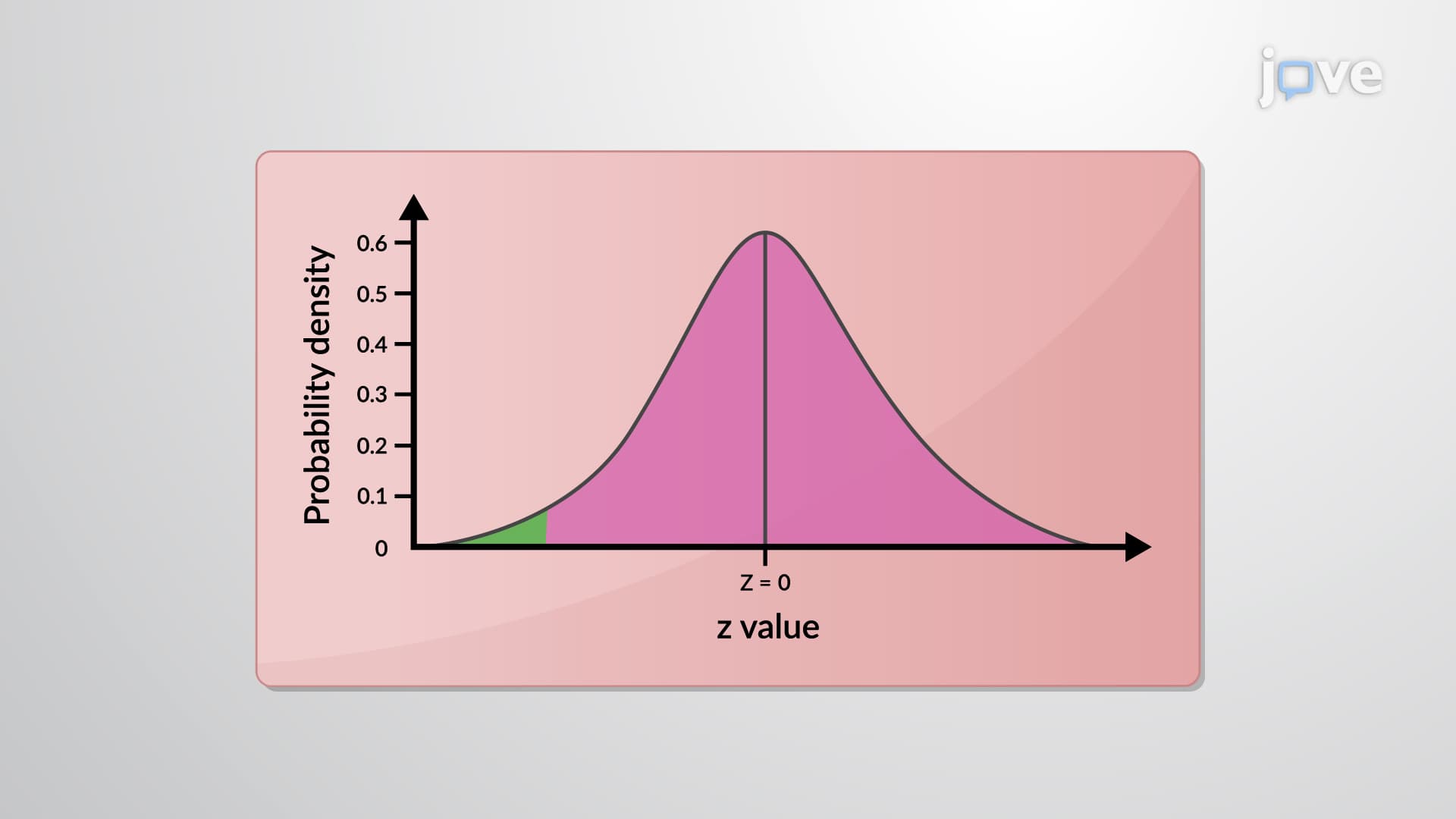
Statistical hypothesis testing involves making decisions under uncertainty, which inevitably leads to potential errors. A Type I error occurs when researchers incorrectly reject a true null hypothesis-essentially finding an effect that doesn't actually exist. For example, a pharmaceutical company might conclude their new blood pressure medication works when it actually doesn't, leading to FDA approval of an ineffective drug.
Conversely, a Type II error happens when researchers fail to detect a real effect, accepting a false null hypothesis. This might occur when a genuinely effective cancer treatment gets dismissed because the study lacked sufficient power to detect its benefits. The probability of Type I error (alpha) is typically set at 0.05, meaning researchers accept a 5% chance of false positive results. Type II error probability (beta) should remain at 0.2 or lower, ensuring at least 80% statistical power.
Accuracy Versus Precision: Hitting the Target
Accuracy represents how close measurements come to the true value-like an archer hitting the bullseye. In medical diagnostics, an accurate blood glucose meter provides readings very close to actual glucose levels. Precision, however, measures consistency or reproducibility-like an archer grouping arrows tightly together, regardless of whether they hit the center.
Consider standardized testing: an accurate SAT would measure true academic ability, while a precise SAT would produce consistent scores when students retake the exam under identical conditions. The ideal measurement system achieves both high accuracy and high precision.
Systematic Errors and Their Real-World Impact
Systematic errors create consistent bias, pushing all measurements in the same direction away from true values. A bathroom scale that consistently reads 5 pounds heavy demonstrates systematic error. In research contexts, systematic errors might arise from faulty equipment calibration, biased survey questions, or flawed experimental procedures.
These concepts prove essential for AP Statistics students, pre-med students preparing for the MCAT, and anyone interpreting research findings. Understanding accuracy errors helps evaluate everything from clinical trial results published in medical journals to quality control data in manufacturing settings.
Frequently Asked Questions
Accuracy measures how close your results are to the true or correct value, while errors refer to the mistakes that can occur when making statistical decisions. In hypothesis testing, Type I errors mean finding effects that aren't really there, while Type II errors mean missing effects that actually exist. These concepts help scientists and researchers evaluate the reliability of their findings.
AP Statistics frequently tests these concepts through hypothesis testing problems and experimental design questions. Students must identify Type I and II errors in context, calculate error probabilities, and interpret statistical power. The College Board emphasizes understanding these concepts through real-world scenarios like medical testing or quality control applications.
The MCAT Psychology/Sociology section tests understanding of research methodology, including measurement accuracy and statistical errors. Pre-med students should focus on how these concepts apply to clinical research, understanding why statistical power matters in drug trials, and recognizing systematic versus random errors in experimental design. These topics frequently appear in data interpretation passages.
Medical diagnostic tests demonstrate these principles perfectly. A blood test with high accuracy gives results close to true values, while precision ensures consistent results across multiple tests. Type I errors in medical testing create false positives (saying disease is present when it isn't), while Type II errors create false negatives (missing actual disease), both with serious patient care implications.
Not at all! These concepts focus more on logical thinking than complex calculations. High school algebra provides sufficient mathematical background. The key lies in understanding the definitions, recognizing examples, and applying these ideas to interpret research findings. Most problems emphasize conceptual understanding rather than computational skills.
Create concept maps connecting accuracy, precision, Type I errors, Type II errors, and statistical power. Practice with real examples from different fields like medicine, psychology, and quality control. Use mnemonics like "Type I = Incorrect rejection" and work through practice problems that require identifying error types in various contexts rather than just memorizing definitions.
Statistical power (1 minus Type II error probability) measures your study's ability to detect real effects when they exist. Higher power means lower chance of Type II errors. Researchers typically aim for 80% power, meaning only a 20% chance of missing true effects. Power increases with larger sample sizes, bigger effect sizes, and higher alpha levels.
Build on this foundation by exploring confidence intervals, effect size calculations, and sample size determination. Advanced topics include multiple comparison corrections, non-parametric tests, and experimental design principles. These concepts prepare you for upper-level statistics courses and research methodology in your chosen field.
Related Micro-courses

29 Concepts


15 Concepts