Loading subject page…


36,893 views

Video Summary: What Is Open Angle Glaucoma Treatment
Nearly 3 million Americans live with glaucoma, yet half don't even know they have this "silent thief of sight." Open angle glaucoma treatment involves strategic medications that either reduce fluid production in the eye or improve drainage to prevent vision loss. The Cleveland Clinic reports that early intervention with proper treatment can preserve sight in over 95% of patients. Understanding what is open angle glaucoma treatment becomes crucial for anyone studying ophthalmology or preparing for healthcare careers. Watch the full video on JoVE Coach to master this concept with expert-led visuals and step-by-step explanations.
Open angle glaucoma treatment centers on a critical principle: reducing intraocular pressure (IOP) to prevent optic nerve damage and preserve vision. This condition affects over 2.7 million Americans over age 40, making it the leading cause of irreversible blindness in the United States. The primary challenge lies in the trabecular meshwork-the eye's natural drainage system-becoming stiff and inefficient, creating a backup of aqueous humor fluid.
Treatment strategies follow two distinct pathways: decreasing aqueous humor production or enhancing its outflow. This dual approach gives ophthalmologists flexibility in tailoring treatment plans based on patient-specific factors, disease severity, and medication tolerance.
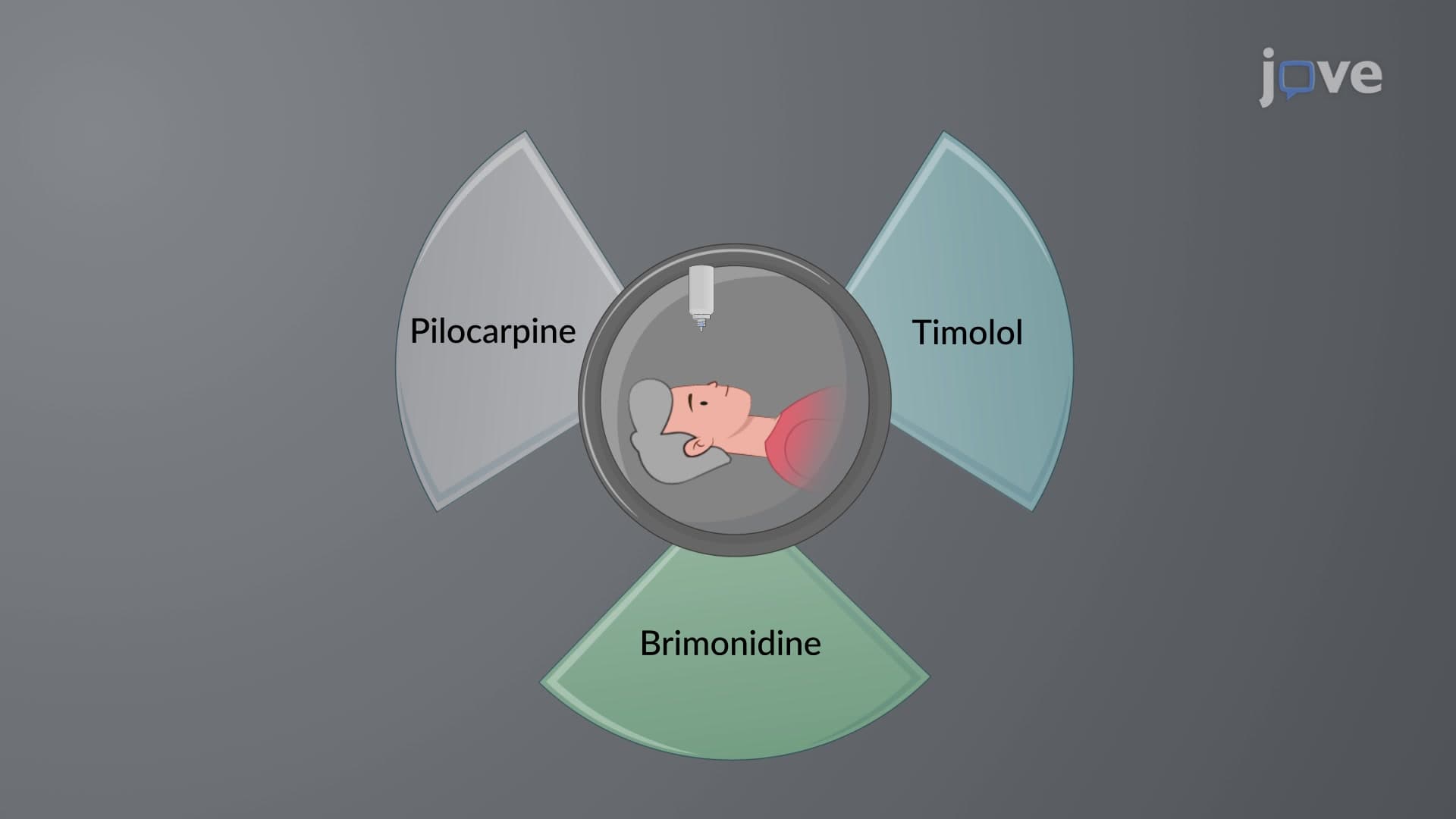
The first line of defense often involves drugs that target the ciliary body, where aqueous humor originates. Alpha-2 adrenergic agonists like brimonidine (Alphagan P) work by binding to specific receptors on ciliary epithelial cells, effectively "turning down" the fluid production machinery. Beta-blockers such as timolol (Timoptic) take a broader approach, blocking both beta-1 and beta-2 receptors to achieve similar results.
Carbonic anhydrase inhibitors represent another crucial category. Medications like brinzolamide (Azopt) inhibit the enzyme responsible for bicarbonate production, directly impacting the chemical processes that drive aqueous humor formation. These drugs are particularly valuable because they work through a completely different mechanism, allowing for combination therapy when single agents prove insufficient.
When improving drainage becomes the priority, cholinomimetic drugs like pilocarpine take center stage. These medications mimic acetylcholine's effects on muscarinic receptors, causing ciliary muscle contraction that physically opens drainage pathways. Though effective, pilocarpine's side effects-including vision blurring and brow ache-limit its use primarily to acute situations or when other options fail.
Modern treatment increasingly relies on prostaglandin analogs like latanoprost (Xalatan), which have revolutionized glaucoma management since their introduction. These drugs work by increasing outflow through the uveoscleral pathway, offering excellent pressure reduction with once-daily dosing. Rho kinase inhibitors like netarsudil (Rhopressa) represent the newest class, targeting cellular processes that control conventional outflow pathway resistance.
For students preparing for the MCAT, understanding glaucoma treatment demonstrates pharmacology principles across multiple body systems. The concept frequently appears in passages testing knowledge of autonomic nervous system drugs and their receptor-specific effects. AP Biology students encounter this topic when studying homeostasis and negative feedback mechanisms in human physiology.
Pre-med students should recognize how this knowledge translates to clinical decision-making. Ophthalmologists must consider patient factors like asthma history (avoiding beta-blockers like timolol), cardiovascular status, and medication compliance when prescribing. The systematic approach to glaucoma treatment exemplifies evidence-based medicine principles that appear throughout medical education.
Related Micro-courses