Loading…
Loading video…

38,559 views
Ever wonder how your smartphone's wireless charging works? The answer lies in oscillations in an LC circuit, where electrical energy seamlessly transforms between electric and magnetic fields. From the Tesla coils at Boston's Museum of Science to the radio transmitters broadcasting from New York's Empire State Building, LC circuits create the rhythmic energy exchanges that power modern electronics. Oscillations in An LC Circuit Explained reveals how capacitors and inductors work together to create these perpetual energy cycles. Watch the full video on JoVE Coach to master this concept with expert-led visuals and step-by-step explanations.
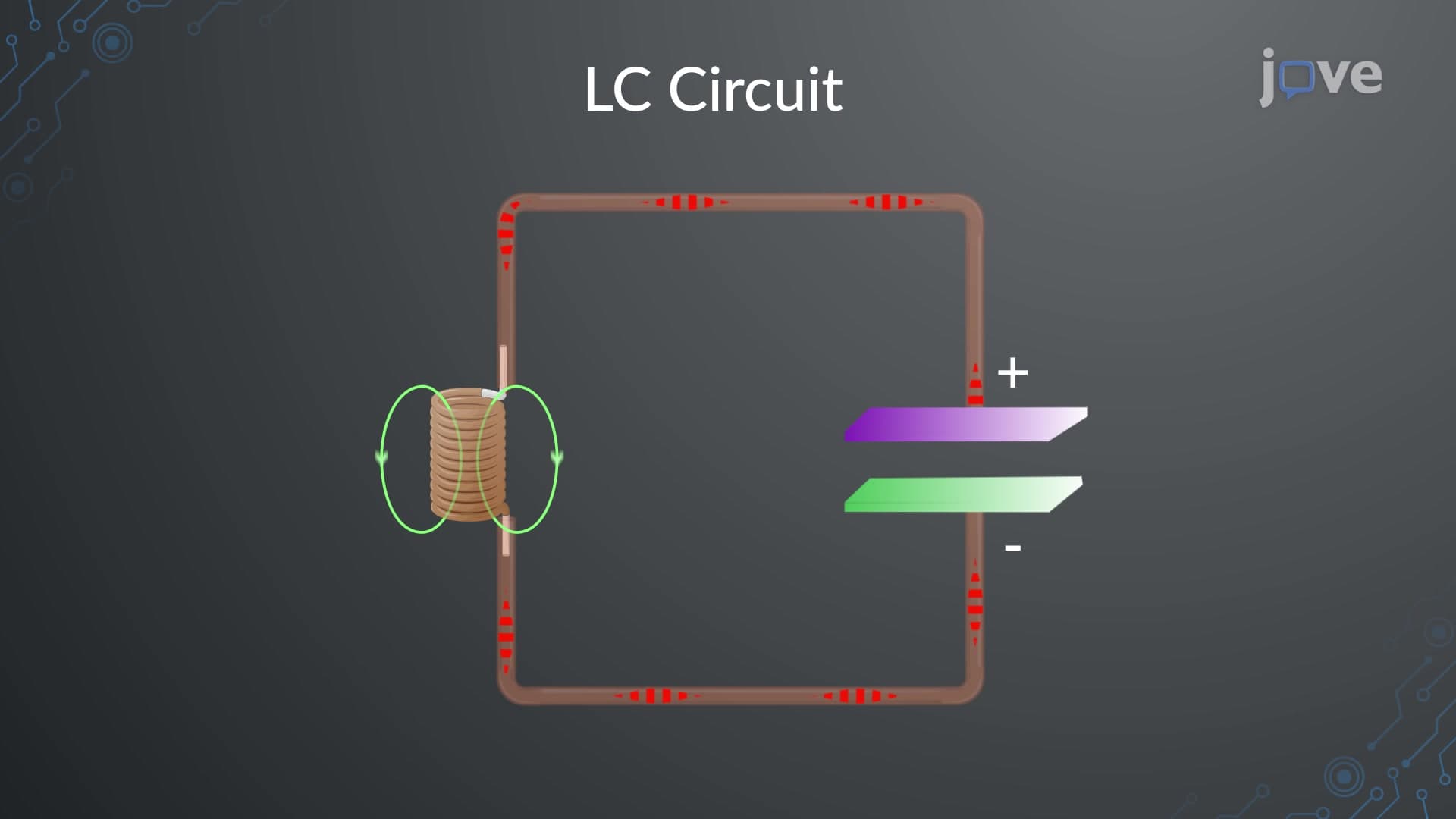
Oscillations in an LC circuit represent one of the most elegant demonstrations of energy conservation in electrical systems. When a charged capacitor connects to an inductor, the circuit creates a closed loop where electrical energy continuously transforms between two forms: the electric field energy stored in the capacitor and the magnetic field energy stored in the inductor. This transformation occurs without energy loss in an ideal circuit, creating perpetual oscillations that follow predictable mathematical patterns.
The oscillatory behavior emerges from the fundamental properties of both components. Capacitors resist changes in voltage, while inductors resist changes in current. This opposition creates a natural "push-pull" effect that sustains the energy exchange cycle indefinitely.
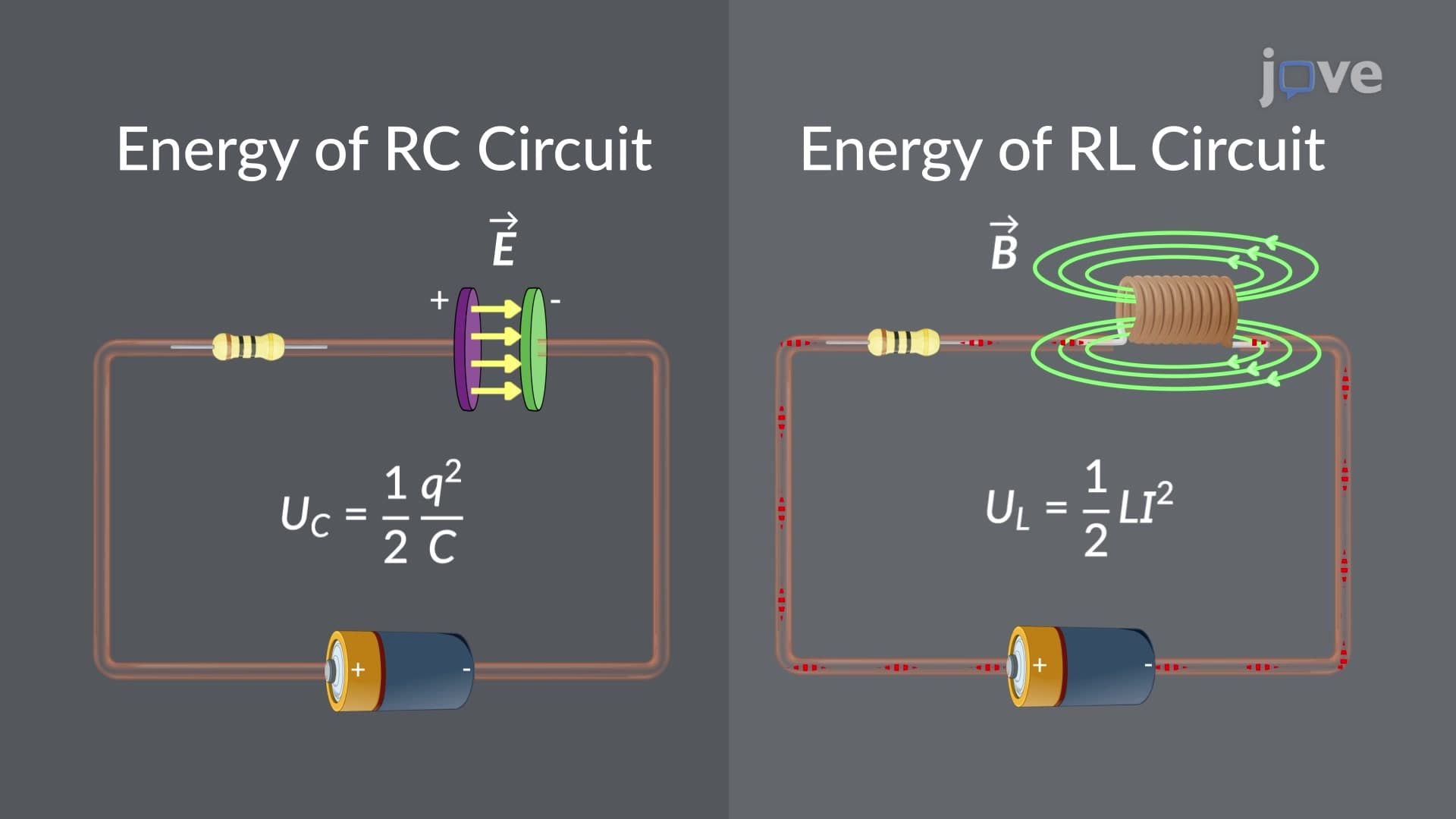
The energy transfer process follows a precise sequence that repeats continuously. Initially, when the capacitor holds maximum charge, all circuit energy exists as electric field energy (E = Q²/2C). At this moment, current flow equals zero. As the capacitor discharges through the inductor, electric field energy decreases while magnetic field energy increases. The inductor's self-inductance property prevents instantaneous current changes, causing current to build gradually.
When the capacitor fully discharges, all energy has transferred to the inductor's magnetic field (E = LI²/2), and current reaches its maximum value. The inductor then "fights" to maintain this current flow, pushing charge back onto the capacitor plates with opposite polarity. This reverse charging process converts magnetic energy back to electric energy, completing one half-cycle of oscillation.
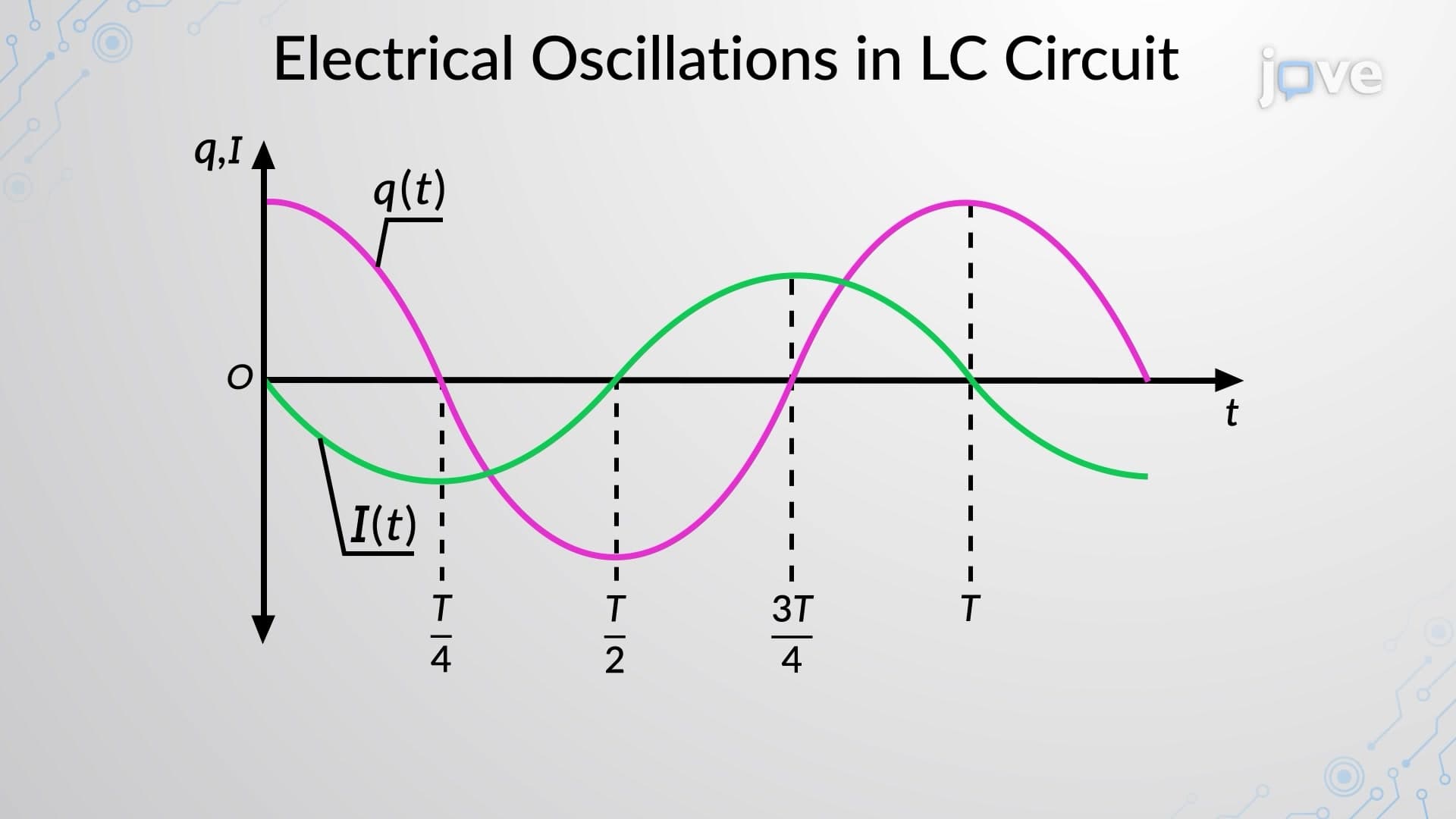
LC circuit oscillations follow sinusoidal patterns described by the angular frequency ω = 1/√(LC). This relationship appears frequently on AP Physics exams and college-level electrical engineering coursework. The charge on the capacitor varies as Q(t) = Q₀cos(ωt), while current follows I(t) = -Q₀ω sin(ωt), demonstrating a 90-degree phase difference between these quantities.
These principles find extensive application in modern technology. Radio stations use LC circuits tuned to specific frequencies for signal transmission. The 88-108 MHz FM radio band relies on LC oscillators in both transmitters and receivers. Medical devices like MRI machines employ LC circuits in their radiofrequency systems. Even smartphone wireless charging pads use LC circuits operating at 6.78 MHz to transfer power efficiently.
Understanding LC oscillations proves essential for students pursuing STEM careers. Electrical engineering programs at institutions like MIT and Stanford emphasize these concepts in introductory circuits courses. The MCAT physics section frequently tests oscillation concepts, particularly energy conservation principles. Students preparing for AP Physics C: Electricity and Magnetism encounter LC circuits in both multiple-choice and free-response questions.
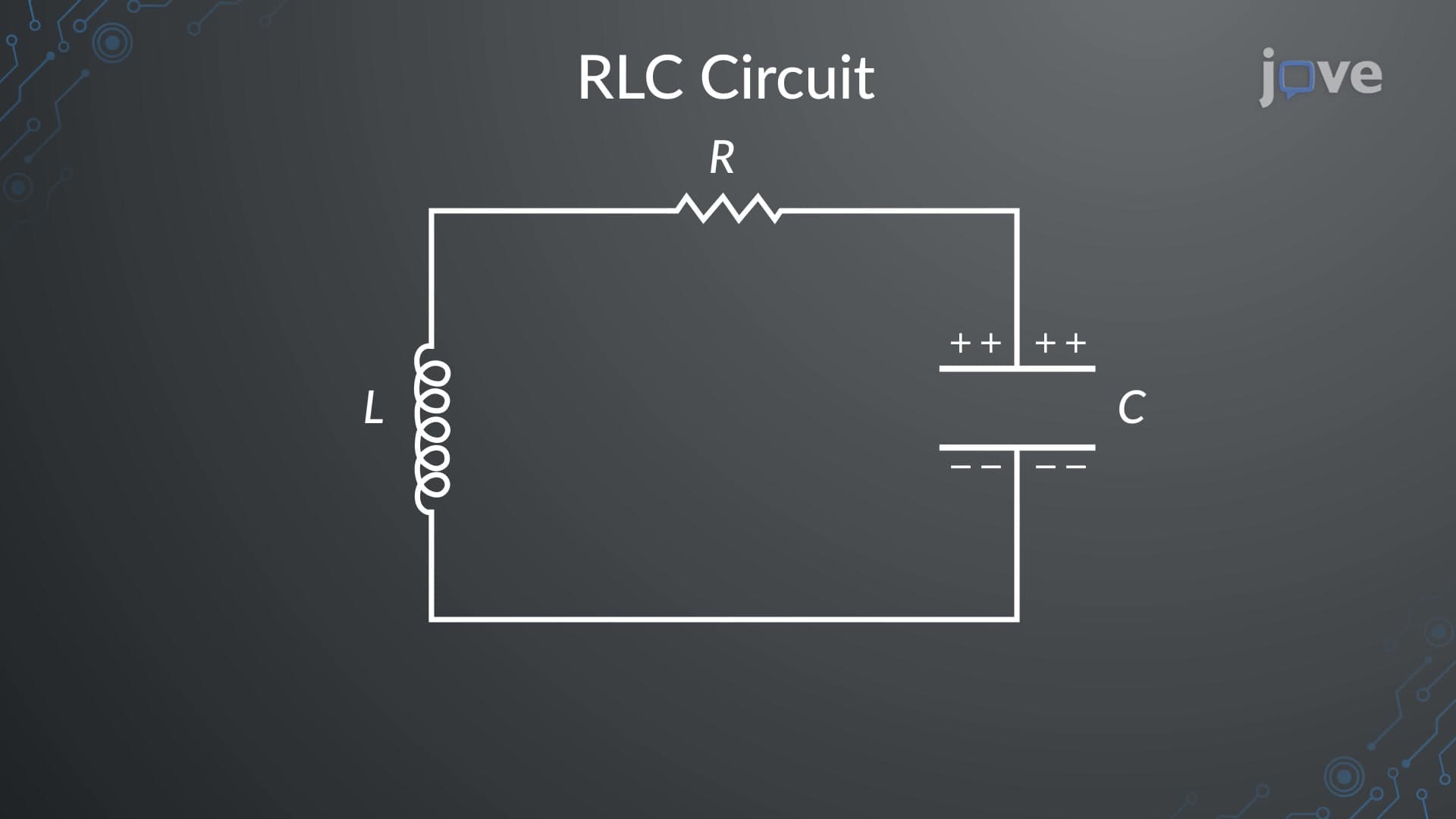
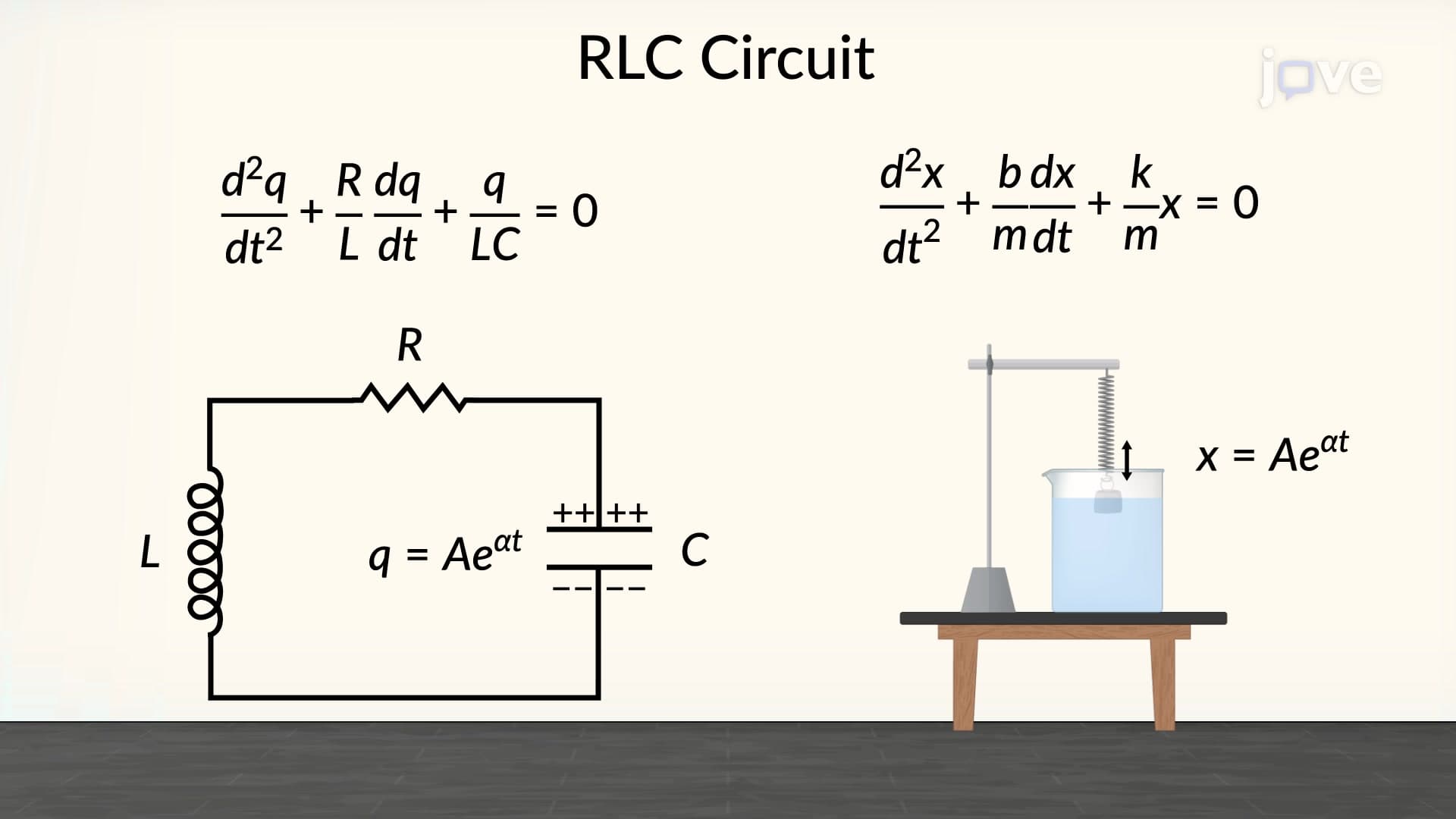
Perfect LC oscillations require ideal components with no resistance. Real circuits always contain some resistance, causing oscillation amplitude to decay exponentially. This damping effect leads to more complex RLC circuit analysis, forming the foundation for advanced topics in signal processing and control systems.
Frequently Asked Questions
Oscillations in an LC circuit occur when electrical energy continuously transfers between a capacitor's electric field and an inductor's magnetic field. The capacitor discharges through the inductor, creating current that builds up magnetic energy, then the inductor forces current to continue flowing, recharging the capacitor with opposite polarity. This cycle repeats indefinitely in ideal circuits, creating sinusoidal variations in both charge and current.
AP Physics C frequently tests LC oscillations through energy conservation problems and mathematical analysis questions. Students must calculate oscillation frequencies using ω = 1/√(LC), determine energy distributions between components, and analyze phase relationships between current and voltage. Free-response questions often combine LC circuits with other topics like electromagnetic induction or simple harmonic motion.
The MCAT tests LC oscillation principles through energy conservation, periodic motion, and electromagnetic field concepts. Students should understand how electrical potential energy converts to magnetic energy, recognize sinusoidal behavior patterns, and apply conservation laws to circuit analysis. These concepts connect to broader physics topics like wave behavior and harmonic oscillators that appear throughout the exam.
LC oscillations power many technologies you use daily, including radio and television broadcasting, wireless charging systems, and RFID tags in contactless payment cards. Tesla coils at science museums demonstrate dramatic LC oscillations, while your car's ignition system uses LC circuits to generate high-voltage sparks. Even the wireless networks connecting your devices rely on LC oscillator circuits for signal generation.
LC circuit oscillations require only basic trigonometry and algebra concepts typically covered in high school. You'll work with sine and cosine functions, square roots, and simple derivatives if studying calculus-based physics. The mathematical complexity is similar to simple harmonic motion problems, making LC circuits accessible to students who've mastered basic oscillation concepts.
Focus on energy conservation principles and practice identifying when energy exists as electric versus magnetic field energy. Master the relationship ω = 1/√(LC) and understand phase differences between charge and current. Work through problems involving initial conditions, maximum values, and time-dependent functions. Connect LC oscillations to simple harmonic motion concepts you've already learned.
LC oscillations provide the foundation for studying damped oscillations in RLC circuits, resonance phenomena in AC circuits, and electromagnetic wave propagation. Advanced courses explore topics like impedance matching, filter design, and transmission line theory. These concepts become essential for electrical engineering, telecommunications, and RF design coursework in college.
Real circuits contain resistance in wires, components, and connections that gradually converts oscillation energy into heat. This resistance creates damped oscillations where amplitude decreases exponentially over time, eventually bringing the circuit to equilibrium. Understanding this energy loss mechanism helps explain why practical oscillator circuits require active components or external energy sources to maintain continuous operation.
Related Micro-courses


Related Subjects
 Math Fundamentals 11 micro-courses›
 Statistics 17 micro-courses›