Loading…
Loading video…

38,559 views
Have you ever wondered how your smartphone charges wirelessly on a pad? Mutual inductance powers this everyday technology through electromagnetic coupling between two coils. When current flows through one coil in a wireless charger, it creates a changing magnetic field that induces electricity in your phone's receiving coil—no direct connection needed. This fundamental electromagnetic principle explains how transformers distribute power across America's electrical grid and enables countless modern devices. Watch the full video on JoVE Coach to master this concept with expert-led visuals and step-by-step explanations.
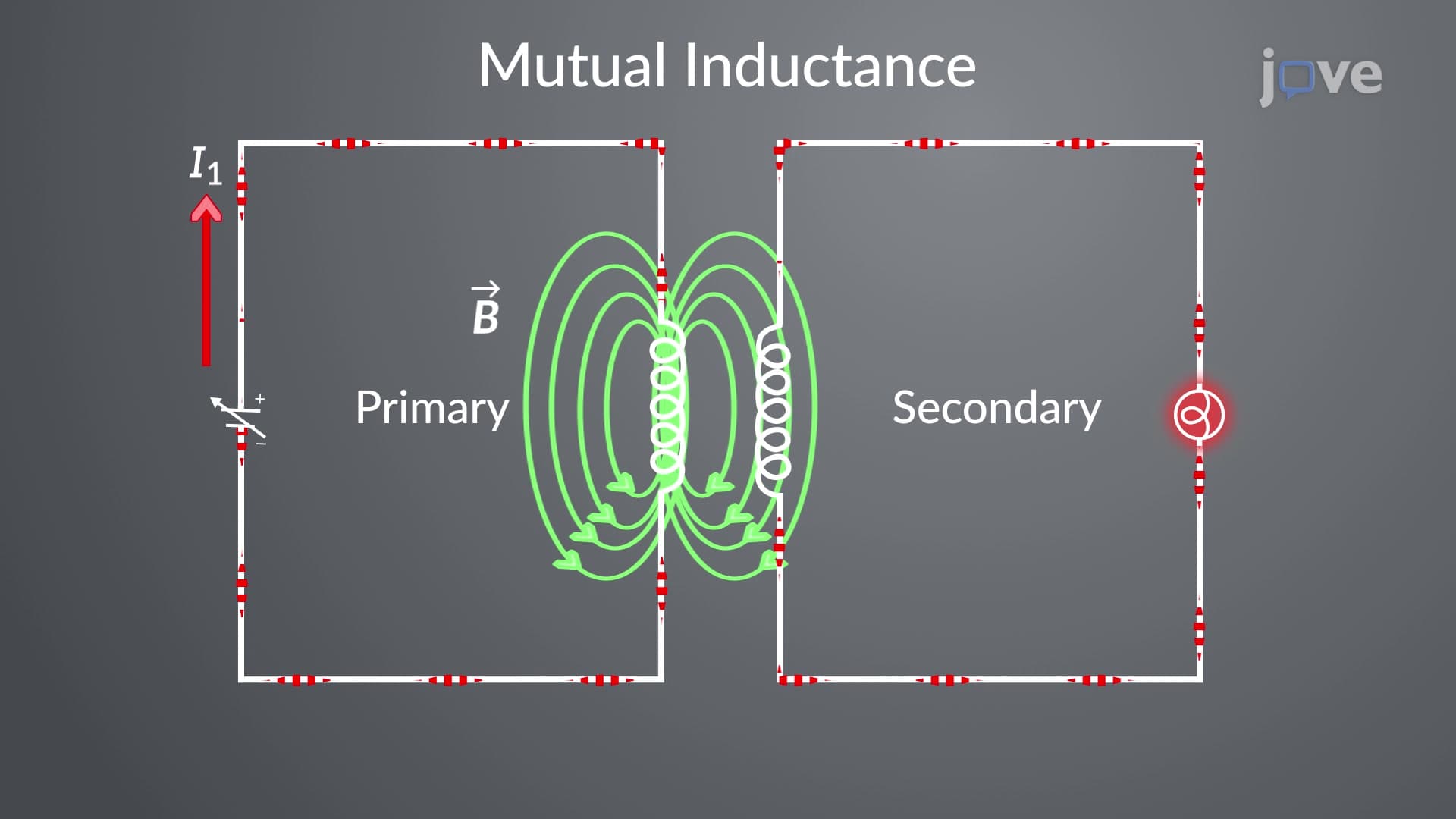
Mutual inductance represents the fundamental electromagnetic relationship between two nearby coils or circuits. When current flows through one coil (the primary), it generates a magnetic field that extends through space. If a second coil (the secondary) lies within this magnetic field, any changes in the primary current will induce an electromotive force in the secondary coil—even without physical connection.
This phenomenon occurs because changing magnetic flux through the secondary coil creates an induced EMF according to Faraday's law. The mutual inductance definition quantifies this relationship: it's the ratio of magnetic flux linking one coil to the current producing that flux in the other coil. Mathematically, mutual inductance M = Φ(2)/I(1), where Φ(2) is the flux through coil 2 and I(1) is the current in coil 1.
The mutual inductance concept depends entirely on the physical characteristics of both coils, not on the currents or voltages involved. Key factors include:
Coil geometry and turns: More turns in either coil increase mutual inductance because more magnetic field lines can link between coils. A coil with 1000 turns will have much higher mutual inductance with a neighboring coil than one with 100 turns.
Distance and orientation: Coils positioned closer together experience stronger magnetic coupling. Similarly, coils aligned along the same axis have maximum mutual inductance, while perpendicular coils may have near-zero coupling.
Core material: Air-core coils have lower mutual inductance than those with ferromagnetic cores like iron or ferrite, which concentrate and strengthen the magnetic field.
The induced EMF in the secondary coil equals: EMF(2) = -M × (dI(1)/dt). The negative sign reflects Lenz's law—the induced current opposes the change causing it. For coils in vacuum or air, M(12) = M(21), meaning mutual inductance is symmetric.
This principle powers transformers throughout America's electrical grid, stepping voltage up for efficient long-distance transmission and down for safe household use. A typical distribution transformer might have mutual inductance values of several henries between its primary and secondary windings.
On AP Physics C exams and college electromagnetic courses, mutual inductance study guide problems often involve calculating induced EMF or determining optimal coil configurations. Students should recognize that mutual inductance problems frequently combine with Faraday's law, Lenz's law, and circuit analysis.
Common exam scenarios include analyzing transformer efficiency, calculating power transfer in wireless charging systems, or determining the EMF induced in nearby circuits by changing currents. Understanding that mutual inductance depends only on geometry—not current—helps solve many conceptual questions on standardized tests.
Frequently Asked Questions
Mutual inductance is the electromagnetic coupling between two coils where changing current in one coil induces voltage in another nearby coil. It works through magnetic field lines from the primary coil passing through the secondary coil—when the magnetic flux changes, Faraday's law creates an induced EMF. The strength depends entirely on coil geometry, not the current values.
Mutual inductance is measured in henries (H), named after Joseph Henry. One henry equals one weber per ampere, meaning when current changes at 1 A/s in the primary coil, it induces 1 volt in the secondary coil. Practical values range from microhenries (µH) in electronic circuits to several henries in power transformers.
AP Physics C frequently tests mutual inductance through transformer problems, calculating induced EMF using M × (dI/dt), and analyzing energy transfer between coils. Expect questions combining Faraday's law with mutual inductance concepts. College midterms often include circuit analysis problems where mutual inductance affects impedance and phase relationships in AC circuits.
The MCAT physics section covers mutual inductance in electromagnetic induction contexts, particularly relating to medical imaging equipment like MRI machines. Understanding how changing magnetic fields induce currents helps with questions about electromagnetic radiation, circuit analysis, and the physics underlying medical diagnostic tools.
Mutual inductance powers wireless phone chargers, electric vehicle charging pads, and contactless payment systems like Apple Pay readers. Power transformers on utility poles use mutual inductance to convert high-voltage transmission power to household 120V/240V electricity. Induction cooktops also use this principle to heat magnetic cookware directly.
Mutual inductance builds naturally on basic electromagnetic concepts you already know—magnetic fields around current-carrying wires and Faraday's law. The key insight is recognizing that coils can influence each other without touching. Start with the wireless charging example, then work through the mathematics step-by-step.
Practice identifying primary and secondary coils in circuits, then apply the formula EMF = -M × (dI/dt) systematically. Memorize that mutual inductance depends only on geometry, not current. Work through transformer problems since they're common exam scenarios, and always check units in your final answers.
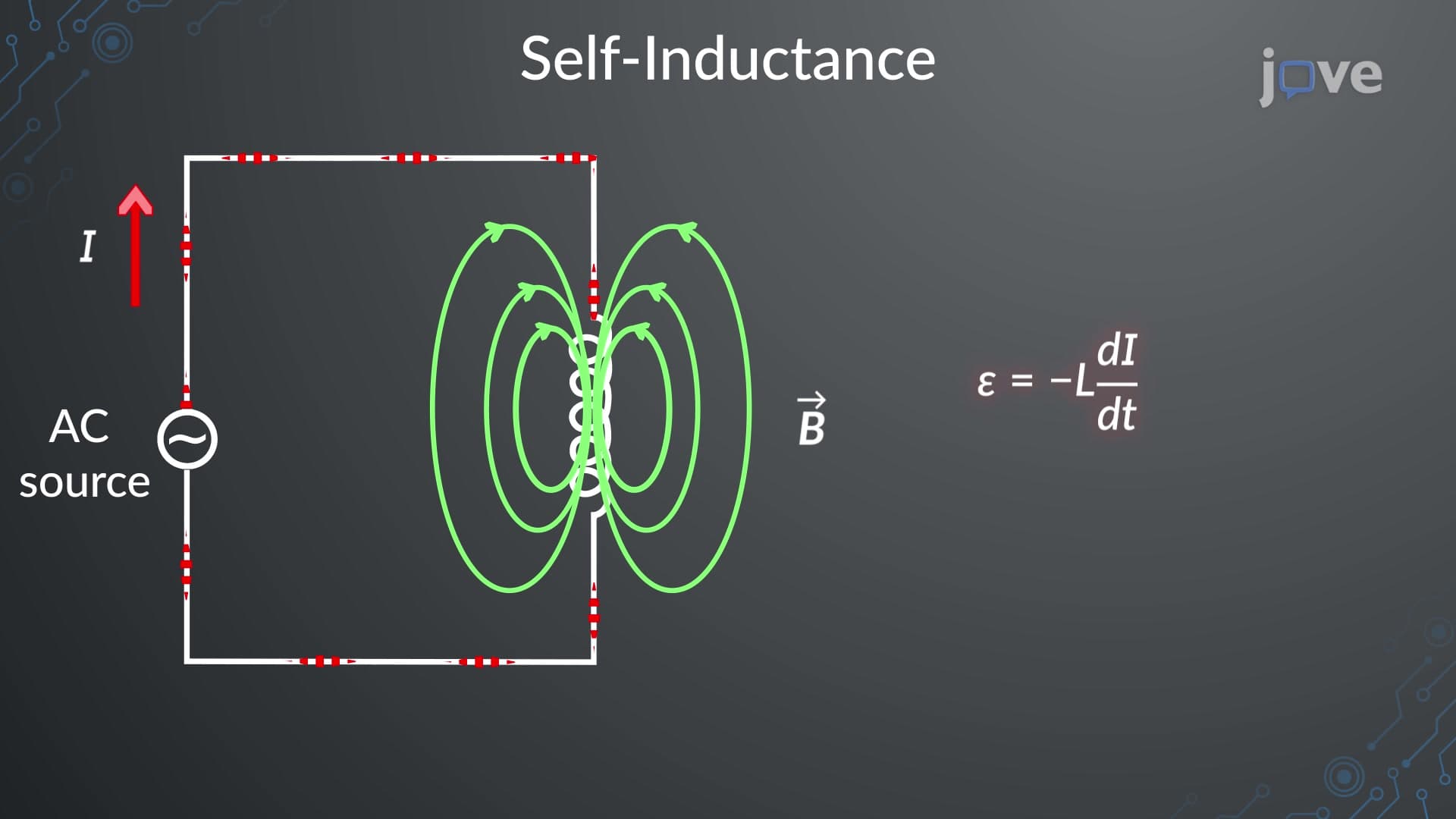
Build on mutual inductance by exploring self-inductance in single coils, then advance to AC circuit analysis with impedance and reactance. Study electromagnetic waves and how alternating currents create radio frequency emissions. These concepts prepare you for advanced topics in electrical engineering and physics courses.
Related Micro-courses


Related Subjects
 Math Fundamentals 11 micro-courses›
 Statistics 17 micro-courses›