Loading subject page…

- Physics
- Potential Energy and Energy Conservation
- Force and Potential Energy in One Dimension
Micro-course: Potential Energy and Energy Conservation
130,500 views
Learn key concepts and earn your certificate.



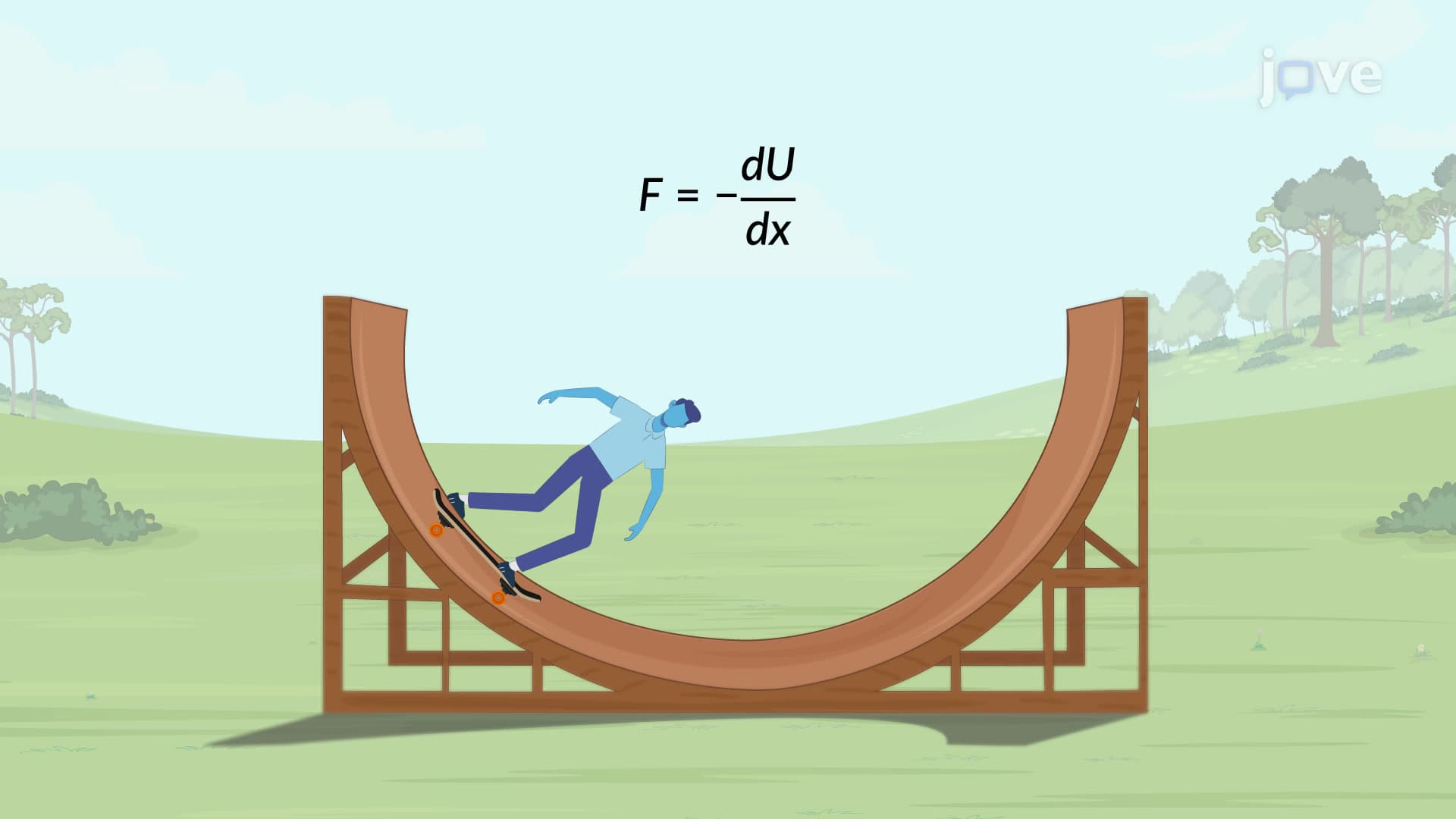
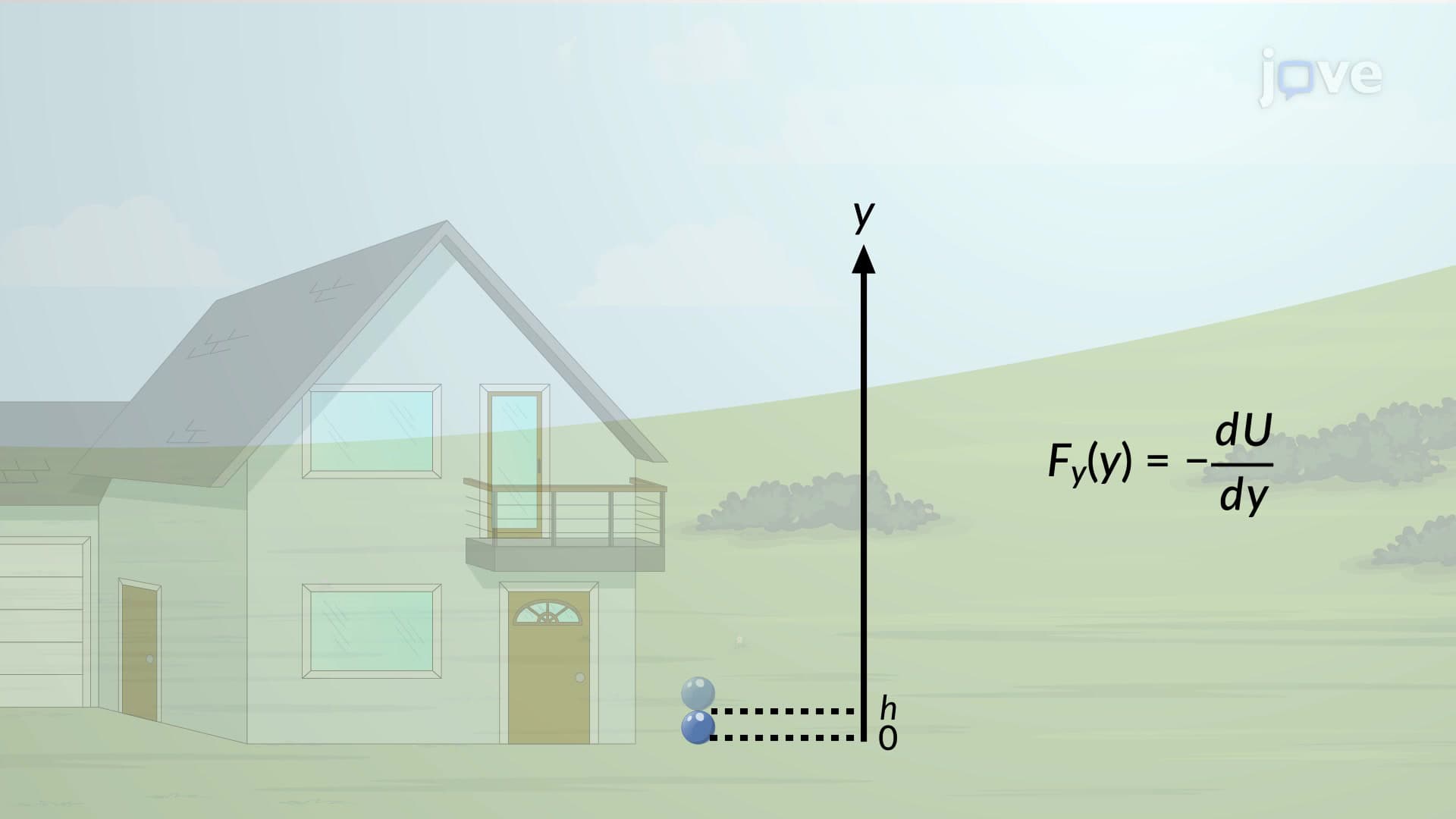
Force and Potential Energy in One Dimension

00:00
01:13
Video Summary: Force and Potential Energy in One Dimensional Systems
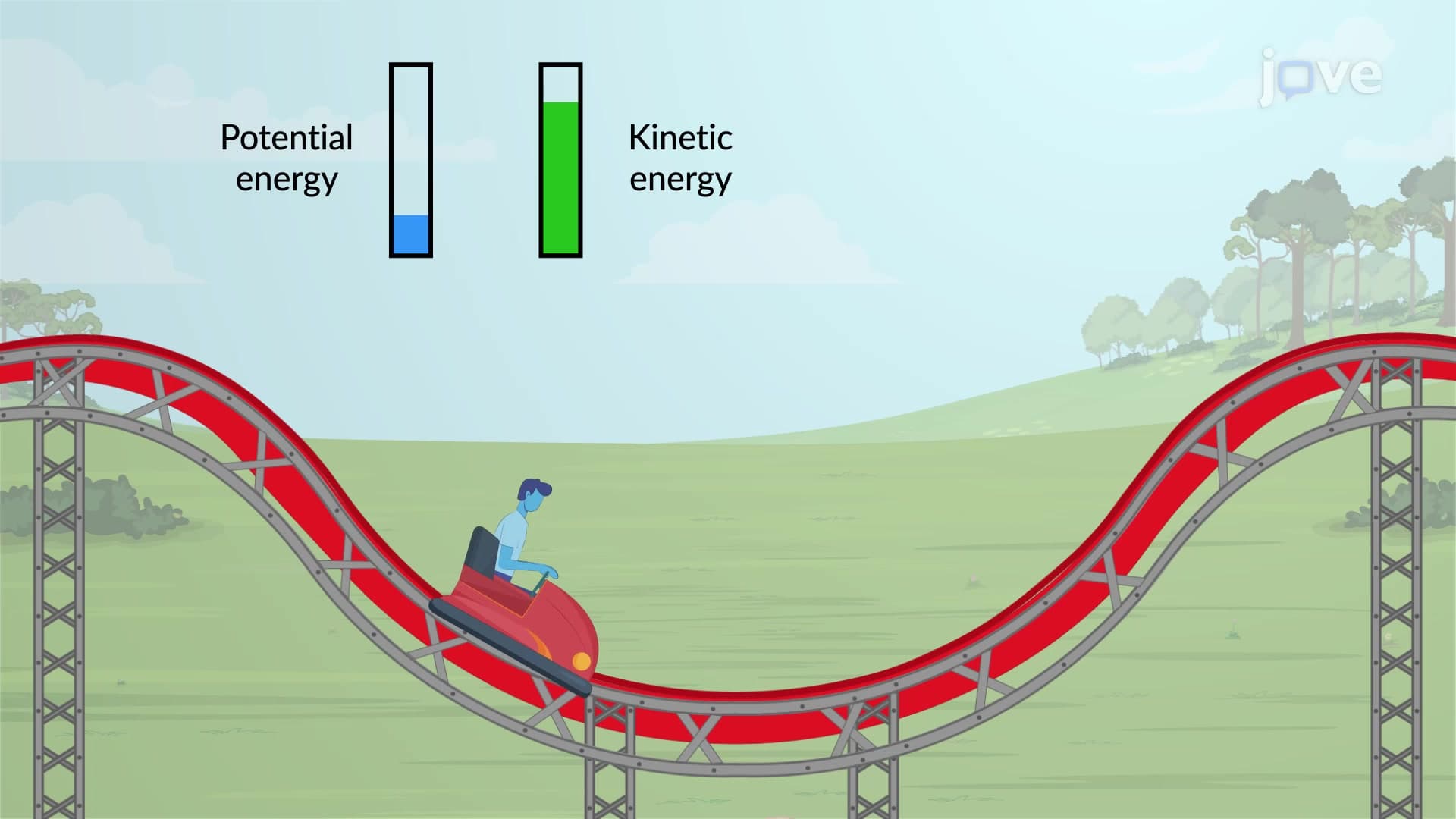
Ever wonder why a roller coaster naturally slows down as it climbs a hill? Force and potential energy in one-dimensional systems reveals the fundamental relationship between conservative forces and energy changes in linear motion. When NASA engineers design spacecraft trajectories, they rely on this principle to calculate how gravitational forces affect orbital mechanics. The connection between force and potential energy shows that conservative forces always act to minimize a system's potential energy, creating the mathematical foundation for understanding everything from spring-loaded mechanisms to pendulum clocks. Watch the full video on JoVE Coach to master this concept with expert-led visuals and step-by-step explanations.
- Understand how force and potential energy in one-dimensional systems connect through the fundamental relationship F = -dU/dx
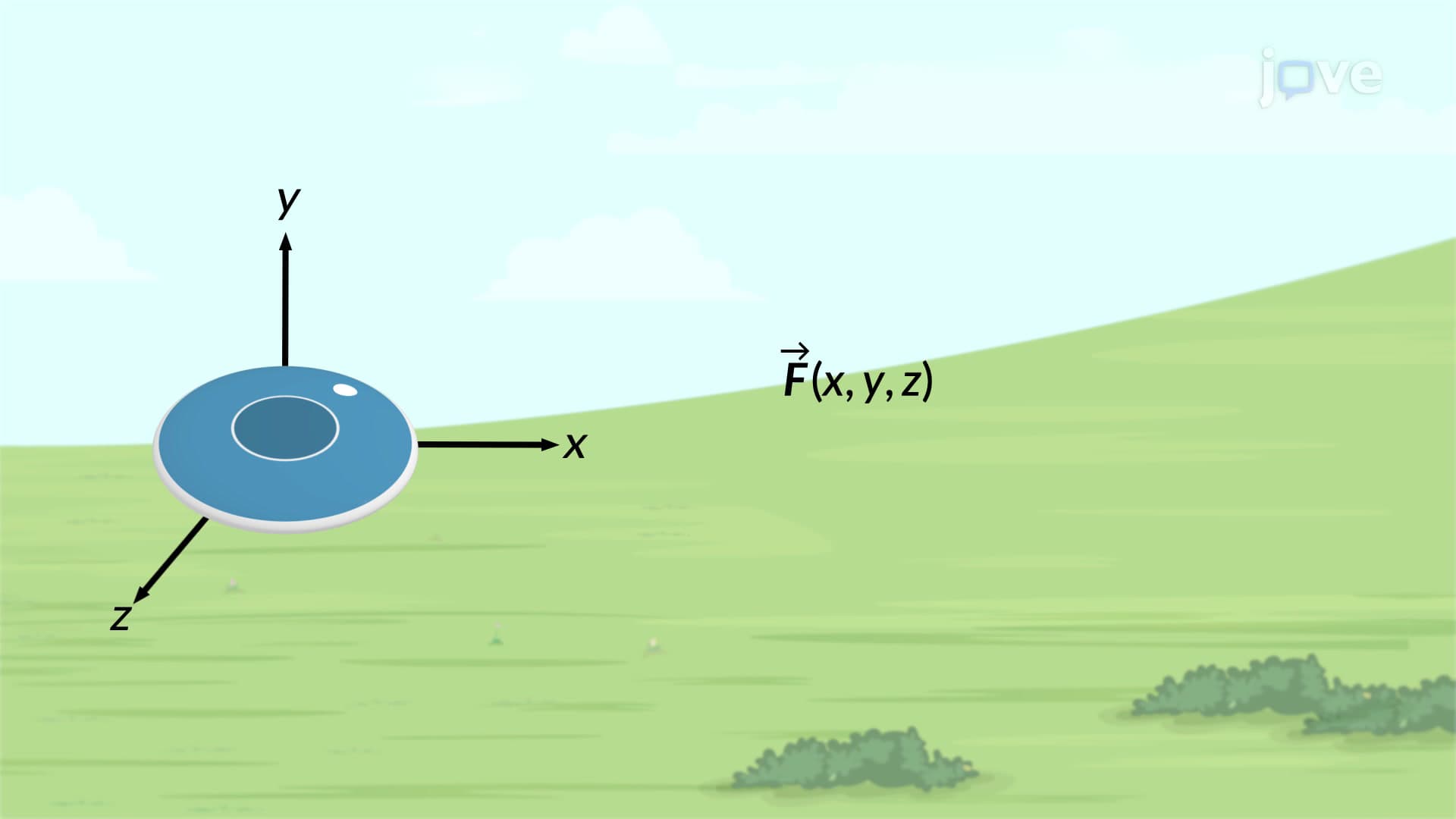
- Identify conservative forces and explain why they can be expressed in terms of potential energy functions
- Analyze the negative sign in the force-potential energy relationship and its physical significance for system behavior
- Apply the mathematical relationship between force and potential energy to solve problems involving springs, gravity, and other conservative forces
- Evaluate how small displacements lead to the differential form of the force-potential energy equation
- Recognize real-world applications of this principle in mechanical systems, from car suspension to architectural design
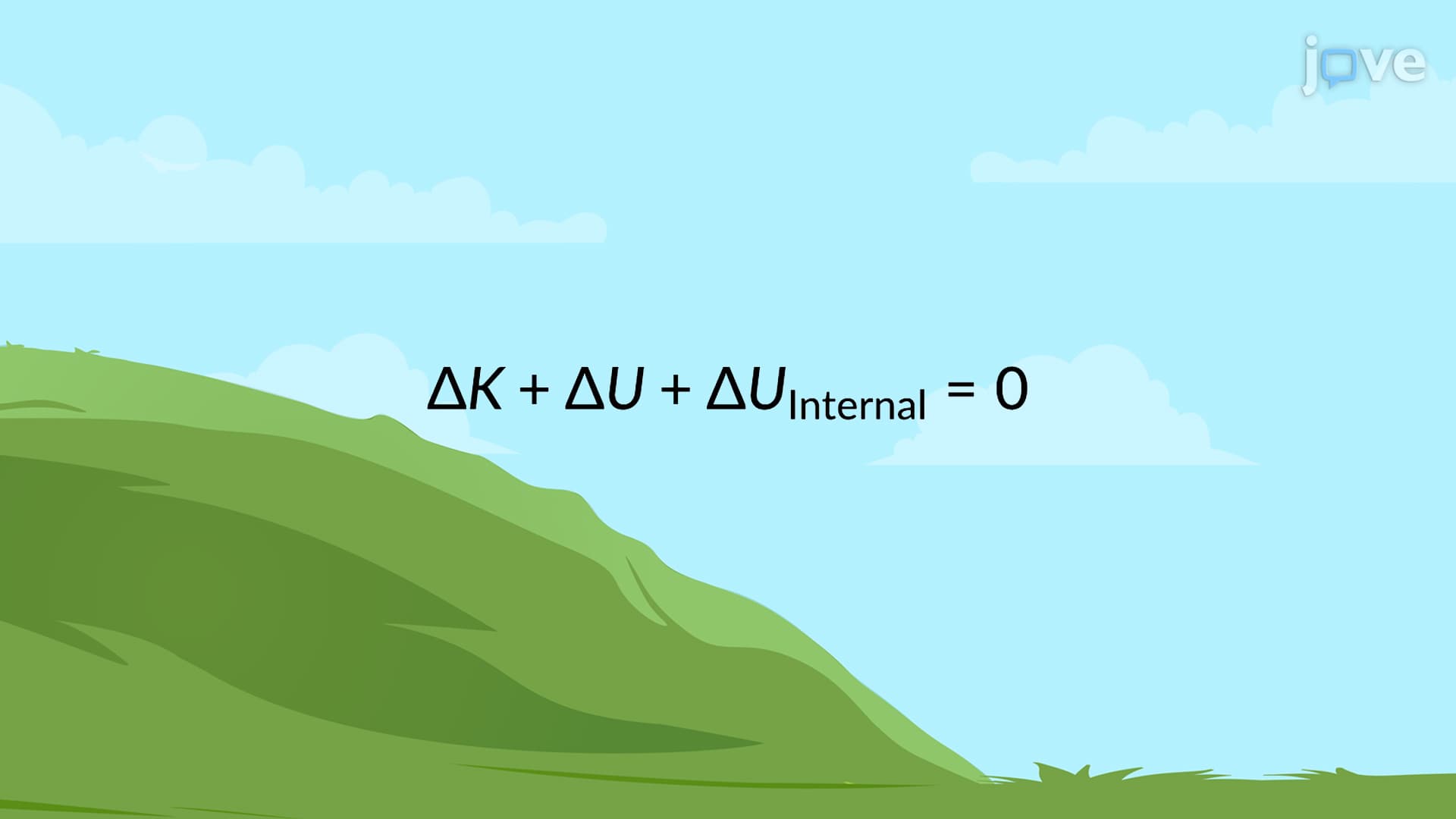
- Compare work done by conservative forces with changes in potential energy to verify energy conservation
- Explore how Hooke's law emerges as a specific case of the general force-potential energy relationship
Understanding Force and Potential Energy in One-Dimensional Systems
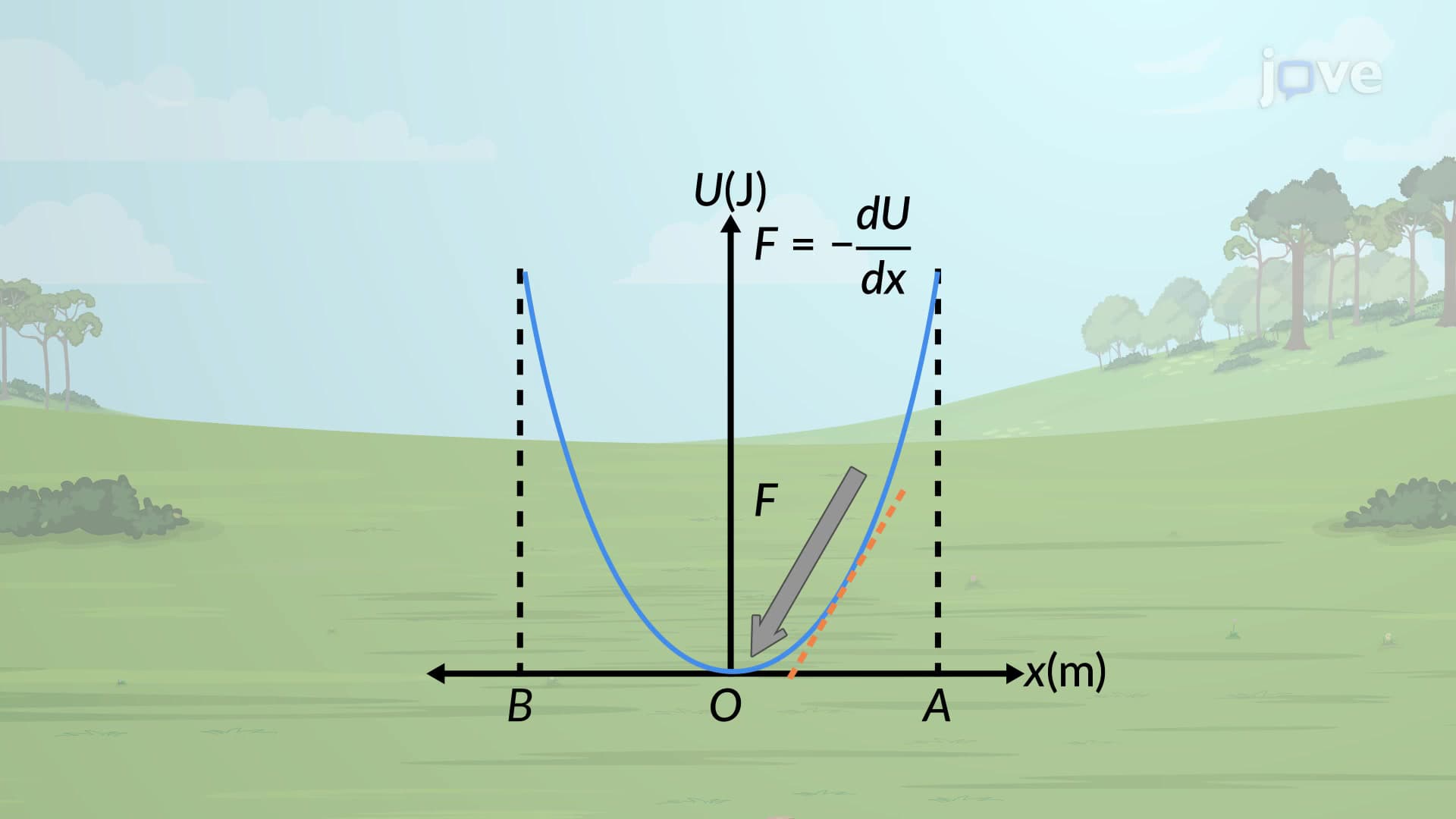
The relationship between force and potential energy in one-dimensional systems forms a cornerstone of classical mechanics, providing the mathematical framework that connects forces to energy changes along a single axis. This fundamental principle states that for any conservative force acting in one dimension, the force equals the negative derivative of potential energy with respect to position: F = -dU/dx.
The Mathematical Foundation and Physical Meaning
Conservative forces possess a unique property: the work they perform depends only on the initial and final positions, not the path taken. This characteristic allows us to define a potential energy function U(x) that completely describes the force's behavior. The negative sign in F = -dU/dx carries profound physical significance-it indicates that conservative forces naturally drive systems toward positions of minimum potential energy.
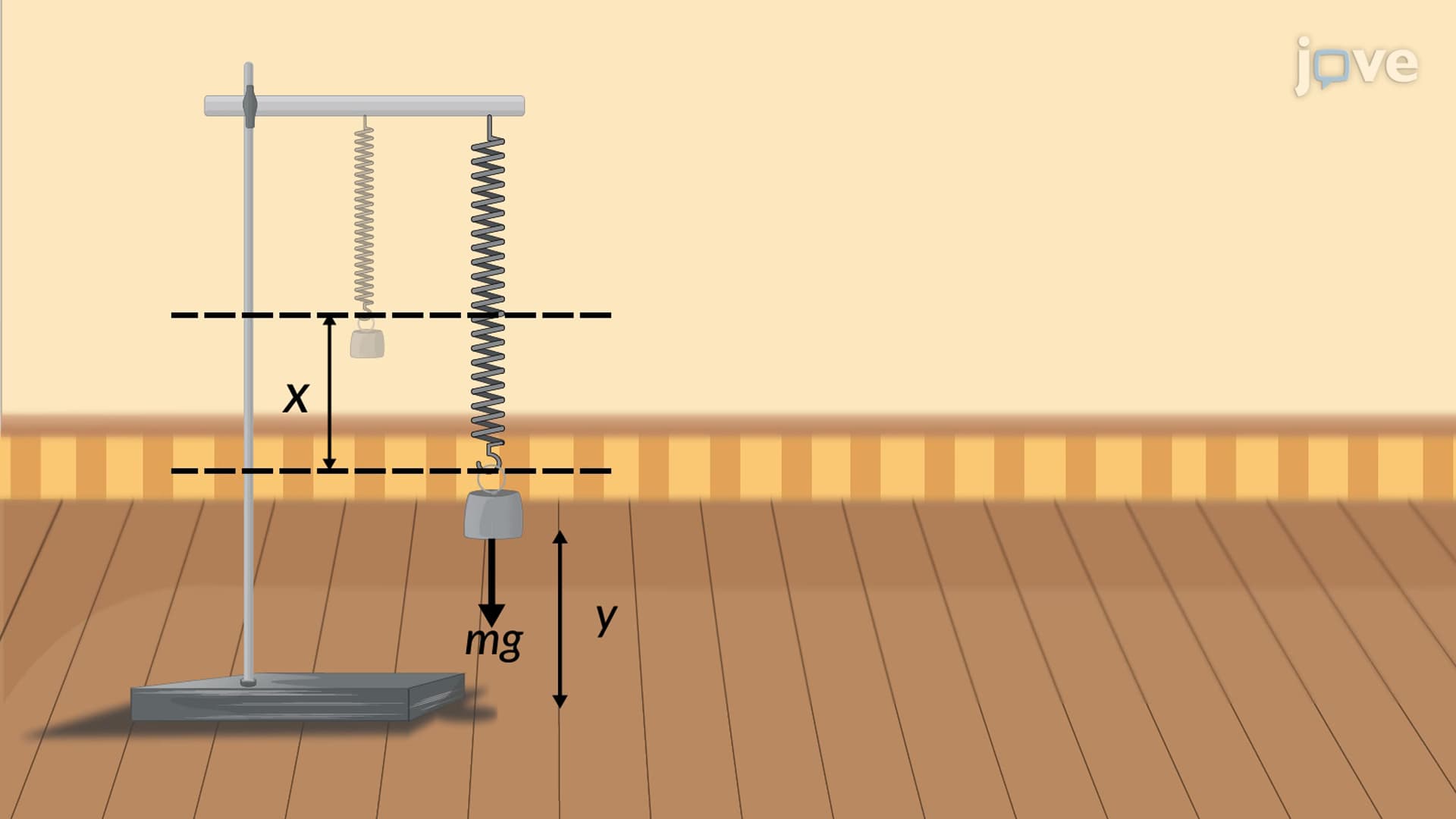
Consider a mass attached to a spring, a system frequently encountered in AP Physics courses and college mechanics labs. As the spring stretches beyond its equilibrium position, elastic potential energy increases according to U = (1/2)kx², where k represents the spring constant. Applying our fundamental relationship, F = -dU/dx = -kx, which directly yields Hooke's law. This derivation demonstrates how the general principle of force and potential energy connects to specific physical laws students encounter throughout their coursework.
Real-World Applications and Engineering Relevance
The principles governing force and potential energy in one-dimensional systems appear throughout American engineering and technology. Bridge designers at firms like ARUP and AECOM rely on these concepts when analyzing how structural elements respond to loading. The Golden Gate Bridge's suspension cables, for instance, store and release elastic potential energy as traffic loads vary throughout the day.
Automotive engineers apply these same principles when designing shock absorbers and suspension systems. Companies like Ford and General Motors optimize spring constants and damping coefficients using force-potential energy relationships to ensure vehicles provide smooth rides while maintaining road contact. The mathematical framework helps predict how suspension components will behave under various driving conditions, from highway cruising to off-road terrain.
Exam Preparation and Problem-Solving Strategies
Students preparing for standardized tests like the AP Physics exam or MCAT encounter force and potential energy problems that require both conceptual understanding and mathematical fluency. These problems often involve analyzing graphs of potential energy versus position, determining equilibrium points, and calculating forces at specific locations. Success requires recognizing that force equals the negative slope of the potential energy curve, with steeper slopes indicating stronger forces.
Frequently Asked Questions
It's the fundamental relationship showing how conservative forces relate to potential energy changes along a straight line, expressed mathematically as F = -dU/dx. This principle explains how forces naturally drive systems toward minimum potential energy configurations. The concept applies to any conservative force acting in one dimension, from springs to gravitational fields.
Exam problems typically involve analyzing potential energy graphs to find force values, determining equilibrium positions, and solving spring-mass system problems. Students must interpret the negative slope of U(x) curves as force magnitude and direction. These questions often combine with energy conservation principles and oscillatory motion topics.
Yes, MCAT physics passages frequently test force-potential energy relationships through problems involving molecular interactions, spring systems, and energy diagrams. Understanding this concept helps with questions about chemical bond formation and biological system mechanics. The mathematical relationship often appears in data interpretation and calculation-based questions.
Automotive engineers design suspension systems using these principles to optimize ride comfort and handling characteristics. Structural engineers analyze building foundations and earthquake resistance using force-potential energy relationships. Aerospace companies like Boeing and Lockheed Martin apply these concepts when designing aircraft landing gear and spacecraft mechanisms.
Basic derivative concepts are sufficient for introductory applications of force and potential energy relationships. High school students can grasp the fundamental ideas using simple slope calculations and graphical interpretation. Advanced calculus becomes important for complex systems and engineering applications, but core principles remain accessible to algebra-based physics students.
Practice interpreting potential energy graphs by sketching corresponding force curves, focusing on the negative slope relationship. Work through spring-mass system problems systematically, connecting Hooke's law to the general F = -dU/dx principle. Create concept maps linking conservative forces, work-energy theorem, and potential energy functions to build comprehensive understanding.
This foundation directly leads to simple harmonic motion analysis, where restoring forces proportional to displacement create oscillatory behavior. The same mathematical framework extends to wave mechanics and quantum systems studied in advanced courses. Mastering one-dimensional force-potential relationships provides essential groundwork for understanding periodic motion and energy transfer mechanisms.
Students can explore multi-dimensional potential energy surfaces, central force problems in orbital mechanics, and quantum mechanical potential wells. Advanced engineering applications include vibration analysis, structural dynamics, and control systems theory. Graduate-level physics extends these concepts to field theory and particle physics applications.
Related Micro-courses

19 Concepts

14 Concepts
14 Concepts