Loading subject page…

- Physics
- Potential Energy and Energy Conservation
- Force and Potential Energy in Three Dimensions
Micro-course: Potential Energy and Energy Conservation
130,500 views
Learn key concepts and earn your certificate.

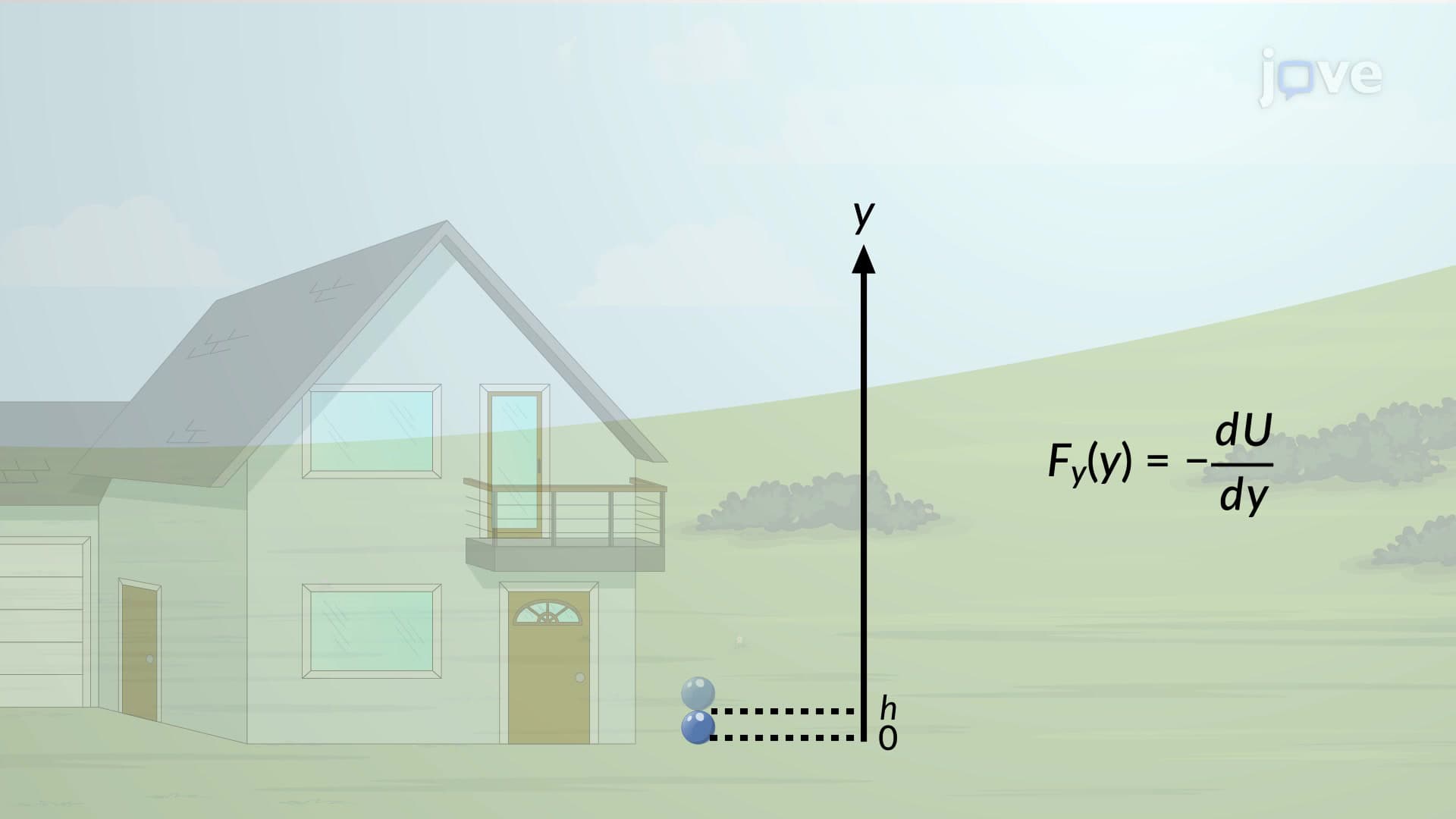
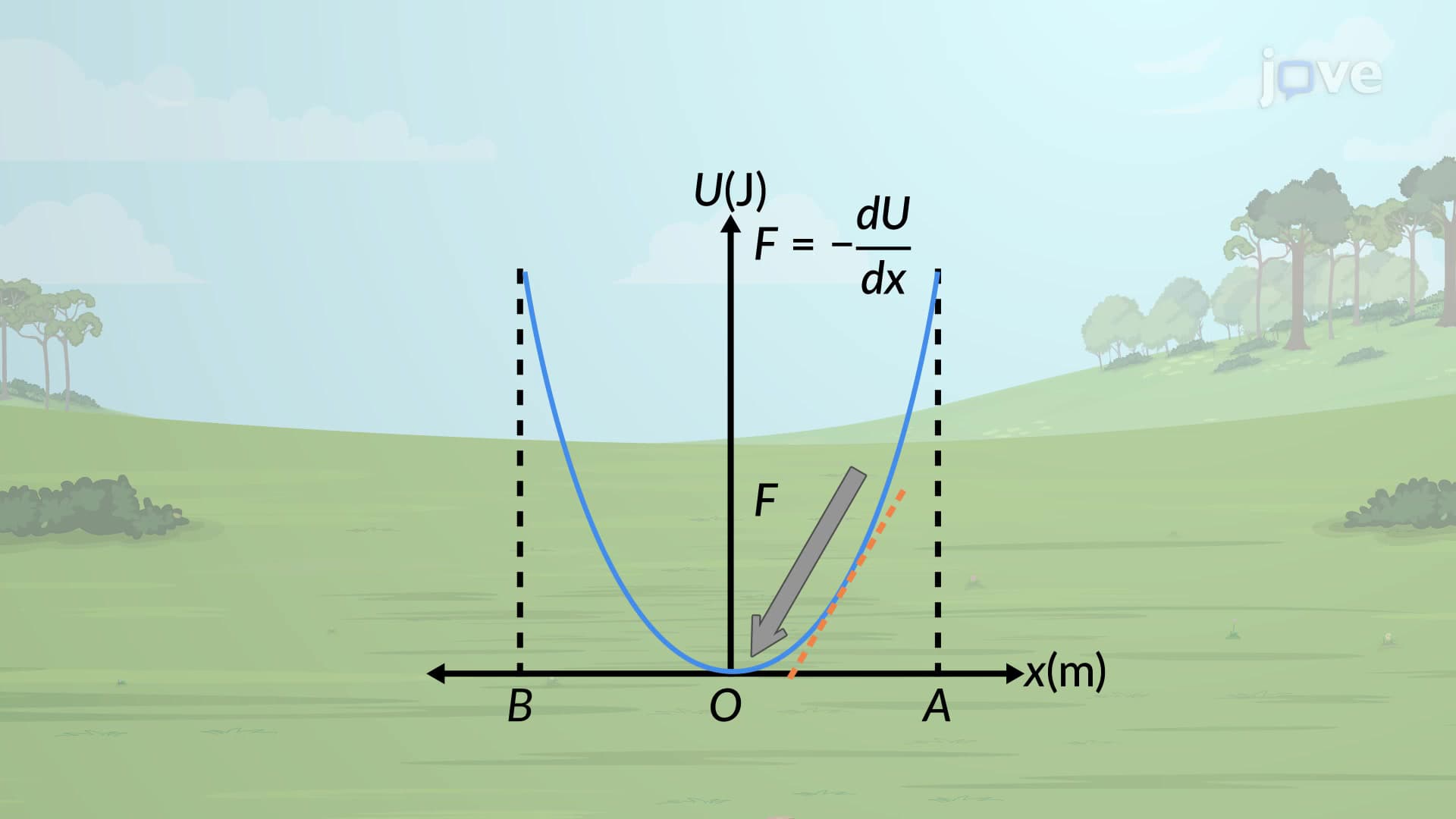
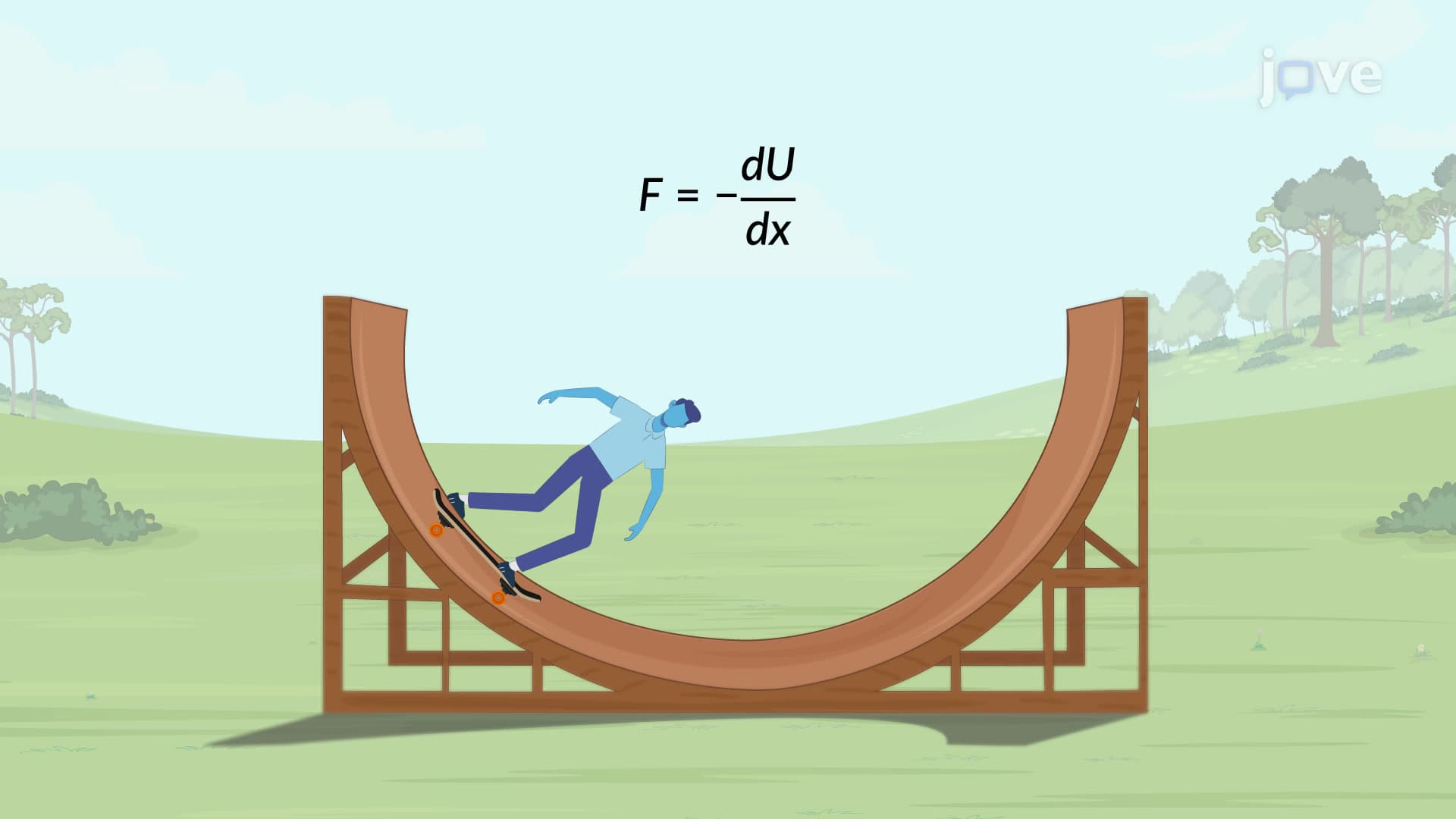
Force and Potential Energy in Three Dimensions

00:00
01:04
Video Summary: Force and Potential Energy in Three Dimensional Systems
Ever wonder how GPS satellites maintain their precise orbits around Earth? The answer lies in force and potential energy in three-dimensional systems, where gravitational forces operate along x, y, and z coordinates simultaneously. Unlike one-dimensional motion, three-dimensional systems require vector mathematics to describe how conservative forces relate to potential energy through partial derivatives and gradients. NASA engineers use these principles daily when calculating spacecraft trajectories and orbital mechanics for missions to the International Space Station. Watch the full video on JoVE Coach to master this concept with expert-led visuals and step-by-step explanations.
- Understand how force and potential energy in three-dimensional systems extends beyond simple one-dimensional relationships to include vector components along x, y, and z axes
- Identify the mathematical relationship between conservative forces and potential energy using partial derivatives and gradient operations
- Apply the negative gradient formula (F = -∇U) to calculate three-dimensional force vectors from potential energy functions
- Analyze how gravitational potential energy demonstrates the force-energy relationship in real three-dimensional scenarios
- Recognize when conservative forces allow potential energy functions to exist and how this simplifies complex motion problems
- Evaluate the physical meaning of potential energy gradients and their connection to force direction and magnitude
- Compare one-dimensional force-energy relationships with their three-dimensional vector counterparts
- Explore practical applications in orbital mechanics, structural engineering, and electromagnetic field theory
Understanding Force and Potential Energy in Three-Dimensional Systems
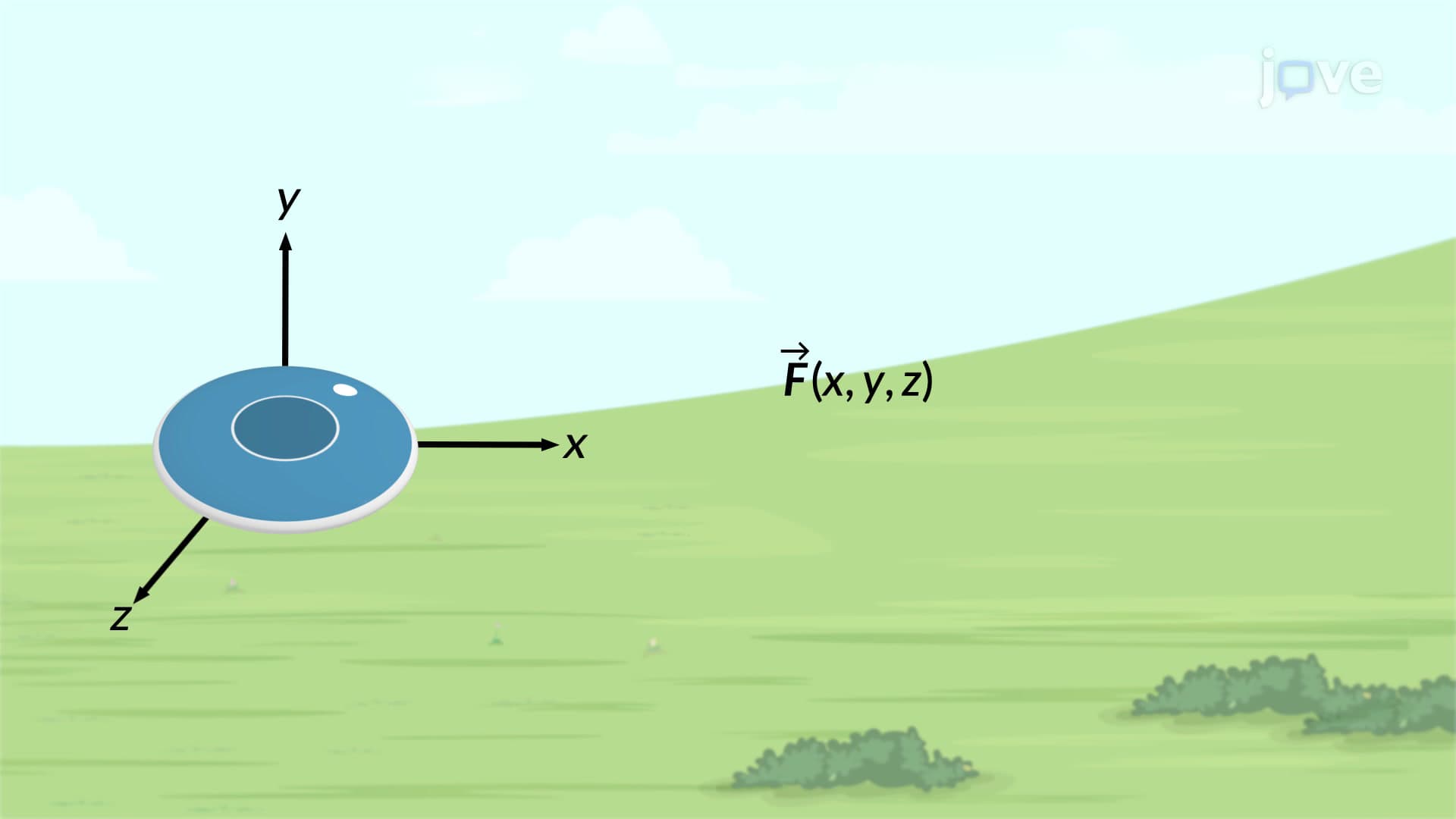
The transition from one-dimensional to three-dimensional force analysis represents a fundamental leap in physics understanding. While introductory courses often focus on motion along a single axis, real-world systems operate in three-dimensional space where forces and potential energies become vector quantities with x, y, and z components.
Mathematical Foundation: The Gradient Relationship
In three-dimensional systems, the relationship between force and potential energy becomes:
F = -∇U = -(∂U/∂x)i - (∂U/∂y)j - (∂U/∂z)k
This equation reveals that force equals the negative gradient of potential energy. Each component represents how potential energy changes with respect to displacement along that coordinate axis. The negative sign indicates that forces point toward decreasing potential energy-a fundamental principle governing everything from gravitational attraction to molecular interactions.
Real-World Applications in Engineering and Technology
Consider how Boeing engineers design aircraft navigation systems. They must account for gravitational potential energy variations as planes climb and descend, while also considering air resistance and thrust forces in all three dimensions. Similarly, petroleum engineers drilling offshore oil wells use three-dimensional potential energy analysis to understand fluid flow patterns and optimize extraction processes.
The concept appears prominently on standardized exams. AP Physics C frequently tests students' ability to calculate force components from given potential energy functions. College-level courses in engineering mechanics and physics build extensively on these principles, particularly in courses like statics, dynamics, and electromagnetic theory.
Gravitational Systems as Classical Examples
Gravitational potential energy provides the clearest demonstration of three-dimensional force-energy relationships. Near Earth's surface, we often simplify to U = mgh, but the complete expression U = -GMm/r reveals how gravitational forces operate radially in three dimensions. This understanding proves crucial for aerospace applications, from satellite communications to interplanetary missions.
Conservative Forces and Path Independence
The beauty of conservative force systems lies in their path independence. Whether a satellite travels directly to its orbital position or follows a complex trajectory, the potential energy change depends only on initial and final positions. This principle enables engineers at companies like SpaceX to optimize fuel consumption by choosing efficient flight paths that minimize energy requirements while maintaining safety margins.
Frequently Asked Questions
Force and potential energy in three-dimensional systems describes how conservative forces relate to potential energy using vector mathematics across x, y, and z coordinates. The force equals the negative gradient of potential energy, expressed as F = -∇U. This relationship allows engineers to predict motion in complex three-dimensional scenarios like spacecraft navigation and structural analysis.
AP Physics C Mechanics frequently tests three-dimensional force-energy relationships through gradient calculations and conservative force problems. Students typically encounter questions requiring them to find force components from potential energy functions or determine whether forces are conservative. Practice with partial derivatives and vector notation proves essential for success on these exam sections.
MCAT physics sections often include potential energy problems in biological contexts, such as protein folding and molecular interactions. Understanding three-dimensional force-energy relationships helps with questions about gravitational effects on circulation, electromagnetic forces in nerve conduction, and mechanical work in muscle systems. These concepts appear in both discrete questions and passage-based problems.
NASA engineers apply these principles daily for mission planning and spacecraft operations. They calculate orbital trajectories using gravitational potential energy in three dimensions, design landing systems that account for multiple force components, and optimize fuel consumption for deep space missions. The Perseverance Mars rover landing exemplifies complex three-dimensional force analysis in action.
While partial derivatives appear in the mathematical formulation, the core physics concepts remain accessible to students with basic calculus knowledge. Focus first on understanding the physical meaning: forces point toward lower potential energy regions. Mathematical sophistication develops through practice with specific examples rather than abstract theory alone.
Start with simple examples like gravitational systems before progressing to complex scenarios. Practice converting between potential energy functions and force vectors using the gradient relationship. Create visual diagrams showing force directions relative to potential energy surfaces, and work through problems systematically by identifying coordinates, taking derivatives, and checking physical reasonableness of results.
Upper-level courses in classical mechanics, electromagnetism, and quantum mechanics extensively use these principles. Engineering disciplines like aerospace, mechanical, and civil engineering apply three-dimensional force analysis throughout their curricula. Graduate programs in physics and engineering assume solid mastery of these fundamental relationships for more specialized applications.
Related Micro-courses

19 Concepts

14 Concepts
14 Concepts