Loading subject page…

- Physics
- Motion in Two or Three Dimensions
- Projectile Motion: Example
Micro-course: Motion in Two or Three Dimensions
154,200 views
Learn key concepts and earn your certificate.

Projectile Motion: Example

00:00
01:18
Video Summary: What Is Projectile Motion Example
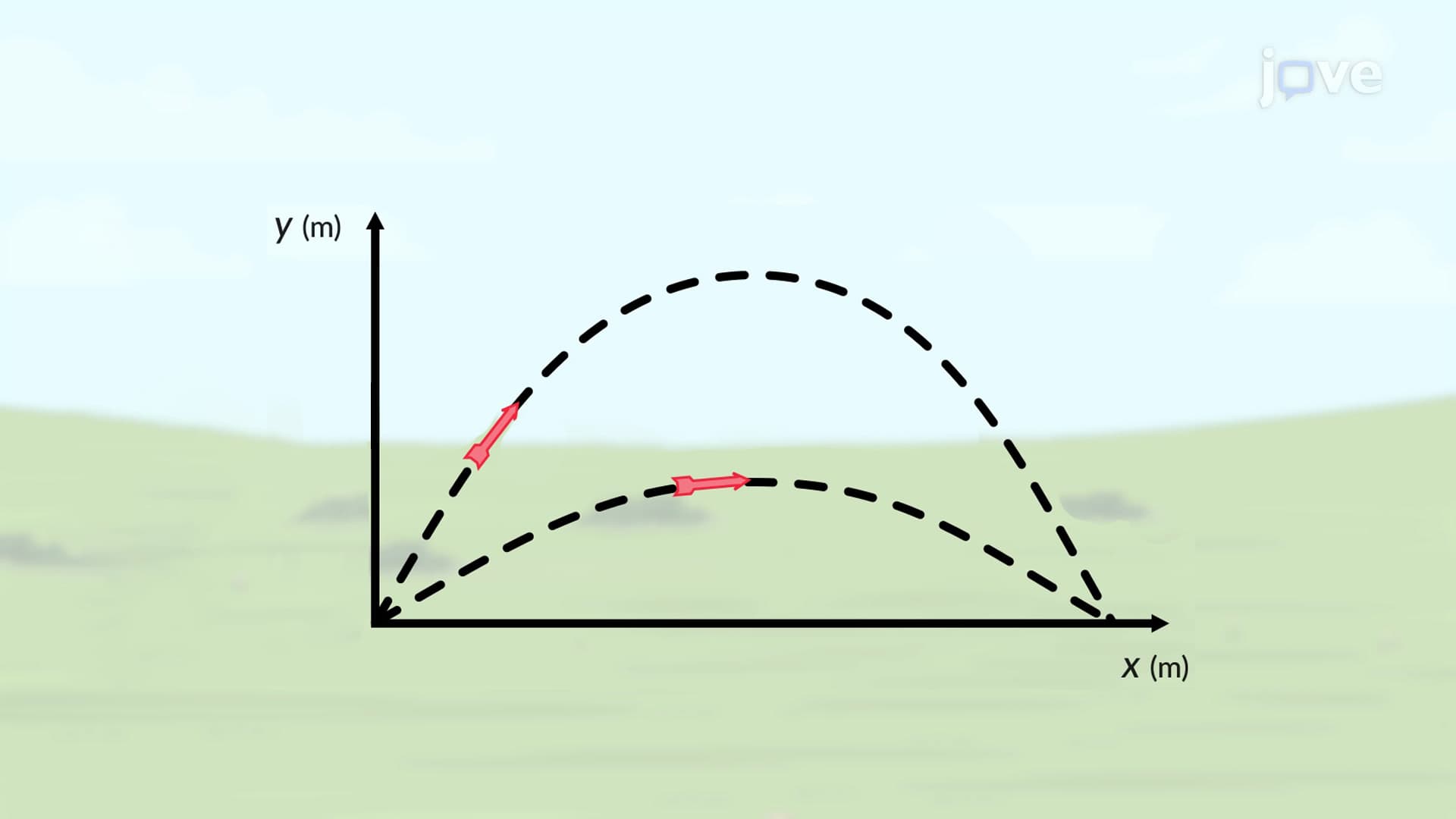
When an NFL quarterback throws a perfect 40-yard touchdown pass, the football follows a curved path that demonstrates projectile motion example principles in action. This what is projectile motion example scenario shows how objects move under gravity's influence, with the optimal launch angle of 45 degrees providing maximum range for any given initial velocity. The archer's arrow trajectory illustrates how complementary angles (like 30° and 60°) produce identical ranges despite different flight paths. Watch the full video on JoVE Coach to master this concept with expert-led visuals and step-by-step explanations.
- Understand what is projectile motion example through real-world scenarios like archery and sports applications
- Identify the key variables affecting projectile range: initial velocity, launch angle, and gravitational acceleration
- Analyze why 45-degree launch angles produce maximum range for projectile motion in ideal conditions
- Compare projectile trajectories for complementary angles and explain why they achieve identical ranges
- Evaluate the relationship between launch angle and maximum height reached during projectile motion
- Apply projectile motion equations to calculate range, height, and flight time for various scenarios
- Recognize how sine function values determine optimal launch conditions for different projectile applications
- Explore the mathematical relationship between initial velocity, angle, and projectile performance metrics
Understanding What is Projectile Motion Example Applications
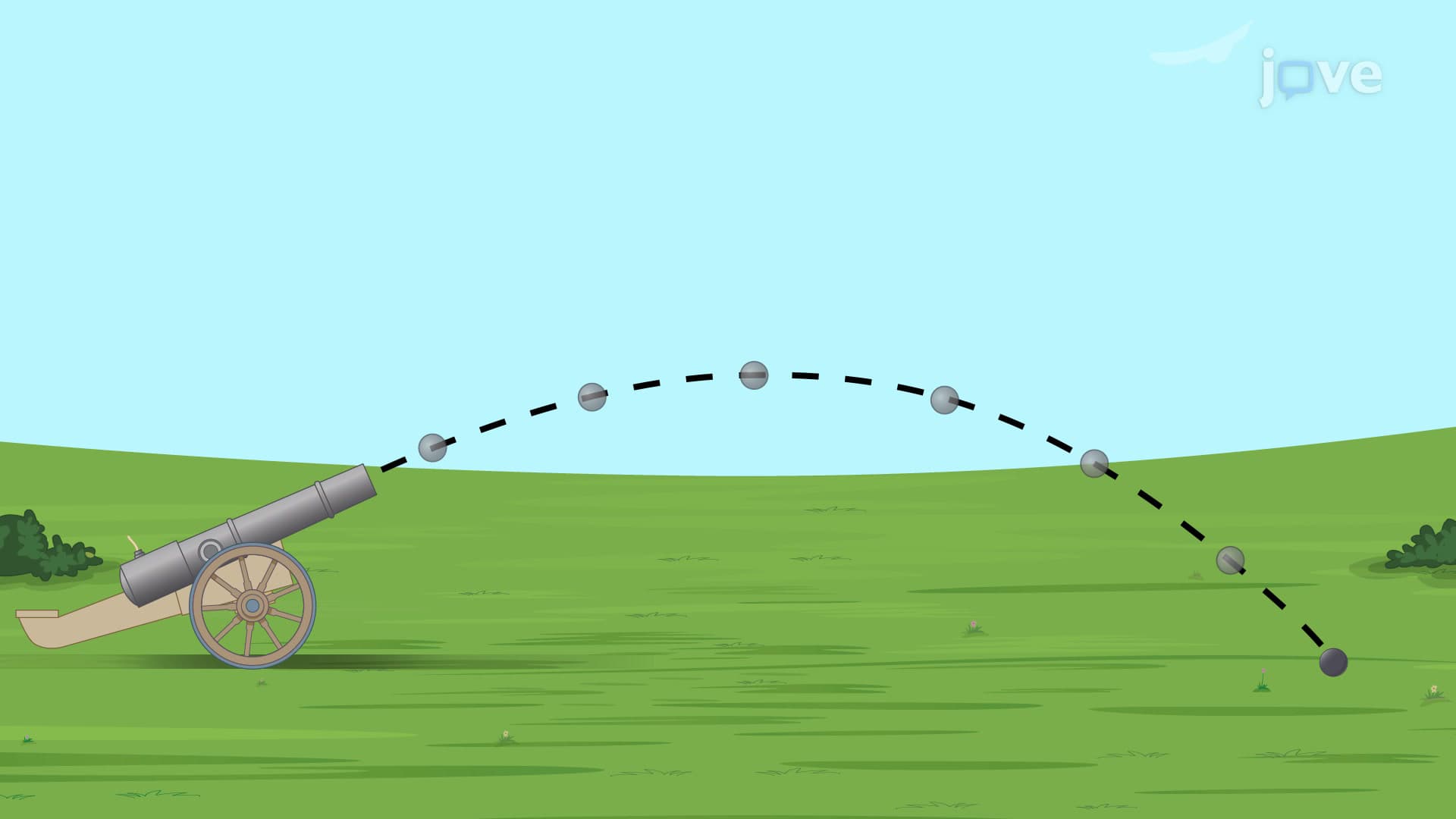
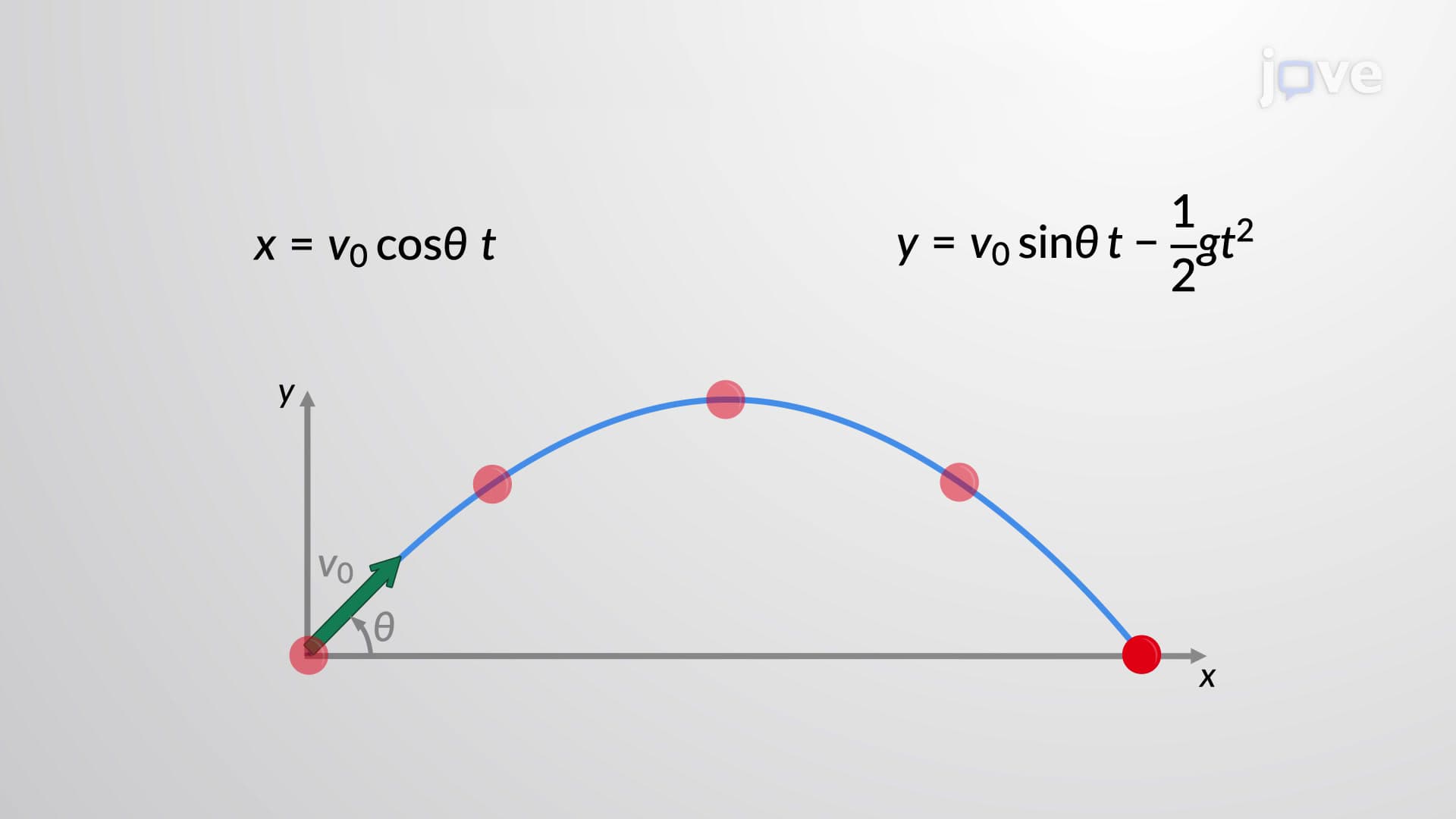
Projectile motion example scenarios surround us daily, from basketball shots to water fountain arcs. This fundamental physics concept describes the curved path objects follow when launched into the air under gravity's influence alone. Unlike linear motion, projectiles experience constant downward acceleration while maintaining horizontal momentum, creating the characteristic parabolic trajectory.
Mathematical Foundation and Range Optimization
The range equation R = (v₀² sin(2θ))/g reveals why 45-degree launches maximize distance. Since sin(2θ) reaches its maximum value of 1 when θ = 45°, this angle optimizes range for any initial velocity. This principle applies across various scenarios, from Olympic shot put competitions to NASA spacecraft trajectories. The archer example demonstrates this perfectly: complementary angles like 30° and 60° produce identical ranges because sin(60°) = sin(120°), making sin(2×30°) = sin(2×60°).
Real-World Applications in American Sports and Engineering
Professional baseball pitchers instinctively understand projectile motion when throwing fastballs and curveballs. The optimal batting angle for home runs typically ranges from 25-35 degrees, slightly below the theoretical maximum due to air resistance and launch height considerations. Similarly, basketball players aim for approximately 45-50 degree release angles for optimal shooting accuracy. Engineers designing fountain displays or irrigation systems use these same principles to achieve desired water coverage patterns.
Academic Applications and Exam Preparation
AP Physics courses extensively cover projectile motion calculations, often featuring scenarios involving launched objects at various angles. Students must master component analysis, separating horizontal and vertical motion to solve complex problems. SAT Physics Subject Tests frequently include projectile motion questions requiring students to apply kinematic equations and trigonometric relationships. College-level physics courses expand these concepts to include air resistance effects and three-dimensional trajectories, preparing students for advanced engineering applications.
The height difference between complementary angle trajectories illustrates another crucial concept: while range remains constant, maximum height varies significantly. This distinction proves essential for applications requiring specific clearance heights, such as military ballistics or architectural water features.
Frequently Asked Questions
Projectile motion example describes any object following a curved path after being launched, like a basketball shot or arrow flight. The object moves in a parabolic arc due to gravity pulling it downward while it maintains forward momentum. Common examples include thrown footballs, launched rockets, and water from garden sprinklers.
AP Physics 1 exams frequently test projectile motion through multi-step problems involving range, height, and time calculations. Students must analyze launch angles, apply kinematic equations, and interpret graphs showing projectile trajectories. These problems often combine with energy conservation and momentum concepts in comprehensive scenarios.
SAT Physics Subject Tests include projectile motion questions focusing on range optimization, complementary angle relationships, and basic trajectory calculations. Students should master the range formula, understand why 45 degrees maximizes distance, and solve problems involving objects launched from different heights. Practice with both numerical calculations and conceptual understanding proves essential.
NFL quarterbacks instinctively apply projectile motion when throwing passes, adjusting launch angle and velocity for different distances. Short passes require lower angles to avoid interception, while deep throws utilize higher angles for maximum range. Professional players develop muscle memory incorporating optimal release angles for various game situations.
Basic trigonometry and algebra skills suffice for most projectile motion problems in high school and introductory college courses. Students should understand sine and cosine functions, quadratic equations, and vector components. The mathematical foundation builds gradually, making this topic accessible for students with solid Algebra 2 and basic trigonometry knowledge.
Practice solving problems systematically by separating horizontal and vertical motion components, then applying appropriate kinematic equations. Create reference sheets with key formulas, work through varied scenarios involving different launch angles and heights, and focus on understanding when to apply specific equations rather than memorizing isolated facts.
Complementary angles (like 30° and 60°) yield identical ranges because the sine of double these angles equals the same value. Mathematically, sin(2×30°) = sin(60°) and sin(2×60°) = sin(120°), and since sin(60°) = sin(120°), both produce equal ranges despite following different trajectory paths with varying maximum heights.
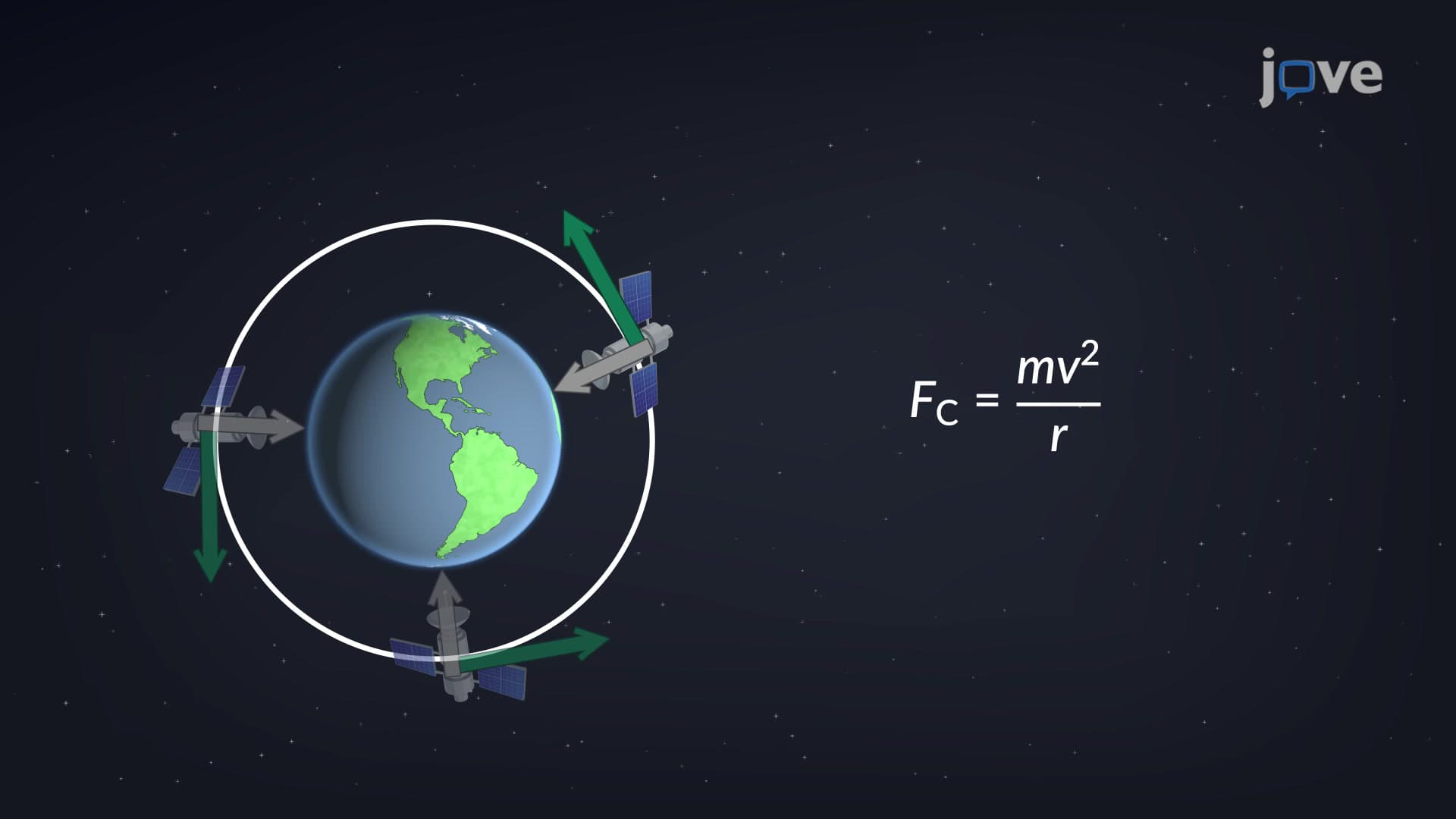
Advanced applications include air resistance effects, orbital mechanics, and ballistics engineering. Students can explore how atmospheric drag modifies ideal trajectories, study satellite launch calculations, and investigate military artillery systems. These concepts bridge to aerospace engineering, meteorology, and advanced physics coursework.
Related Micro-courses
16 Concepts

10 Concepts
15 Concepts