Loading…
Loading video…

174,400 views
Ever wonder why pushing a shopping cart feels easier when it's empty versus when it's full of groceries? Positive negative and zero work depends entirely on the relationship between force direction and motion direction. When you push that cart forward at your local Walmart, you're doing positive work because your force and the cart's displacement align. However, if you tried to slow it down by pushing backward while it still moves forward, you'd be doing negative work. Watch the full video on JoVE Coach to master this concept with expert-led visuals and step-by-step explanations.
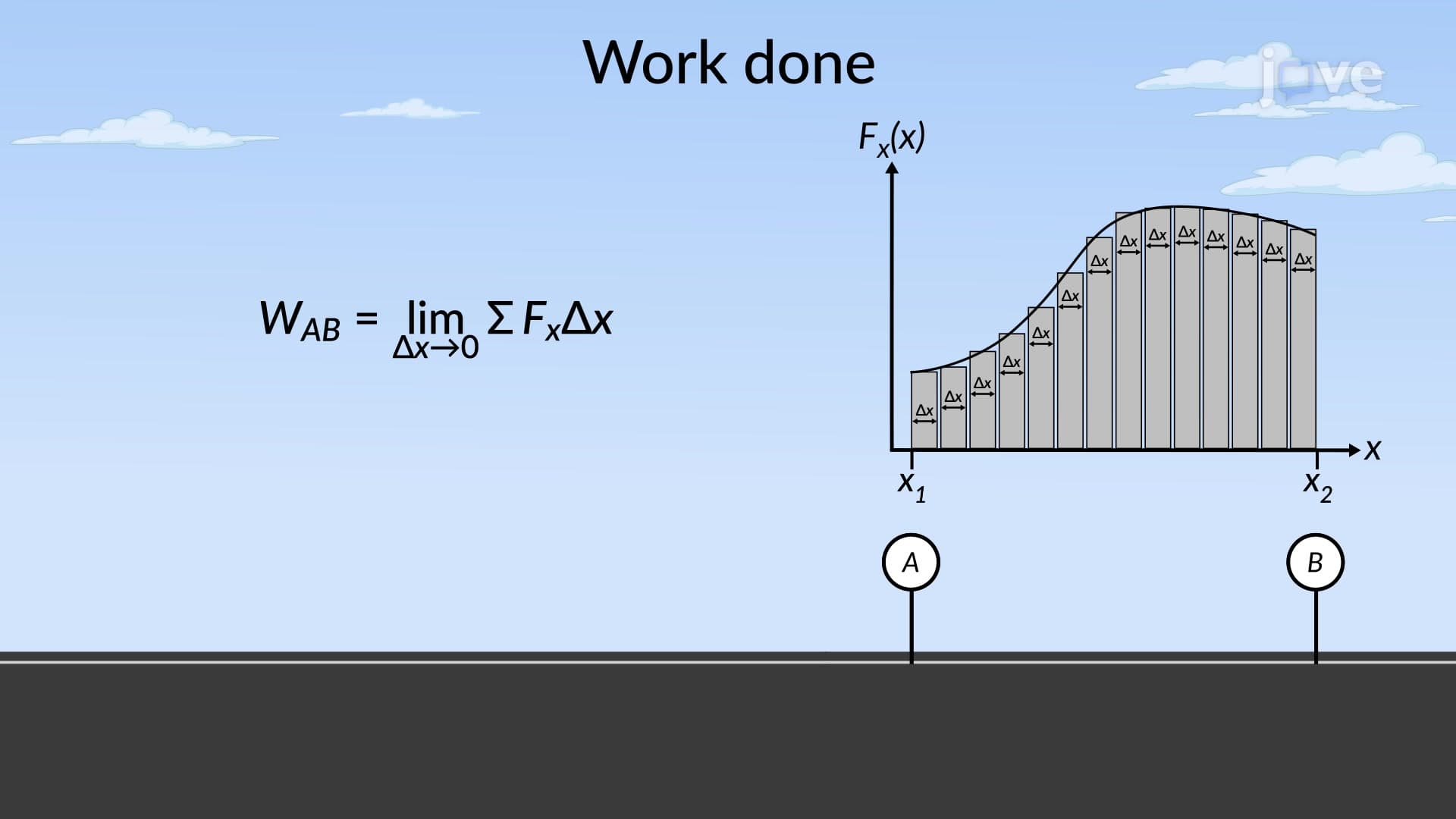
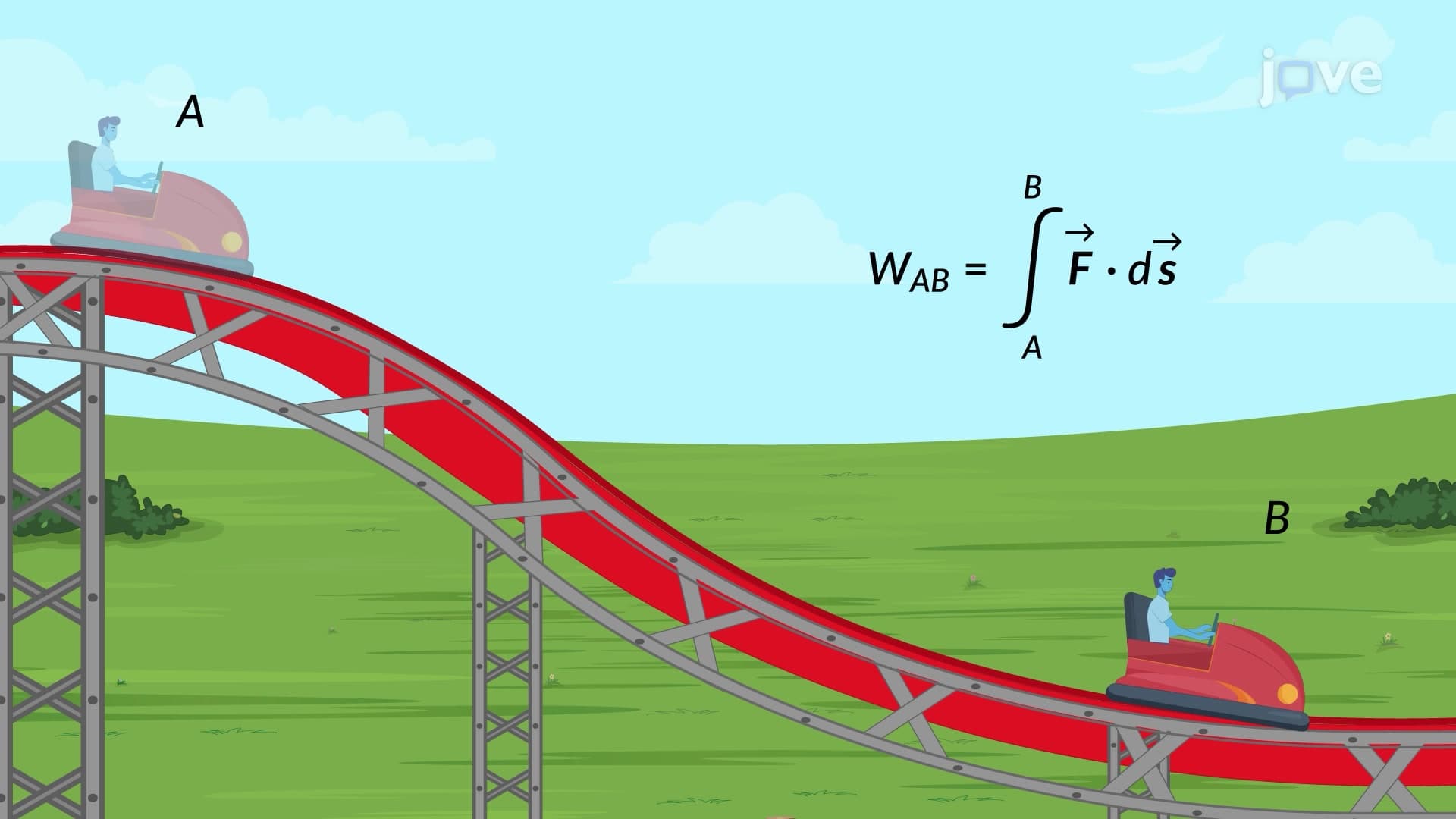
Work in physics represents energy transfer through force application over a distance. The classification of work as positive, negative, or zero depends critically on the angular relationship between the applied force vector and the displacement vector. This fundamental concept appears throughout mechanics and forms the foundation for understanding energy conservation principles.
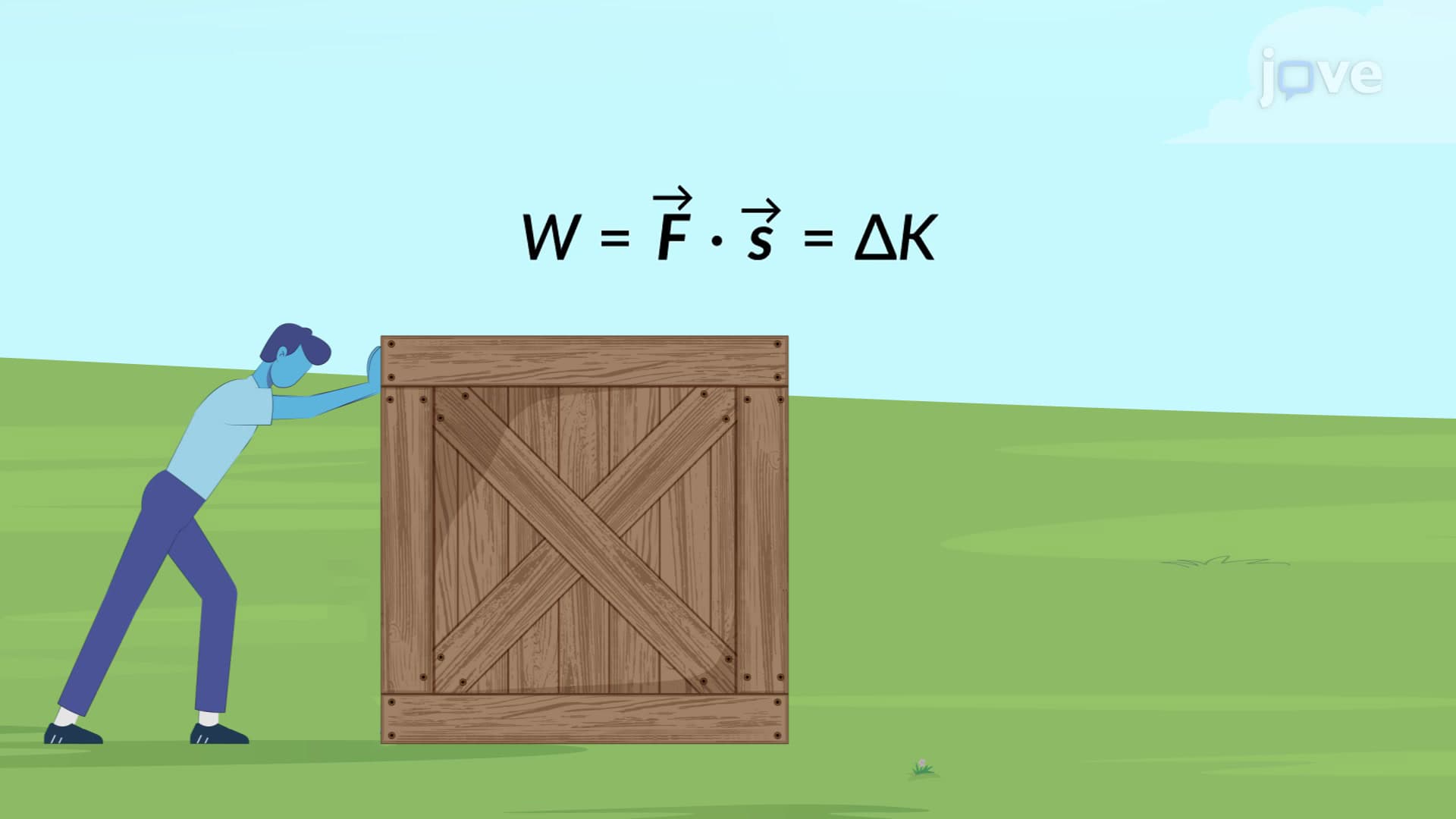
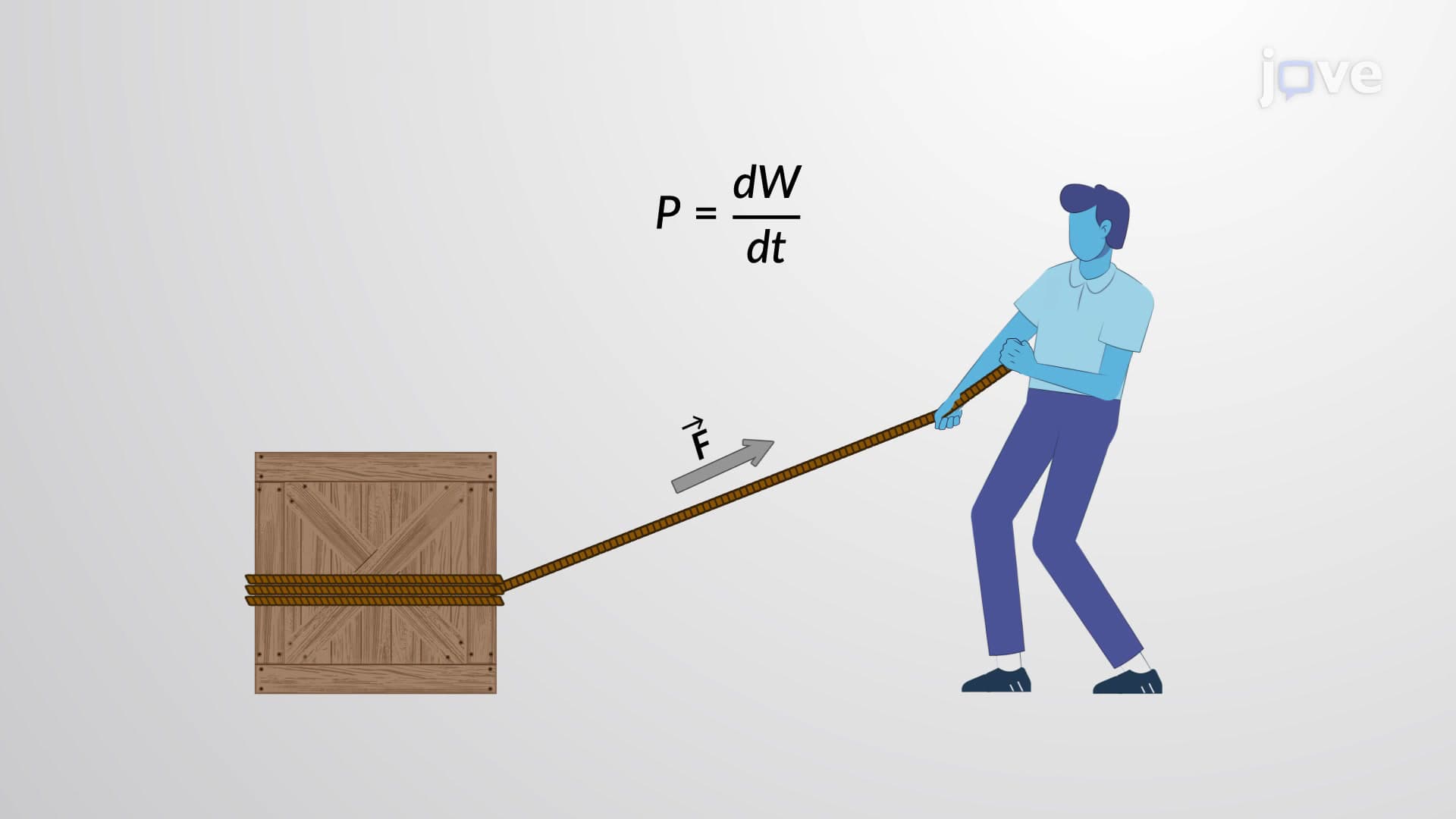
The mathematical expression W = F × d × cos(θ) captures this relationship precisely, where θ represents the angle between force and displacement vectors. This equation explains why work classification depends entirely on the cosine function's behavior at different angles.
Positive work occurs when the force component acts in the same direction as displacement (θ = 0° to 90°). Consider a student pushing textbooks up a ramp at UCLA—both the applied force and displacement point upward along the incline. The positive work done transfers energy to the books, increasing their gravitational potential energy.
In AP Physics courses, students frequently encounter positive work problems involving engines accelerating cars, elevators lifting passengers, or athletes throwing projectiles. The key indicator is that the force assists or enhances the motion, resulting in energy addition to the system.
Negative work happens when force opposes displacement (θ = 90° to 180°). Friction provides the most common example—as a hockey puck slides across ice at Madison Square Garden, kinetic friction acts opposite to the puck's motion. This negative work removes kinetic energy from the puck, eventually bringing it to rest.
College physics students studying thermodynamics encounter negative work in compression processes, where external forces do negative work on gas molecules. Similarly, gravitational forces do negative work on projectiles during their upward trajectory, converting kinetic energy to potential energy.
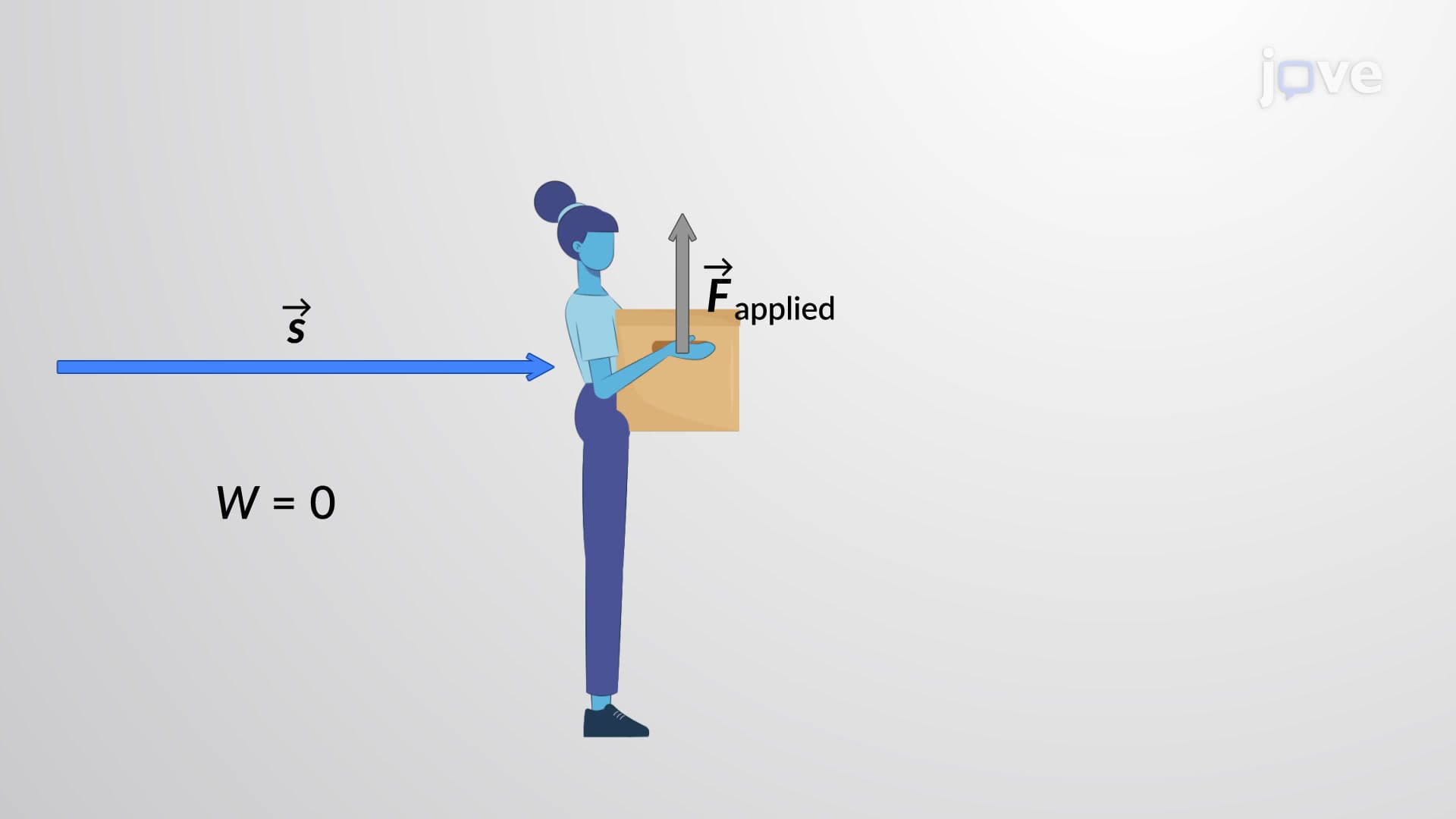
Zero work occurs when force acts perpendicular to displacement (θ = 90°). A classic example involves a server carrying a tray horizontally across a restaurant floor. Despite applying significant upward force to support the tray's weight, no work is done because the force direction is perpendicular to the horizontal displacement.
This concept frequently appears on SAT Subject Tests and MCAT physics sections, where students must recognize that centripetal forces in circular motion do zero work. The force constantly redirects velocity without changing the object's speed or kinetic energy.
Understanding work classification proves essential for AP Physics 1 and 2 exams, particularly in energy conservation problems. Students must identify whether forces add energy (positive work), remove energy (negative work), or simply redirect motion (zero work) to solve complex mechanical systems correctly.
Frequently Asked Questions
Positive negative and zero work describes how forces transfer energy based on their direction relative to motion. Positive work occurs when force aids movement (like pushing a car forward), negative work happens when force opposes movement (like braking), and zero work occurs when force acts perpendicular to movement (like carrying a suitcase horizontally). The angle between force and displacement vectors determines which type occurs.
AP Physics 1 and 2 exams frequently test work classification through energy conservation problems and mechanical system analysis. Students must identify work types to apply the work-energy theorem correctly and solve problems involving inclined planes, pulleys, and projectile motion. Understanding these concepts is crucial for scoring well on both multiple-choice and free-response sections.
MCAT physics sections often present scenarios involving biological systems where students must classify work done by muscles, gravity, or friction forces. Typical questions involve analyzing energy changes in human movement, cardiovascular pumping mechanisms, or molecular transport processes. These problems test your ability to connect physics principles with biological applications.
Start by drawing force and displacement vectors for each object in the system, then determine angles between them using trigonometry. Calculate work using W = F × d × cos(θ) and classify as positive (energy added), negative (energy removed), or zero (no energy change). This systematic approach helps solve complex problems involving multiple forces and energy transformations.
Consider a football player catching a pass while running at MetLife Stadium. His leg muscles do positive work propelling him forward, air resistance does negative work opposing his motion, and his arms do zero work holding the ball steady while moving horizontally. This single scenario demonstrates how multiple forces can simultaneously perform different types of work on the same object.
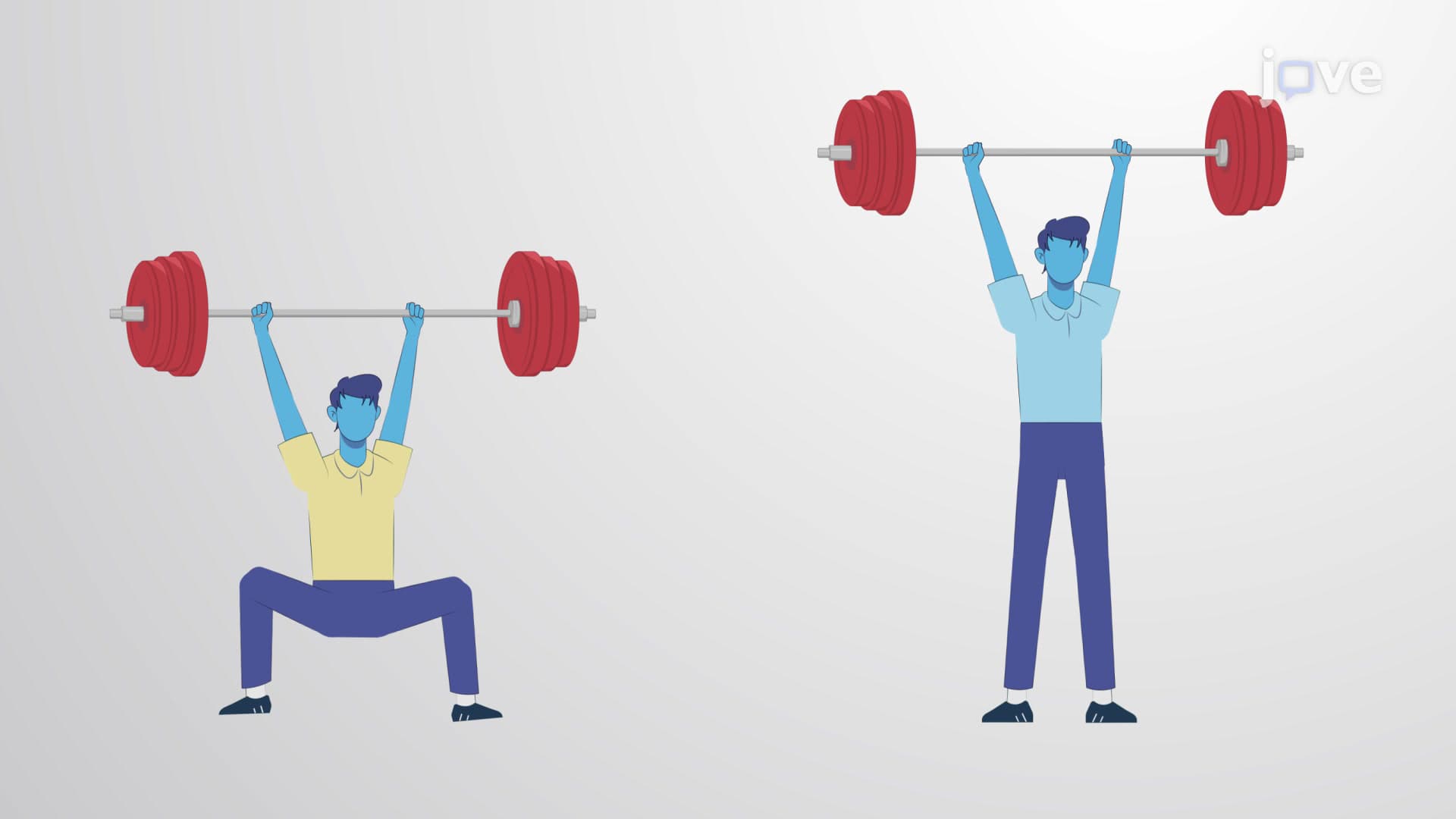
This concept is very manageable for students with basic trigonometry knowledge and vector understanding. The key insight is recognizing that work classification depends solely on force-displacement angle relationships, not force magnitude. Start with simple examples like pushing boxes or lifting weights before progressing to more complex scenarios involving multiple forces.
Practice identifying force directions and displacement directions separately before determining their angular relationship. Create diagrams showing force vectors and displacement vectors for each problem scenario. Focus on memorizing that cos(0°) = 1 (positive work), cos(90°) = 0 (zero work), and cos(180°) = -1 (negative work) to quickly classify work types during exams.
Progress to the work-energy theorem, which connects work calculations to kinetic energy changes, then explore conservative versus non-conservative forces. These concepts lead naturally to mechanical energy conservation, power calculations, and eventually thermodynamic work in advanced courses. Understanding work classification provides the foundation for all energy-related physics topics.
Related Micro-courses


Related Subjects
 Math Fundamentals 11 micro-courses›
 Statistics 17 micro-courses›