Loading subject page…


174,403 views


Video Summary: What Is Kinetic Energy Ii
Did you know that a baseball traveling at 90 mph carries enough kinetic energy to power a light bulb for several seconds? Kinetic energy II explores the deeper mathematical relationships between motion, momentum, and energy, revealing how velocity's squared relationship makes small speed changes create dramatic energy differences. Consider a NASCAR driver at Daytona International Speedway-doubling their speed from 100 to 200 mph quadruples their kinetic energy, explaining why high-speed crashes are so devastating. Watch the full video on JoVE Coach to master this concept with expert-led visuals and step-by-step explanations.
What is Kinetic Energy II represents an advanced exploration of motion energy that goes beyond simple memorization of KE = ½mv². This concept delves into the interconnected relationships between kinetic energy, momentum, and reference frames-critical knowledge for AP Physics, SAT Subject Tests, and introductory college physics courses.
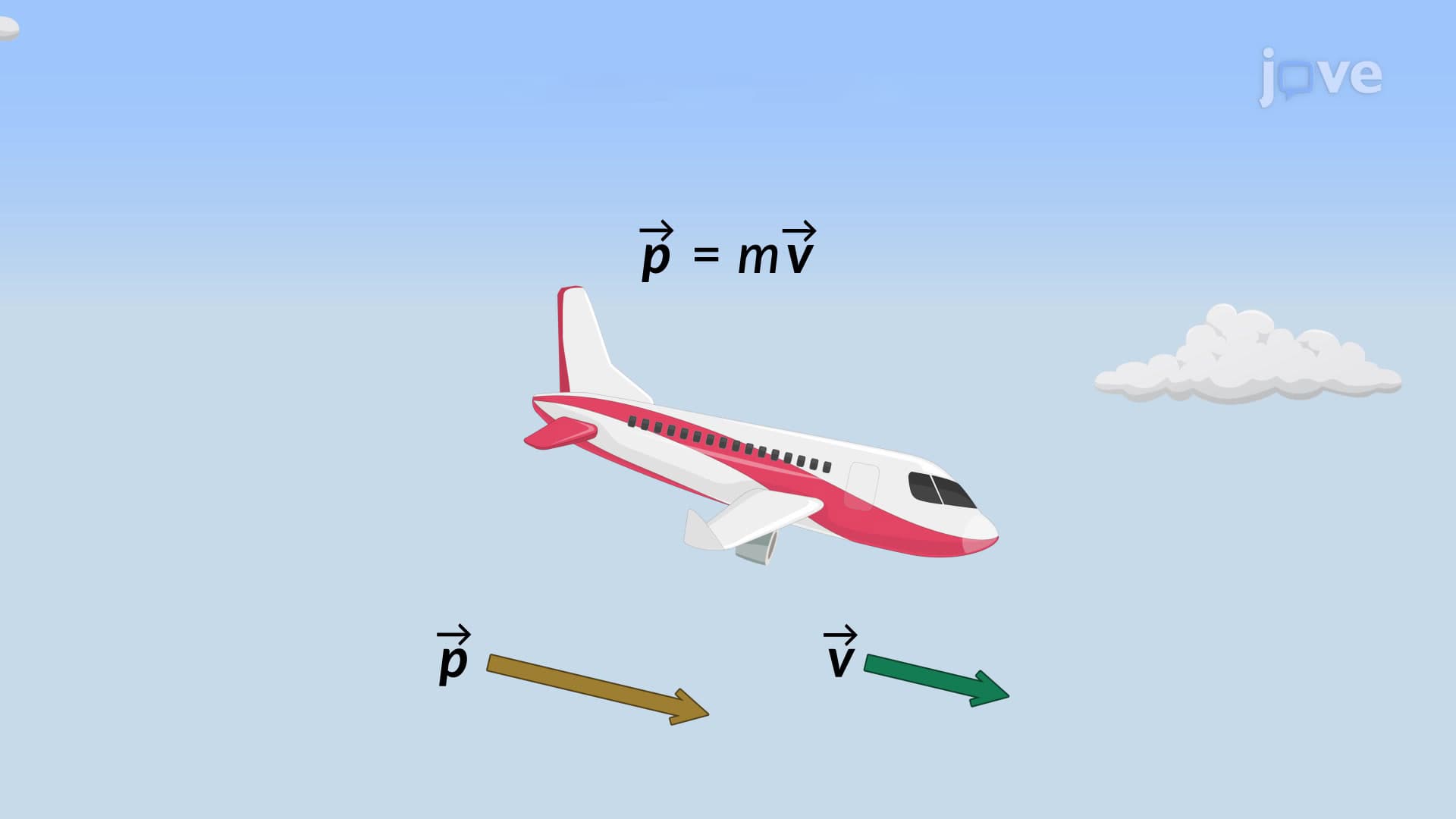
The kinetic energy II definition emphasizes the mathematical elegance connecting energy and momentum. Starting with the fundamental equation KE = ½mv², we can substitute the momentum relationship p = mv to derive alternative expressions. This manipulation yields KE = p²/2m, revealing how kinetic energy relates quadratically to momentum while remaining inversely proportional to mass.
These mathematical relationships prove invaluable when solving complex physics problems. For instance, in collision analysis-whether studying car crashes at the Insurance Institute for Highway Safety or analyzing particle interactions in nuclear physics research at Fermilab-understanding these interconnected equations allows physicists to apply conservation laws more effectively.
Understanding kinetic energy II requires mastering reference frame concepts. Consider a passenger on an Amtrak train traveling at 80 mph through Pennsylvania. Relative to another passenger, their kinetic energy is zero. However, relative to a stationary observer at the Philadelphia station, both passengers possess significant kinetic energy. This reference frame dependency explains why energy calculations in spacecraft navigation, satellite communications, and GPS systems require careful consideration of observational perspectives.
What is kinetic energy II in detail encompasses practical applications across multiple fields. Automotive engineers at Ford or General Motors use these principles when designing crumple zones, understanding that kinetic energy's velocity-squared relationship means crash severity increases dramatically with speed. Similarly, NASA engineers calculating spacecraft trajectories must account for reference frame changes as vehicles transition between Earth's gravitational influence and interplanetary space.
For standardized testing success, students encounter these concepts on AP Physics exams, college placement tests, and MCAT physics sections. Problems typically involve calculating energy transfers, analyzing collisions, or determining energy requirements for acceleration scenarios-all building upon the fundamental relationships explored in kinetic energy II studies.
Related Micro-courses