Loading subject page…


174,403 views

Video Summary: What Is Work Energy Theorem
Ever wonder why a baseball pitcher can throw a fastball at 100 mph? The work energy theorem explains how the pitcher's arm muscles do work on the baseball, converting that work directly into the ball's kinetic energy. This fundamental physics principle states that the total work done on an object equals its change in kinetic energy, helping us understand everything from car crashes to NASA rocket launches. Watch the full video on JoVE Coach to master this concept with expert-led visuals and step-by-step explanations.
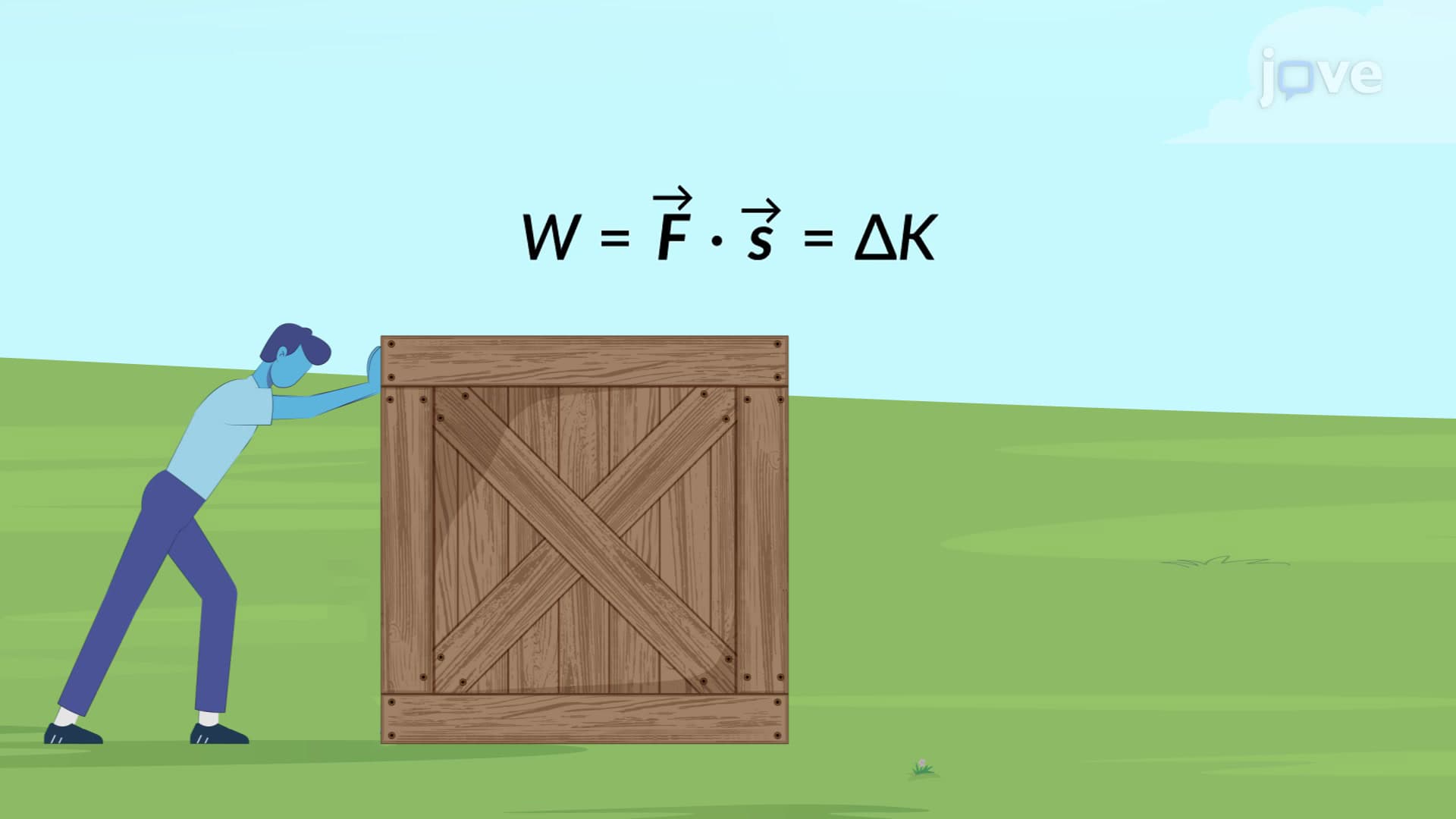
The work energy theorem serves as a cornerstone principle connecting two fundamental concepts in physics: work and kinetic energy. This theorem establishes that the net work done by all forces acting on an object directly equals the change in that object's kinetic energy. Mathematically, this relationship appears as W(net) = ΔKE = (1/2)mv(f)² - (1/2)mv(i)², where m represents mass, v(f) is final velocity, and v(i) is initial velocity.
The theorem's derivation stems from Newton's second law (F = ma) combined with kinematic equations. When a constant force acts on an object moving in a straight line, we can substitute F = ma and the displacement equation s = (v(f)² - v(i)²)/(2a) into the work formula W = Fs. This substitution yields the work energy theorem, demonstrating its deep connection to fundamental motion principles that students encounter in AP Physics courses and college-level mechanics.
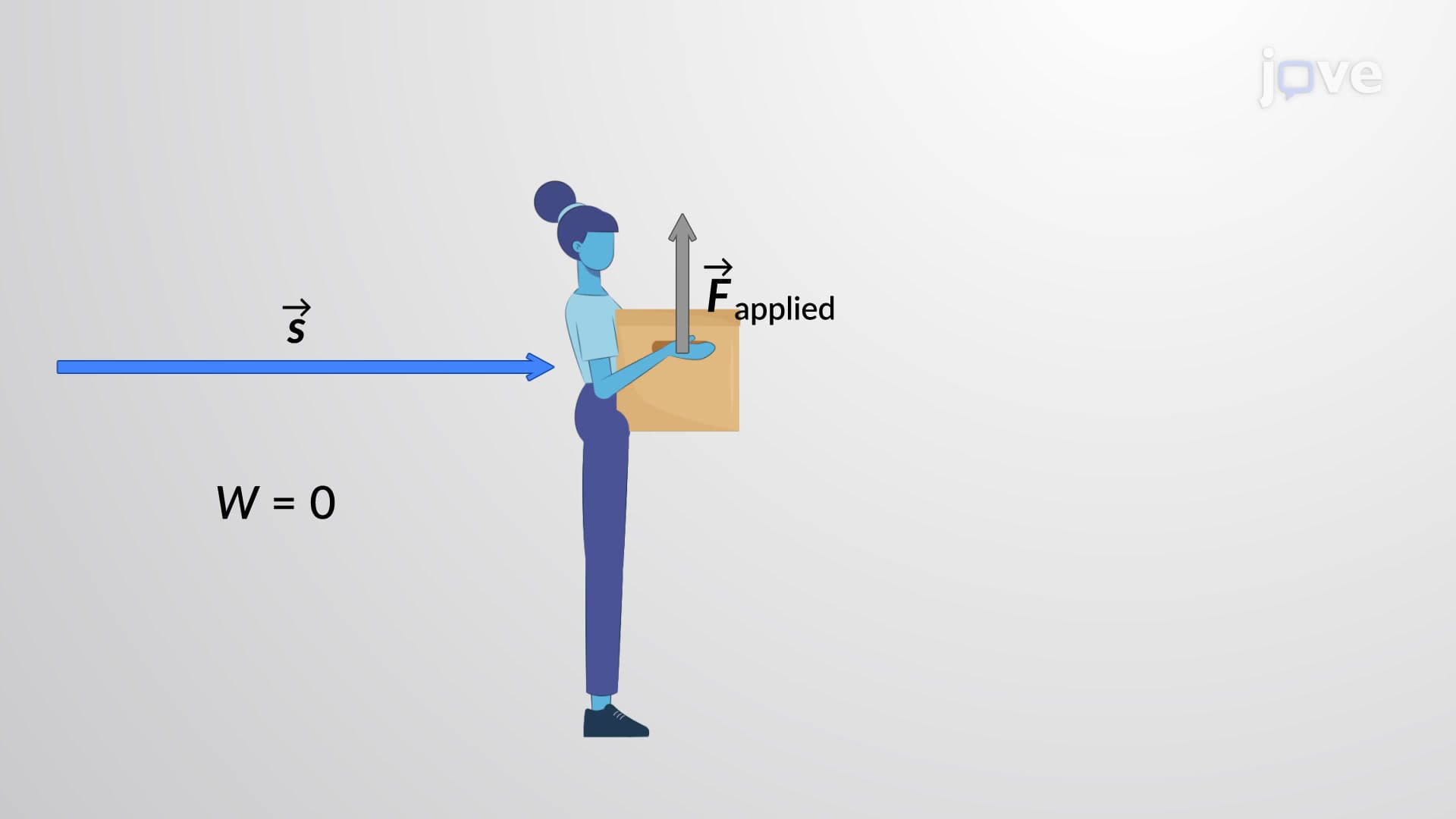
Understanding work's sign convention proves crucial for mastering this concept. Positive work occurs when applied forces increase an object's speed-like a car's engine accelerating the vehicle forward. The kinetic energy increases, and work done equals this energy gain. Conversely, negative work happens when forces oppose motion, such as friction brakes slowing a moving car. Here, kinetic energy decreases, and work done equals the energy loss. Zero work occurs when forces act perpendicular to motion or when an object maintains constant speed despite applied forces.
The work energy theorem appears frequently in standardized tests like the SAT Subject Test in Physics and AP Physics exams. Students apply it to analyze collision problems, calculate stopping distances for vehicles, and understand energy transformations in mechanical systems. For instance, when NASA engineers calculate spacecraft orbital maneuvers, they use this theorem to determine fuel requirements for velocity changes. Similarly, automotive engineers apply it when designing safety systems that absorb kinetic energy during crashes, converting that energy into deformation work to protect passengers.
Related Micro-courses