Loading video…


 15 Concepts
 174.4K views

Video Summary: What Is Work
Ever wondered why pushing a car up a hill feels so exhausting? Work occurs when energy transfers between objects through applied force, making it one of physics's most practical concepts. Picture an NFL linebacker tackling a quarterback-the force applied over the distance moved demonstrates work in action. Understanding what is work involves recognizing that only force components parallel to displacement contribute to energy transfer. Watch the full video on JoVE Coach to master this concept with expert-led visuals and step-by-step explanations.
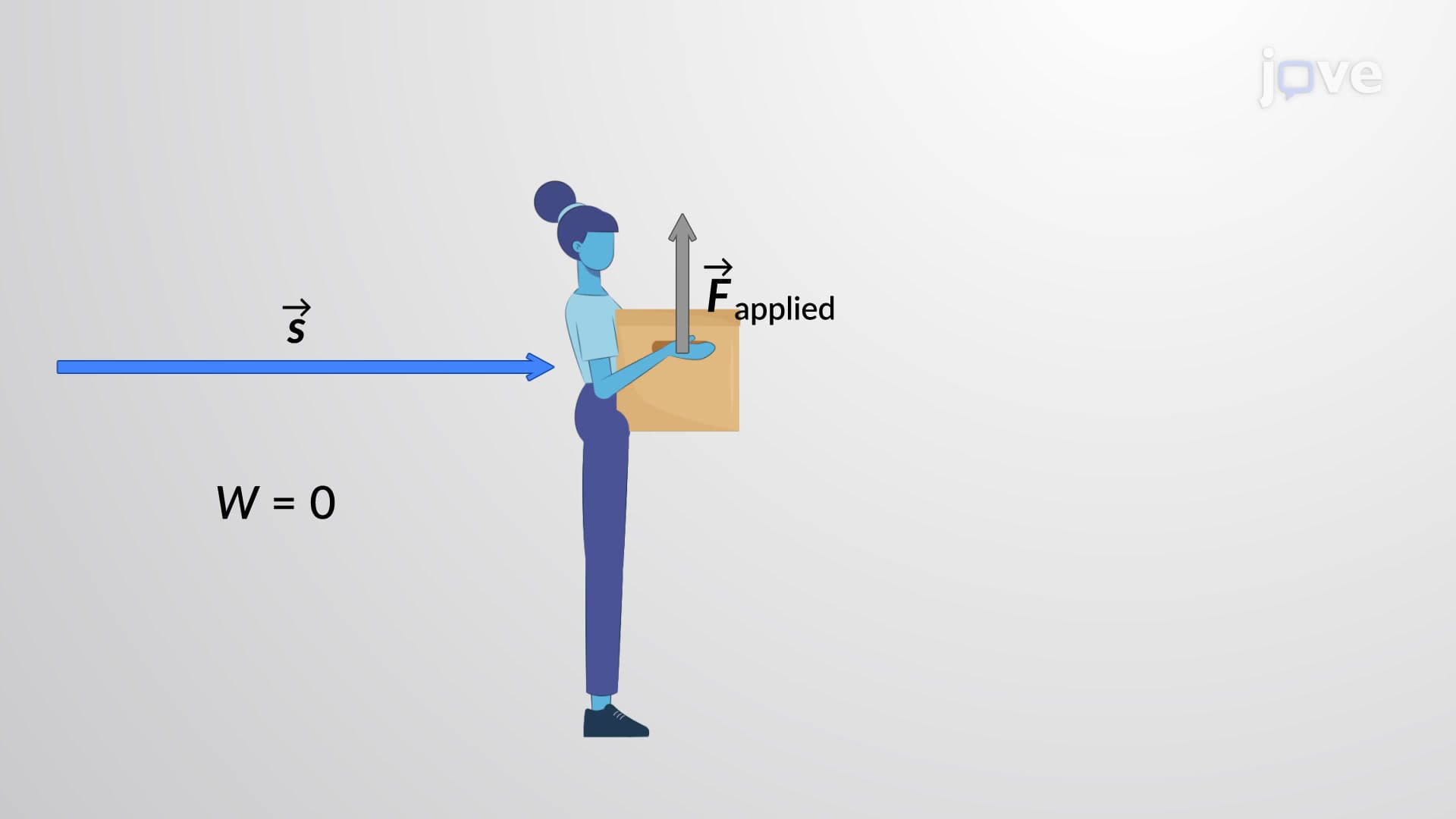
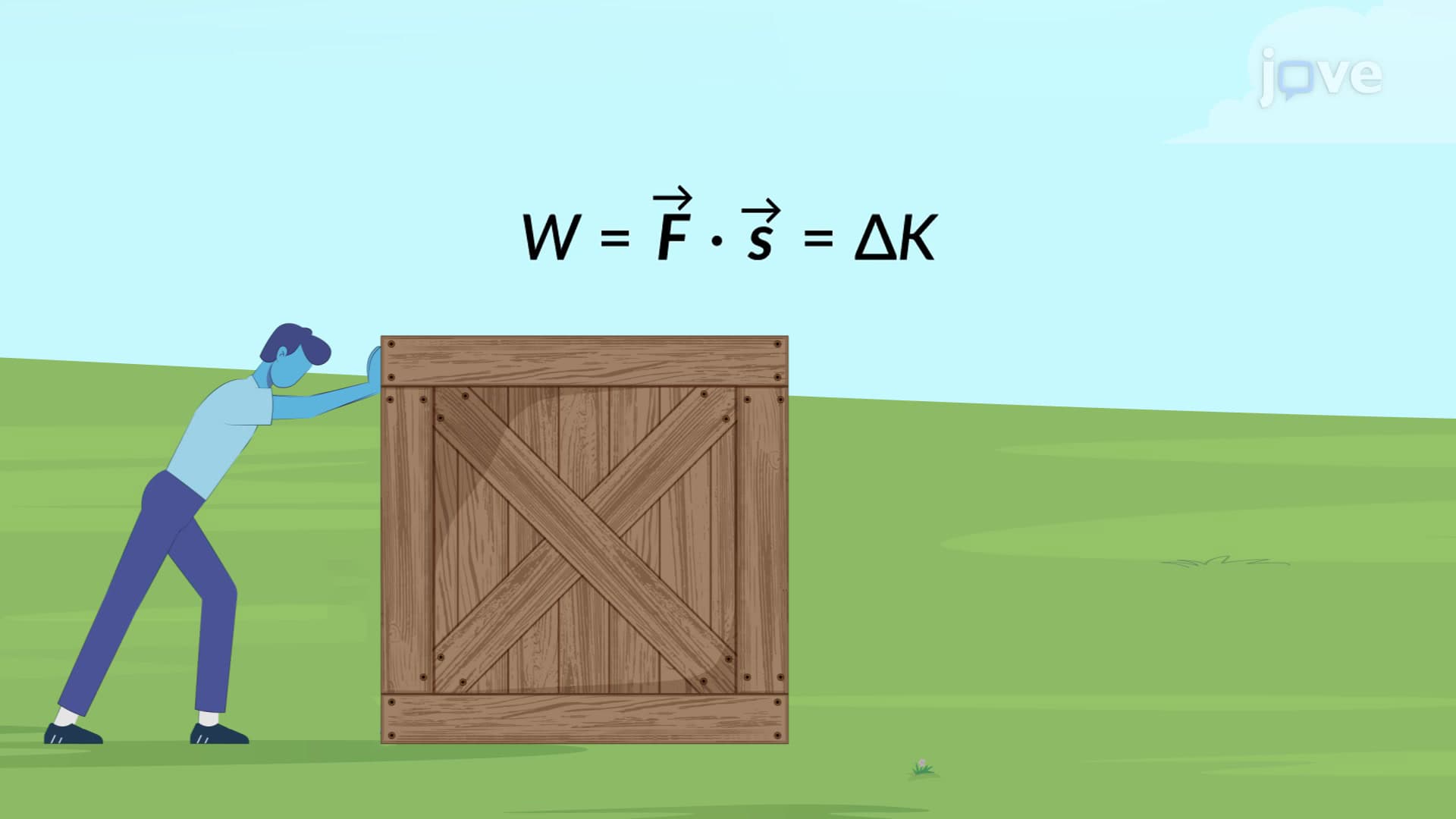
Work represents one of physics's most fundamental concepts, describing energy transfer when forces act through displacement. Unlike everyday language where "work" might mean any effort, physics defines work precisely: energy transfer occurs only when force components act parallel to an object's movement.
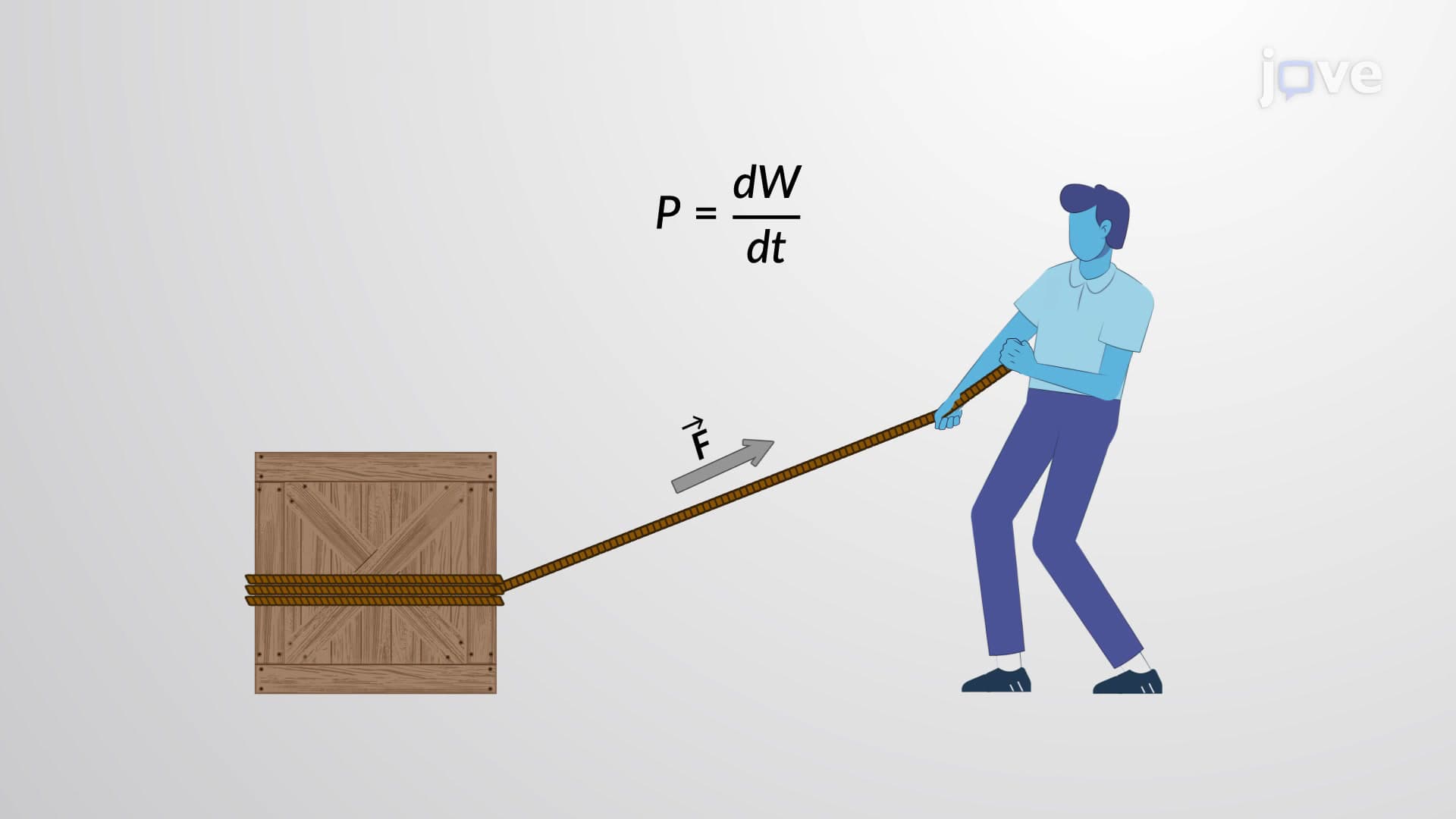
The basic work equation appears deceptively simple: W = F · d. However, this dot product reveals crucial insights. When you push a shopping cart straight ahead, maximum work occurs because force aligns with displacement. Push at an angle, and only the horizontal force component contributes to work-the vertical component does nothing.
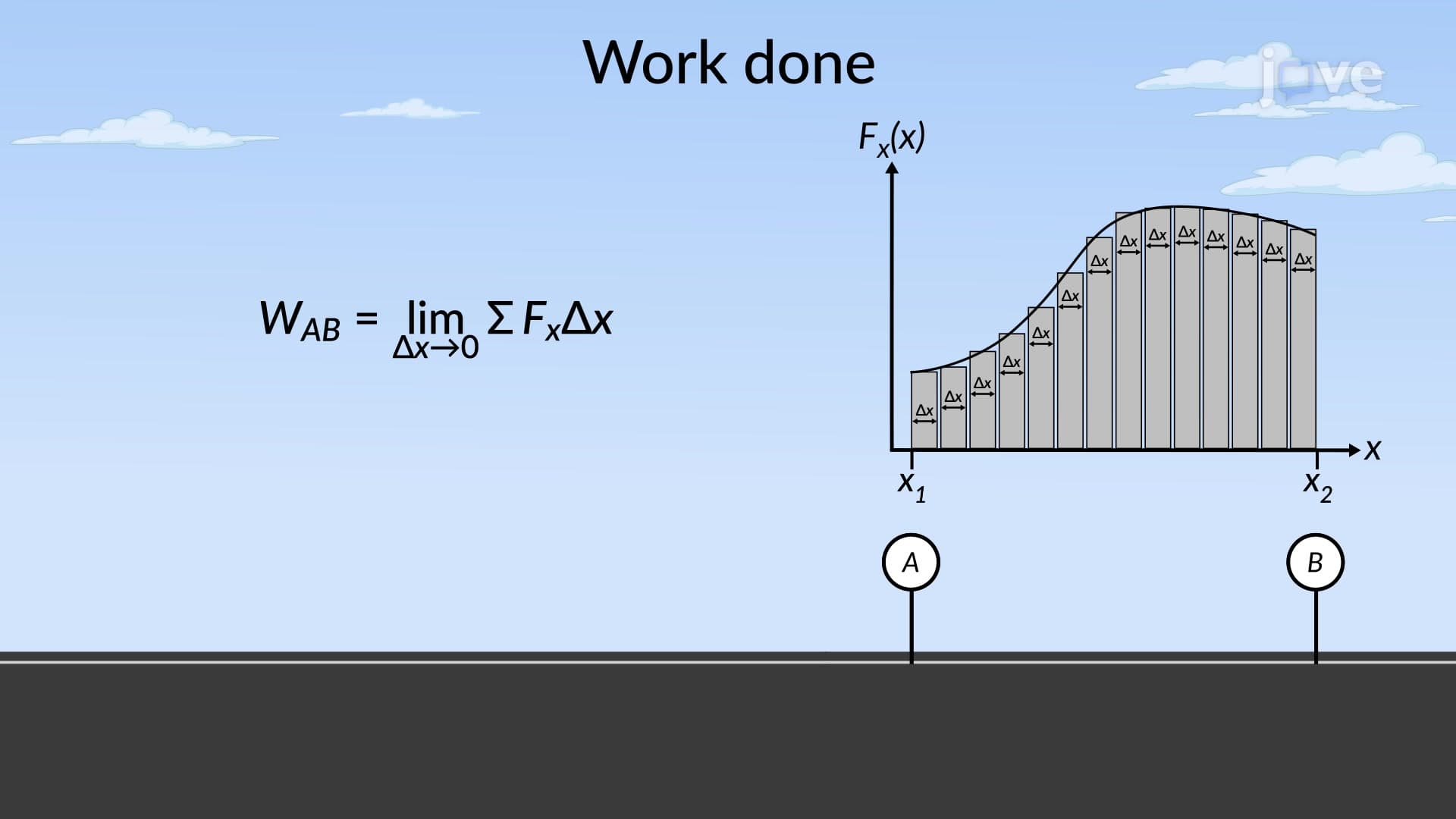
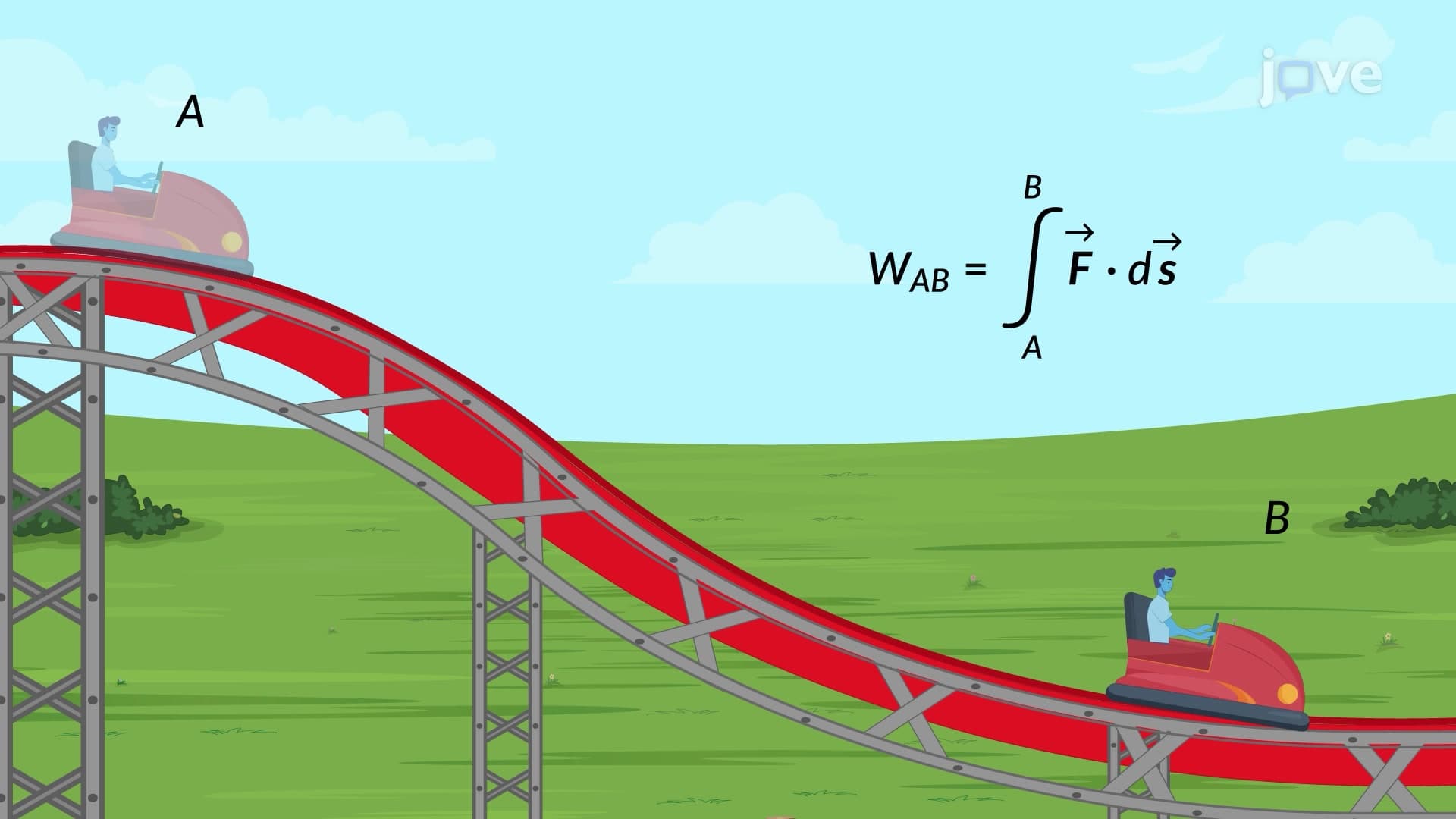
For variable forces, calculus becomes essential. Consider a basketball player compressing then releasing a basketball. The work integral W = ∫F·ds accounts for changing force throughout compression. Spring systems exemplify this perfectly: W = ½k(x₂² - x₁²), where k represents the spring constant.
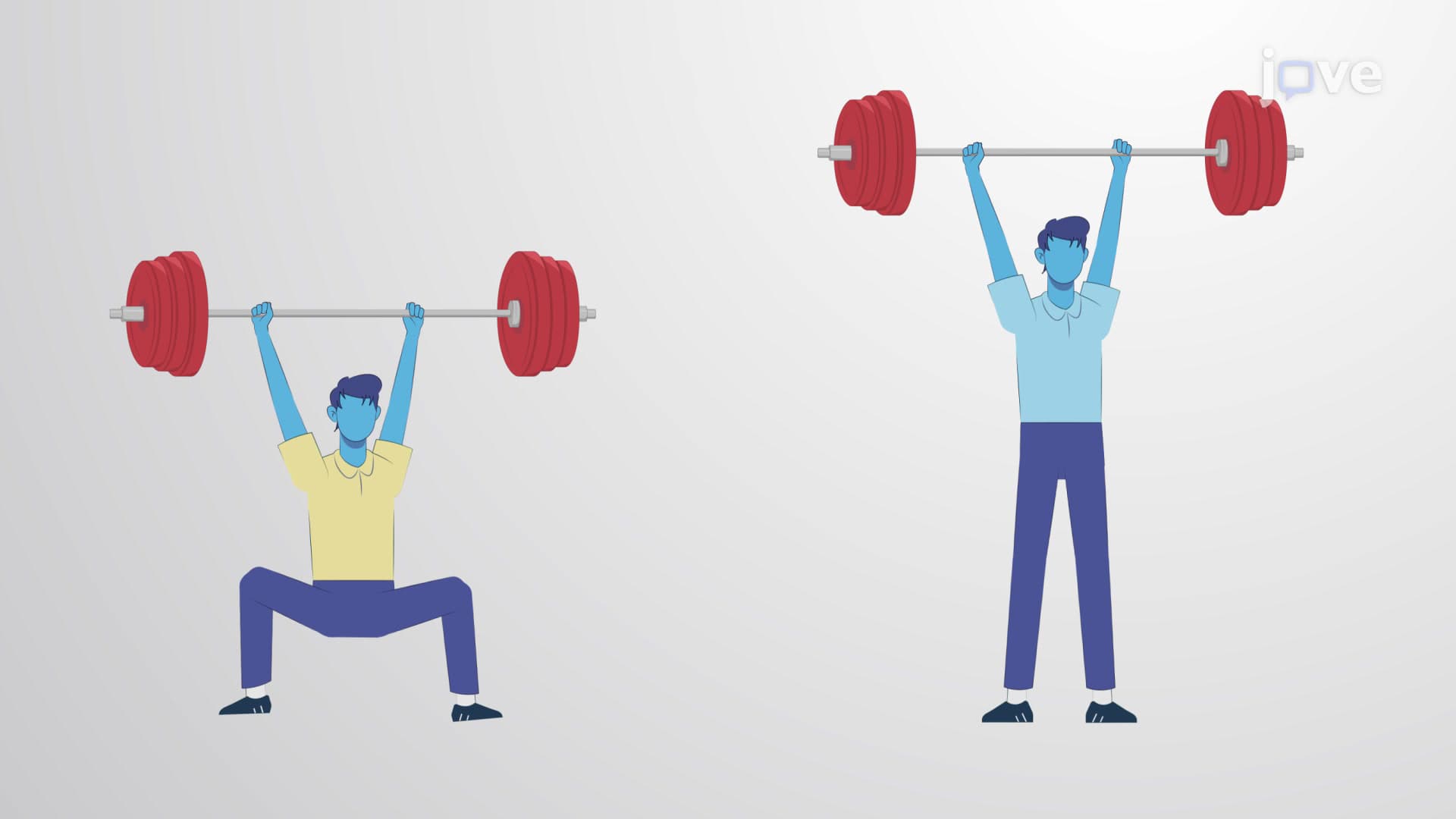
Construction workers understand work intuitively. Lifting concrete blocks requires positive work (force and displacement align upward). Lowering blocks involves negative work (gravity does positive work while worker tension does negative work). This concept appears frequently on AP Physics exams and college mechanics courses.
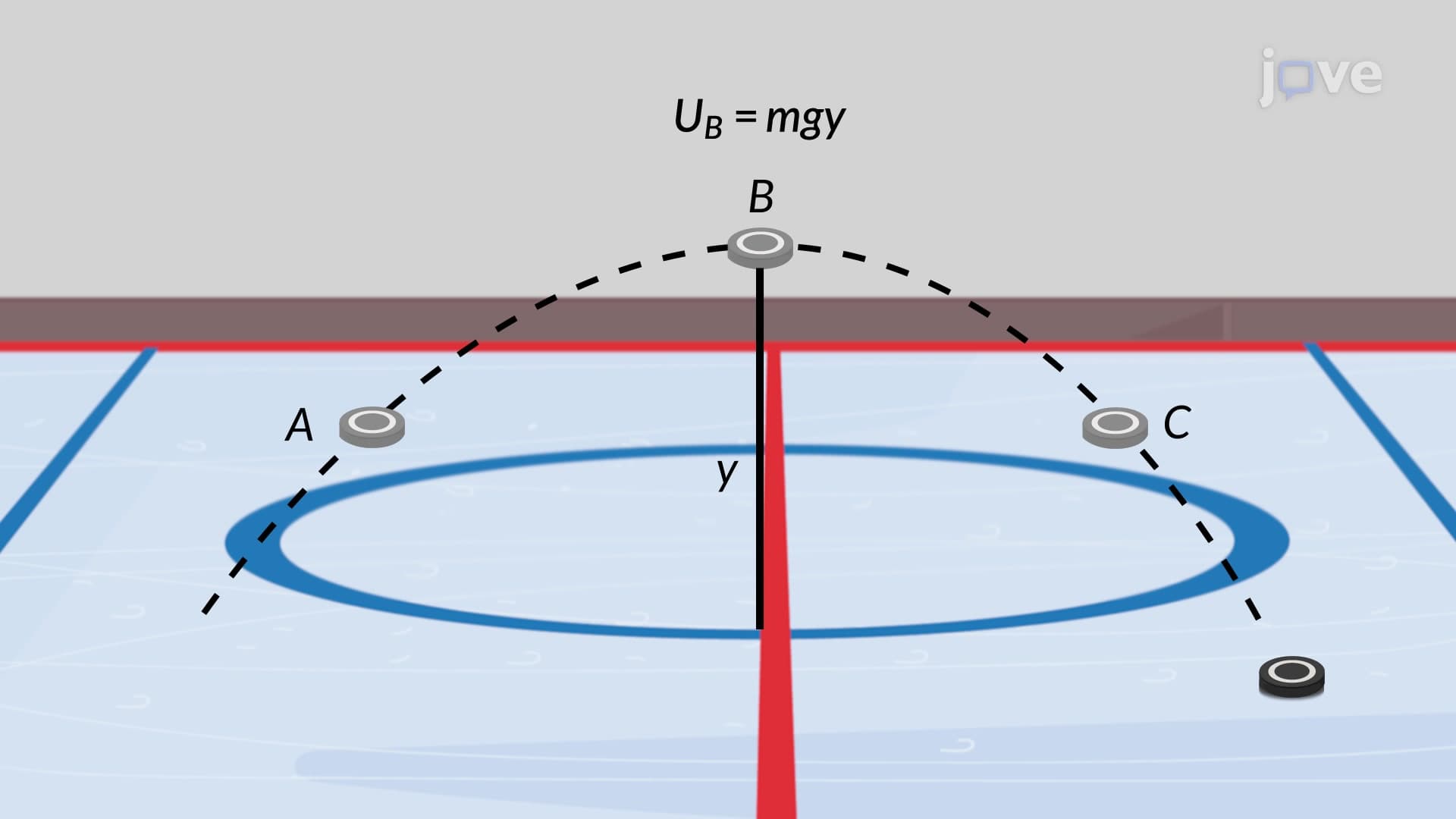
Path independence distinguishes conservative from non-conservative forces. Gravitational work depends only on height change, not the route taken-crucial for solving SAT Physics problems efficiently. Friction work, however, depends entirely on path length, making longer routes require more energy.
Work-energy theorem links work directly to kinetic energy changes: W(net) = ΔKE. This relationship proves invaluable for analyzing collisions, pendulum motion, and roller coaster physics-all common exam topics. Understanding work deepens comprehension of mechanical energy conservation, preparing students for advanced physics concepts in college and standardized tests like the MCAT.
Related Micro-courses