Loading video…


 15 Concepts
 174.4K views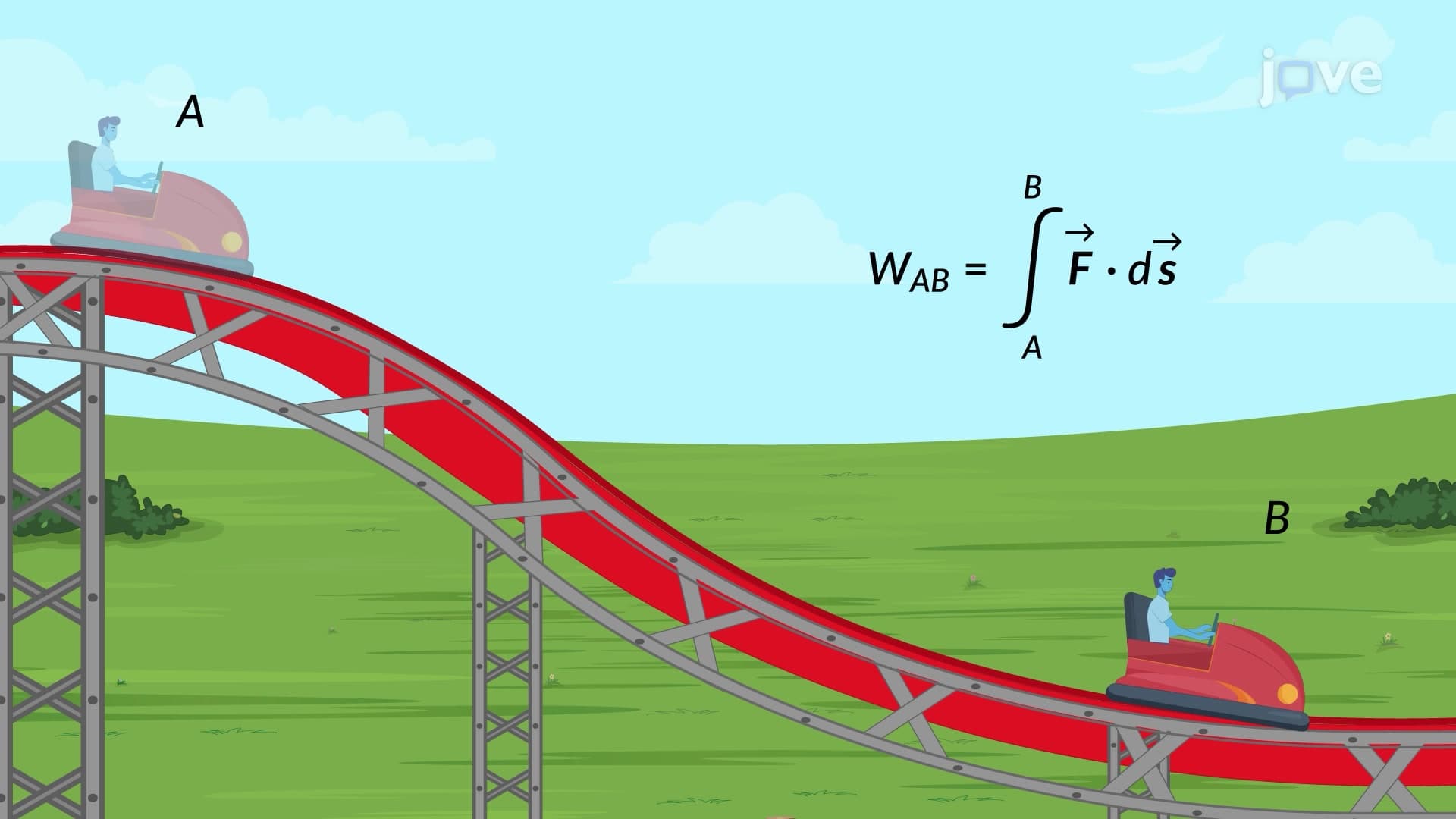

Video Summary: Work Energy Theorem for Motion Explained
Ever wonder why a baseball hit deep into the outfield at Fenway Park carries so much energy? The work energy theorem for motion reveals that work done displacing an object along any path-curved or straight-equals its kinetic energy change. Consider a pendulum swinging in a physics lab: as gravity does work on the bob, its potential energy converts to kinetic energy following this fundamental principle. The Work Energy Theorem For Motion Explained demonstrates how forces create motion through energy transfer in real-world scenarios. Watch the full video on JoVE Coach to master this concept with expert-led visuals and step-by-step explanations.
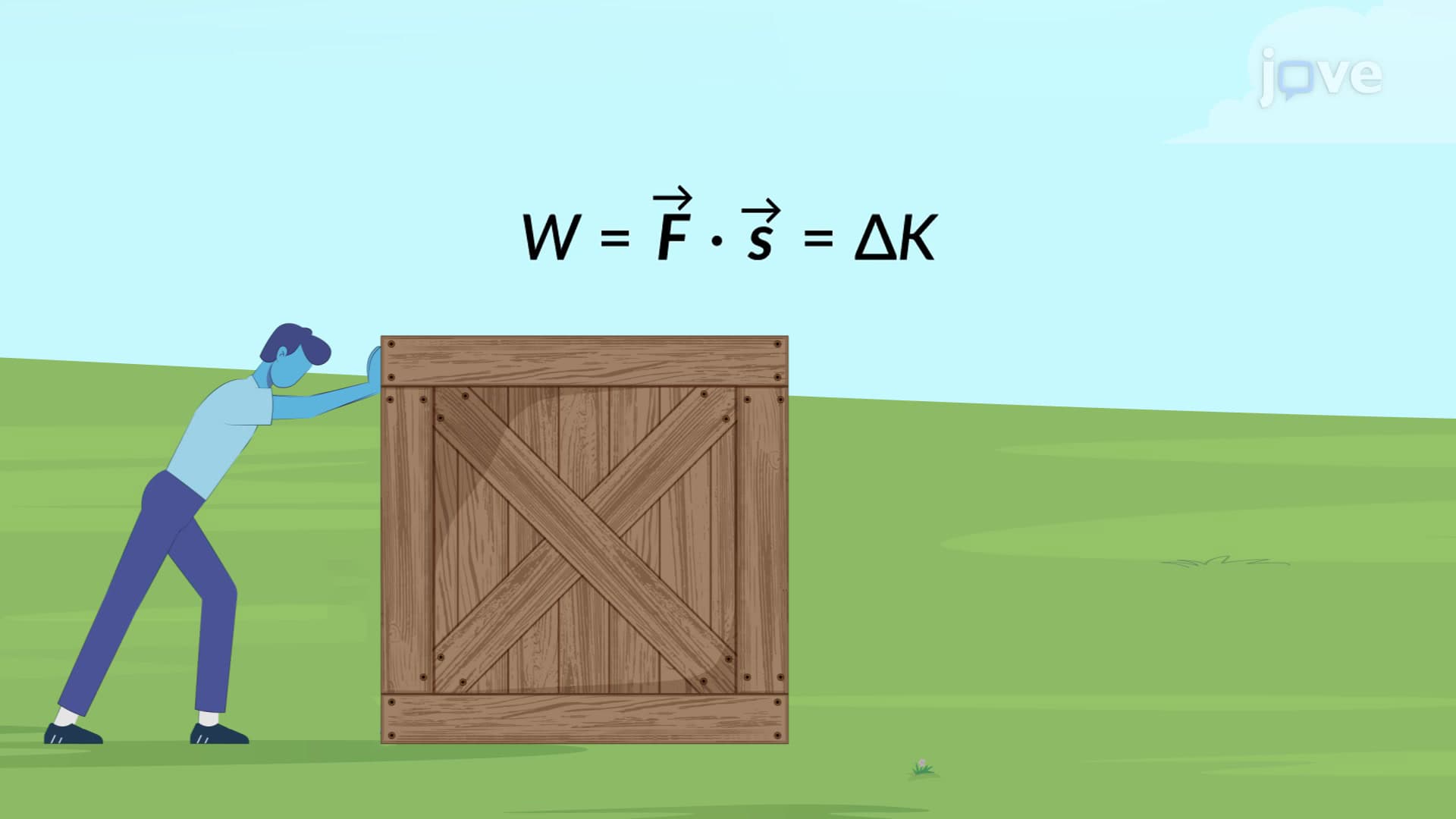
The work-energy theorem represents one of physics' most powerful tools for analyzing motion, establishing that the net work done on an object equals its change in kinetic energy: W(net) = ΔKE = (1/2)mv(f)² - (1/2)mv(i)². This theorem applies universally-whether an object moves along a straight highway or follows the complex curves of a Six Flags roller coaster in California.
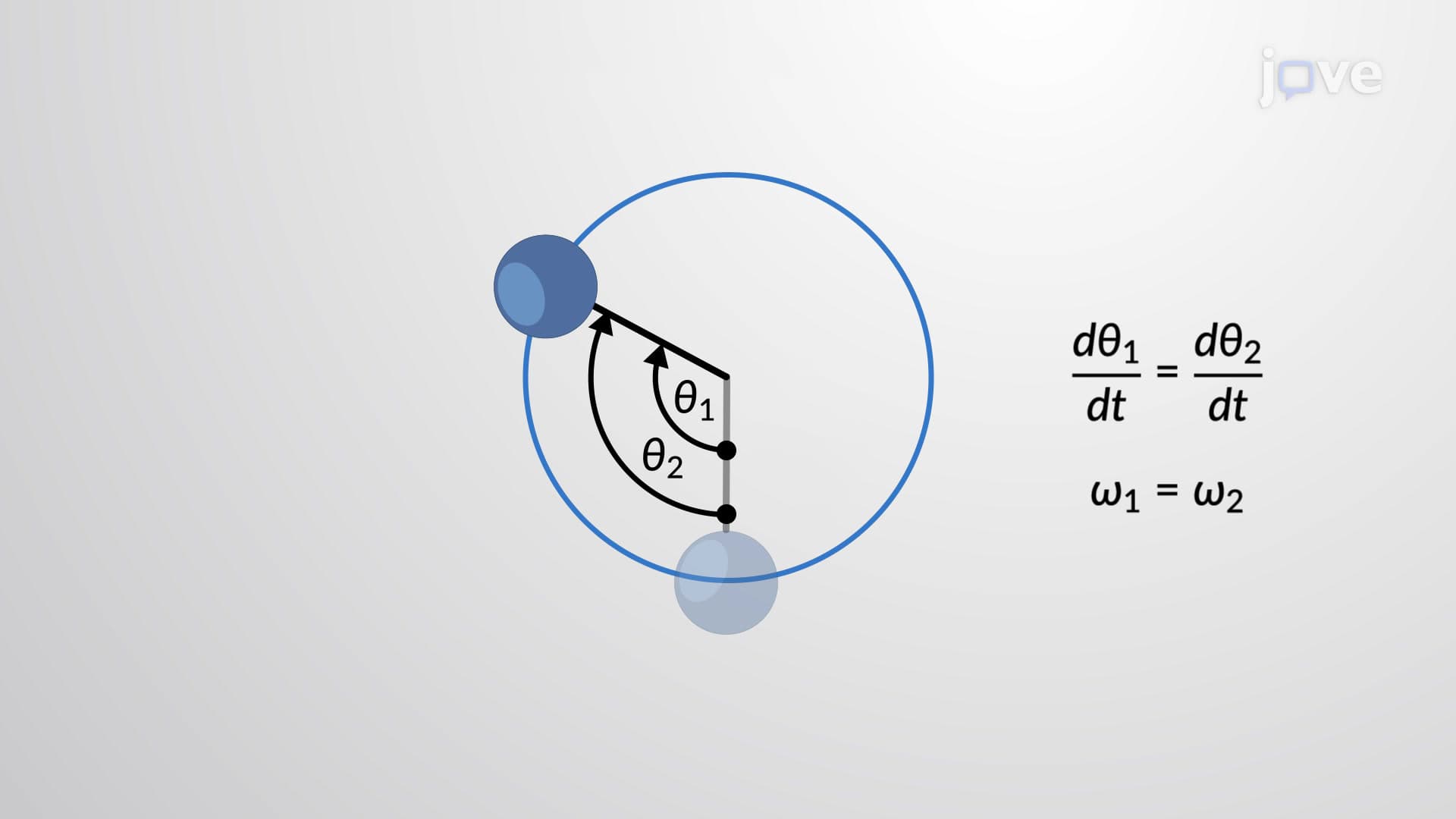
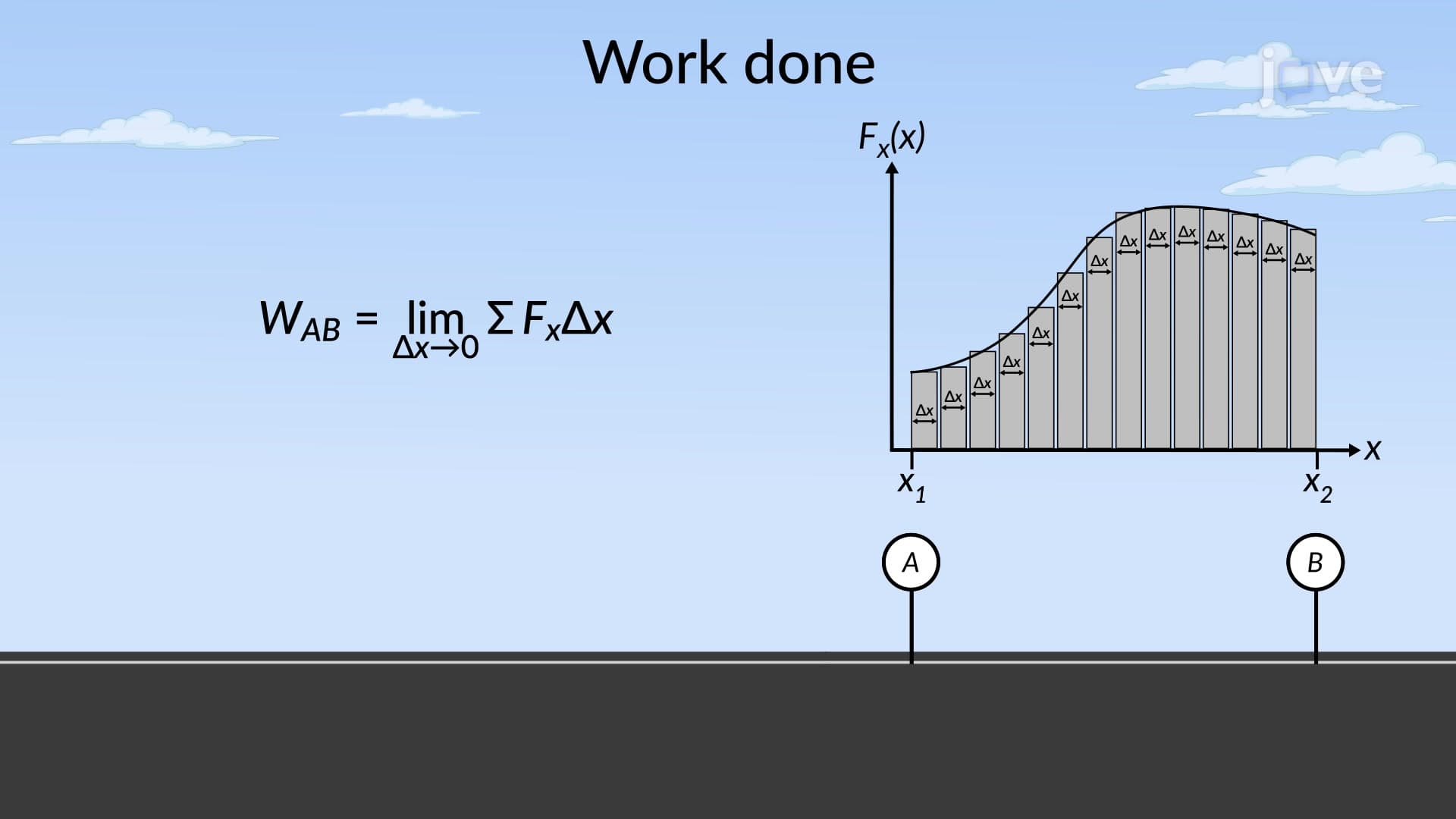
When objects follow curved paths, calculating work requires integration techniques. Consider the pendulum example: as the bob swings from its highest point to the bottom, we must integrate the dot product of force and displacement vectors along the entire arc. The gravitational force component tangent to the path varies with position, making integration necessary: W = ∫F·ds from initial to final position.
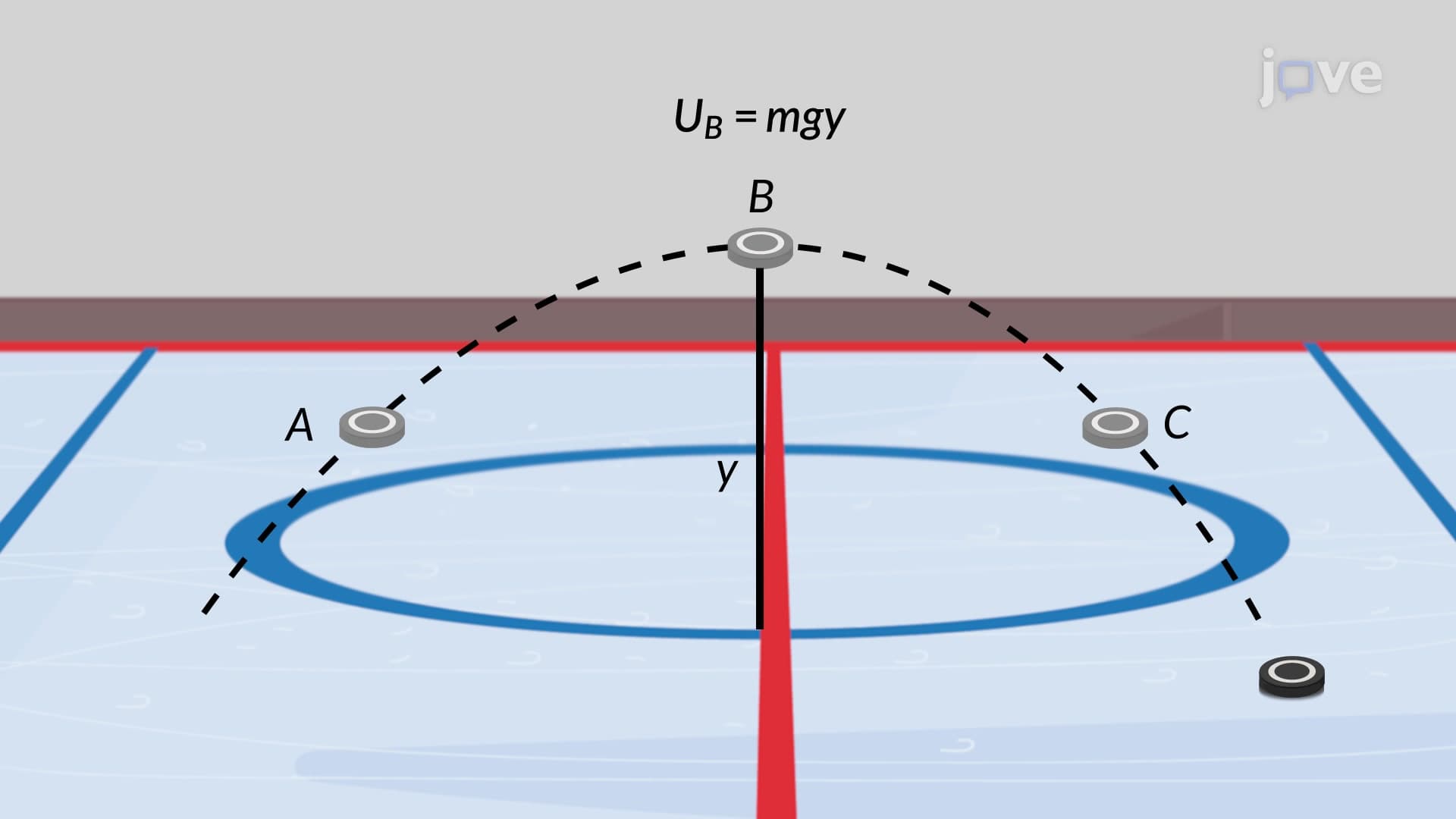
For pendulum motion, this integration reveals that work done by gravity equals mgh, where h represents the vertical height change. This work directly converts to kinetic energy, demonstrating energy conservation principles that appear frequently on AP Physics exams and college mechanics courses.
The theorem explains countless phenomena in American sports and engineering. When a NASCAR driver accelerates through turn four at Daytona International Speedway, the engine does work against friction and air resistance, increasing the car's kinetic energy. Similarly, when a gymnast swings on uneven bars, gravitational work continuously transforms between potential and kinetic energy forms.
Understanding these transformations proves crucial for engineering applications. Bridge designers at firms like AECOM must account for how wind work affects suspension cables, while aerospace engineers at Boeing calculate how thrust work accelerates aircraft during takeoff sequences.
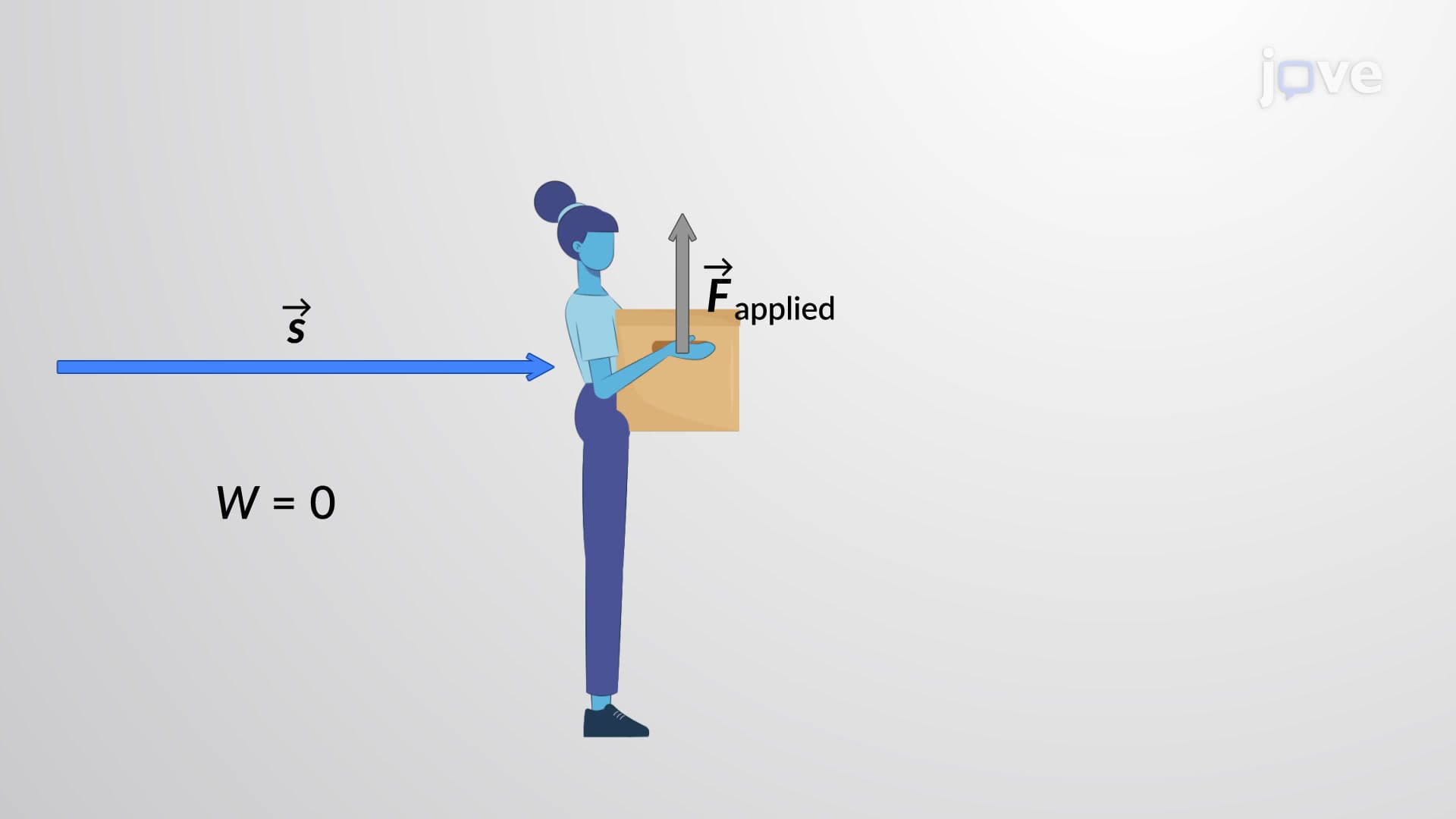
Students preparing for standardized tests should master the theorem's applications to both simple and complex systems. The pendulum problem frequently appears on AP Physics C exams, requiring students to set up proper coordinate systems and apply calculus-based integration techniques. College-level physics courses often extend this concept to analyze systems with multiple forces, where students must carefully identify which forces perform work versus those that don't (like normal forces perpendicular to motion).
Practice problems typically involve identifying initial and final energy states, then applying conservation principles to solve for unknown quantities like final velocity or maximum height reached.
Related Micro-courses