Loading video…


 15 Concepts
 174.4K views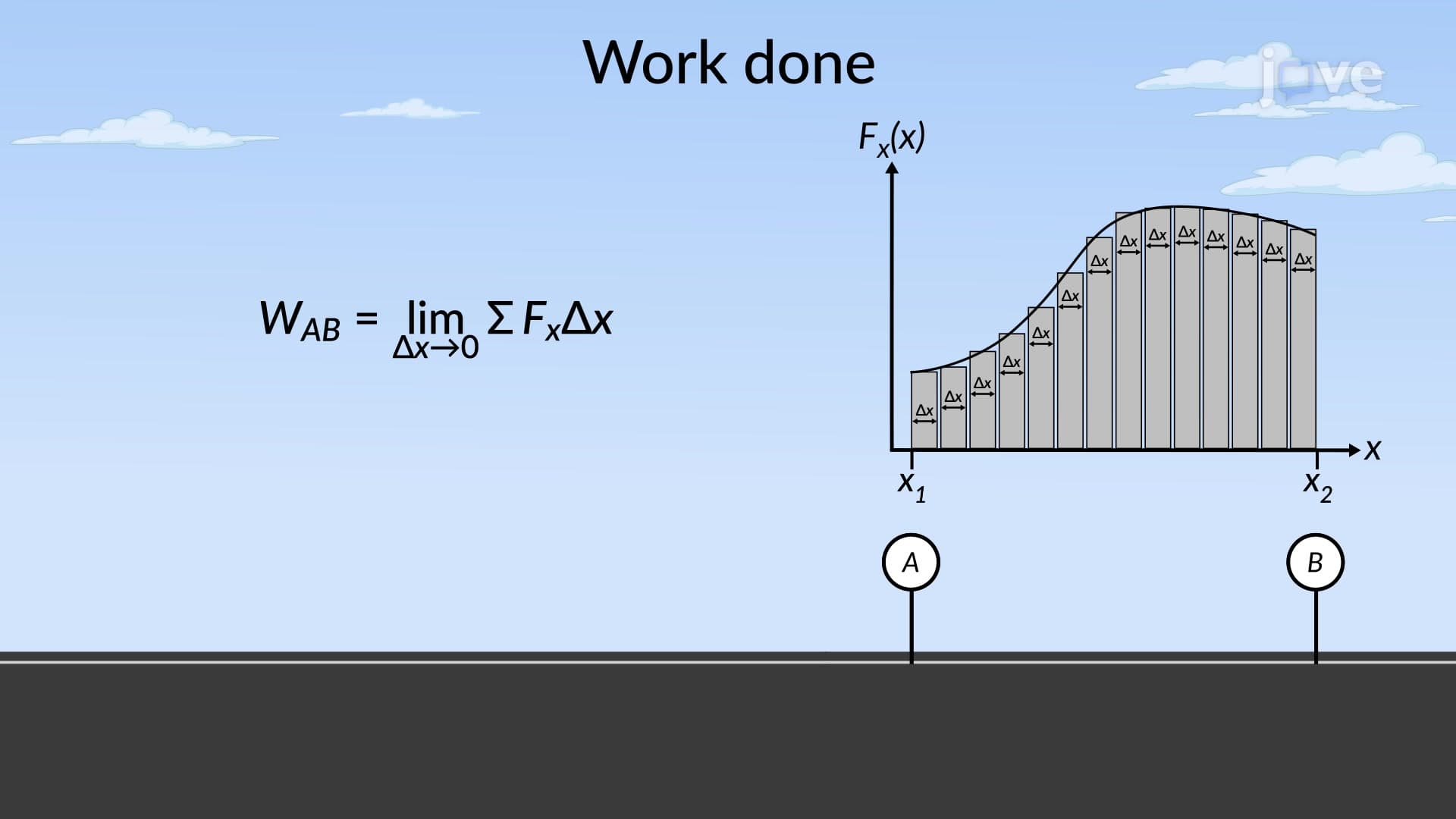

Video Summary: Work and Energy for Variable Forces Explained
Did you know that a Tesla Model 3 accelerating from 0 to 60 mph experiences constantly changing forces due to air resistance, road friction, and motor torque variations? Understanding work and energy for variable forces becomes crucial when analyzing real-world motion where forces aren't constant. Unlike simple constant-force problems, variable forces require integration techniques to calculate total work done. This concept bridges basic mechanics with advanced calculus applications, helping students tackle complex engineering problems in automotive design and aerospace. Watch the full video on JoVE Coach to master this concept with expert-led visuals and step-by-step explanations.
Work and energy for variable forces represents a fundamental shift from introductory physics concepts. While constant forces allow simple multiplication (Work = Force × Distance), real-world scenarios like NASA rocket launches or Ford F-150 acceleration involve forces that change continuously with position, velocity, or time.
Consider a practical example: when a baseball pitcher throws a fastball, the force applied by their hand varies significantly throughout the throwing motion. Initially, minimal force builds up potential energy in the arm's spring-like motion. As the pitcher's arm accelerates forward, force increases dramatically, reaching maximum values during the rapid extension phase. Finally, force decreases as the ball leaves the hand. Traditional W = F × d calculations would provide completely inaccurate results.
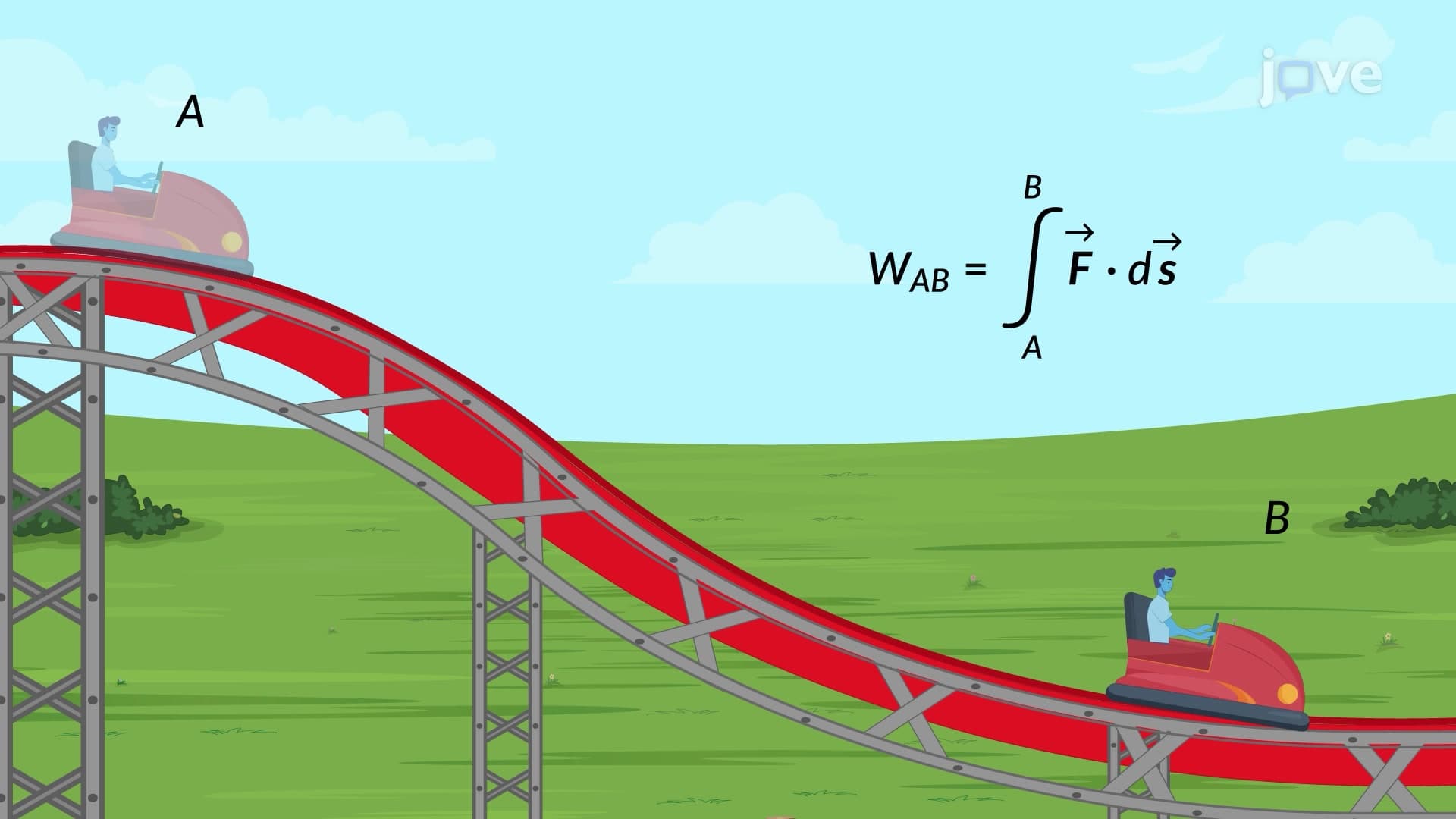
The key insight lies in breaking down variable force problems into infinitesimally small segments where force can be considered approximately constant. This strip method, fundamental to integral calculus, transforms the work calculation into:
Work = ∫ F(x) dx (from point A to point B)
This integral represents the area under the force-displacement curve, providing exact work values regardless of how dramatically the force varies. For AP Physics C students and college undergraduates, this concept bridges mechanics with calculus applications, appearing frequently on Advanced Placement exams and university midterms.
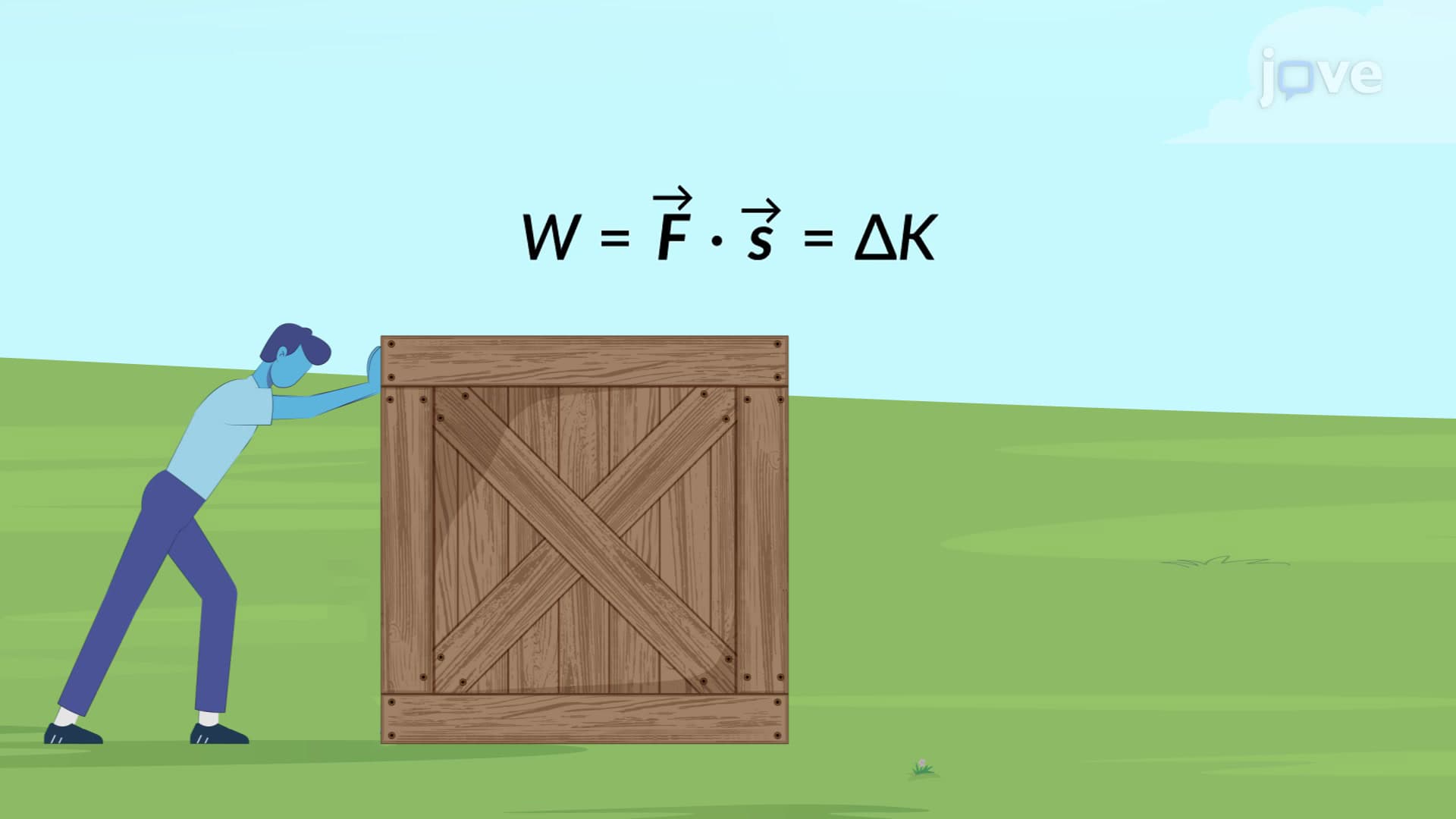
Variable force analysis becomes particularly powerful when connected to the work-energy theorem. Using Newton's second law (F = ma) and applying calculus chain rules, we can rewrite work integrals in terms of kinetic energy changes:
Work done = Change in kinetic energy = (1/2)mv(final)² - (1/2)mv(initial)²
This relationship proves invaluable for engineering applications. Boeing engineers use these principles when designing aircraft engines, where thrust forces vary continuously based on altitude, air density, and flight speed requirements.
Students encounter work and energy for variable forces concepts in numerous practical contexts. Automotive engineers at General Motors apply these principles when designing hybrid vehicle regenerative braking systems, where braking force varies based on battery charge levels and driving conditions. Similarly, SpaceX mission planners use variable force calculations to optimize fuel consumption during rocket launches, where gravitational forces decrease with altitude while atmospheric resistance changes with velocity.
For exam success on SAT Subject Tests, AP Physics, or college physics courses, students should practice identifying variable force scenarios, setting up appropriate integrals, and connecting mathematical results to physical interpretations.
Related Micro-courses