Loading video…


 7 Concepts
 5.5K views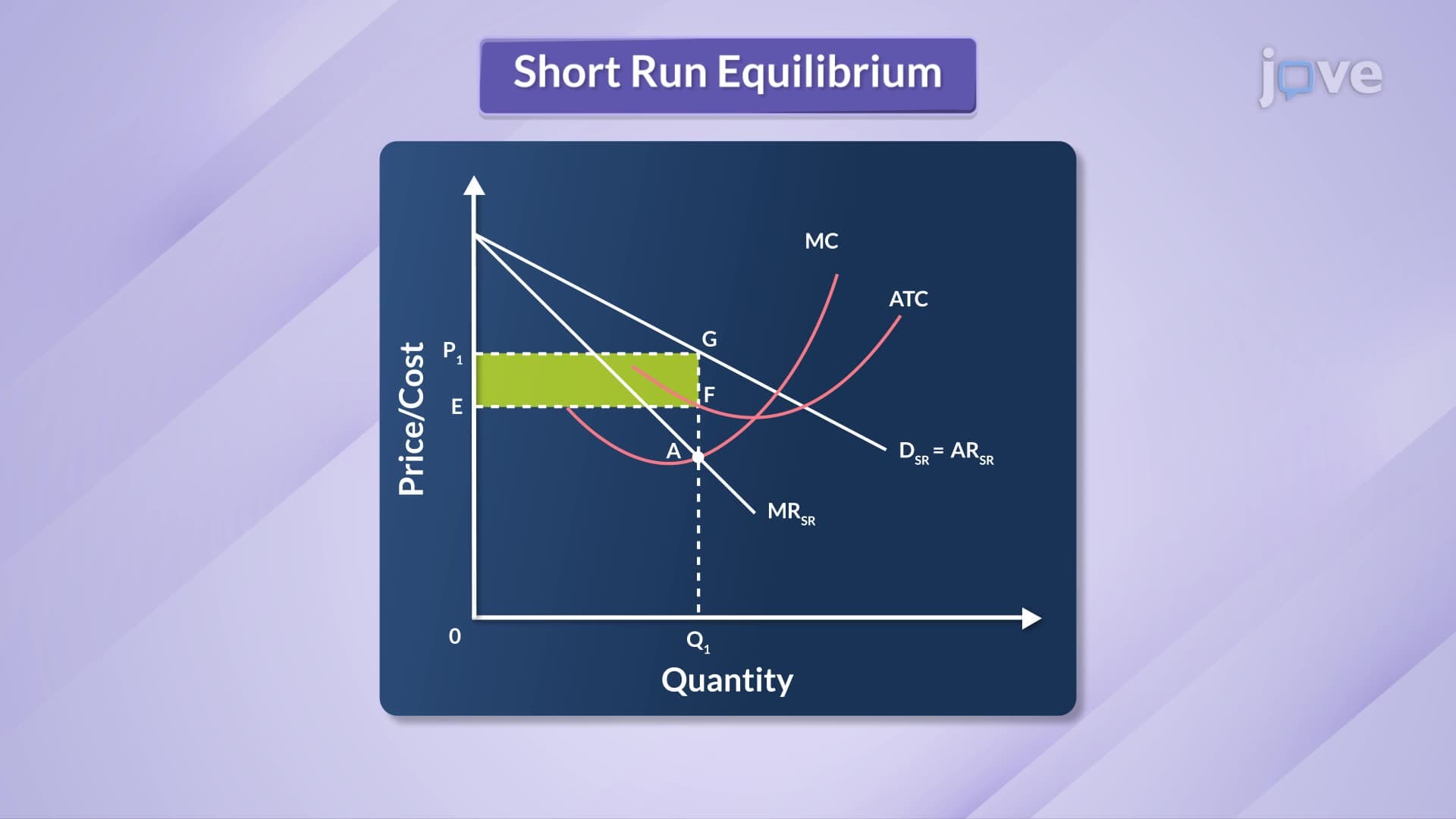

Video Summary: Short Run Equilibrium Under Monopolistic Competition Explained
Ever wonder why Starbucks can charge $5 for coffee while maintaining packed stores? Short run equilibrium under monopolistic competition reveals how firms like Starbucks maximize profits by setting prices where marginal revenue equals marginal cost. In this market structure, companies earn economic profits temporarily until competitors enter, forcing innovation to maintain advantages. Understanding Short Run Equilibrium Under Monopolistic Competition Explained helps decode real business strategies. Watch the full video on JoVE Coach to master this concept with expert-led visuals and step-by-step explanations.
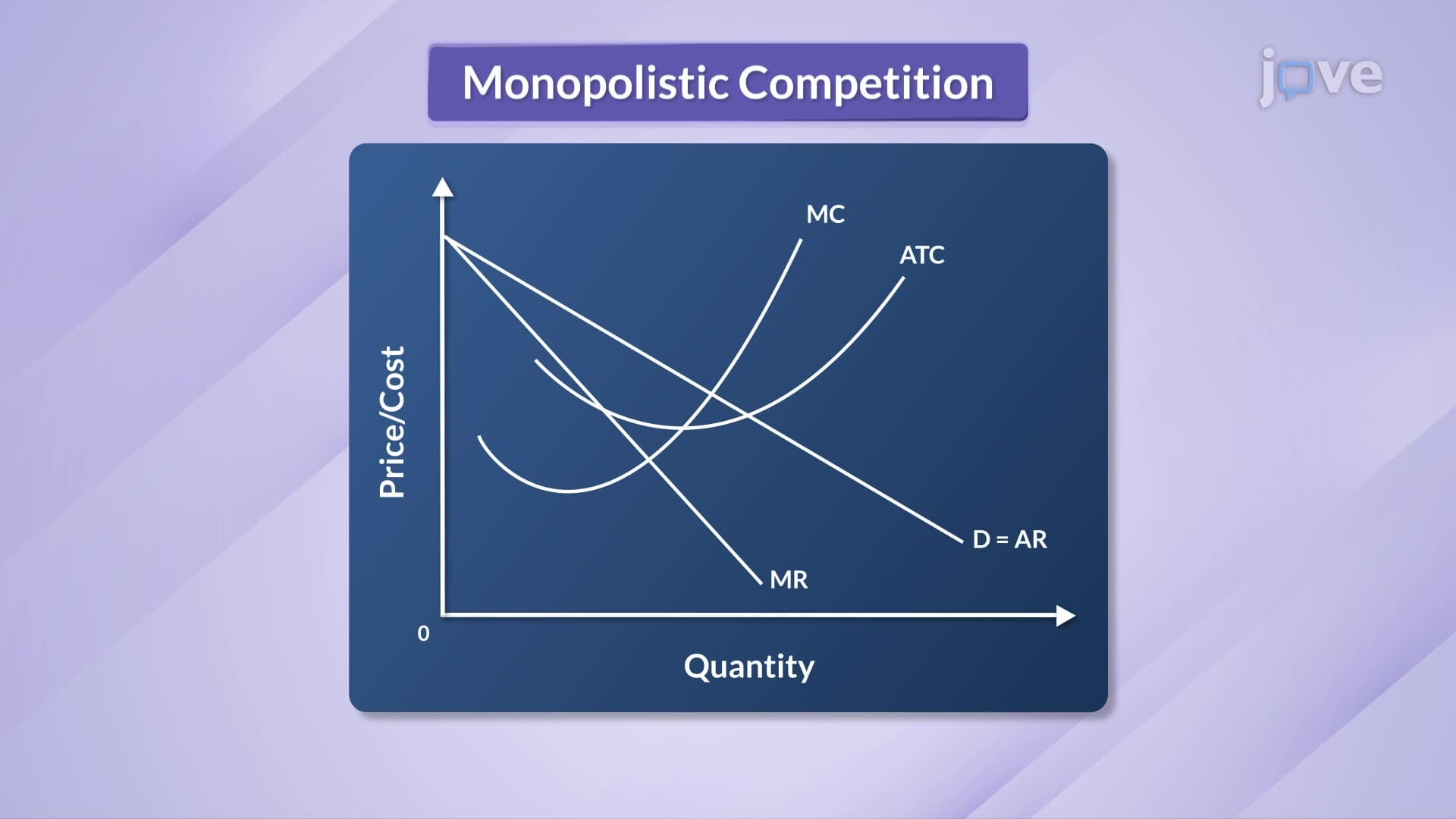
Short run equilibrium under monopolistic competition occurs when firms maximize profits by producing where marginal revenue equals marginal cost (MR = MC). Unlike perfect competition, monopolistically competitive firms face downward-sloping demand curves due to product differentiation, allowing them to set prices above marginal cost.
The profit-maximizing quantity occurs at the intersection of marginal revenue and marginal cost curves. Once firms determine this optimal output level, they use the demand curve to set corresponding prices. This pricing strategy explains why local coffee shops can charge premium prices-they've differentiated their products enough to create unique demand curves.
Consider Chipotle's pricing model: despite numerous competitors, their specific brand positioning allows them to charge higher prices than generic fast-food chains. In the short run equilibrium definition, Chipotle maximizes profits where their marginal revenue from additional burritos equals the marginal cost of producing them.
Short run equilibrium under monopolistic competition economics explained reveals three possible outcomes. First, if price exceeds average total cost (P > ATC), firms earn positive economic profits-the rectangular area between price and ATC represents this profit. Second, when price equals ATC (P = ATC), firms break even with zero economic profit. Third, if price falls below ATC (P < ATC), firms incur losses.
These profit conditions drive market dynamics. When Shake Shack initially entered markets and earned substantial profits, their success attracted competitors like Five Guys and In-N-Out to expand into similar territories. This demonstrates how short-run profits inevitably attract new entrants.
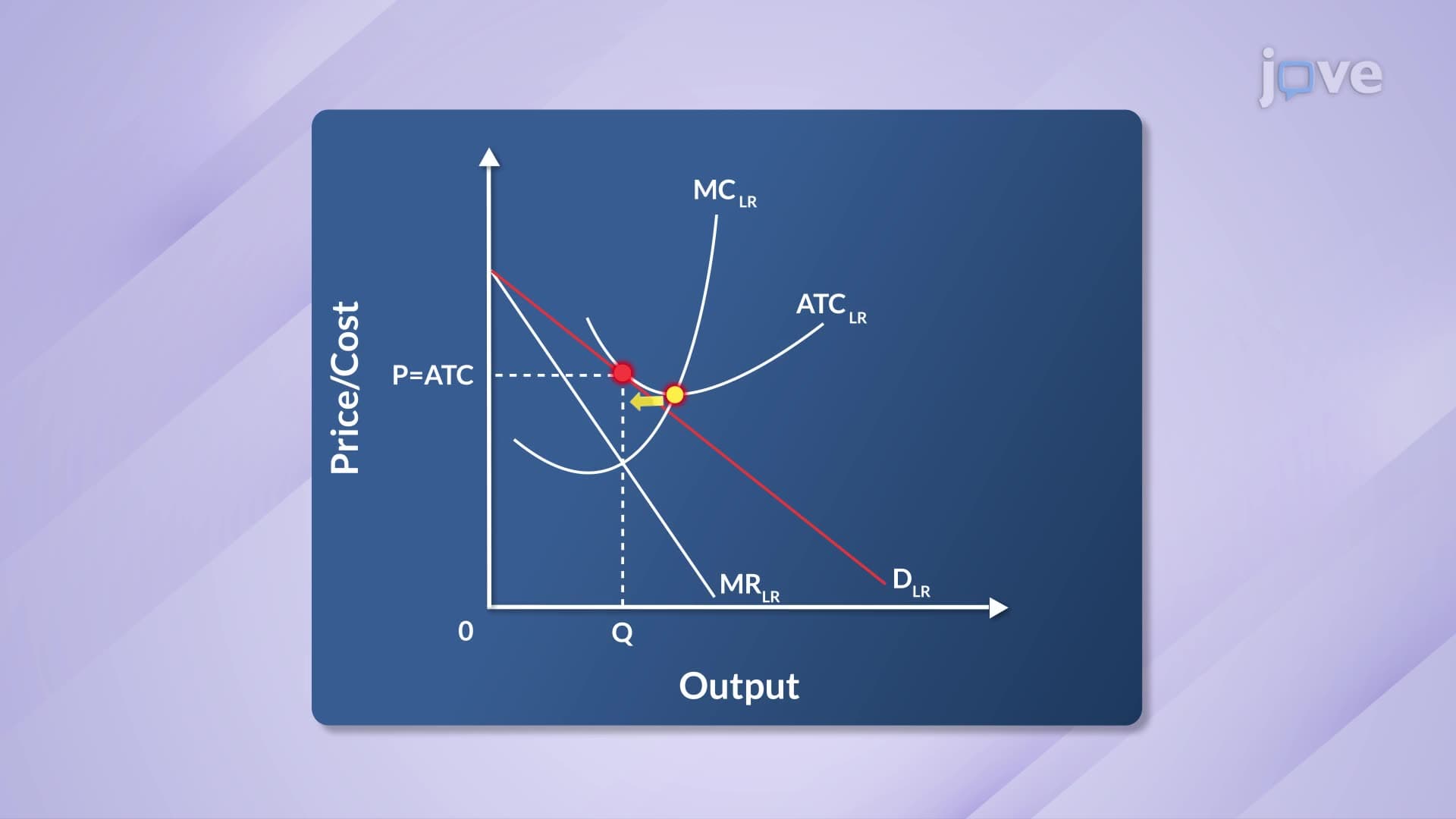
The short run equilibrium under monopolistic competition study guide emphasizes that positive economic profits cannot persist indefinitely. New market entrants increase competition, shifting individual firm demand curves leftward and reducing prices. Eventually, the market reaches long-run equilibrium where firms earn zero economic profit.
However, successful companies maintain profitability through continuous innovation and differentiation. Apple exemplifies this principle-despite intense smartphone competition, they maintain premium pricing through constant product innovation and brand differentiation. This concept frequently appears on AP Economics exams and college microeconomics midterms, where students analyze how firms sustain competitive advantages.
Understanding these equilibrium concepts proves essential for SAT Subject Tests and college-level economics courses, particularly when analyzing real market scenarios and business strategy decisions.
Related Micro-courses