Loading video…


 15 Concepts
 1.1M views

Video Summary: What Is First Law of Thermodynamics
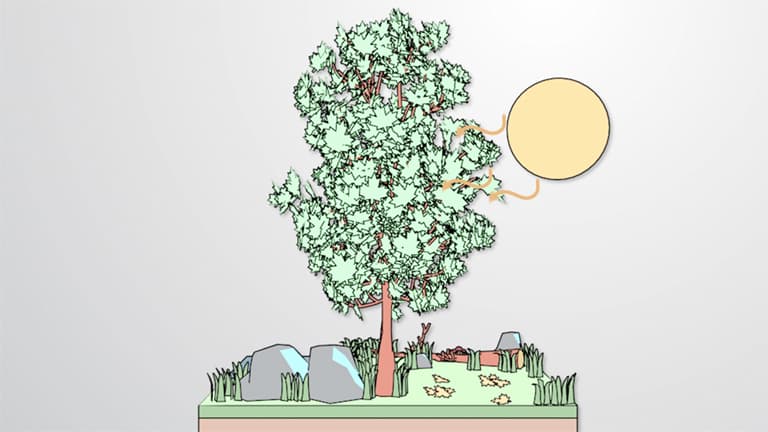
Did you know that the energy powering your smartphone right now follows the same fundamental rule that governs every ecosystem on Earth? The first law of thermodynamics states that energy cannot be created or destroyed, only transformed from one form to another. In Yellowstone National Park, solar energy captured by grass transforms into chemical energy, then into kinetic energy as bison graze, perfectly demonstrating What is First Law of Thermodynamics in action. Watch the full video on JoVE Coach to master this concept with expert-led visuals and step-by-step explanations.
The first law of thermodynamics represents one of the most fundamental principles governing our universe: energy conservation. This law states that the total energy of an isolated system remains constant-energy can neither be created nor destroyed, only converted from one form to another. This principle underlies everything from the smallest cellular processes to massive industrial systems across the United States.
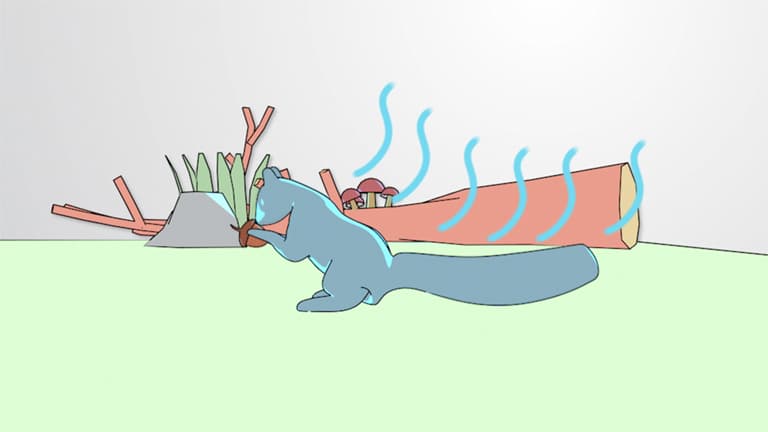
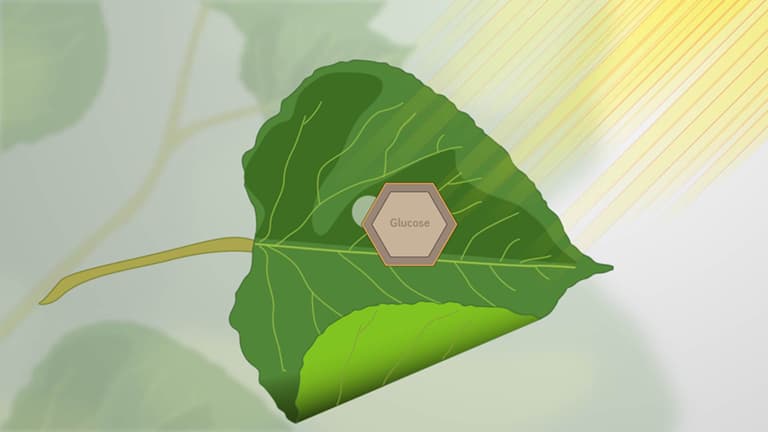
Biological systems provide exceptional examples of the first law in action. During photosynthesis, plants in America's national forests convert approximately 1-2% of available solar energy into chemical energy stored in glucose molecules. When a white-tailed deer consumes these plants, digestive enzymes break down complex carbohydrates, releasing stored chemical energy that transforms into mechanical energy for movement, thermal energy for maintaining body temperature, and additional chemical energy stored in ATP molecules.
This energy cascade continues throughout food webs. When a mountain lion hunts the deer, the chemical energy stored in the prey's tissues transfers to the predator, though significant energy disperses as heat during each transformation-a key insight for AP Biology students studying ecosystem energy flow.
The first law mathematically expresses as ΔU = Q - W, where ΔU represents the change in internal energy, Q represents heat added to the system, and W represents work done by the system. This equation appears frequently on MCAT physics sections and college thermodynamics exams.
Consider a steam turbine at a Texas power plant: chemical energy in natural gas converts to thermal energy through combustion, then to mechanical energy as steam drives turbine blades, and finally to electrical energy powering homes across the state. Despite multiple transformations, the total energy remains constant, though some inevitably disperses as waste heat.
American industries rely heavily on first law principles for energy efficiency calculations. Automotive engineers at Ford and General Motors use these concepts to optimize engine performance, calculating how chemical energy in gasoline transforms into kinetic energy while minimizing thermal losses. Similarly, aerospace engineers at NASA apply first law principles when designing spacecraft systems, ensuring energy budgets account for every transformation from launch to orbit.
Understanding these applications proves crucial for students preparing for engineering coursework or pursuing STEM careers in America's growing clean energy sector.
Related Micro-courses