Loading video…


 12 Concepts
 181.2K views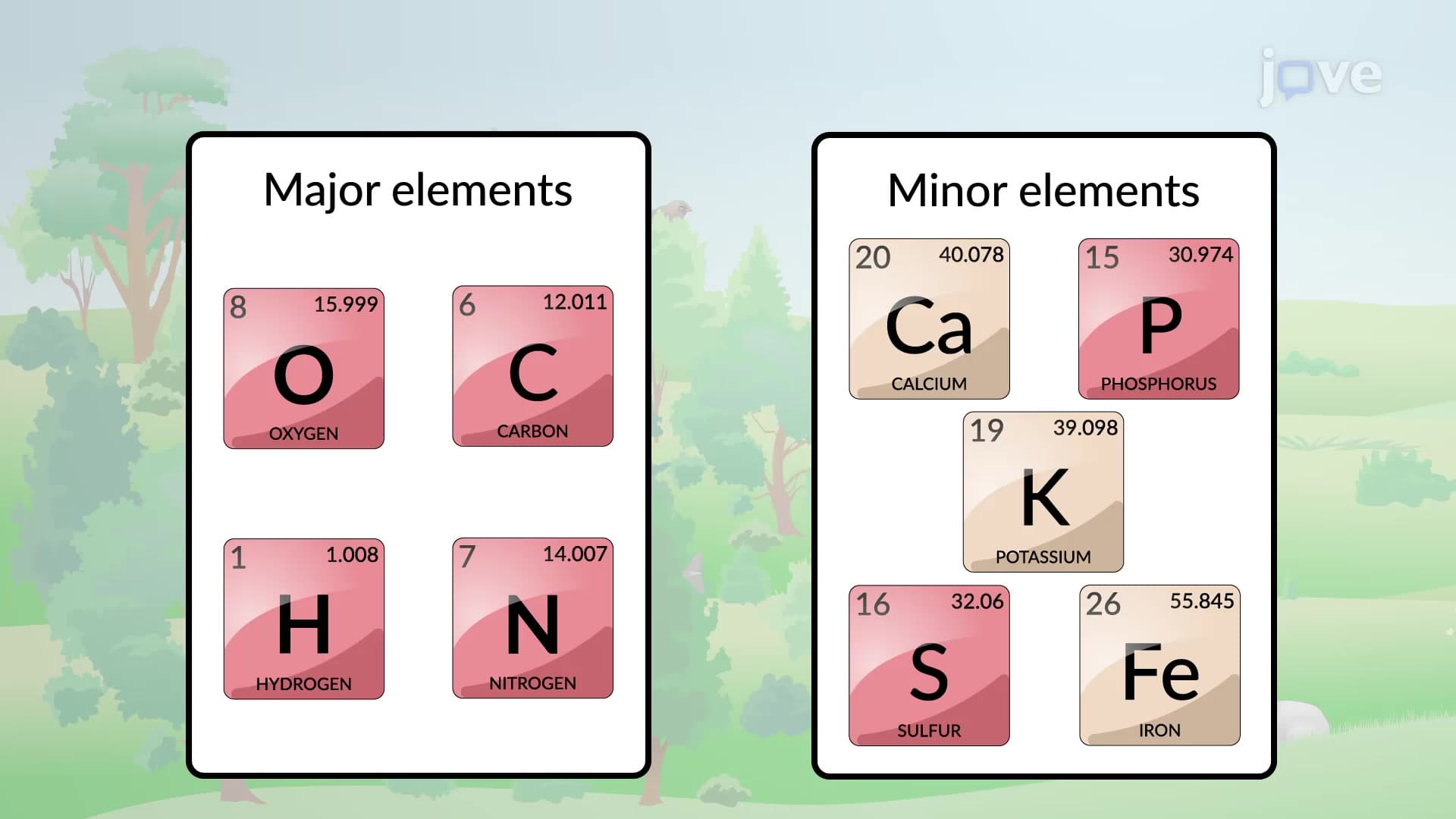

Video Summary: The Periodic Table and Organismal Elements Explained
Did you know that your body is essentially a walking chemistry set, with 96% of your biological matter composed of just four elements from the periodic table? Understanding periodic table organismal elements reveals how oxygen, carbon, hydrogen, and nitrogen form the foundation of all life. Consider how iron in your hemoglobin transports oxygen from your lungs throughout your body-a perfect example of chemistry in action. Watch the full video on JoVE Coach to master this concept with expert-led visuals and step-by-step explanations.
The intersection of chemistry and biology becomes crystal clear when examining how elements from the periodic table form the building blocks of life. Elements represent pure substances containing only one type of atom, arranged in the periodic table according to increasing atomic number. This systematic organization helps predict element behavior and understand why certain elements dominate biological systems.
The acronym CHON (Carbon, Hydrogen, Oxygen, Nitrogen) represents the four elements comprising 96% of all biological matter. Carbon serves as the backbone of organic molecules due to its ability to form four stable covalent bonds, creating complex structures like proteins, carbohydrates, and DNA. Hydrogen participates in crucial bonds and maintains pH balance, while oxygen enables cellular respiration and forms water molecules essential for life. Nitrogen appears in amino acids and nucleic acids, making proteins and genetic material possible.
This distribution isn't random-these elements possess ideal properties for biological systems. Their atomic sizes allow efficient bonding, their electronegativity values enable polar and nonpolar interactions, and their abundance in Earth's environment makes them readily available. Students preparing for AP Biology or college chemistry courses should understand how these elements' positions in the periodic table predict their biological roles.
The remaining 4% consists of calcium, phosphorus, potassium, sulfur, and iron-elements crucial despite their smaller quantities. Calcium strengthens bones and teeth while regulating muscle contractions and nerve signaling. In the United States, calcium deficiency contributes to osteoporosis affecting over 10 million Americans annually. Iron's role in hemoglobin demonstrates how trace amounts create massive biological impact-just 4 grams of iron in your body enables oxygen transport to 37 trillion cells.
Metal ions like magnesium, manganese, copper, zinc, and molybdenum function as enzyme cofactors, facilitating metabolic reactions. Magnesium activates over 300 enzymes, including those involved in ATP synthesis. Zinc deficiency affects immune function and wound healing, while copper enables collagen formation. These examples frequently appear on MCAT passages testing biochemistry knowledge.
Understanding these concepts proves essential for pre-med students, nursing students taking NCLEX exams, and anyone pursuing health sciences. The periodic table isn't just memorization-it's a roadmap explaining why life chemistry works the way it does.
Related Micro-courses