Loading video…


 6 Concepts
 922 views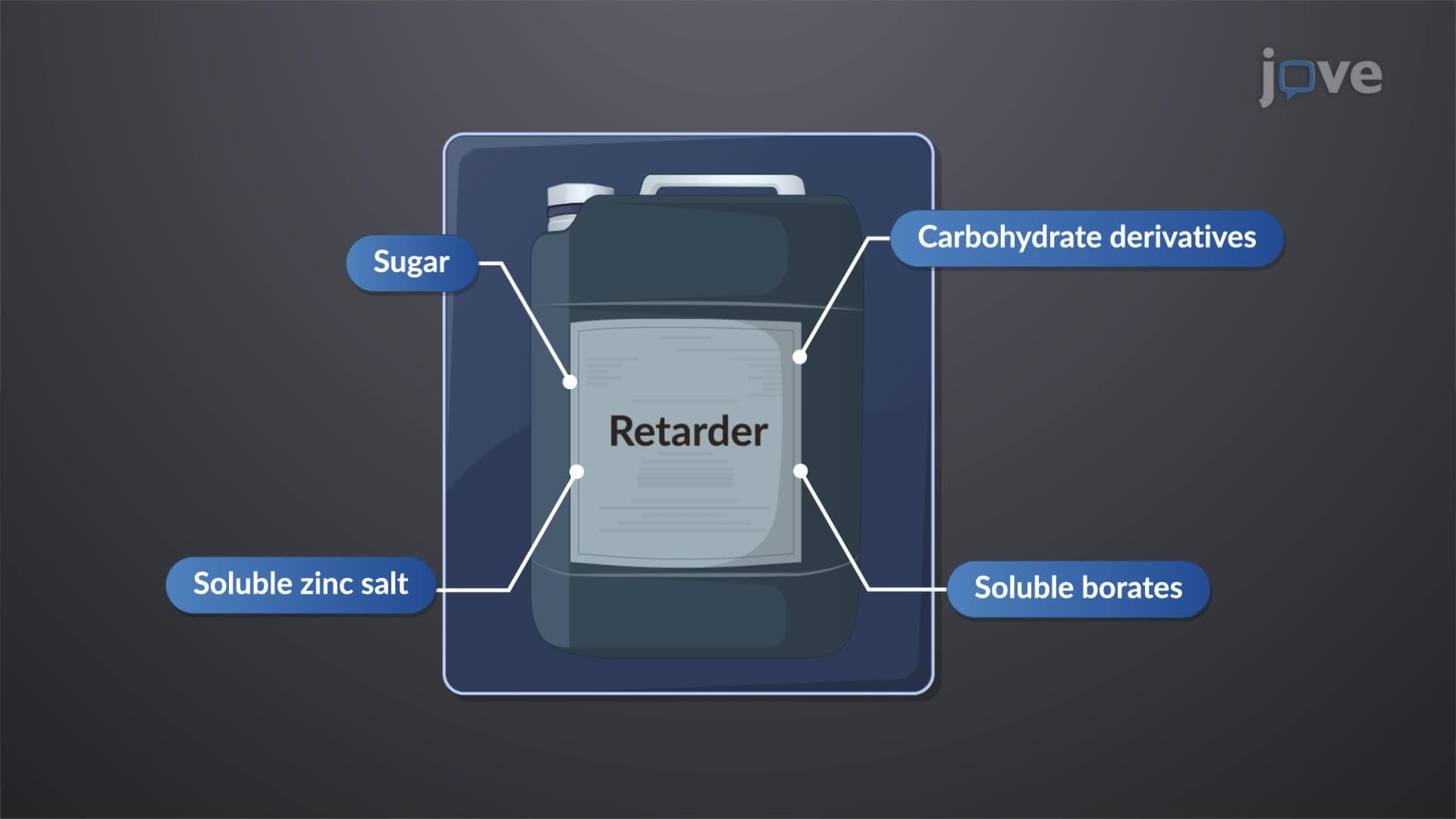

Video Summary: What Is Retarders
Ever wondered why concrete poured during a scorching Texas summer doesn't always set properly? Retarders are chemical admixtures that deliberately slow concrete's setting time, preventing premature hardening that could compromise structural integrity. When the California Department of Transportation builds highway bridges in 100°F heat, retarders ensure each concrete pour bonds seamlessly with the next layer. These additives work by interfering with cement's natural hydration process, buying construction crews precious extra hours to achieve uniform, high-quality results. Watch the full video on JoVE Coach to master this concept with expert-led visuals and step-by-step explanations.
Retarders represent a crucial category of concrete admixtures designed to combat one of construction's most persistent challenges: premature setting in adverse conditions. These chemical agents deliberately slow the hydration reaction between cement and water, providing construction crews with extended working time when environmental factors threaten concrete quality.
The retardation process operates at the molecular level, where retarding agents interfere with calcium silicate hydration-the primary reaction responsible for concrete's strength development. Unlike accelerators that speed up this process, retarders create obstacles to continued hydration by adsorbing onto cement grain surfaces and forming protective barriers around calcium ions.
Common retarding agents include naturally occurring substances like sugar and synthetic compounds such as lignosulfonates and hydroxycarboxylic acids. Sugar, surprisingly effective at remarkably low concentrations, demonstrates how even 0.05% by cement weight can extend setting time by four hours. Carbohydrate derivatives and soluble zinc salts work similarly, though through slightly different chemical pathways.
Retarders prove indispensable in hot-climate construction across the American Southwest, where ambient temperatures frequently exceed 90°F. The Nevada Department of Transportation relies heavily on retarders when pouring concrete for the I-15 corridor through the Mojave Desert, where uncontrolled setting could create structural weaknesses.
Cold joint prevention represents another vital application. When concrete hardens before the next layer arrives, the resulting cold joint creates a plane of weakness that can compromise structural integrity. Retarders maintain the first pour's plasticity, ensuring proper bonding when fresh concrete is placed on top.
The penetration test serves as the industry standard for quantifying retardation effects, measuring concrete's resistance to penetration at specific time intervals. This ASTM-standardized procedure helps engineers optimize retarder dosages for specific project requirements and environmental conditions.
Students preparing for the Fundamentals of Engineering (FE) exam should understand that retarders become integral parts of the final concrete structure without altering ultimate hydration products-a key concept tested in materials engineering sections.
Related Micro-courses