Loading video…


 6 Concepts
 922 views

Video Summary: What Is Accelerators
Ever wonder how concrete highways get repaired overnight in freezing Chicago winters? Accelerators are special concrete admixtures that speed up the hardening process, allowing construction crews to complete critical repairs even when temperatures drop to 35°F. The most common accelerator, calcium chloride, can boost concrete strength development as effectively as raising the temperature by 11 degrees Fahrenheit. These chemical additives don't just affect setting time-they enhance the dissolution of cement's slowest-reacting components during early hydration. Watch the full video on JoVE Coach to master this concept with expert-led visuals and step-by-step explanations.
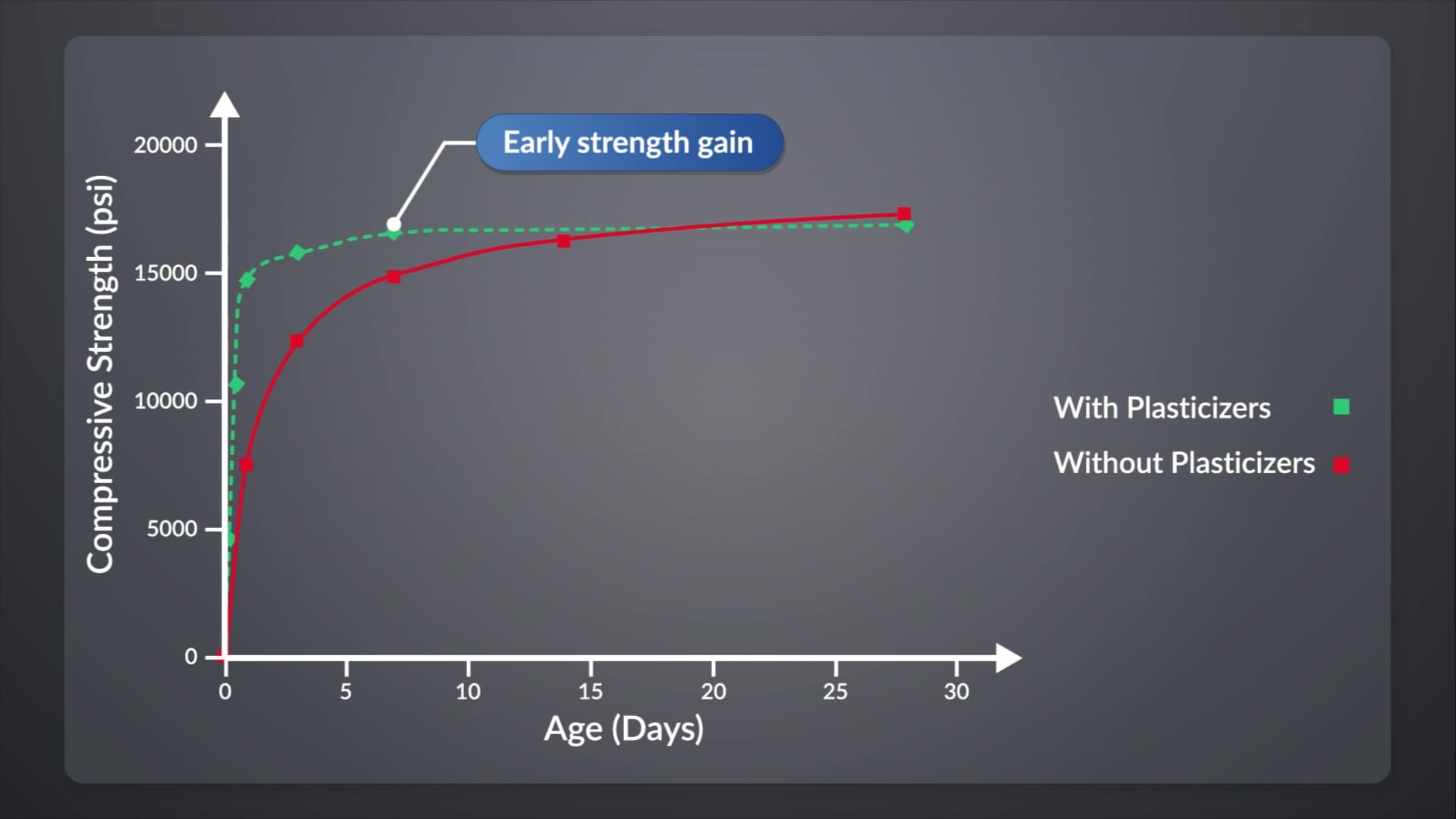
Accelerators represent a crucial category of concrete admixtures designed to speed up the hardening process without necessarily affecting initial setting time. These chemical additives work by enhancing the dissolution rate of cement's slowest-reacting components, particularly silicates, during the critical early hydration phase. For students studying materials science or civil engineering, understanding accelerators provides insight into how chemical modifications can dramatically alter material properties and construction timelines.
Calcium chloride stands as the most widely used accelerator in the construction industry, typically added at concentrations of 1-2% by cement weight. This compound works by increasing the rate of calcium silicate hydration, the primary reaction responsible for concrete strength development. Students preparing for AP Chemistry or college-level materials courses should note that calcium chloride's effectiveness stems from its ability to provide additional calcium ions and create a more alkaline environment that promotes faster cement dissolution.
The mechanism involves accelerating the formation of calcium silicate hydrate (C-S-H) gel, the binding agent that gives concrete its strength. Alternative accelerators include calcium nitrate, calcium formate, and various organic compounds, each offering different performance characteristics and environmental considerations.
Accelerators prove invaluable in specific construction scenarios across the United States. Cold-weather concreting represents the primary application-when ambient temperatures drop below 40°F, normal concrete hydration slows significantly. Major infrastructure projects like the reconstruction of Interstate 95 in Philadelphia have utilized accelerators to maintain construction schedules during winter months.
Emergency repair situations also rely heavily on accelerators. When sections of the Golden Gate Bridge required urgent deck repairs, contractors used accelerated concrete mixes to achieve sufficient strength for traffic loading within hours rather than days. This rapid strength development proves critical for minimizing traffic disruptions and maintaining public safety.
While accelerators offer significant advantages in speed and cold-weather performance, they introduce important trade-offs that engineering students must understand. Calcium chloride accelerators can reduce concrete's resistance to sulfate attack, increase alkali-aggregate reaction potential, and enhance long-term shrinkage and creep. However, they also improve resistance to erosion and abrasion-properties valuable in highway and marine applications.
For students taking the Fundamentals of Engineering (FE) exam or pursuing civil engineering degrees, understanding these trade-offs becomes crucial for proper material selection in different environments and loading conditions.
Related Micro-courses