Loading subject page…

494 views

Video Summary: What are Complex Zeros
Ever wonder why medical heart monitors don't pick up electrical interference from hospital power lines? Complex zeros are the mathematical key that filters out unwanted 60 Hz electrical noise while preserving crucial heart rhythm data. These special values make polynomials equal zero and include imaginary components that extend beyond real number solutions. In US hospitals, engineers use complex zeros in digital filters to ensure EKG machines capture clean, accurate cardiac signals for life-saving diagnoses. Watch the full video on JoVE Coach to master this concept with expert-led visuals and step-by-step explanations.
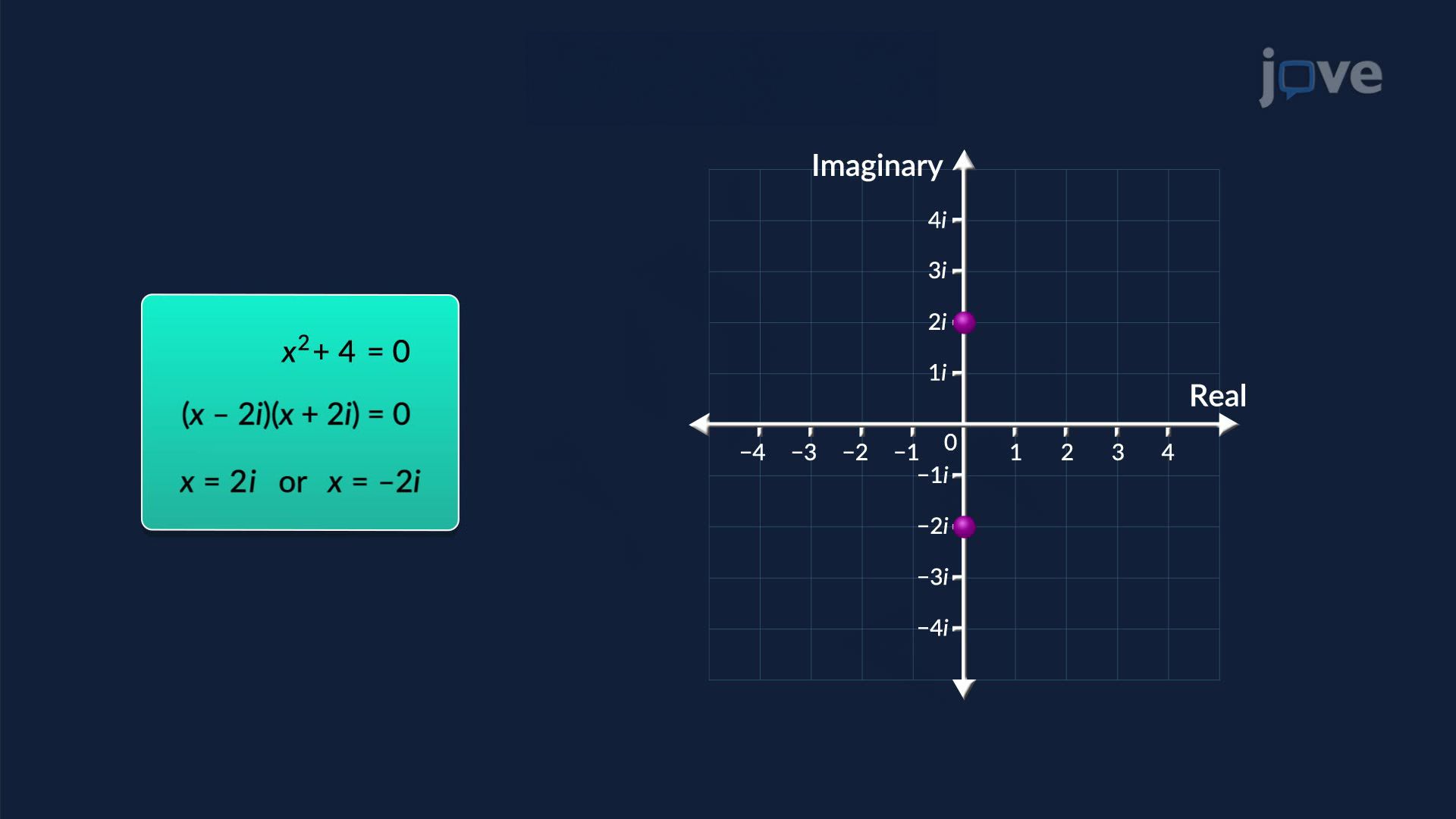
Complex zeros represent a fundamental extension of polynomial solutions into the realm of imaginary numbers. While real zeros are the familiar x-intercepts you see on graphs, complex zeros include solutions with imaginary components (involving i = √(-1)). These zeros are essential because they allow every polynomial equation to have a complete set of solutions, filling gaps where real solutions don't exist.
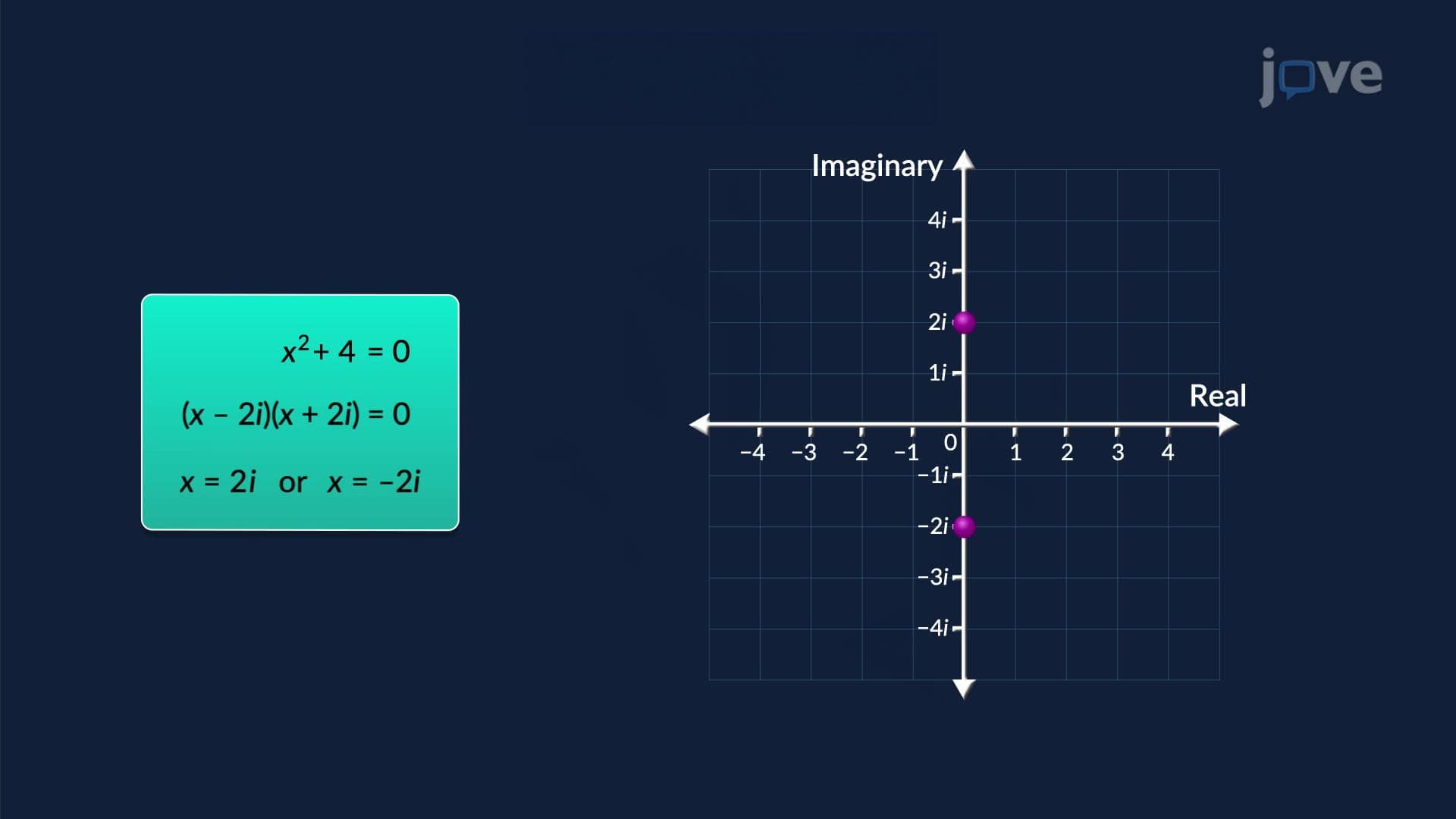
Consider the polynomial x² + 1 = 0. This equation has no real solutions since no real number squared equals -1. However, it has two complex zeros: i and -i. This illustrates why complex zeros are crucial-they ensure mathematical completeness in polynomial analysis, a concept heavily tested on AP Calculus BC and college-level algebra courses.
The Complete Factorization Theorem states that any polynomial of degree n can be written as a product of n linear factors using complex zeros. For example, the polynomial x³ - 8 factors completely as (x - 2)(x - 2ω)(x - 2ω²), where ω represents complex cube roots of unity. This theorem guarantees that every polynomial has a full factorization when complex numbers are allowed.
This concept frequently appears on SAT Subject Tests and college entrance exams. Students must understand that while some factors may have real coefficients, others will involve complex numbers to achieve complete factorization.
Multiplicity refers to how many times a particular zero appears as a solution. If (x - a)³ appears as a factor, then a is a zero with multiplicity 3. The Zeros Theorem builds on this concept, stating that a polynomial of degree n has exactly n zeros when multiplicities are counted.
For instance, the polynomial (x - 3)²(x² + 1) has degree 4 and exactly 4 zeros: 3 (with multiplicity 2), i, and -i. Understanding multiplicity is crucial for graphing polynomial functions and predicting their behavior, skills essential for AP Calculus and college algebra success.
Complex zeros have powerful applications in signal processing and filter design. In US telecommunications, engineers use complex zeros to create notch filters that eliminate specific unwanted frequencies. For example, medical devices in American hospitals utilize filters with complex zeros at 60 Hz to remove power line interference from sensitive measurements like EEGs and EKGs.
Similarly, audio engineers at US recording studios employ complex zeros in digital signal processing to eliminate hum and noise from recordings while preserving the desired audio content. These practical applications demonstrate why mastering complex zeros is valuable for STEM careers and engineering programs.
Related Micro-courses