Loading video…


 10 Concepts
 495 views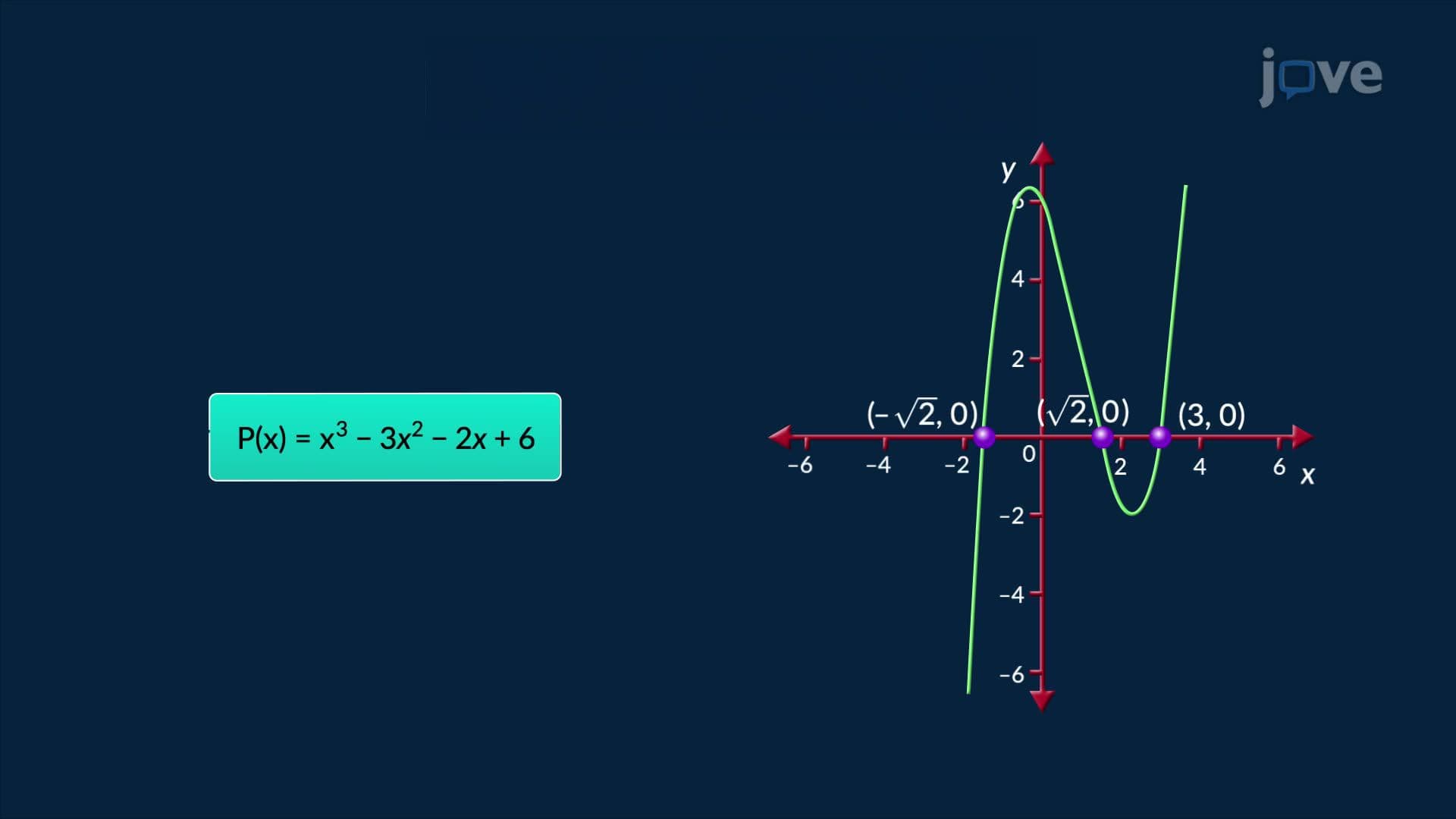

Video Summary: What are Real Zeros of Polynomials
Ever wondered how Netflix determines optimal server capacity or how Boeing calculates fuel efficiency curves? The answer lies in real zeros of polynomials, the precise input values where polynomial functions equal zero. These mathematical solutions drive critical decisions across engineering, economics, and technology industries throughout the United States. From designing packaging that maximizes volume while minimizing waste to modeling population growth in cities like Austin or Seattle, understanding what are real zeros of polynomials unlocks powerful problem-solving capabilities. Watch the full video on JoVE Coach to master this concept with expert-led visuals and step-by-step explanations.
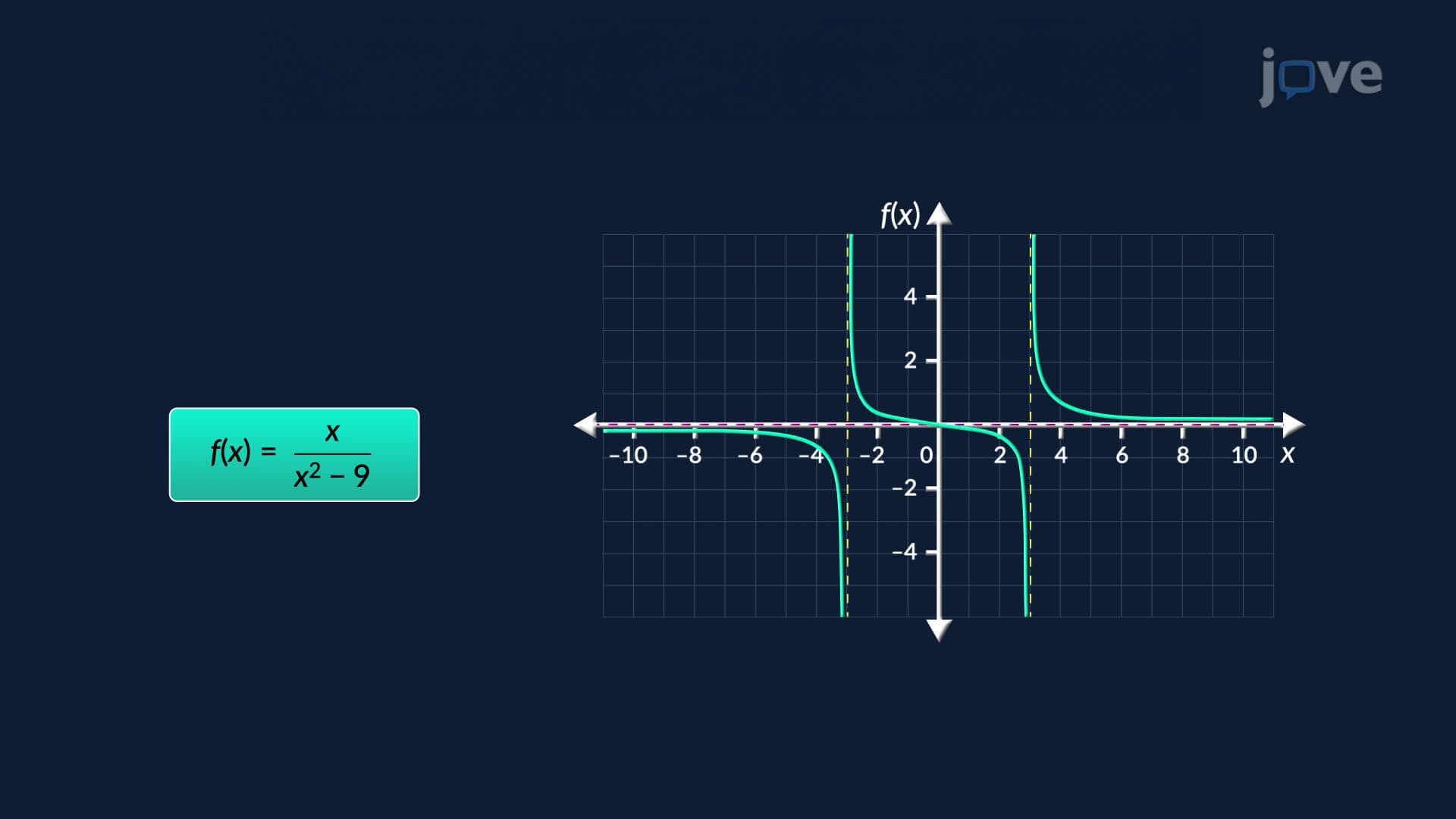
Real zeros of polynomials represent the foundation of advanced algebraic problem-solving, serving as critical intersection points where polynomial functions cross or touch the x-axis. These values satisfy the fundamental condition f(x) = 0, making them essential for solving equations across multiple STEM disciplines. Unlike complex zeros that involve imaginary numbers, real zeros correspond to actual measurable quantities in physical applications.
The types of real zeros of polynomials include rational zeros (expressible as fractions), irrational zeros (like √2 or π), and repeated zeros (where factors appear multiple times). Students preparing for AP Calculus, SAT Subject Tests, or college algebra courses must master these distinctions to succeed in higher-level mathematics.
The Rational Root Theorem provides a systematic approach for finding potential rational zeros. For any polynomial with integer coefficients, possible rational zeros take the form p/q, where p divides the constant term and q divides the leading coefficient. This real zeros of polynomials concept eliminates guesswork and creates efficient problem-solving strategies.
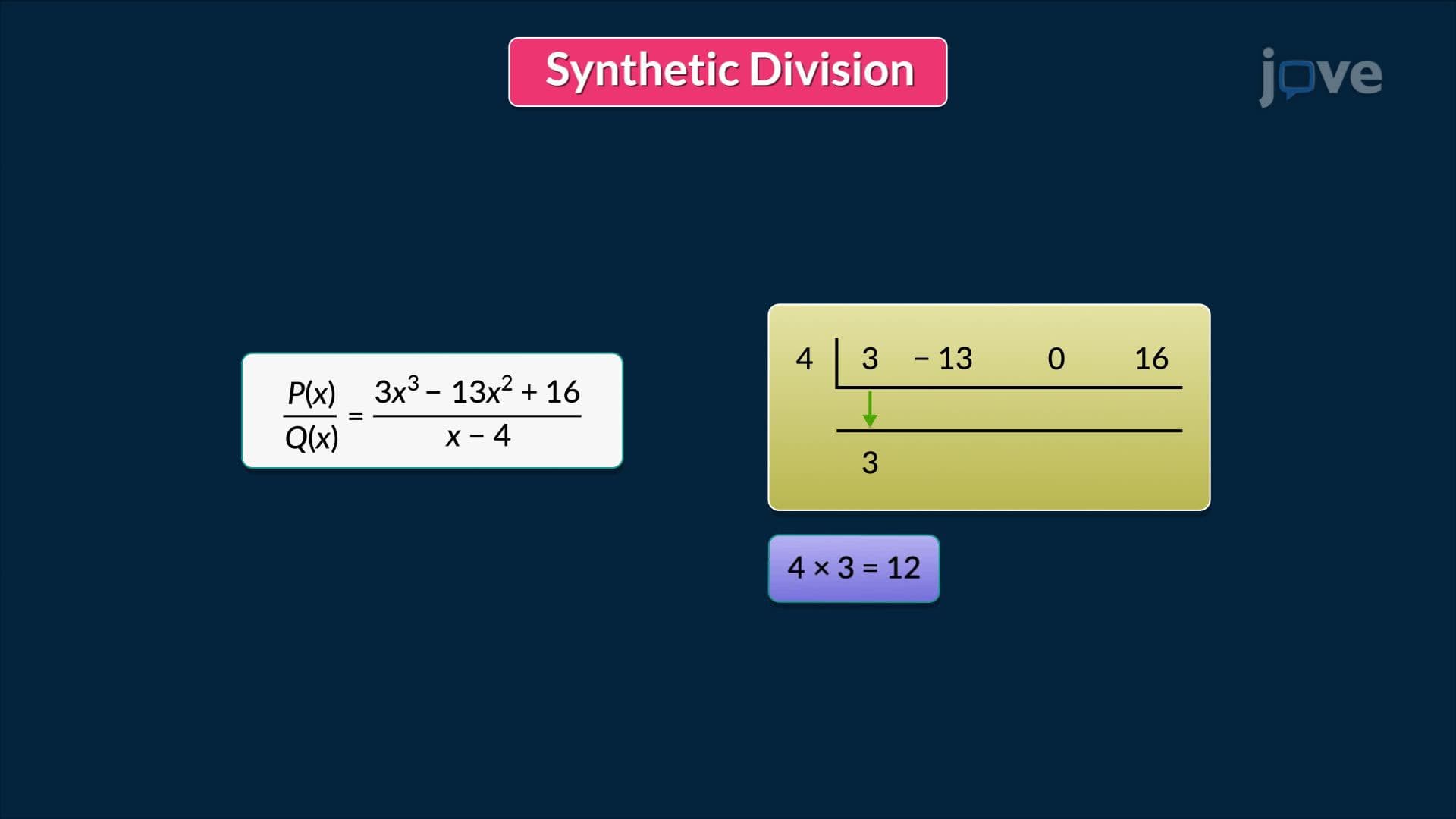
Consider the polynomial 2x³ - 5x² - 4x + 3 = 0. The constant term (3) has factors ±1, ±3, while the leading coefficient (2) has factors ±1, ±2. Therefore, possible rational zeros are ±1, ±3, ±1/2, ±3/2. Students can then test each candidate using synthetic division or direct substitution.
Manufacturing companies like General Motors use polynomial modeling to optimize production costs, where real zeros represent break-even points or maximum efficiency levels. In pharmaceutical research, companies such as Pfizer employ polynomial regression to model drug concentration curves, with zeros indicating when medications clear from patients' systems.
Environmental engineers working for the EPA utilize polynomial functions to model pollution dispersion patterns, where real zeros might represent safe distance thresholds or optimal cleanup intervention points. These applications demonstrate why understanding the real zeros of polynomials overview extends far beyond classroom exercises.
Successful students develop systematic approaches combining graphical visualization with algebraic verification. Graphing calculators help identify approximate zero locations, while analytical methods provide exact solutions. This dual approach proves invaluable during timed exams like AP Calculus or college placement tests.
The real zeros of polynomials study guide strategy involves: identifying the polynomial degree (determining maximum possible zeros), applying the Rational Root Theorem, testing candidates systematically, and verifying results through factorization. Advanced students learn to recognize patterns, such as how coefficient signs influence zero distribution and multiplicity.
Related Micro-courses