Loading video…


 4 Concepts
 3.8K views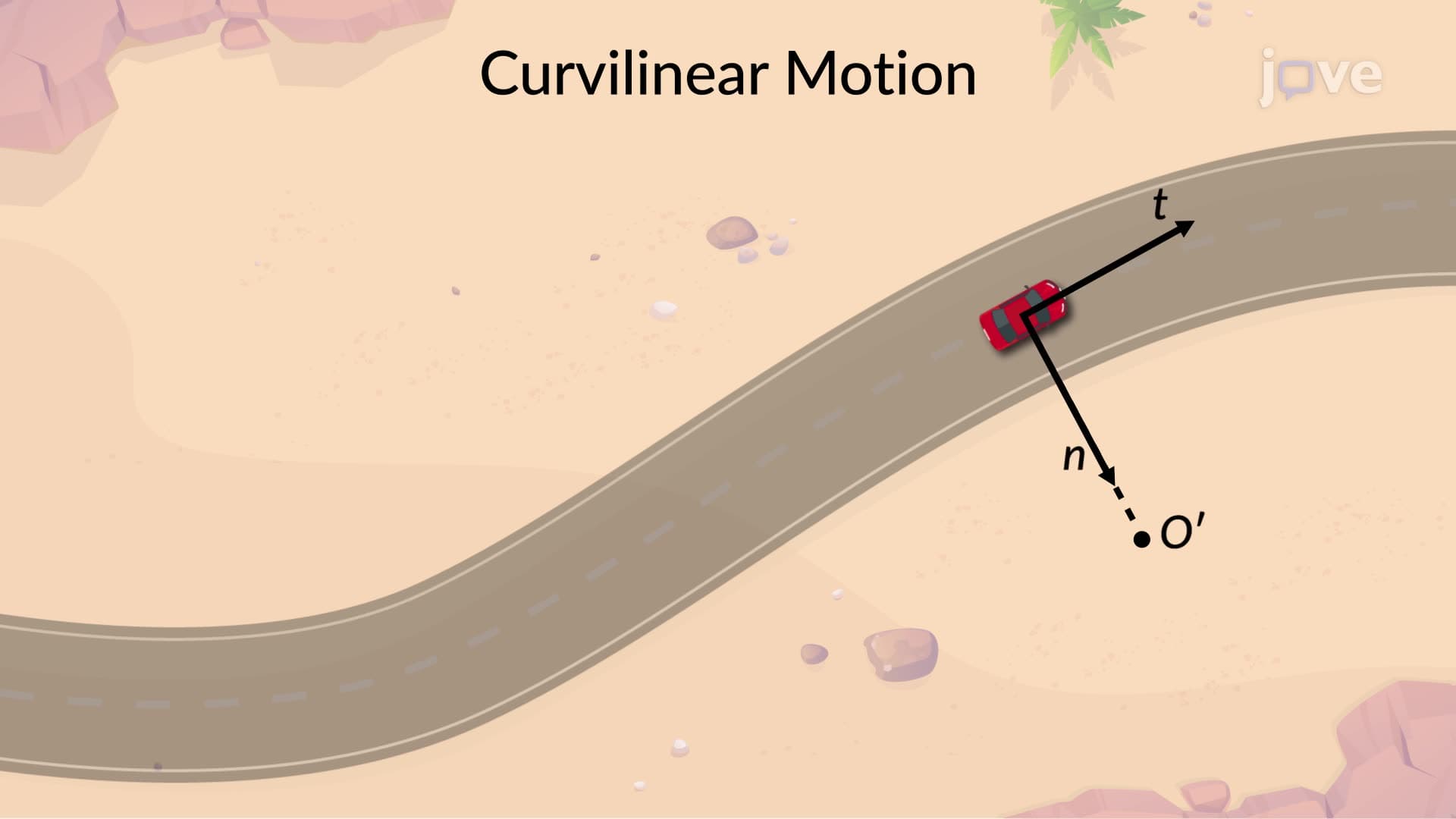

Video Summary: Curvilinear Motion Normal and Tangential Components Explained
Ever wondered why NASCAR drivers feel pinned against their seats during high-speed turns? Curvilinear motion normal and tangential components explain this phenomenon through two perpendicular acceleration directions that describe particle motion along curved paths. When a Formula 1 car navigates the Indianapolis Motor Speedway's banked turns, engineers analyze both the tangential component (speed changes) and normal component (direction changes) to optimize performance and safety. Understanding Curvilinear Motion Normal And Tangential Components Explained reveals how particles experience acceleration even at constant speeds due to continuous directional changes. Watch the full video on JoVE Coach to master this concept with expert-led visuals and step-by-explanations.
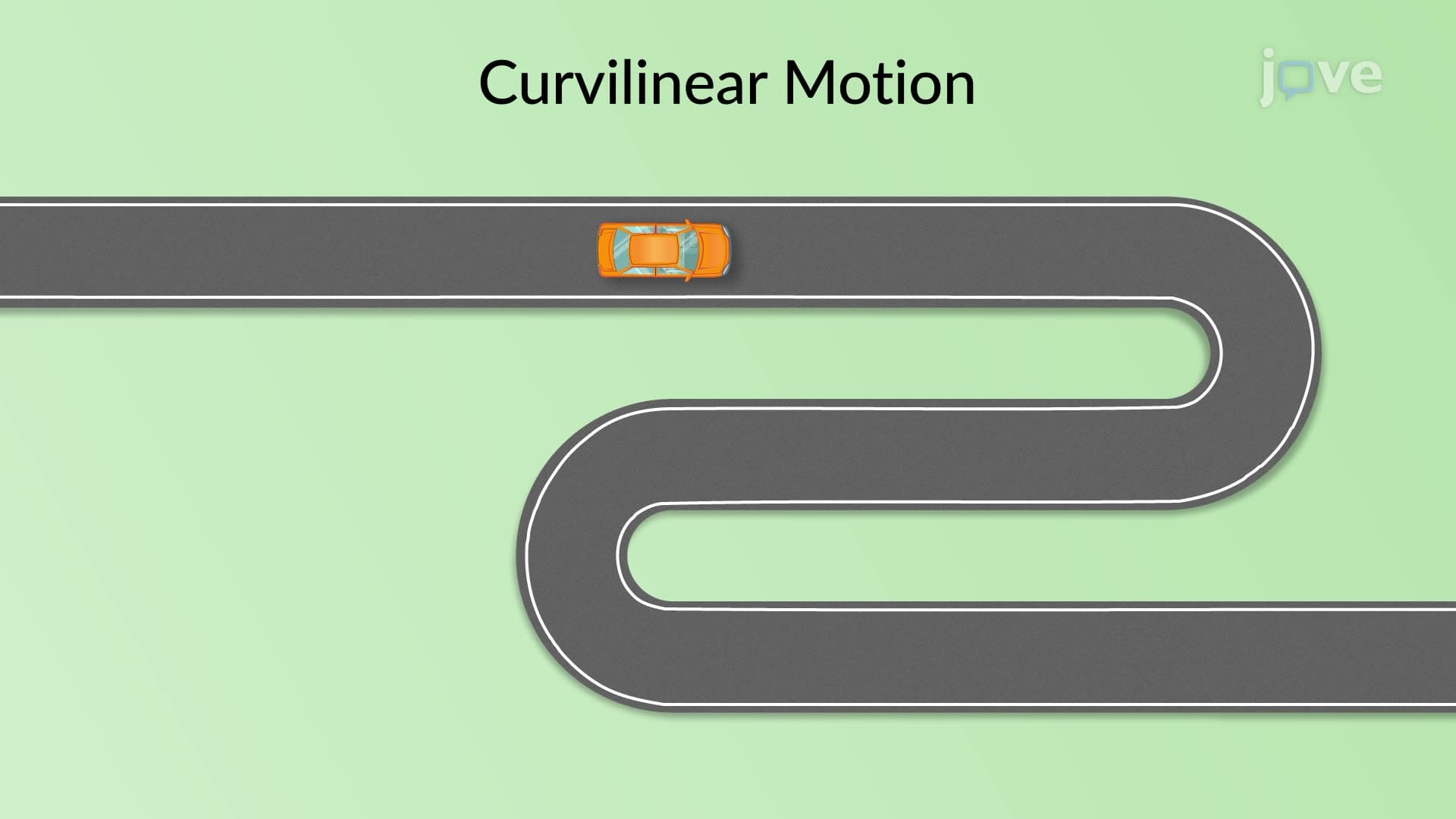
Curvilinear motion normal and tangential components represent a coordinate system that simplifies the analysis of particles moving along curved paths. Unlike Cartesian coordinates that use fixed x-y-z directions, this approach uses two perpendicular directions that travel with the moving particle. This moving coordinate system proves essential for understanding complex motions like satellite orbits, roller coaster dynamics, and automotive engineering applications.
The tangential component (t-direction) aligns with the particle's instantaneous velocity direction. The unit vector u(t) points along the increasing position direction of the curved path. When a particle speeds up or slows down along its trajectory, this creates tangential acceleration. For example, when a Tesla Model S accelerates around a curved highway ramp, the tangential acceleration component increases the vehicle's speed while maintaining its curved trajectory. In AP Physics courses, students learn that tangential acceleration equals the time derivative of speed: a(t) = dv/dt.
The normal component (n-direction) points perpendicular to the tangent, directed toward the center of curvature. The unit vector u(n) changes direction continuously as the particle moves, creating what engineers call centripetal acceleration. This component doesn't change the particle's speed but constantly redirects its velocity vector. Consider a NASCAR vehicle maintaining constant speed through Daytona's banked turns, the normal acceleration component keeps the car following the curved track rather than continuing straight due to Newton's first law.
The acceleration vector in curvilinear motion becomes: a = a(t)u(t) + a(n)u(n), where a(t) represents tangential acceleration and a(n) = v²/ρ represents normal acceleration (ρ being the radius of curvature). This framework appears extensively in mechanical engineering curricula at universities like MIT and Stanford. Students encounter these concepts in statics, dynamics, and fluid mechanics courses. The normal component calculation proves crucial for designing safe highway curves, determining satellite orbital mechanics, and analyzing manufacturing equipment with rotating components.
College-level physics exams, including AP Physics C and university dynamics courses, frequently test students' ability to decompose complex curved motions into these components. Understanding this concept prepares students for advanced engineering applications in aerospace, mechanical, and civil engineering disciplines.
Related Micro-courses