Loading subject page…


24,278 views

Video Summary: Population Distribution of Nuclear Spin States in Atomic Nuclei
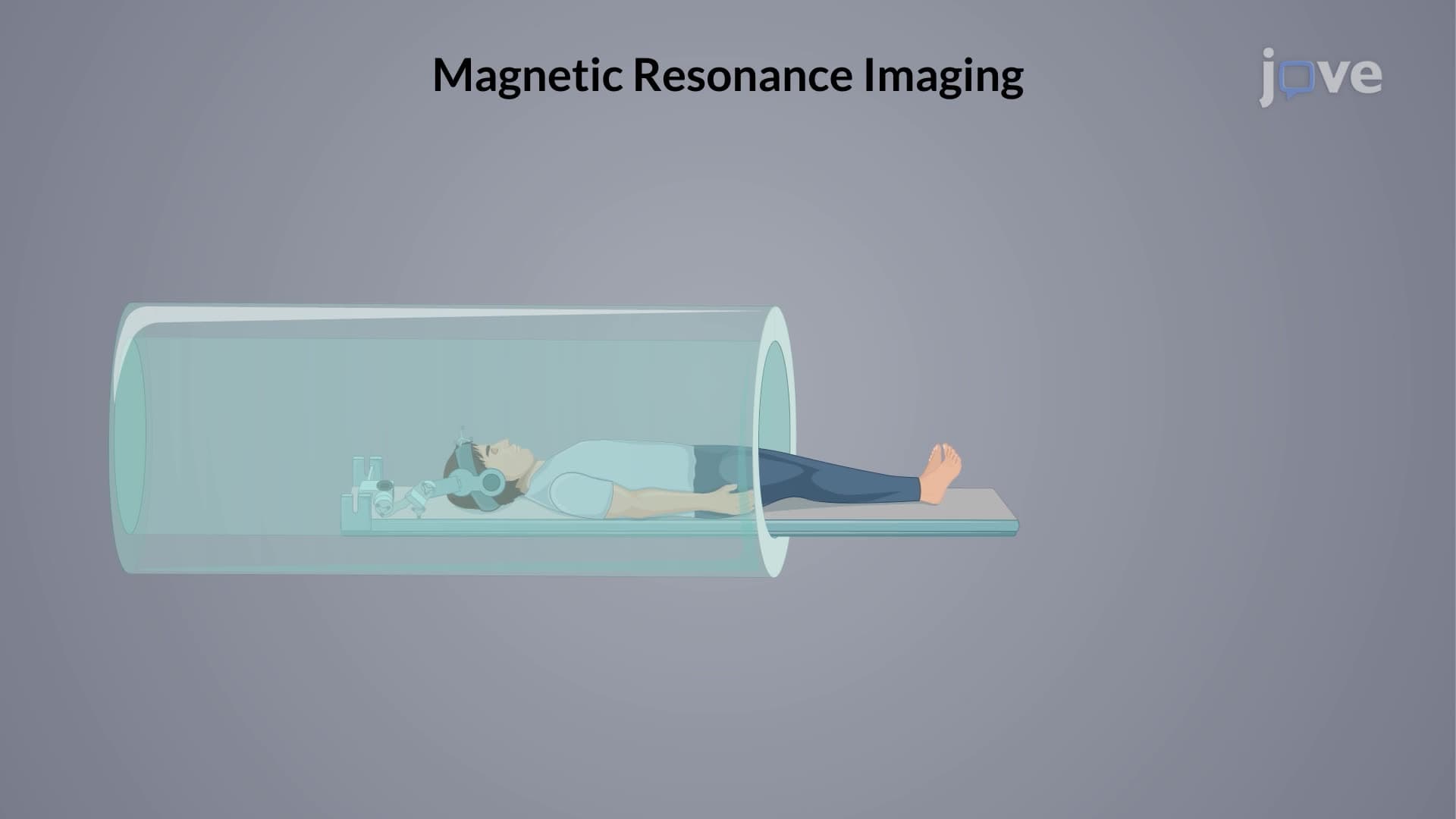
Ever wondered why MRI machines at Johns Hopkins Hospital need such powerful magnets to detect tiny signals from your body? Nuclear spin state population creates an incredibly small imbalance-just 9-10 extra nuclei per 2 million favor the lower energy state at room temperature. This minuscule excess in the population distribution of nuclear spin states in atomic nuclei is what generates the NMR signals that revolutionized medical imaging and analytical chemistry. Watch the full video on JoVE Coach to master this concept with expert-led visuals and step-by-step explanations.
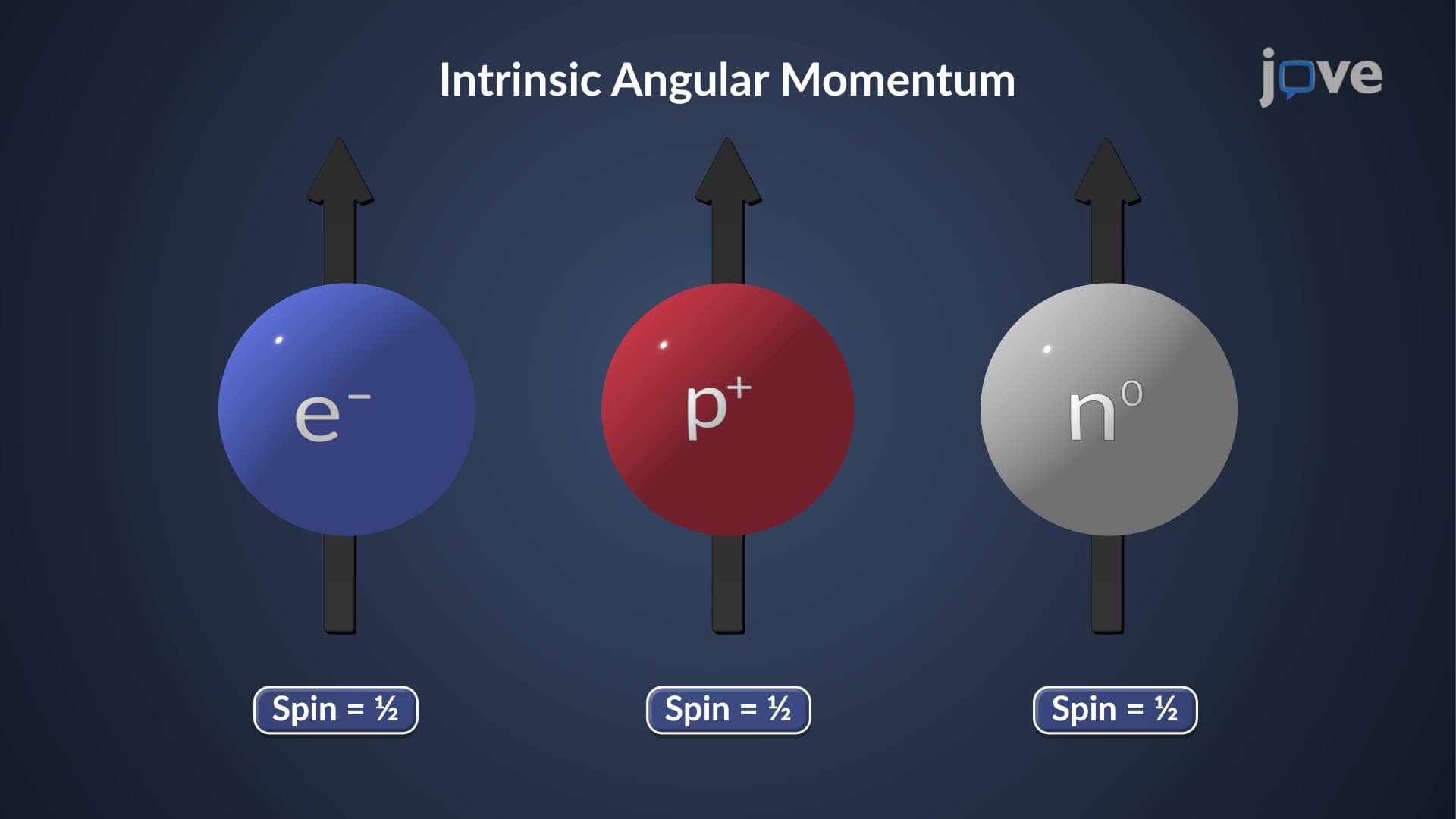
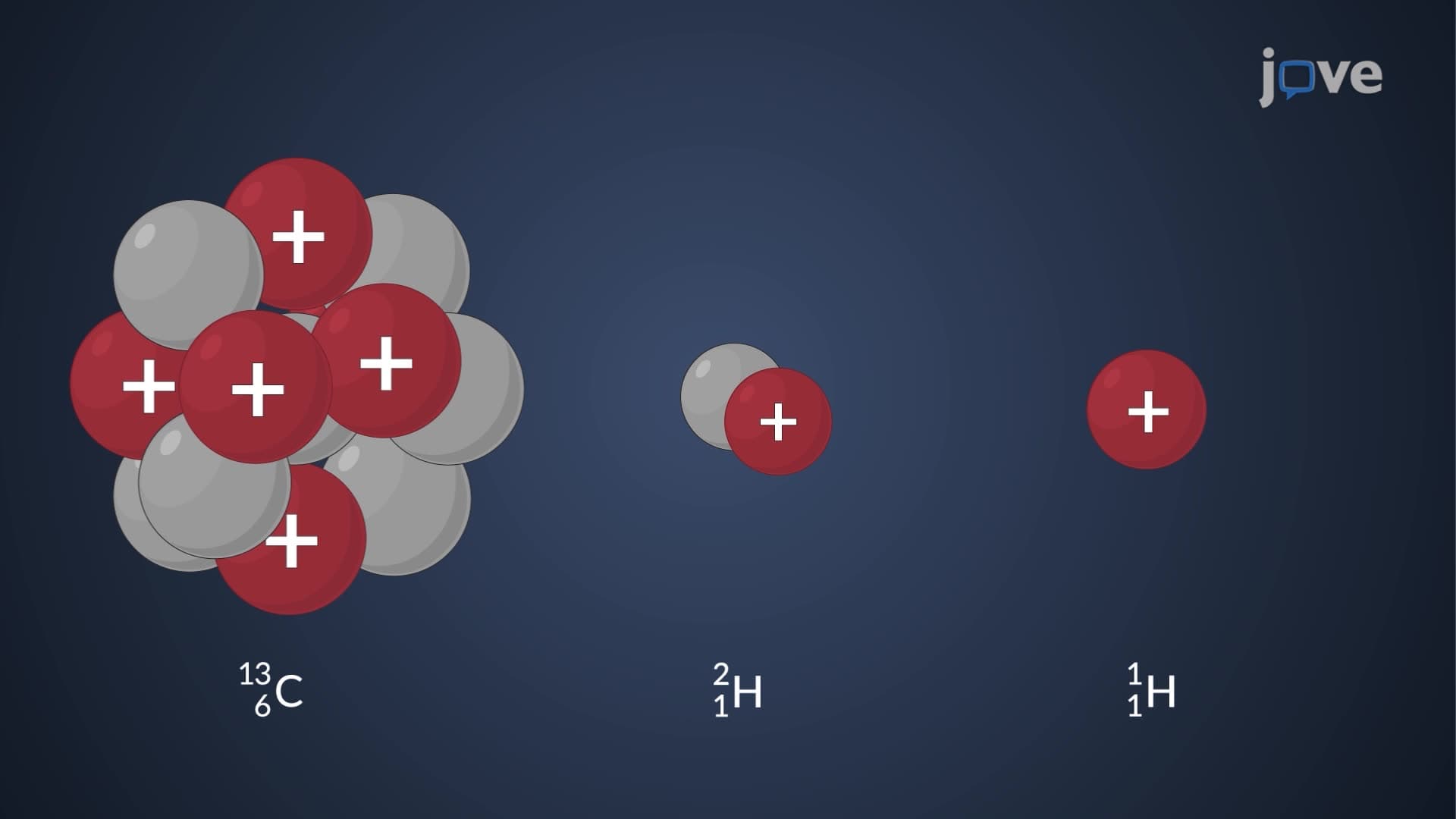
Nuclear magnetic resonance spectroscopy relies on a fundamental quantum mechanical principle: atomic nuclei with non-zero spin can exist in different energy states when placed in a magnetic field. The population distribution of nuclear spin states in atomic nuclei follows predictable patterns that directly impact the strength and detectability of NMR signals.
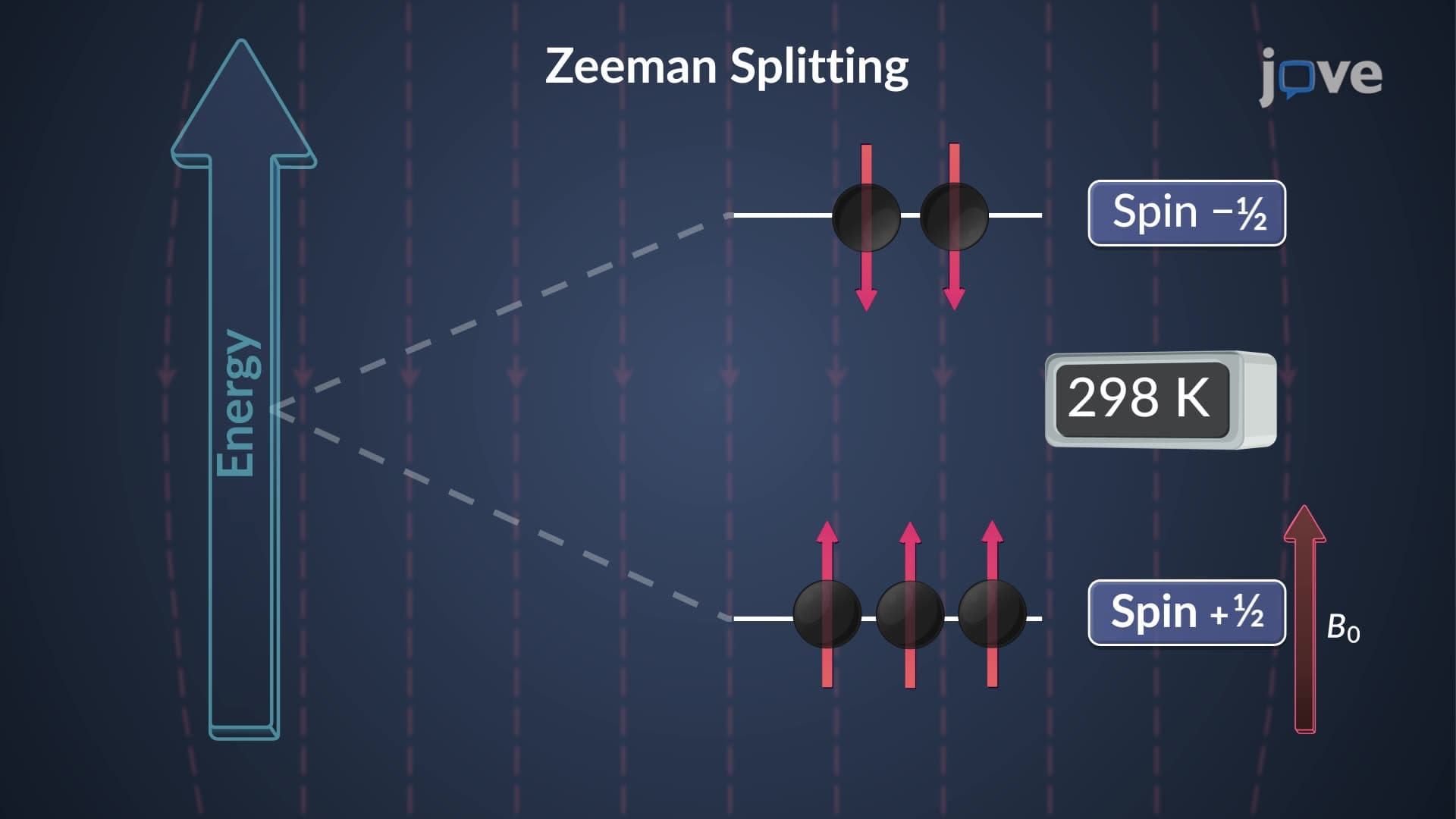
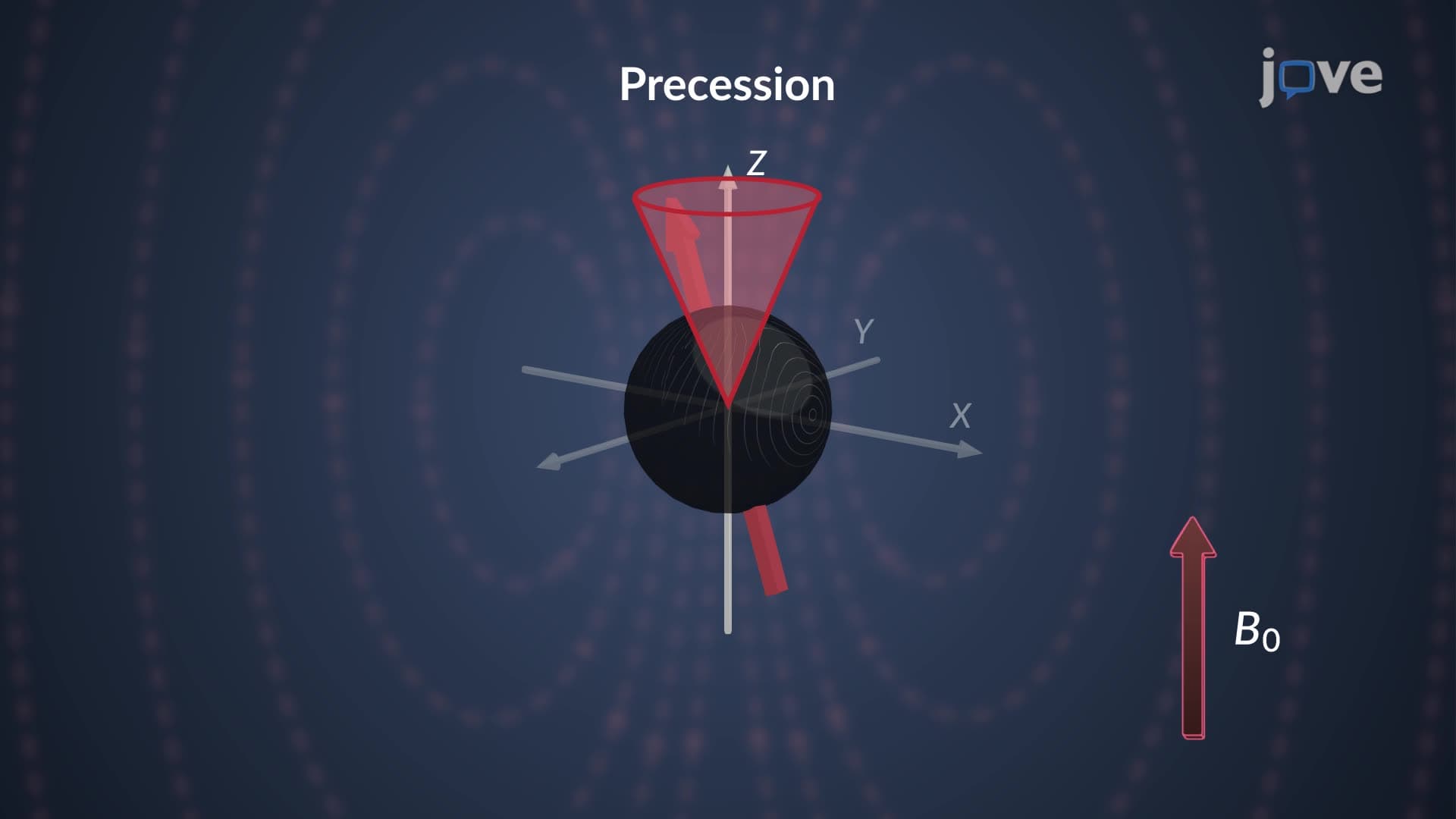
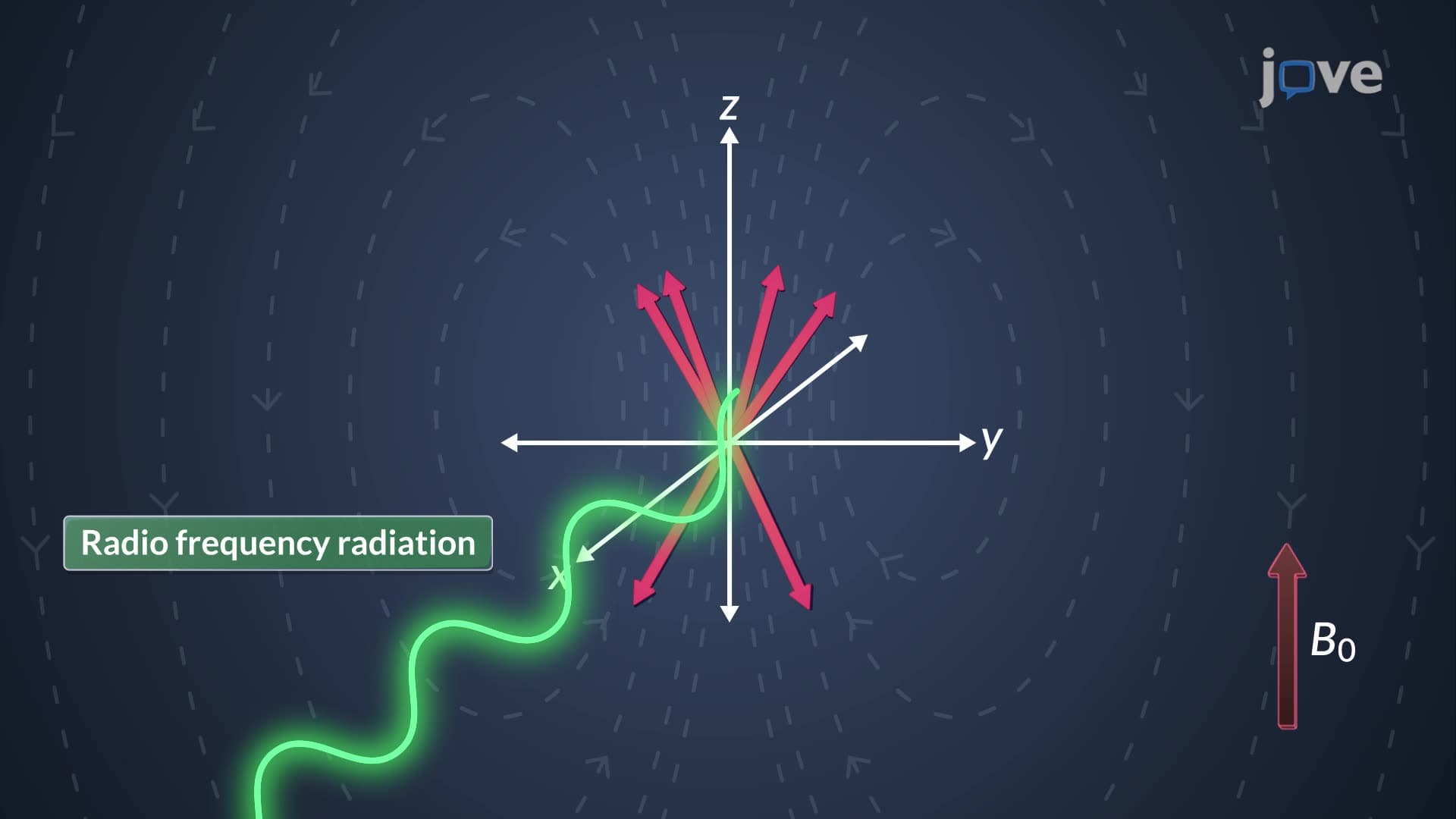
At the molecular level, nuclei act like tiny magnets that can align either with or against an external magnetic field. The "spin up" state (parallel alignment) represents lower energy, while the "spin down" state (antiparallel alignment) has higher energy. This energy difference creates the foundation for all NMR applications, from medical imaging at Massachusetts General Hospital to pharmaceutical analysis at Pfizer research facilities.
Temperature plays a crucial role in determining how nuclei distribute between energy states. At absolute zero, nearly all nuclei would occupy the lower energy state. However, at room temperature (298 K), thermal energy provides enough motion to partially populate the higher energy state. This creates a dynamic equilibrium described by the Boltzmann distribution equation:
N(-)/N(+) = exp(-ΔE/kT)
Where N(-) and N(+) represent populations in the higher and lower energy states respectively, ΔE is the energy difference, k is the Boltzmann constant, and T is absolute temperature. Students preparing for the MCAT or AP Chemistry exams should recognize this as a fundamental application of statistical thermodynamics.
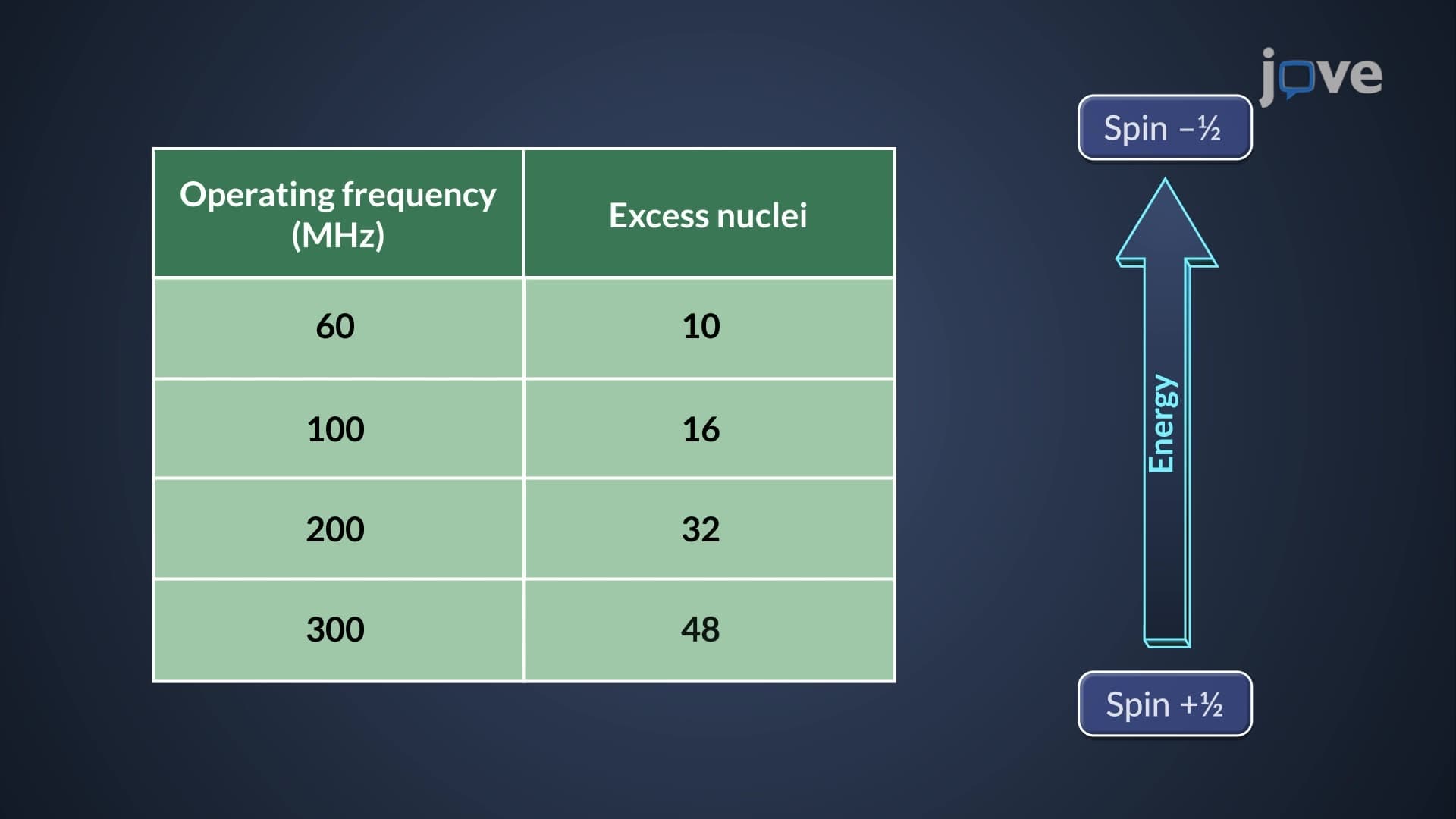
The excess population in the lower energy state, though small, generates measurable NMR signals. In a typical 60 MHz instrument operating at room temperature, only about 9-10 nuclei per 2 million favor the lower energy state. This tiny population difference might seem insignificant, but it's amplified by the enormous number of nuclei in a typical sample-approximately 10^20 nuclei per milliliter of water.
Higher operating frequencies increase both the energy gap between states and the population difference. A 600 MHz instrument (common in university research facilities like those at Stanford or MIT) provides ten times better sensitivity than a 60 MHz system, making it possible to detect smaller concentrations and obtain higher resolution spectra for complex molecular analysis.
Understanding nuclear spin populations is essential for college-level physical chemistry courses and appears frequently on standardized exams. The MCAT tests this concept in the context of medical imaging, while AP Chemistry may include questions about energy state distributions and the Boltzmann equation. Students should be able to calculate population ratios and predict how changing temperature or magnetic field strength affects NMR sensitivity-skills directly applicable to laboratory work and research careers in pharmaceutical sciences or medical diagnostics.
Related Micro-courses