Loading subject page…


104,967 views

Video Summary: What are Si Units
Ever wonder why NASA's Mars Climate Orbiter crashed in 1999? SI units explained the disaster-engineers mixed metric and imperial measurements! The International System of Units (SI) provides global measurement standards that prevent such costly errors. From tracking your daily 10,000 steps (meters) to monitoring your body temperature (Kelvin), understanding what are SI Units ensures precise scientific communication worldwide. Watch the full video on JoVE Coach to master this concept with expert-led visuals and step-by-step explanations.
The International System of Units (SI) represents humanity's most successful attempt at creating a universal measurement language. SI units explained simply: they're internationally agreed-upon standards that ensure a kilogram in Tokyo equals a kilogram in New York. This standardization proves crucial for global scientific collaboration, international trade, and preventing measurement-related disasters like the Mars orbiter incident.
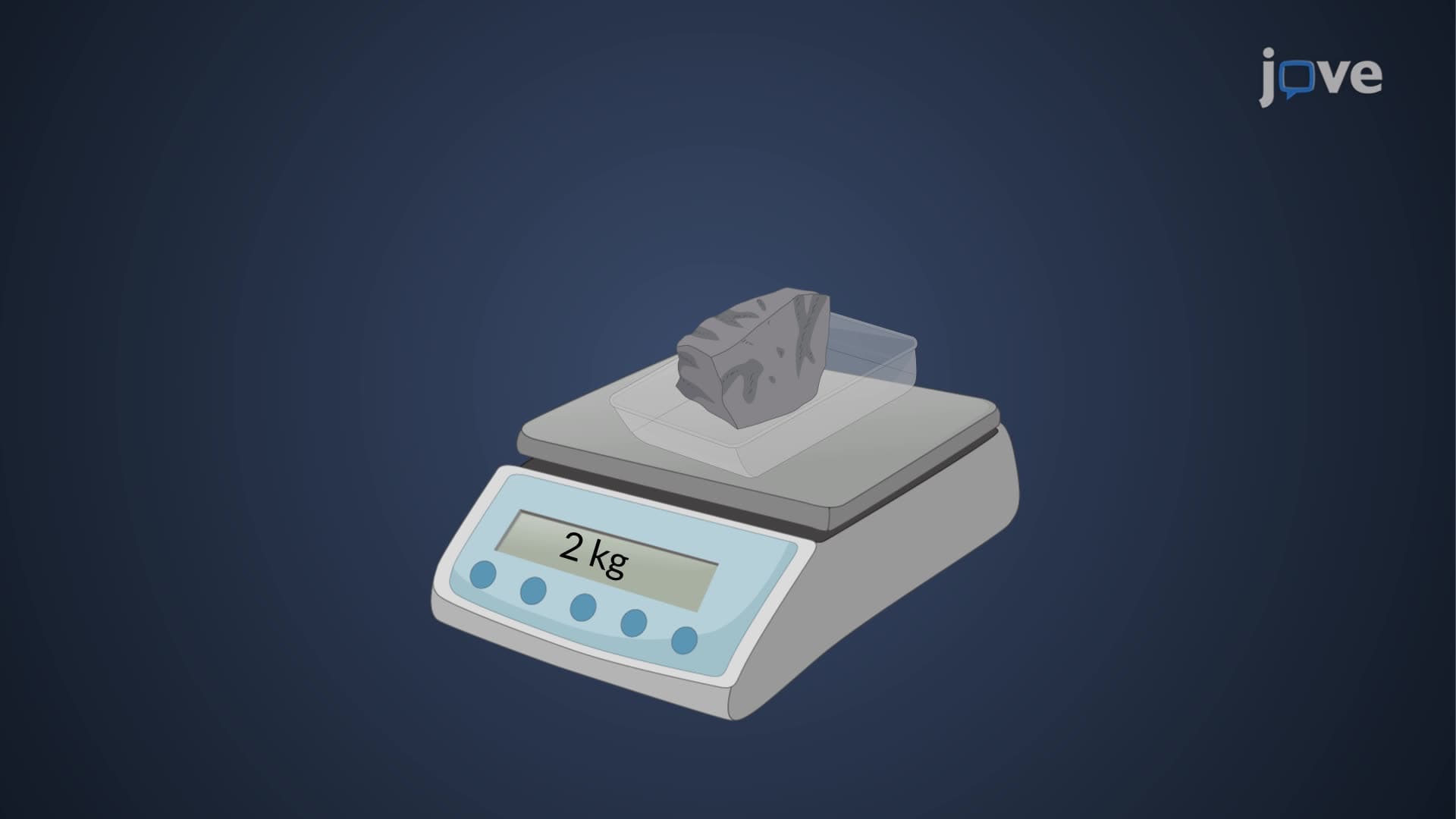
The SI units definition and uses centers on seven base units that form the foundation of all scientific measurement. These fundamental units are: meter (length), kilogram (mass), second (time), ampere (electric current), kelvin (temperature), mole (amount of substance), and candela (luminous intensity). Each base unit has a precise definition-for example, the meter is defined as the distance light travels in a vacuum in 1/299,792,458 of a second.
What are the 7 SI base units becomes particularly important when students encounter chemistry and physics problems. Consider a typical AP Chemistry exam question calculating molarity: you'll use moles (amount of substance) and liters (derived from the cubic meter). Understanding these base units helps students recognize that complex measurements like pressure (pascals) or energy (joules) are simply combinations of these seven fundamentals.
Beyond base units, the metric system units include derived units formed by mathematical combinations of base units. Velocity combines meters and seconds (m/s), while force uses the newton (kg⋅m/s²). These derived units appear frequently in standardized tests-the MCAT extensively tests unit analysis, while AP Physics requires fluency in converting between different unit systems.
In American healthcare, international system of units usage is expanding. Blood glucose is measured in mmol/L internationally, though mg/dL remains common in the US. Nursing students preparing for the NCLEX must understand both systems, as medical equipment increasingly displays SI units alongside traditional American units.
SI unit symbols include prefixes that eliminate cumbersome scientific notation. Instead of writing 0.000001 meters, we use micrometers (μm). Common prefixes like micro (10⁻⁶), milli (10⁻³), kilo (10³), and mega (10⁶) appear regularly in college chemistry and biology courses. Unit conversion science becomes essential when students encounter problems mixing different prefixes-converting nanograms to kilograms, for instance.
This systematic approach to measurement ensures that whether you're calculating drug dosages in a pharmacy, designing bridges as a civil engineer, or conducting research at MIT, your measurements communicate clearly across disciplines and borders.
Related Micro-courses