Loading subject page…

- Analytical Chemistry
- Molecular Vibrational Spectroscopy
- IR Absorption Frequency: Hybridization
Micro-course: Molecular Vibrational Spectroscopy
28,168 views
Learn key concepts and earn your certificate.



IR Absorption Frequency: Hybridization

00:00
01:21
Video Summary: What Is Ir Absorption Frequency Hybridization
Ever wondered why forensic labs can distinguish between gasoline and cooking oil using infrared spectroscopy? The IR frequency hybridization effect explains how carbon atom hybridization determines C-H bond stretching frequencies in molecular fingerprinting. For example, FBI crime labs use these distinct frequencies-alkanes below 3000 cm⁻¹, alkenes around 3100 cm⁻¹, and alkynes at 3300 cm⁻¹-to identify unknown substances in evidence analysis. Watch the full video on JoVE Coach to master this concept with expert-led visuals and step-by-step explanations.
- Understand what is IR absorption frequency hybridization and how it creates predictable spectroscopic patterns
- Identify the relationship between sp, sp², and sp³ hybridization states and their corresponding IR frequencies
- Analyze why sp-hybridized carbons produce higher frequency C-H stretches than sp² and sp³ carbons
- Compare IR absorption ranges for alkanes (<3000 cm⁻¹), alkenes (~3100 cm⁻¹), and alkynes (~3300 cm⁻¹)
- Evaluate molecular structures to predict IR spectral features based on carbon hybridization
- Apply hybridization principles to interpret real IR spectra and identify functional groups
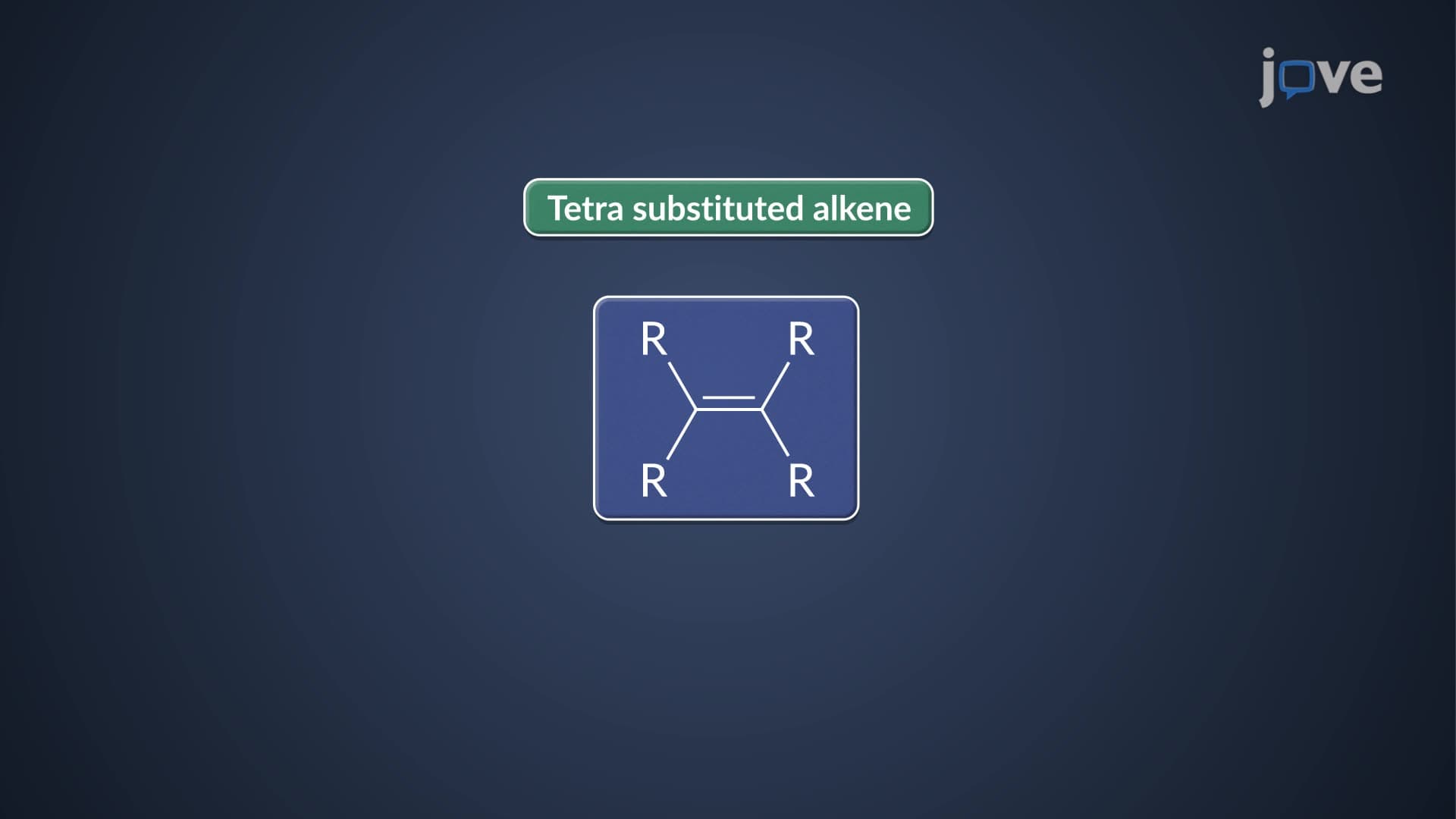
- Recognize exceptions like tetrasubstituted alkenes and internal alkynes in spectral analysis
- Explore how bond strength and electron density influence vibrational frequencies in organic molecules
Understanding IR Absorption Frequency Hybridization Fundamentals
IR absorption frequency hybridization describes the predictable relationship between a carbon atom's hybridization state and the infrared stretching frequency of its C-H bonds. This phenomenon occurs because different hybridization states create varying degrees of s-orbital character, directly affecting bond strength and vibrational frequency.
The trend follows a clear pattern: sp³ < sp² < sp hybridization corresponds to increasing IR frequency. This relationship stems from the fundamental principle that greater s-orbital character concentrates electron density closer to the nucleus, creating shorter, stronger bonds that vibrate at higher frequencies.
The Science Behind Hybridization Effects on Bond Strength
Hybridization bond strength IR relationships emerge from orbital geometry and electron distribution. Sp³-hybridized carbons contain 25% s-character, while sp²-hybridized carbons have 33% s-character, and sp-hybridized carbons possess 50% s-character. This increasing s-orbital percentage creates progressively stronger C-H bonds.
For AP Chemistry and college organic chemistry courses, students must understand that s-orbitals are spherical and closer to the nucleus than p-orbitals. Therefore, higher s-character means electrons spend more time near the positively charged nucleus, creating stronger electrostatic attraction and shorter bond lengths. These structural changes directly translate to higher vibrational frequencies in IR spectroscopy.
Practical Applications in Spectral Analysis
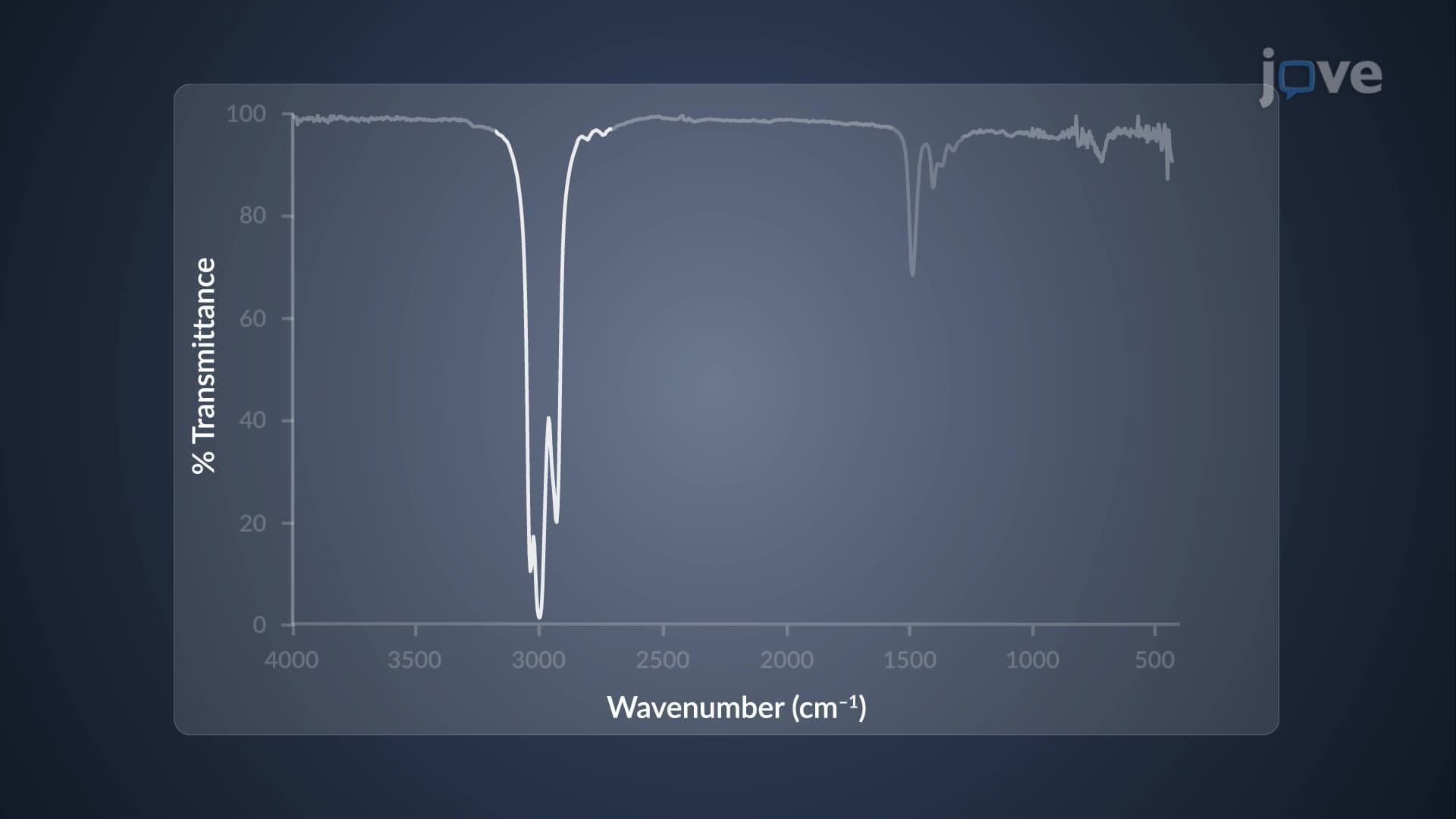
Carbon hybridization IR stretch patterns enable chemists to identify unknown compounds reliably. Alkanes (sp³ carbons) show C-H stretches below 3000 cm⁻¹, typically around 2850-2960 cm⁻¹. Alkenes (sp² carbons) display C-H stretches near 3100 cm⁻¹, while alkynes (sp carbons) appear around 3300 cm⁻¹.
These distinctions prove crucial in pharmaceutical quality control, environmental monitoring, and forensic analysis. For instance, the FDA uses IR spectroscopy to verify drug purity, relying on these hybridization-dependent frequencies to detect impurities or confirm molecular identity.
Exceptions and Special Cases in Hybridization IR Analysis
Understanding hybridization IR wavenumber patterns requires recognizing important exceptions. Tetrasubstituted alkenes lack C-H bonds entirely, so no absorption appears at 3100 cm⁻¹. Similarly, internal alkynes (R-C≡C-R) don't show the characteristic 3300 cm⁻¹ stretch because no hydrogen atoms attach to the sp-hybridized carbons.
These exceptions frequently appear on MCAT passages and college organic chemistry exams, testing students' ability to connect molecular structure with spectroscopic evidence. Mastering these concepts prepares students for advanced coursework in analytical chemistry and spectroscopy applications.
Frequently Asked Questions
IR absorption frequency hybridization explains how carbon atom hybridization (sp³, sp², sp) determines C-H bond stretching frequencies in infrared spectroscopy. This concept enables chemists to identify molecular structures by analyzing characteristic absorption patterns, making it essential for pharmaceutical analysis, forensic chemistry, and research applications.
Hybridization affects IR frequencies through s-orbital character: sp carbons (50% s-character) create the strongest C-H bonds and highest frequencies (~3300 cm⁻¹), sp² carbons (33% s-character) show intermediate frequencies (~3100 cm⁻¹), and sp³ carbons (25% s-character) produce the lowest frequencies (<3000 cm⁻¹). Higher s-character means electrons stay closer to the nucleus, creating stronger bonds that vibrate at higher frequencies.
Yes, IR spectroscopy and hybridization relationships frequently appear on both exams. The AP Chemistry exam tests spectroscopic analysis in free-response questions, while the MCAT includes IR interpretation in General Chemistry and Organic Chemistry passages. Focus on connecting molecular structure to spectral evidence for exam success.
Identify carbon hybridization states in the molecule, then apply the frequency ranges: alkanes (sp³) below 3000 cm⁻¹, alkenes (sp²) around 3100 cm⁻¹, and alkynes (sp) near 3300 cm⁻¹. Remember exceptions like tetrasubstituted alkenes and internal alkynes that lack characteristic C-H stretches. Practice with molecular structure problems to build pattern recognition skills.
Absolutely! Pharmaceutical companies routinely use IR spectroscopy to verify drug identity and purity during manufacturing and quality control. For example, distinguishing between different organic compounds in medications relies on hybridization-dependent IR frequencies, ensuring patient safety and regulatory compliance with FDA standards.
Not at all! While the underlying quantum mechanics is complex, the practical pattern recognition is straightforward. High school students can master this concept by focusing on the three hybridization types and their corresponding frequency ranges, then practicing with molecular examples and spectral interpretation exercises.
Use the mnemonic "Stronger bonds, Higher frequencies" and remember the pattern sp³ < sp² < sp for increasing frequency. Practice with flashcards showing molecular structures and their IR ranges: alkanes (<3000), alkenes (~3100), alkynes (~3300). Connect the numbers to real molecules like methane, ethylene, and acetylene for better retention.
Explore other functional groups in IR spectroscopy (C=O, O-H, N-H stretches), then advance to NMR spectroscopy and mass spectrometry. Understanding how molecular structure affects all spectroscopic techniques builds a comprehensive analytical chemistry foundation for advanced coursework and research applications.
Related Micro-courses

17 Concepts

15 Concepts