Loading subject page…


218,707 views

Video Summary: What are Fibrous Proteins
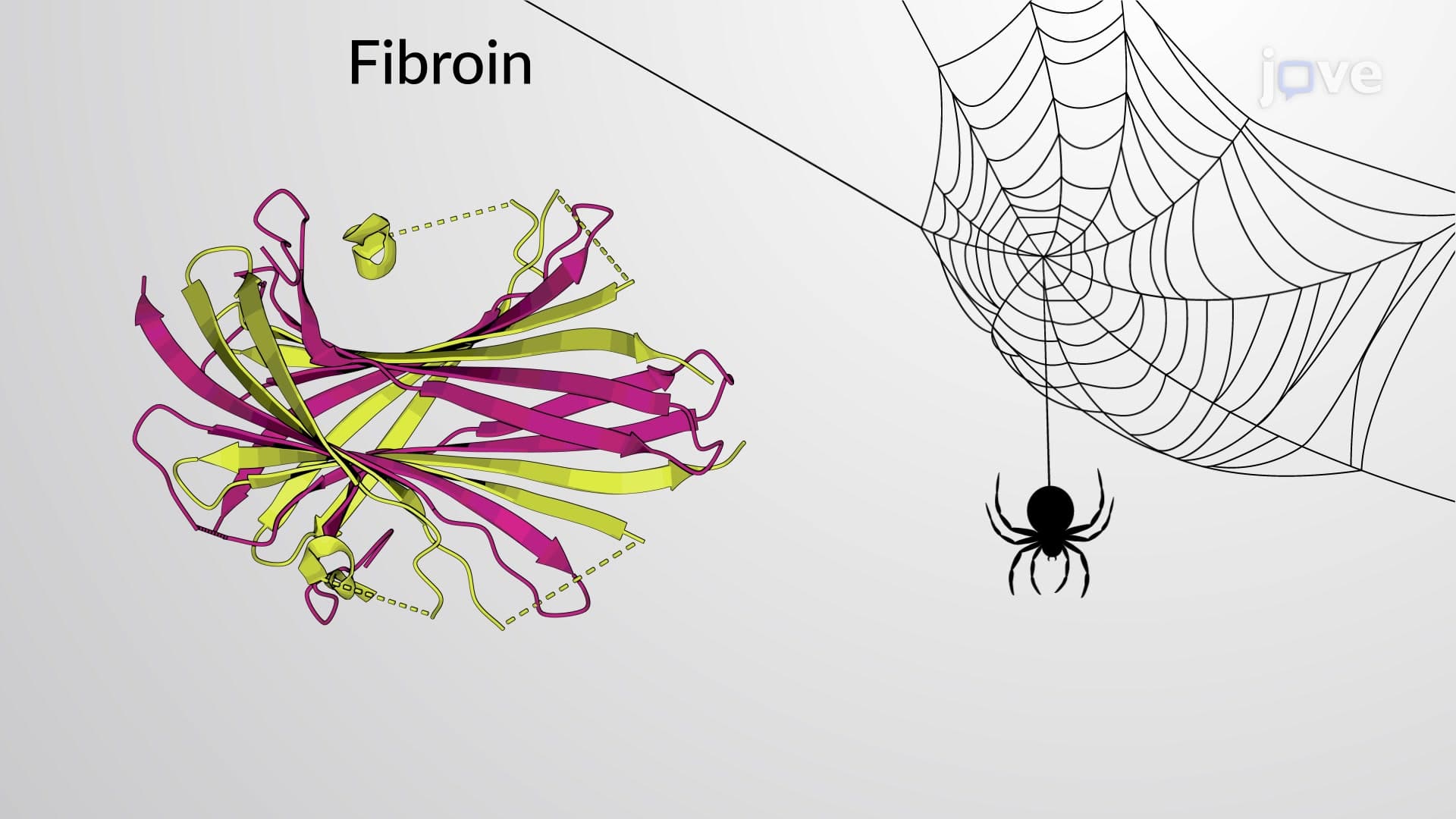
Ever wonder why spider silk is stronger than steel by weight? Fibrous proteins explained through the remarkable structure of proteins like fibroin, which gives silk its incredible strength-to-weight ratio. Unlike globular proteins that fold compactly, what are fibrous proteins reveals elongated structures that form the backbone of connective tissues throughout the human body, from tendons in athletes' knees to the collagen in our skin. Watch the full video on JoVE Coach to master this concept with expert-led visuals and step-by-step explanations.
Fibrous proteins explained begins with recognizing their fundamental role as the body's structural engineers. Unlike globular proteins that fold into compact, spherical shapes for enzymatic or transport functions, fibrous proteins adopt extended, rope-like conformations perfectly suited for mechanical support. These structural protein fibrous molecules predominantly reside in the extracellular matrix, forming the scaffolding that holds tissues together and provides mechanical strength to organs.
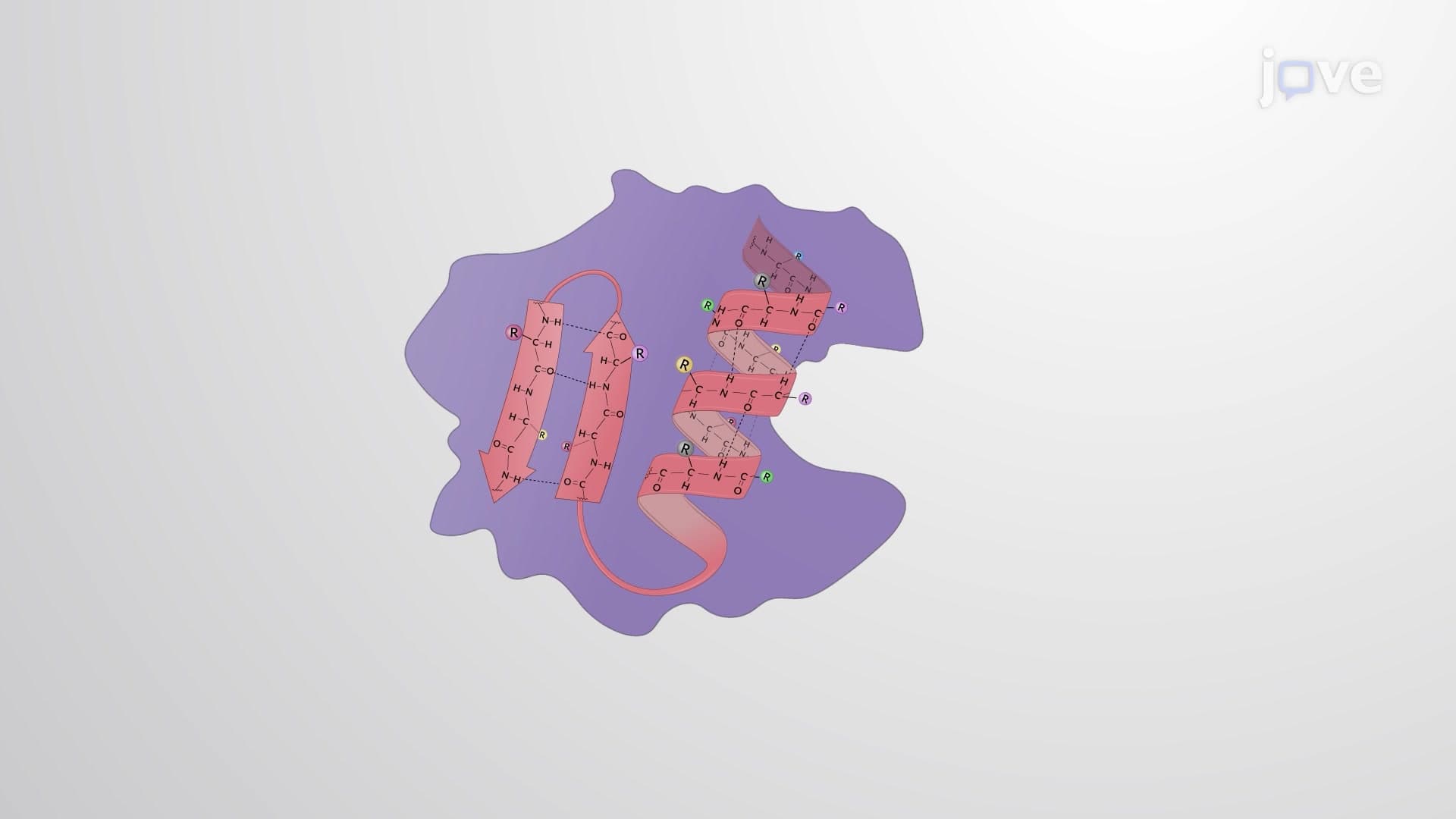
The fibrous protein structure function relationship demonstrates a perfect example of form following function in biology. Most fibrous proteins are constructed from repeating structural motifs-either alpha-helices or beta-sheets-but rarely both within the same protein. This structural consistency allows for predictable, repetitive interactions that build into larger, mechanically robust assemblies. The hydrophobic amino acids positioned on their outer surfaces create sticky patches that facilitate protein-protein interactions, enabling individual molecules to associate into fibers, cables, and networks.
Collagen fibrous protein represents the most abundant protein in mammals, comprising roughly 30% of total body protein. Its unique triple-helix structure forms when three individual alpha-helical chains wind around each other in a coiled-coil arrangement. This molecular architecture provides both flexibility and tensile strength, making collagen ideal for tendons, ligaments, bone matrix, and blood vessel walls. In clinical settings, collagen defects cause conditions like Ehlers-Danlos syndrome, where patients experience joint hypermobility and skin hyperextensibility-demonstrating collagen's critical structural role.
Keratin fibrous structure illustrates another major class of structural proteins, forming the protective barriers of hair, nails, and the outer layer of skin. Unlike collagen's extracellular location, keratins function intracellularly as intermediate filaments. The fibrous protein examples biology extends to elastin (providing stretch and recoil in arteries and lungs), and fibroin (silk protein with remarkable strength-to-weight ratios). These insoluble fibrous protein molecules resist dissolution in water, contributing to their durability and structural integrity-properties frequently tested on the MCAT and AP Biology exams when students analyze protein structure-function relationships.
Related Micro-courses