Loading subject page…


317,339 views


Video Summary: What Is Anatomical Movements
Ever wonder why physical therapists can precisely describe shoulder injuries or how medical students memorize hundreds of body motions? Anatomical movements explained through standardized terminology allows healthcare professionals to communicate with perfect clarity about human motion. When a basketball player at Duke University tears their ACL, doctors use specific anatomical movement terms to describe the knee's compromised flexion and extension capabilities. What is Anatomical Movements encompasses this entire system of describing how bones, joints, and muscles move relative to the body's standard position. Watch the full video on JoVE Coach to master this concept with expert-led visuals and step-by-step explanations.
Anatomical movements explained begin with the concept of anatomical position-a standardized reference point where the body stands upright, arms at sides, palms forward, and feet parallel. This universal starting position ensures consistent communication among healthcare professionals, from emergency room physicians at Johns Hopkins to sports medicine specialists at UCLA.
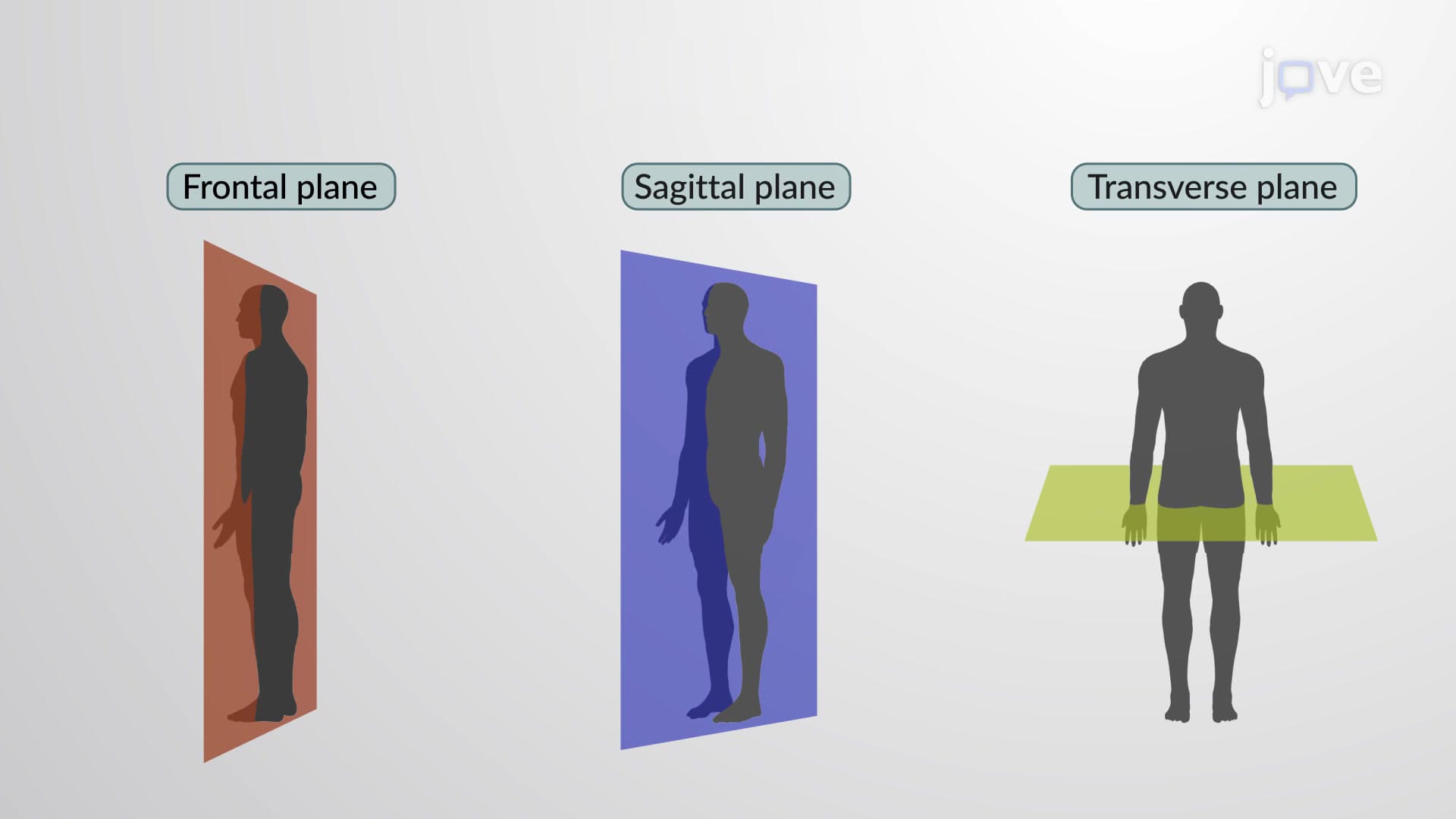
All human movement occurs along three distinct anatomical planes. The sagittal plane divides the body into left and right halves, facilitating forward-backward motions like the flexion-extension movement seen when a baseball pitcher winds up and releases the ball. The frontal plane separates anterior from posterior, enabling side-to-side movements such as abduction-adduction anatomy demonstrated when jumping jacks move arms away from and toward the body's midline. The transverse plane creates superior and inferior divisions, allowing rotational movements like the pronation-supination of forearms when turning a doorknob.
Body movements anatomical terminology relies heavily on paired opposites. Flexion decreases joint angles-think of bicep curls bringing your hand toward your shoulder-while extension increases angles, as in straightening your arm. These movements are crucial for MCAT preparation, where students must identify anatomical joint movements in clinical scenarios.
Abduction moves limbs away from the body's midline (spreading fingers apart), while adduction brings them closer (closing fingers together). These concepts frequently appear on AP Biology exams and college anatomy midterms, particularly when analyzing shoulder and hip mechanics in athletic performance.
What are anatomical movements in physiology becomes particularly fascinating when examining rotation, pronation, and supination. Pronation rotates the forearm so the palm faces downward (like pouring water from a pitcher), while supination turns it upward (holding soup in a bowl). Medical students studying for the USMLE must master these distinctions to understand conditions like tennis elbow or carpal tunnel syndrome.
Understanding body movement terminology extends beyond memorization to practical application. Physical therapists use this language to design rehabilitation programs for NFL players recovering from ACL tears, while occupational therapists apply it when helping stroke patients at Mayo Clinic regain motor function.
Related Micro-courses