Loading subject page…


1,031,804 views

Video Summary: What Is Genomic DNA in Prokaryotes
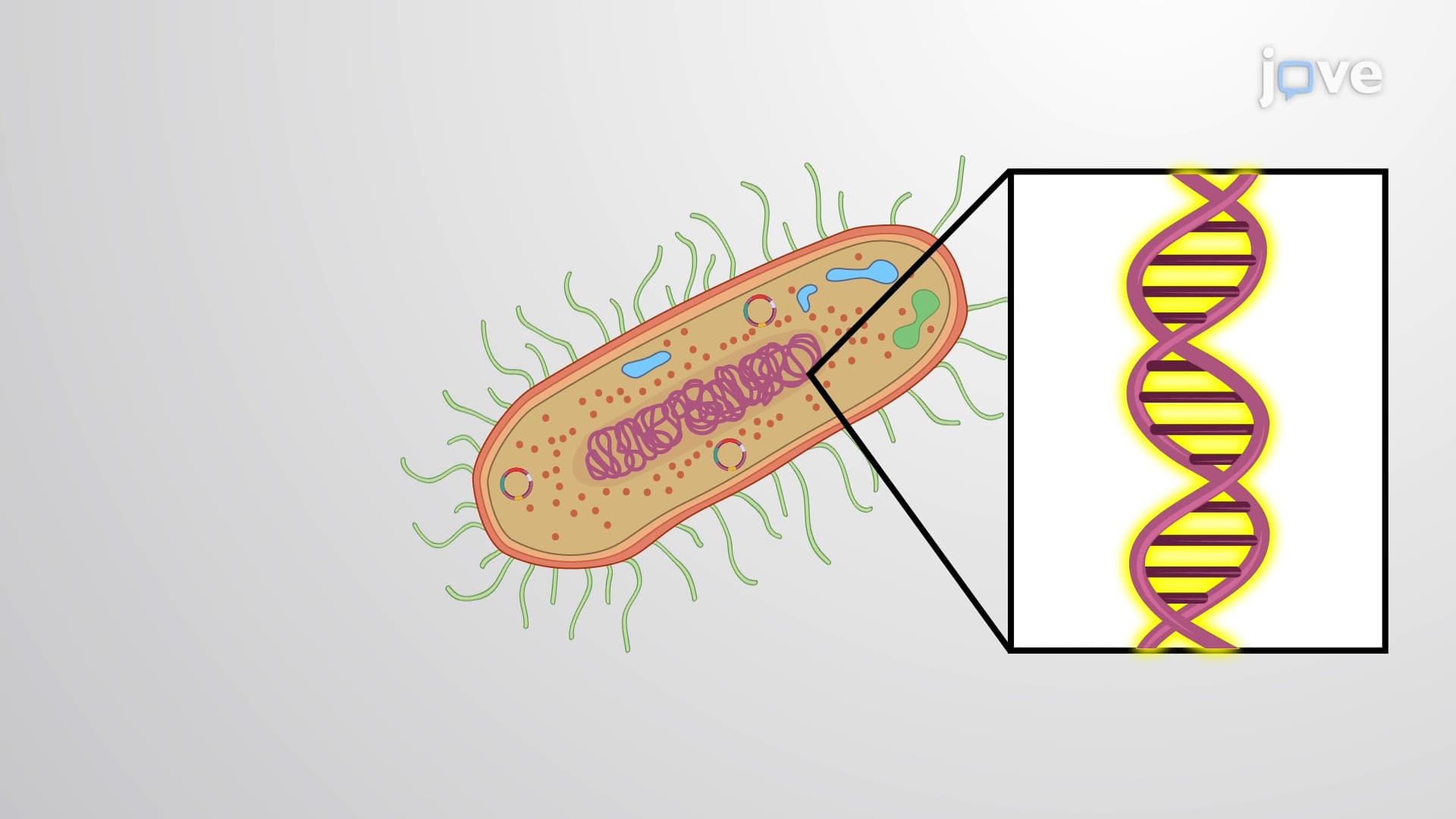
Did you know that E. coli bacteria can survive antibiotic treatments partly because their genomic DNA in prokaryotes includes special resistance genes on tiny DNA loops? Unlike human cells with membrane-bound nuclei, prokaryotic genomic DNA floats freely in a region called the nucleoid, where a single supercoiled chromosome contains the entire genome. Additionally, small independent DNA molecules called plasmids carry survival genes-which is why antibiotic-resistant bacteria in US hospitals pose such a significant challenge. Watch the full video on JoVE Coach to master this concept with expert-led visuals and step-by-step explanations.
Genomic DNA in prokaryotes represents a remarkably efficient organizational system that differs dramatically from eukaryotic cells. While human cells package their DNA within a membrane-bound nucleus, prokaryotic cells like bacteria and archaea have evolved a streamlined approach. Their entire genome exists as a single, circular, double-stranded chromosome located in the nucleoid-a specialized cytoplasmic region without surrounding membranes.
This organization appears in every bacterial species, from the E. coli studied in college microbiology labs to the Streptococcus bacteria causing strep throat infections across US schools each year. The lack of nuclear membranes allows prokaryotic cells to respond rapidly to environmental changes, a crucial survival advantage that has enabled bacteria to colonize virtually every habitat on Earth.
The prokaryotic chromosome undergoes extensive supercoiling, creating a tightly wound structure that fits remarkable amounts of genetic information into microscopic cellular spaces. This supercoiling process involves DNA-binding proteins that help compress the chromosome into an organized, accessible format. Consider that E. coli's chromosome contains over 4 million base pairs of DNA-if stretched linearly, it would measure about 1.4 millimeters, roughly 1,000 times longer than the bacterial cell itself.
Students preparing for AP Biology exams should understand that this supercoiling isn't random; it follows specific patterns that allow enzymes to access genes when needed for protein synthesis. The supercoiled structure also facilitates DNA replication during bacterial cell division, enabling the rapid reproduction rates that characterize bacterial growth.
Beyond the main chromosome, prokaryotic cells contain plasmids-small, circular DNA molecules that replicate independently. These genetic elements typically carry 10-100 genes and serve crucial roles in bacterial survival and adaptation. In US clinical settings, plasmids often carry antibiotic resistance genes, creating significant challenges for treating bacterial infections.
Medical students studying for the MCAT encounter plasmid biology when learning about horizontal gene transfer, where bacteria share resistance genes across species boundaries. This mechanism explains how antibiotic resistance spreads rapidly through bacterial populations in hospitals, contributing to the emergence of "superbugs" resistant to multiple antibiotics.
Understanding prokaryotic DNA organization proves essential for numerous biotechnology applications used throughout US research institutions. Scientists utilize bacterial plasmids as vectors for genetic engineering, inserting foreign genes into bacteria to produce medications like insulin and growth hormone. The simplicity of prokaryotic DNA organization makes bacteria ideal laboratory organisms for studying fundamental genetic processes.
Related Micro-courses