Loading concepts…


8 Concepts
21 Concepts
9 Concepts
16 Concepts
16 Concepts
14 Concepts
15 Concepts
14 Concepts
7 Concepts
9 Concepts
5 Concepts
19 Concepts
13 Concepts
12 Concepts
15 Concepts
7 Concepts
8 Concepts
11 Concepts
12 Concepts
11 Concepts
6 Concepts
8 Concepts
8 Concepts
9 Concepts
8 Concepts
10 Concepts
12 Concepts
12 Concepts
11 Concepts
5 Concepts
4 Concepts
5 Concepts
7 Concepts
21 Concepts
7 Concepts
8 Concepts
 5 Concepts
 850.1K Views
 Popular topics


Meiosis is the specialized sexual reproduction cell division process that transforms diploid cells into genetically diverse haploid gametes. This complex two-stage division ensures genetic variation through crossing over and independent assortment while maintaining chromosome number across generations. Understanding meiosis stages and genetic variation is fundamental for mastering heredity, evolution, and reproductive biology concepts taught in advanced US biology curricula, with JoVE Coach providing comprehensive video explanations.
1. Meiosis Overview and Sexual Reproduction Cell Division Meiosis transforms diploid germ cells into four genetically unique haploid gametes through two sequential divisions. Unlike mitosis, which maintains chromosome number, meiosis reduces diploid (2n) cells to haploid (n) gametes essential for sexual reproduction. In humans, diploid cells contain 46 chromosomes, while gametes (sperm and eggs) contain 23 chromosomes. This reduction prevents chromosome doubling with each generation and enables genetic diversity. Meiosis occurs in specialized reproductive tissues: testes producing sperm and ovaries producing eggs in animals, with similar processes in plant reproductive structures.
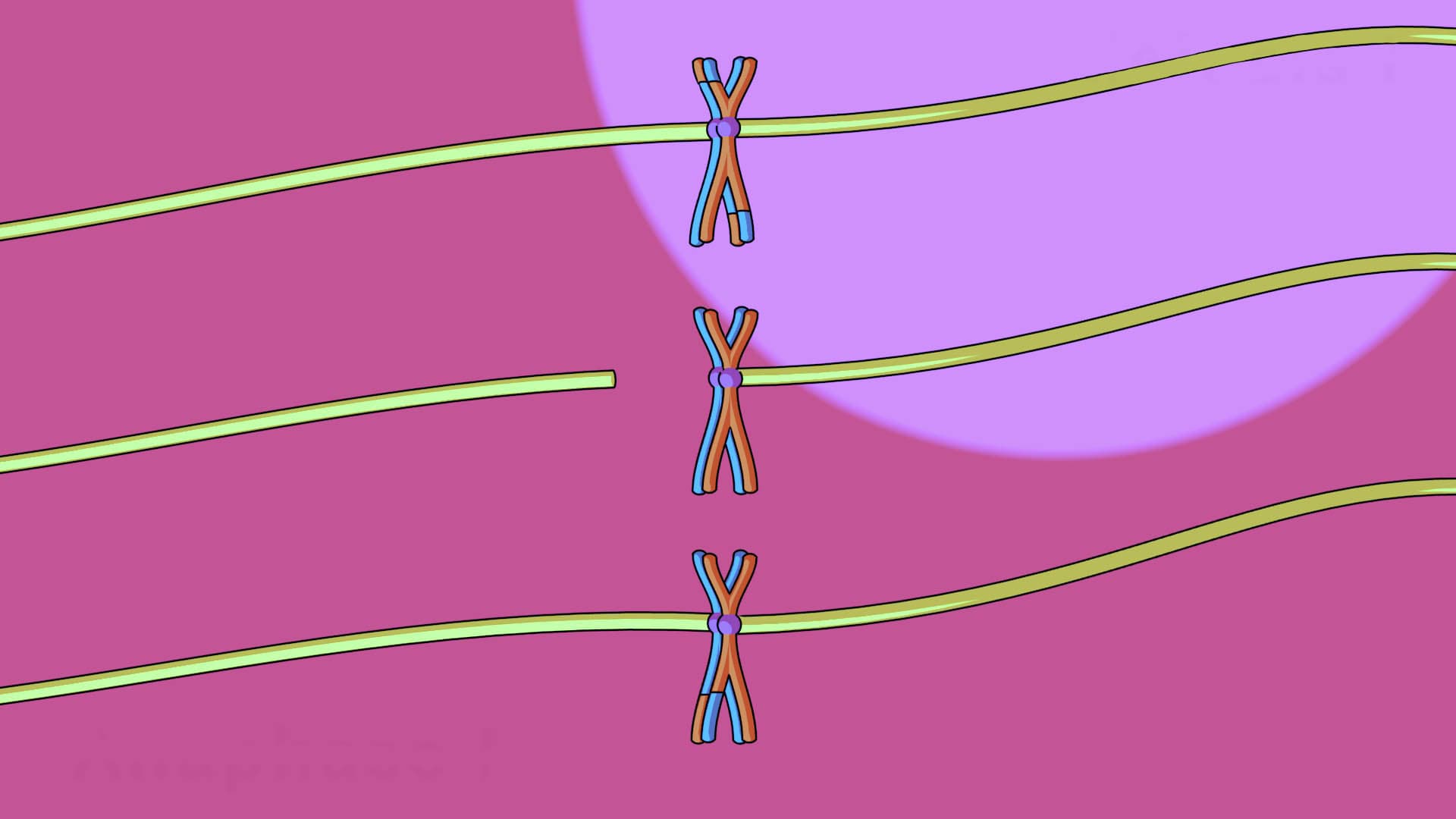
2. Meiosis I: Reductional Division and Homologous Chromosome Separation Meiosis I reduces chromosome number through four distinct phases. Prophase I includes five substages: leptotene (chromosome condensation), zygotene (homolog pairing), pachytene (crossing over), diplotene (chiasma formation), and diakinesis (nuclear envelope breakdown). During metaphase I, homologous chromosome pairs align at the cell equator, with independent assortment determining random distribution. Anaphase I separates whole chromosomes (not sister chromatids) to opposite poles, creating two haploid cells. Telophase I completes division with nuclear reformation. This stage generates genetic diversity through crossing over chromosomes and independent assortment of maternal and paternal chromosomes.
3. Meiosis II: Equational Division and Sister Chromatid Separation Meiosis II resembles mitosis but occurs in haploid cells, separating sister chromatids rather than homologous chromosomes. Following interkinesis (brief rest period), prophase II begins with chromosome condensation and spindle formation. Metaphase II aligns chromosomes at the equator, but unlike mitosis, sister chromatids are genetically different due to prior recombination. Anaphase II separates sister chromatids to opposite poles through cohesin breakdown. Telophase II reforms nuclear envelopes around four haploid nuclei. Cytokinesis produces four genetically distinct gametes from one original diploid cell, completing gamete formation essential for sexual reproduction and species continuation.
4. Crossing Over and Genetic Recombination Mechanisms Crossing over occurs during pachytene of prophase I when homologous chromosomes exchange genetic material through homologous recombination. The synaptonemal complex, a protein structure, facilitates chromosome pairing and recombination between non-sister chromatids. Enzymes like Spo11 create double-strand breaks, while recombinases repair breaks by exchanging chromosome segments. Chiasmata mark crossover points where chromosomes remain connected until separation. This process increases genetic diversity beyond independent assortment alone. In humans, each chromosome pair typically experiences 1-3 crossover events. Genetic mapping uses recombination frequencies to determine gene distances, with 1% recombination frequency equaling one map unit or centimorgan.
5. Independent Assortment and Genetic Variation Generation Independent assortment occurs during metaphase I when homologous chromosome pairs randomly align at the cell equator. Each pair's orientation is independent of other pairs, creating 2^n possible combinations where n equals haploid chromosome number. In humans (n=23), this generates over 8 million possible gamete combinations from independent assortment alone. Combined with crossing over, meiosis produces virtually unlimited genetic diversity. This mechanism explains Mendel's second law and ensures offspring receive unique genetic combinations. Independent assortment contributes to evolutionary adaptation by maintaining genetic variation within populations, providing raw material for natural selection and species survival.
6. Nondisjunction and Chromosomal Disorders Nondisjunction represents meiotic errors where chromosomes fail to separate properly, producing aneuploid gametes with incorrect chromosome numbers. Meiosis I nondisjunction occurs when homologous chromosomes don't separate, while meiosis II nondisjunction involves sister chromatid separation failure. These errors cause trisomy (three copies) or monosomy (one copy) conditions. Common examples include Down syndrome (trisomy 21), Turner syndrome (45,X), and Klinefelter syndrome (47,XXY). Maternal age strongly correlates with nondisjunction risk, particularly for trisomy 21. Advanced diagnostic techniques like amniocentesis and chorionic villus sampling detect chromosomal abnormalities during pregnancy, enabling genetic counseling and informed reproductive decisions.