Loading…
Loading video…

1,269,010 views
Every second, your cells manufacture over 2,000 proteins—from insulin regulating blood sugar to hemoglobin carrying oxygen through your bloodstream. Translation explained biology reveals how ribosomes decode messenger RNA to build these essential proteins, converting genetic instructions into functional molecules your body needs to survive. Consider how pharmaceutical companies like Moderna use this process to design mRNA vaccines that instruct your cells to produce protective proteins. What is translation transforms from abstract concept to life-saving biotechnology when you understand the molecular machinery at work. Watch the full video on JoVE Coach to master this concept with expert-led visuals and step-by-step explanations.
What is translation represents one of biology's most elegant molecular processes—the conversion of genetic information stored in messenger RNA into functional proteins. This fundamental process occurs in every living cell, from the simplest bacteria to complex human tissues. In your body right now, millions of ribosomes are actively translating mRNA molecules to produce the proteins that keep you alive, including enzymes that digest your food, antibodies that fight infections, and structural proteins that maintain your muscles and bones.
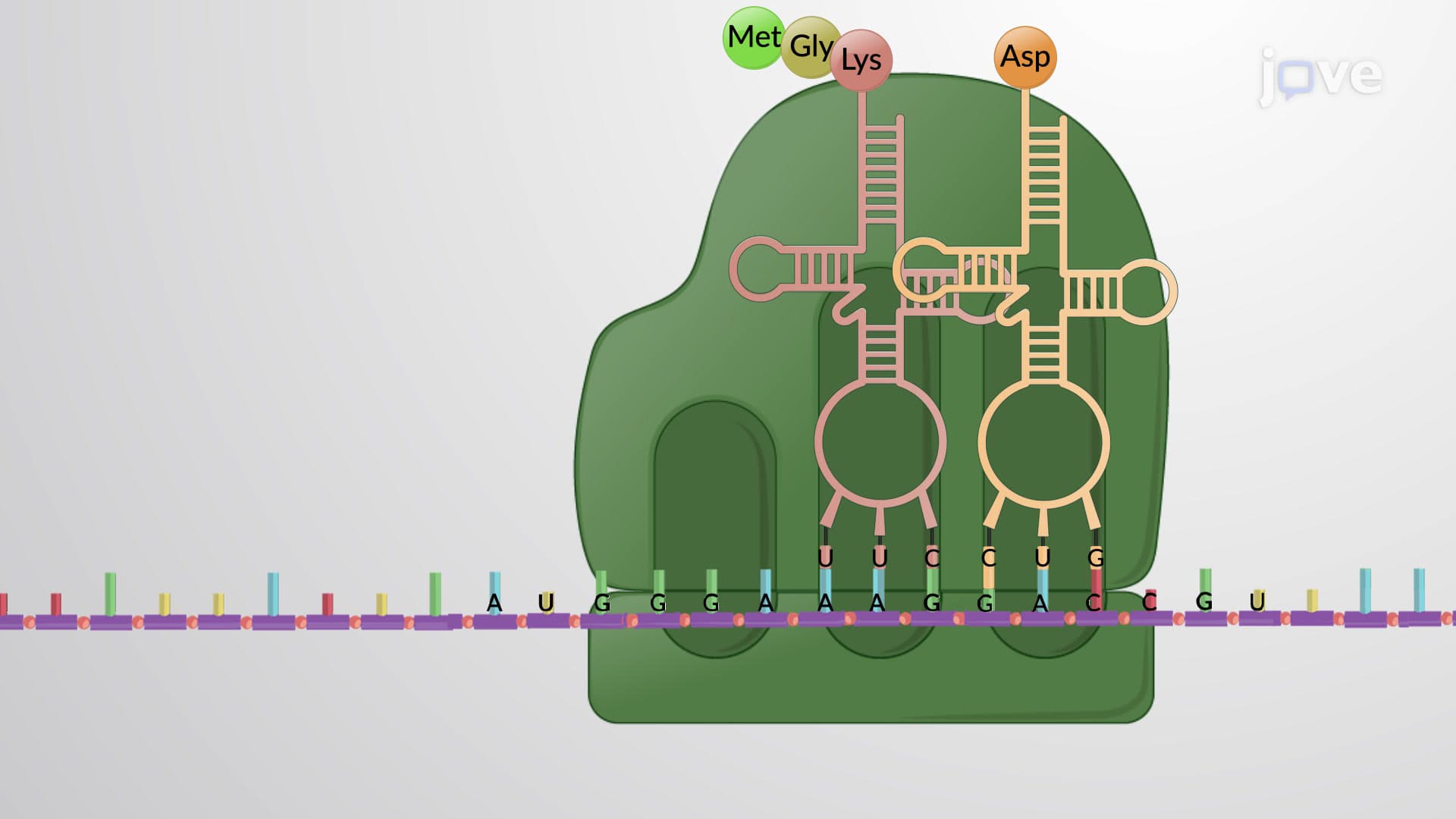
The translation machinery operates like a sophisticated factory assembly line. Ribosomes serve as the primary workstations, consisting of two subunits that work together to decode mRNA messages. Transfer RNAs (tRNAs) function as molecular adapters, each carrying a specific amino acid and featuring an anticodon that pairs with complementary codons on the mRNA. This codon anticodon translation ensures that amino acids are added in the precise sequence dictated by the genetic code. The process demonstrates remarkable fidelity—errors occur in fewer than 1 in 10,000 amino acid incorporations, highlighting the precision of this ribosome translation protein system.
The mRNA translation process unfolds in three distinct phases, each carefully orchestrated by specific molecular signals. Initiation begins when the small ribosomal subunit recognizes the 5' end of mRNA and scans for the AUG start codon, typically encoding methionine as the first amino acid. This scanning process, unique to eukaryotes, allows for regulatory control over protein production. Elongation follows as tRNAs deliver amino acids in sequence, with the ribosome catalyzing peptide bond formation between adjacent amino acids. The ribosome translocates along the mRNA, maintaining reading frame precision. Termination occurs when the ribosome encounters stop codons (UAG, UAA, or UGA), which lack corresponding tRNAs and instead bind release factors that trigger protein release.
Understanding translation biology proves essential for students pursuing healthcare careers, as many medical conditions result from translation defects. For example, cystic fibrosis often stems from mutations affecting protein folding after translation, while certain antibiotics work by disrupting bacterial translation machinery. This knowledge appears frequently on standardized exams—the MCAT dedicates significant attention to protein synthesis, AP Biology includes translation in its molecular biology units, and nursing entrance exams like the HESI A2 test translation comprehension. Students preparing for these assessments benefit from visualizing translation as a dynamic, regulated process rather than memorizing static diagrams.
Frequently Asked Questions
Translation is the process where ribosomes read mRNA sequences and assemble corresponding amino acid chains to create proteins. Unlike transcription, which copies DNA into RNA within the nucleus, translation occurs in the cytoplasm and converts RNA information into protein structures. This represents the second step of gene expression, transforming genetic codes into functional cellular machinery.
MCAT questions often focus on translation regulation, antibiotic mechanisms that disrupt translation, and genetic code interpretation. AP Biology emphasizes understanding translation phases, codon-anticodon pairing, and connecting translation to cellular functions. Both exams require students to analyze experimental data showing translation rates under different conditions and predict outcomes of translation mutations.
Focus on drawing translation diagrams from memory, practicing genetic code problems, and understanding how different factors affect translation efficiency. Review past MCAT passages about antibiotic mechanisms and protein synthesis diseases. Create concept maps linking translation to other cellular processes like transcription and protein folding, as the MCAT often tests integrated knowledge.
Modern drug development increasingly targets translation machinery for therapeutic purposes. mRNA vaccines instruct cells to translate viral proteins that trigger immune responses, while many antibiotics specifically disrupt bacterial translation without affecting human protein synthesis. Cancer treatments often target rapidly translating tumor cells, and genetic therapies aim to correct faulty translation processes causing inherited diseases.
Translation concepts build naturally from basic chemistry principles you already know. Think of it as following recipes—codons are ingredients lists, tRNAs are delivery trucks, and ribosomes are kitchen equipment. The molecular interactions follow logical patterns, and visual aids help students grasp the spatial relationships between mRNA, tRNAs, and ribosomal components without requiring advanced chemistry knowledge.
Use active recall methods like flashcards for codon assignments, create mnemonics for remembering start and stop codons, and practice drawing translation diagrams without references. Form study groups to explain translation steps aloud, as teaching others reinforces your understanding. Focus on understanding the logic behind codon-anticodon pairing rather than pure memorization.
Consider biochemistry courses that explore protein structure and function, molecular biology classes covering gene regulation and biotechnology applications, or genetics courses examining translation mutations and inheritance patterns. Pre-med students benefit from cell biology courses that integrate translation with disease mechanisms, while biotechnology programs offer hands-on experience with protein expression systems used in industry.
HESI A2 biology sections test translation knowledge through questions about protein synthesis, genetic code interpretation, and cellular processes. Understanding translation helps answer questions about how cells produce essential proteins like insulin, hemoglobin, and immune system components. This knowledge also supports anatomy and physiology sections by explaining how genetic information becomes functional body structures.
Prokaryotic translation begins while transcription continues, with ribosomes directly binding internal ribosome binding sites on mRNA. Eukaryotic translation requires mRNA processing and nuclear export before cytoplasmic ribosomes can access the message, allowing for additional regulatory control. These differences explain why certain antibiotics affect bacterial translation without harming human cells, a principle important for understanding drug selectivity.
Related Micro-courses
Related Subjects