Loading…
Loading video…
5,730 views
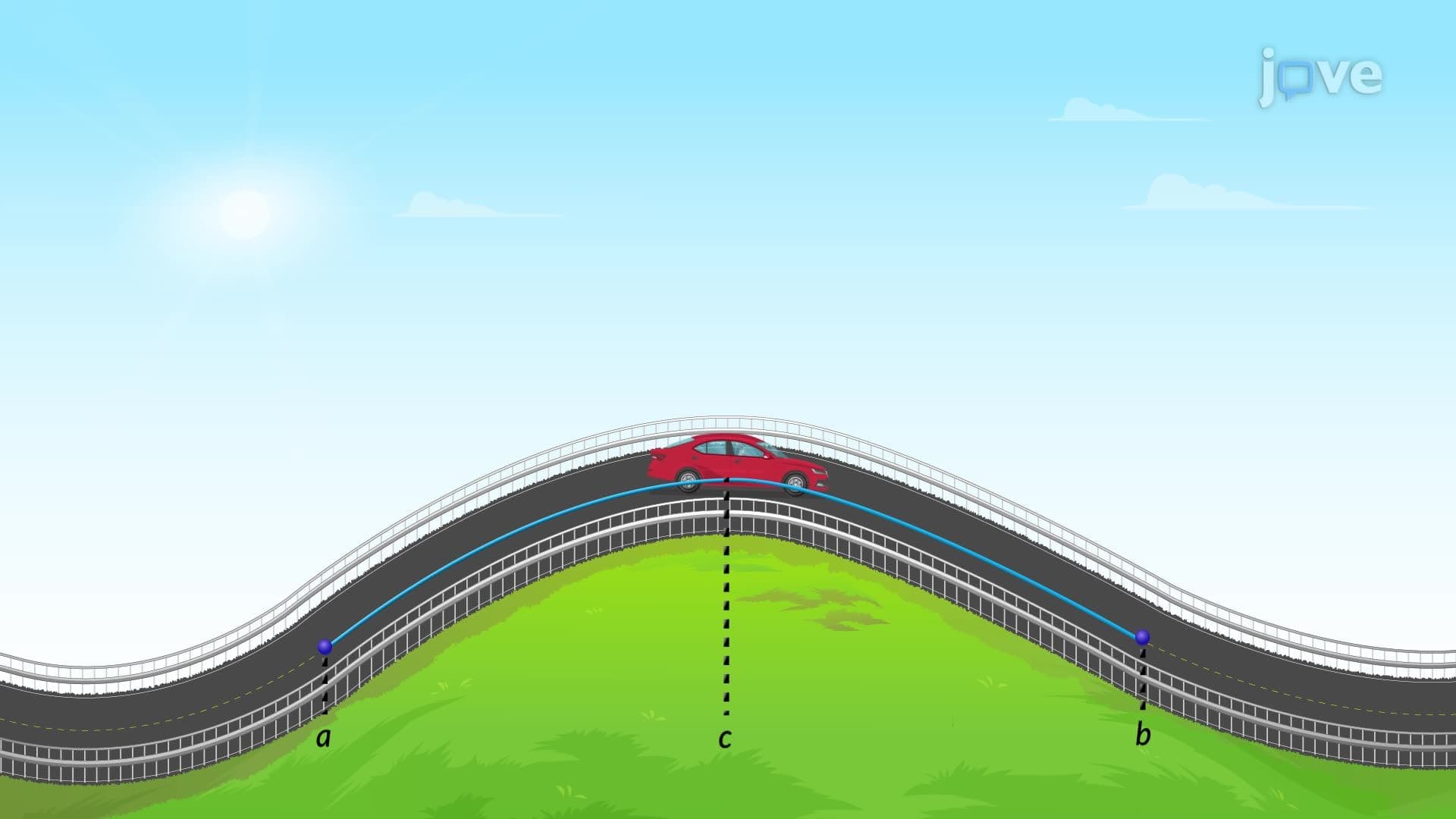
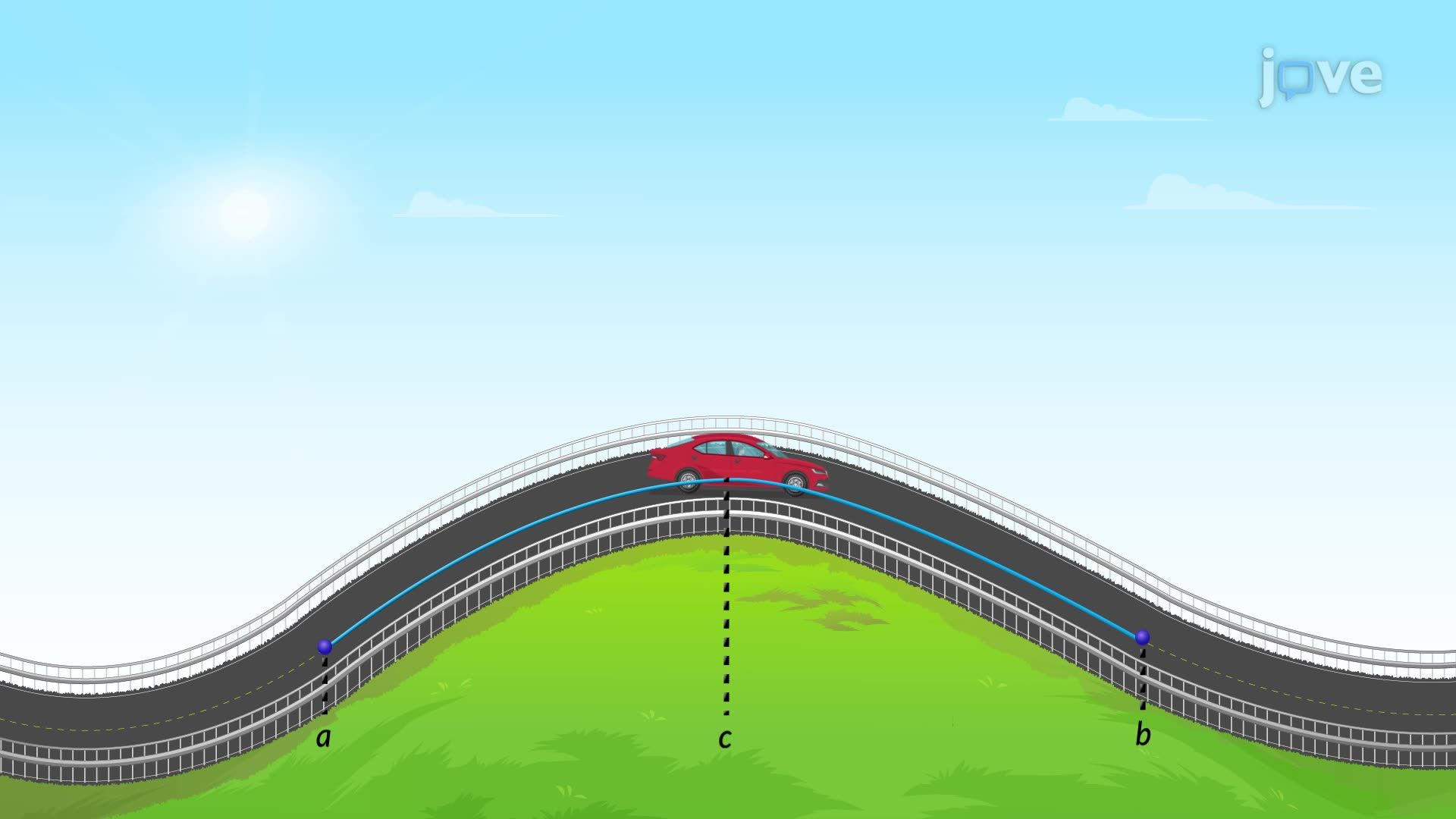
Ever wonder why a roller coaster always has a flat moment at its peak before plunging back down? That's Rolle's Theorem in action. Rolle's theorem basics reveal that if a continuous, differentiable function starts and ends at the same value, its derivative must equal zero at least once in between — like a car cresting a hill on a Colorado mountain pass. Watch the full video on JoVE Coach to master this concept with expert-led visuals and step-by-step explanations.
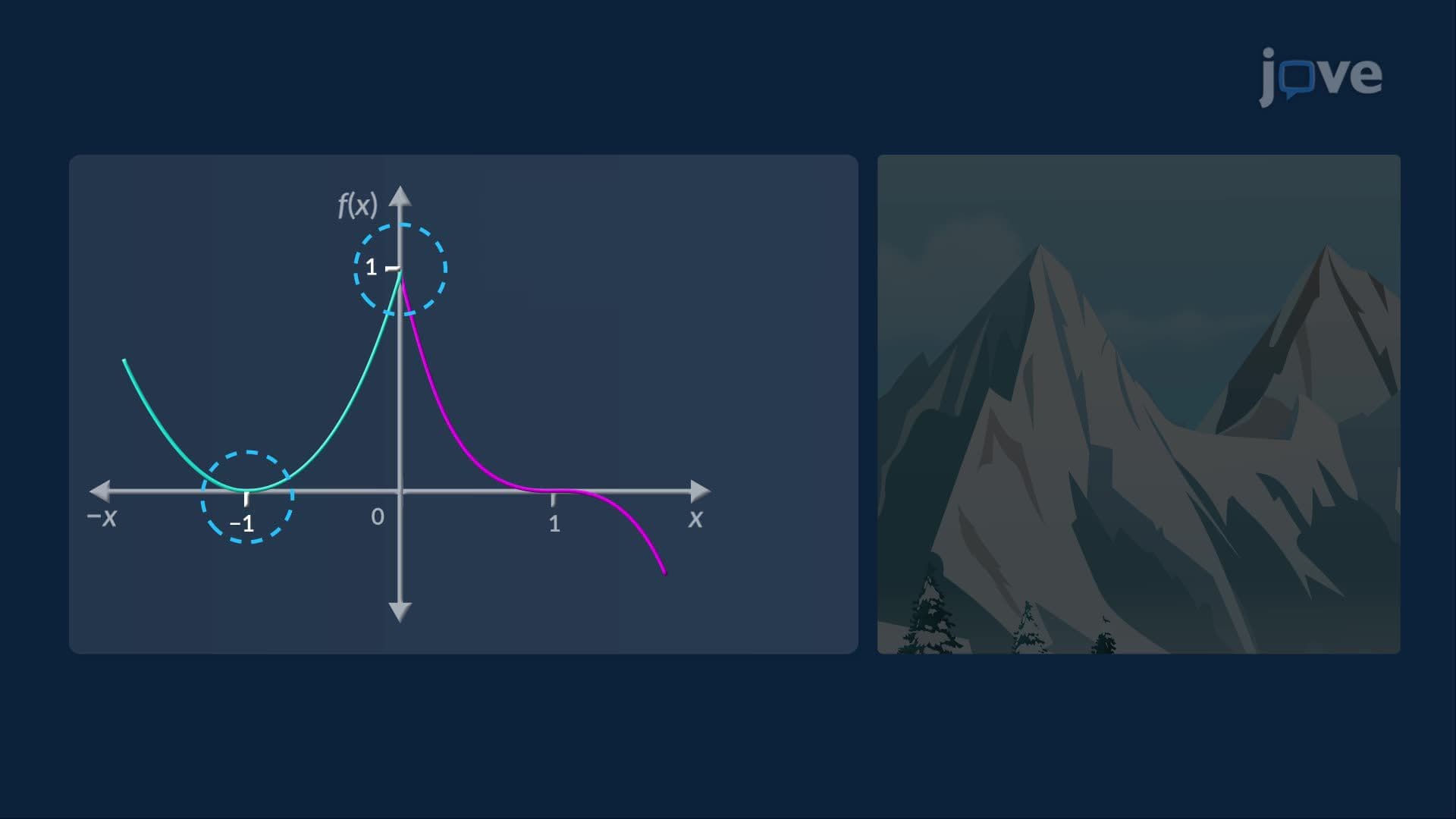
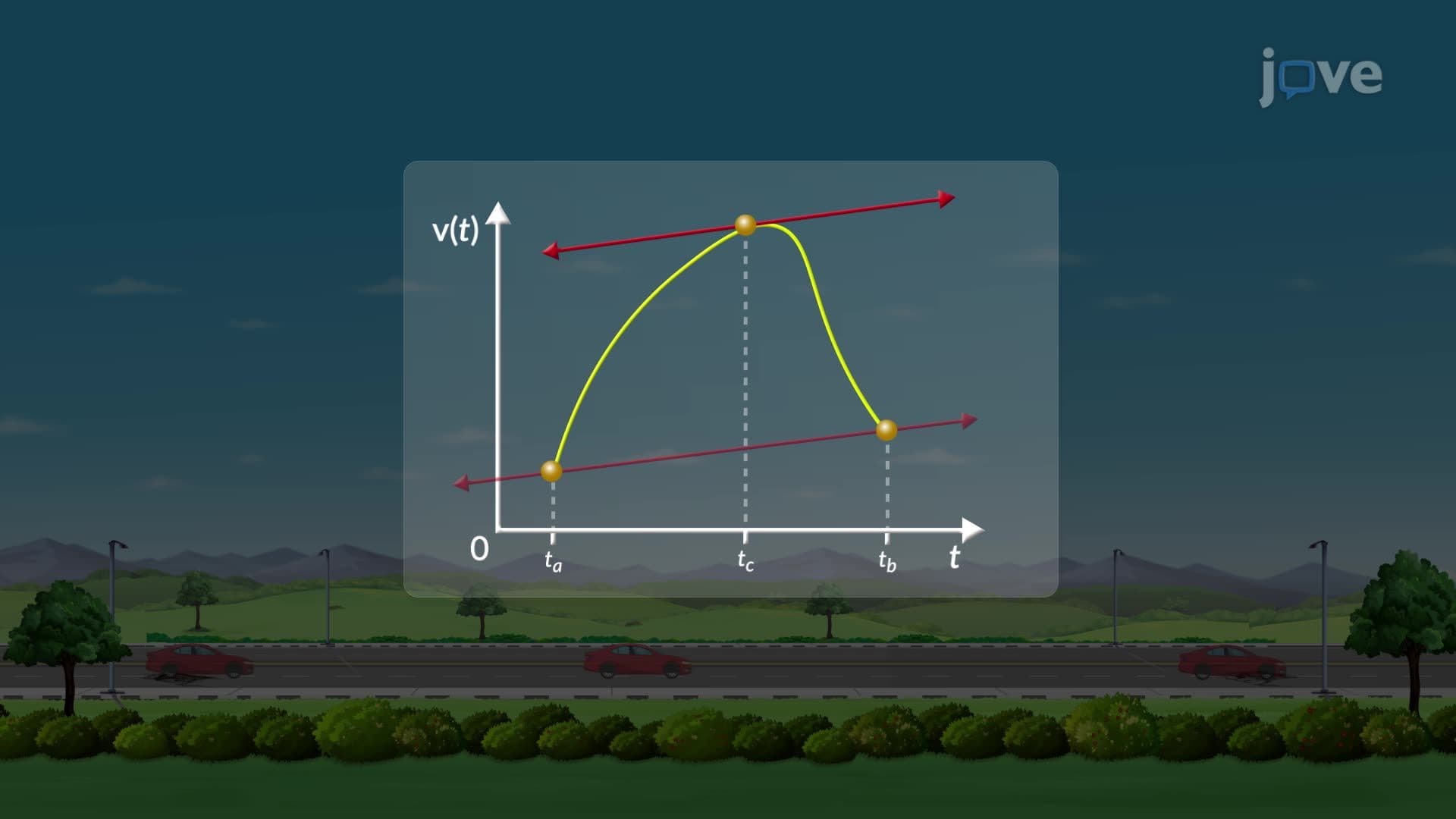
Rolle's Theorem is one of the most elegant and intuitive results in differential calculus. It states: if a function f(x) is continuous on a closed interval [a, b], differentiable on the open interval (a, b), and satisfies f(a) = f(b), then there exists at least one point c in (a, b) such that f'(c) = 0. In plain terms, if a smooth curve begins and ends at the same height, it must level off — at least momentarily — somewhere in between.
This theorem is named after the 17th-century French mathematician Michel Rolle and serves as a special case of the more general Mean Value Theorem, which is a cornerstone topic in AP Calculus AB and BC.
Students often lose points on exams — including AP Calculus free-response questions — by applying Rolle's Theorem without verifying all three conditions. Here's what each requires:
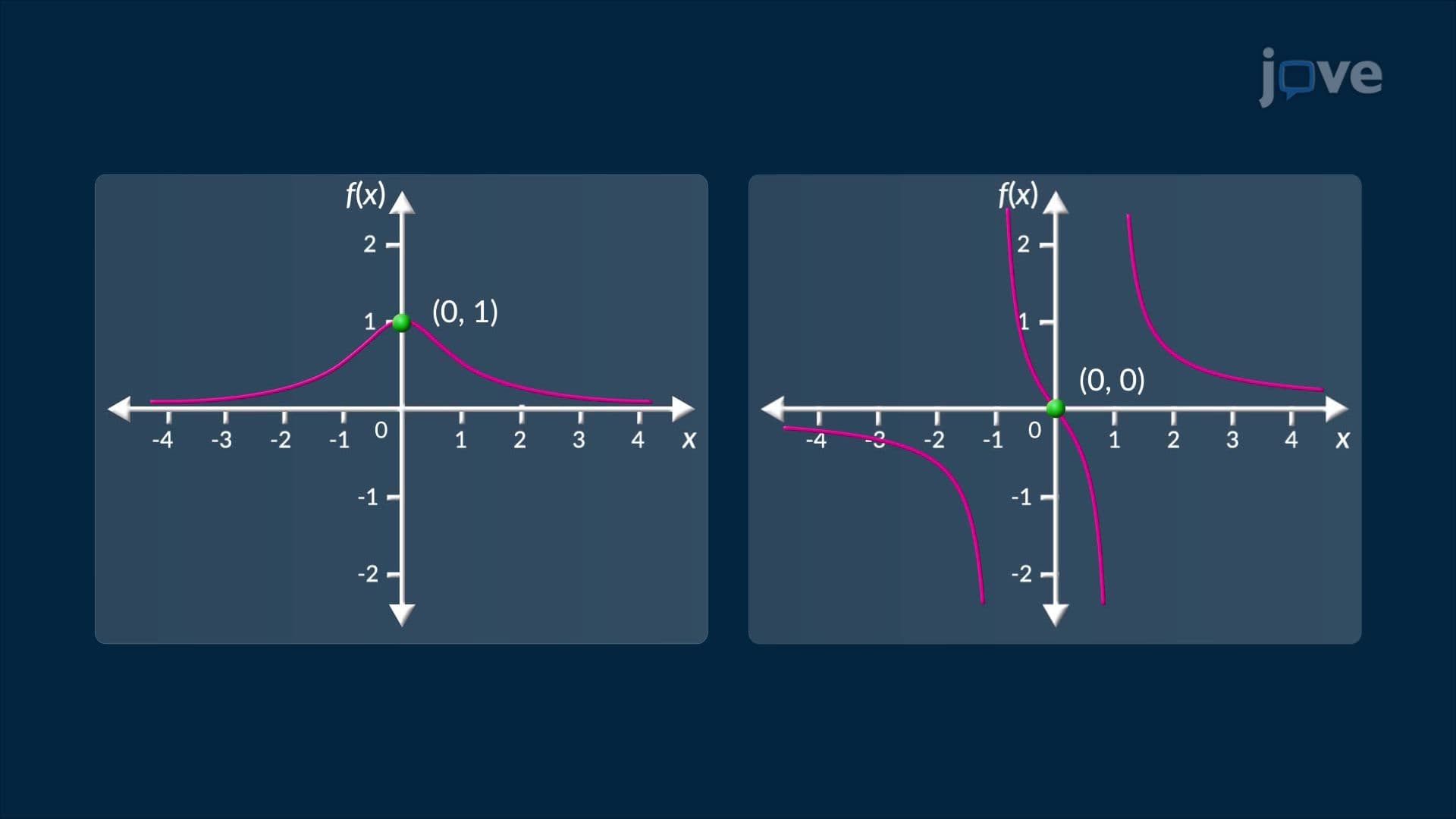
1. Continuity on [a, b]: The function must have no breaks, holes, or jumps on the closed interval. A function like f(x) = 1/x on [-1, 1] fails this test. 2. Differentiability on (a, b): The function must have a well-defined derivative at every interior point. Sharp corners, like those in absolute value functions, disqualify a function from this condition. 3. Equal endpoint values — f(a) = f(b): This is the condition that makes Rolle's Theorem distinct. The function must return to the same output value at both ends.
If even one condition fails, the theorem cannot be applied — and the guaranteed zero-derivative point may not exist.
Rolle's Theorem is not merely an abstract idea — it models real physical behavior. Consider a ball thrown straight up into the air on a football field in Texas. It leaves your hand at ground level, rises, and then returns to ground level. At the peak of its arc, the vertical velocity — the derivative of its position — is exactly zero. Rolle's Theorem mathematically guarantees this moment exists.
In highway engineering, elevation profiles of mountain roads in places like the Sierra Nevada are modeled using continuous, differentiable functions. When a road begins and ends at the same altitude, Rolle's Theorem confirms there is at least one crest or valley where the grade is momentarily flat — critical for safety analysis and road design.
In optimization problems, Rolle's Theorem is often used to prove that a function has a unique maximum or minimum within a constrained interval. This connects directly to finding maximum and minimum values in applied calculus — a skill tested heavily in college midterms and standardized exams.
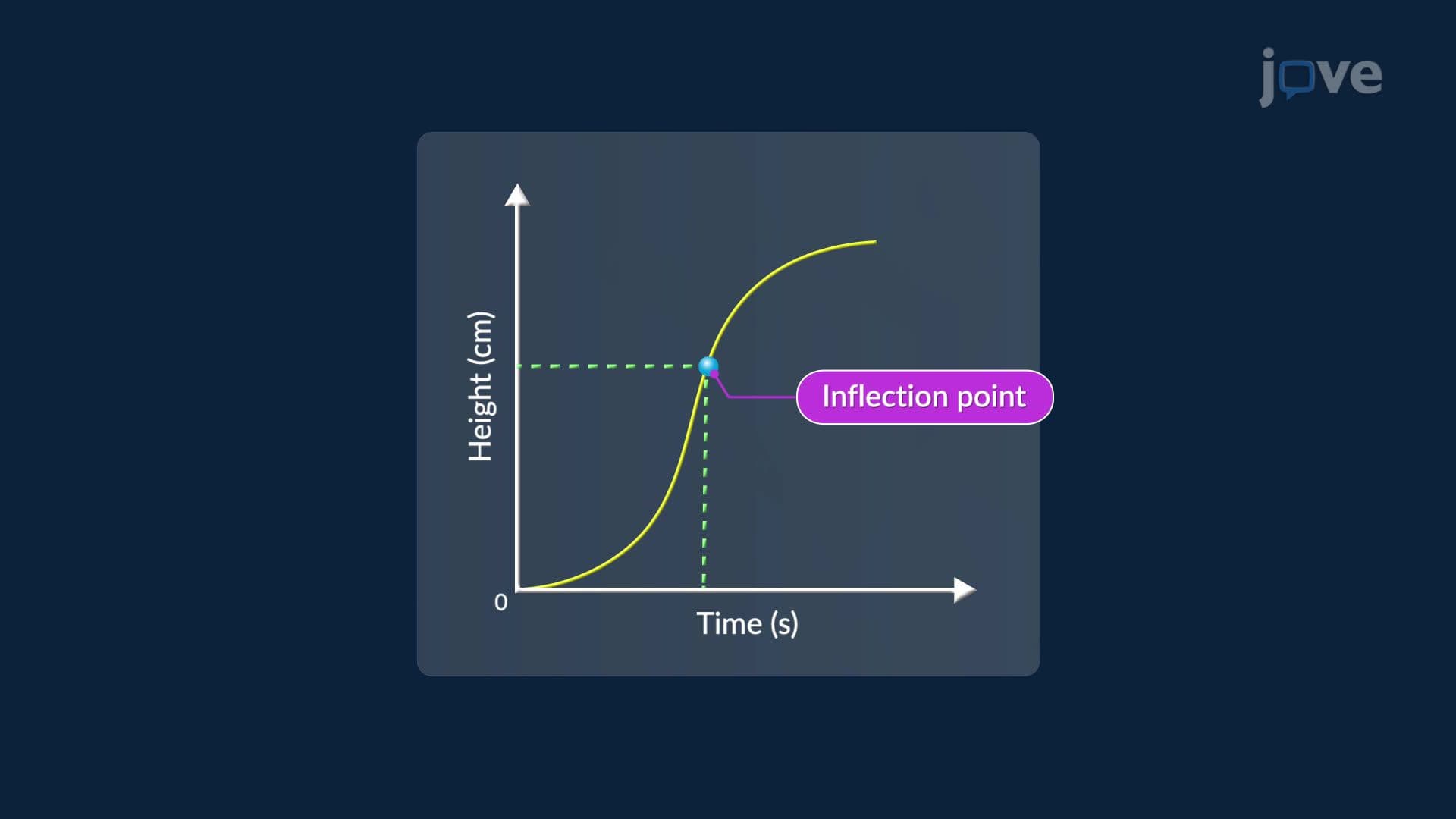
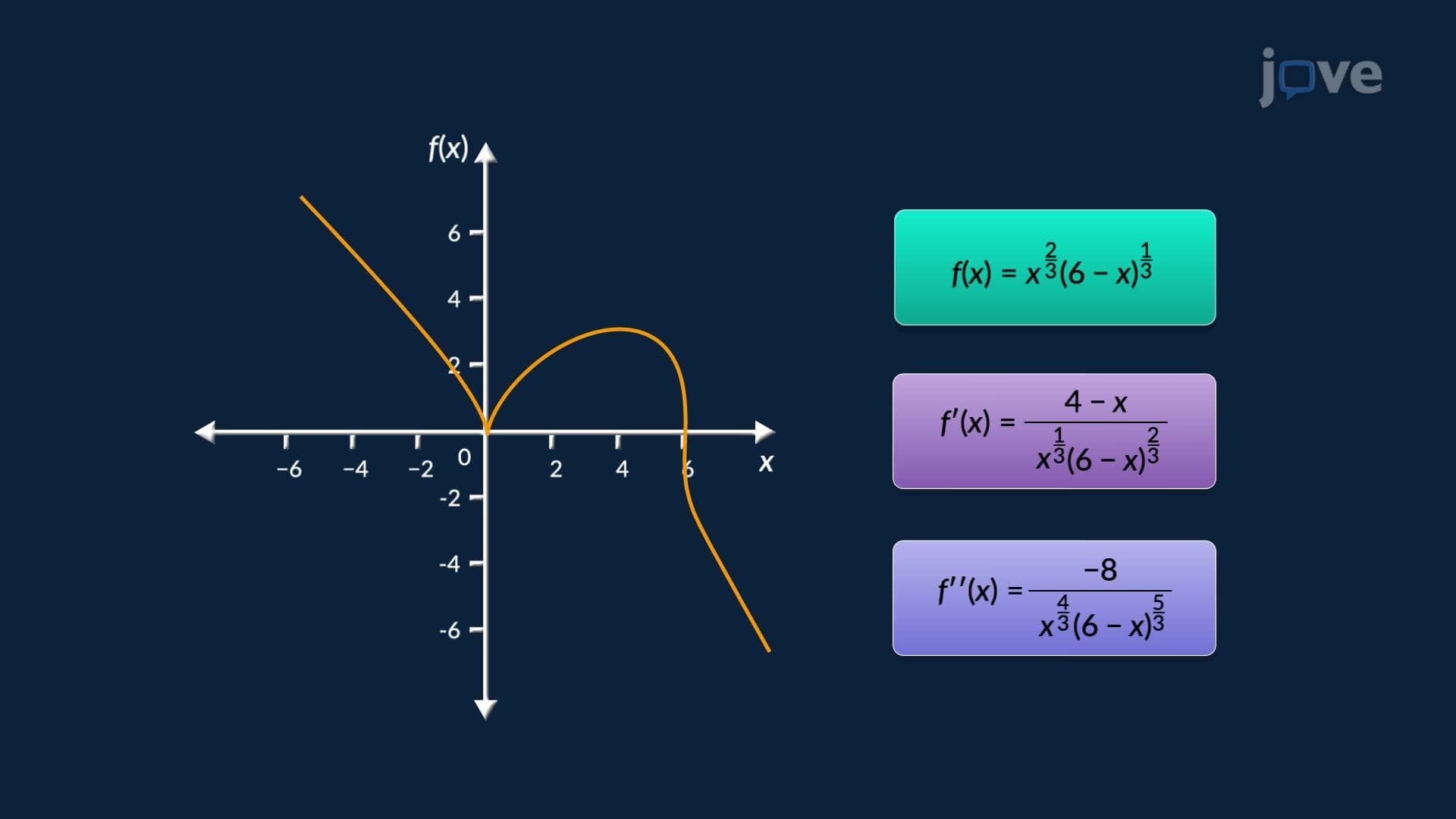
Understanding Rolle's Theorem deepens your ability to perform curve sketching with precision. When f'(c) = 0, the function has a critical point at c — a candidate for a local maximum or minimum. Paired with the second derivative test, you can determine concavity and locate inflection points, building a complete picture of the function's behavior.
Rolle's Theorem also underpins related rates problems and lays the logical groundwork for the Mean Value Theorem, which extends the idea to non-equal endpoints. Together, they form the analytical backbone of Calculus I at virtually every US university, from community colleges to MIT OpenCourseWare-level coursework.
Frequently Asked Questions
Rolle's Theorem says that if a smooth curve starts and ends at the same height, it must have at least one flat point in between. More formally, if a function is continuous on [a, b], differentiable on (a, b), and f(a) = f(b), then f'(c) = 0 for some c between a and b. Think of it as the mathematical guarantee that every hill has a top. ---
Rolle's Theorem is actually a special case of the Mean Value Theorem (MVT). In Rolle's Theorem, the endpoints have equal function values, so the guaranteed slope equals zero. The MVT generalizes this by guaranteeing a point where the instantaneous rate of change equals the average rate of change over the interval, even when the endpoints differ. ---
On the AP Calculus AB and BC exams, Rolle's Theorem most often appears in free-response questions where students must verify the three conditions and identify the value of c where f'(c) = 0. It also appears in multiple-choice questions that ask whether the theorem can be applied to a given function on a specified interval. Practicing condition-checking on piecewise and absolute value functions is especially valuable. ---
Yes — it's a standard topic in Calculus I at US colleges and universities and typically appears on both midterms and finals. Professors frequently ask students to either apply the theorem to a specific function or explain why it cannot be applied. Understanding the theorem conceptually, not just procedurally, is key to full credit on proof-based questions. ---
A classic example is a ski run at a resort like Vail, Colorado, where a skier descends from the top of a slope, travels through a valley, and returns to the same elevation at the end of the run. Because the starting and ending heights are equal, Rolle's Theorem guarantees at least one point along the path where the slope of the terrain is exactly zero — the flat bottom of the valley. ---
No — you don't need advanced proof-writing skills to use Rolle's Theorem effectively. A solid grasp of function continuity, basic differentiation, and what a derivative represents is enough to get started. Most high school and introductory college courses focus on applying the theorem correctly rather than deriving it from first principles. ---
Start by memorizing the three conditions and practice checking each one on a variety of function types — polynomials, trigonometric functions, and piecewise functions. Then solve problems where you find the exact value of c where f'(c) = 0. Work through released AP Calculus free-response questions that involve the Mean Value Theorem, since Rolle's Theorem problems are often embedded within that context. ---
After Rolle's Theorem, the natural next step is the Mean Value Theorem, followed by the First and Second Derivative Tests for classifying critical points. From there, you'll be well-prepared for optimization problems — including how to find the absolute maximum of a function on a closed interval — as well as curve sketching, concavity analysis, and related rates, all of which build directly on the derivative concepts Rolle's Theorem introduces.
Area Problem explores a complementary area of Calculus, while Rolle’s Theorem focuses on the specific concept covered in this video. Understanding both helps you build a stronger foundation in Calculus.
A basic understanding of Critical Numbers and the Closed Interval Method is helpful before diving into Rolle’s Theorem. If you are starting from scratch, the Applications of Differentiation series builds knowledge progressively, so beginning from the first video requires no prior background in Calculus.
The ideas in Rolle’s Theorem show up in everyday Calculus contexts, often alongside concepts like Area Between Curves: Integrating With Respect to x. This video connects the theory to practical situations you may encounter in coursework or exams.
After Rolle’s Theorem, the natural next step is The Mean Value Theorem in the Applications of Differentiation series. Following the playlist in order helps concepts build on each other without gaps.
The Rolle’s Theorem video runs for 1 minute, so you can cover the core concept in a single focused study session without needing a long block of time.
Related Micro-courses


Related Subjects