Loading subject page…


290,608 views

Video Summary: What are Alkali Metals
Ever wonder why sodium explodes in water or why fireworks produce brilliant colors? Alkali metals are the highly reactive Group 1 elements that make these spectacular reactions possible. From the lithium in your smartphone battery to the sodium chloride on your dinner table, these six elements-lithium, sodium, potassium, rubidium, cesium, and francium-play crucial roles in everyday American life and industrial processes. Watch the full video on JoVE Coach to master this concept with expert-led visuals and step-by-step explanations.
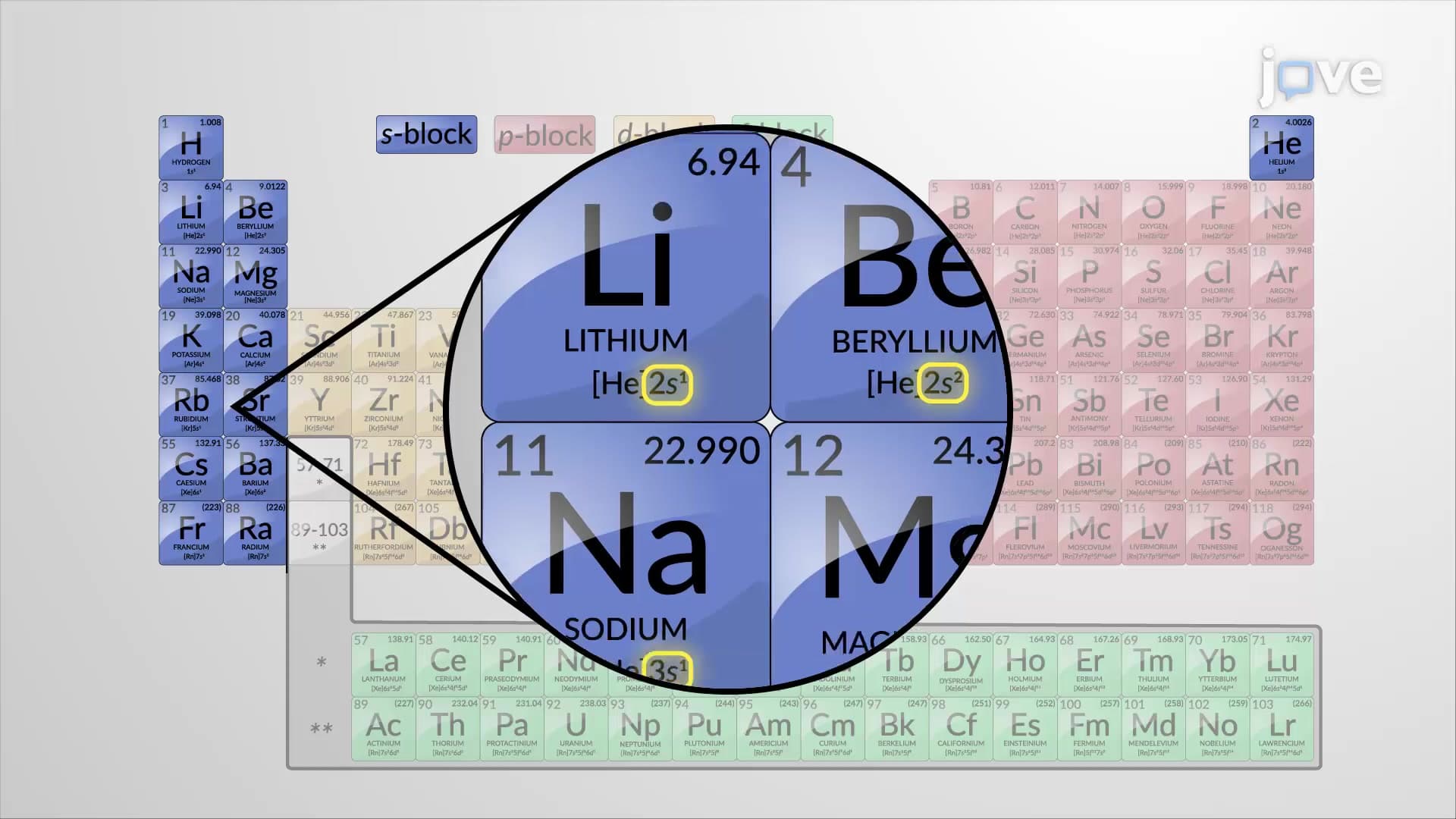
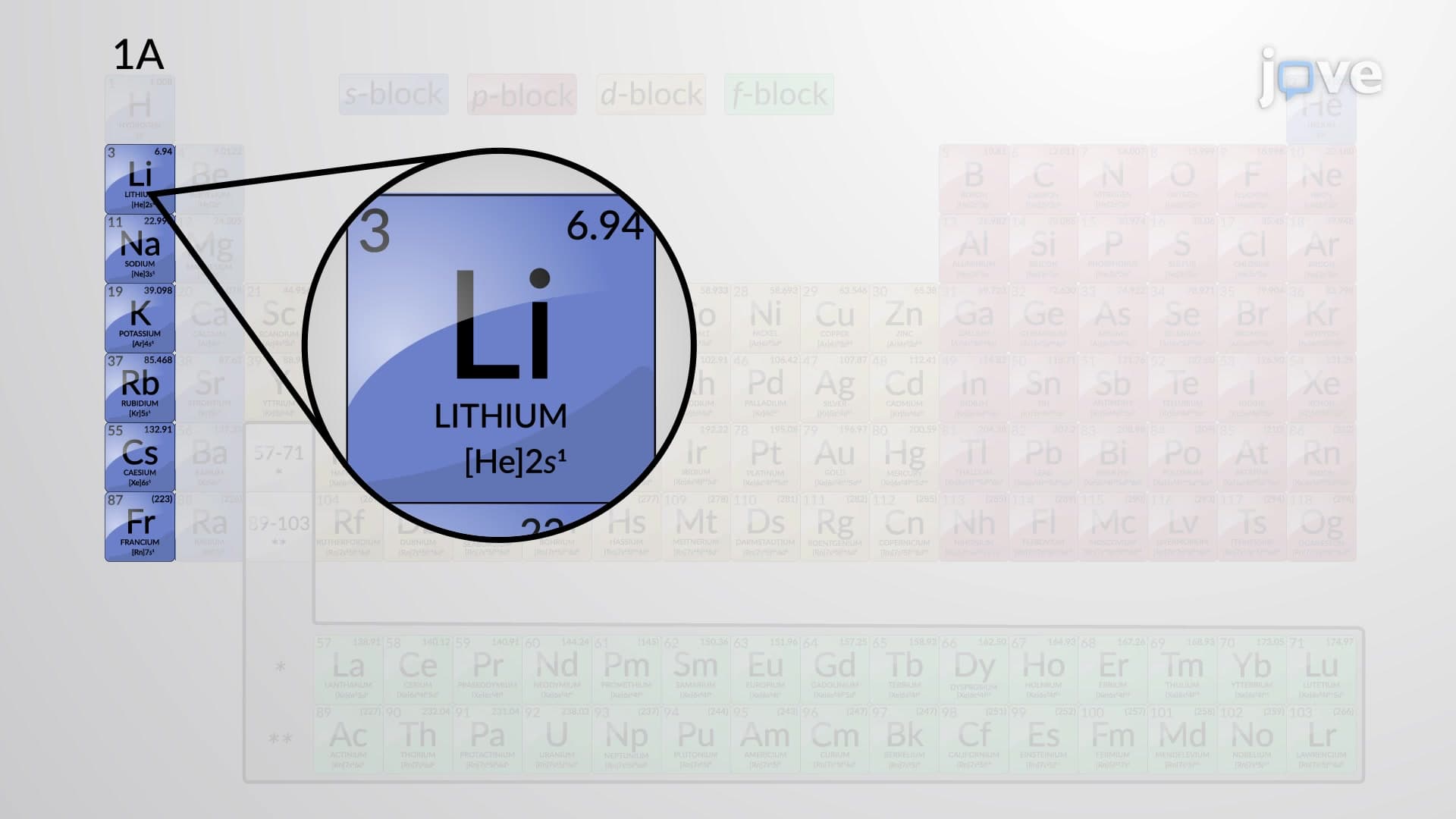
Alkali metals represent one of the most distinctive and reactive families in the periodic table. These Group 1 elements-lithium (Li), sodium (Na), potassium (K), rubidium (Rb), cesium (Cs), and francium (Fr)-share a common electron configuration ending in s¹, meaning each has exactly one valence electron. This single outer electron is the key to understanding their remarkable chemical behavior and why they're essential in everything from the salt industry to advanced battery technology.
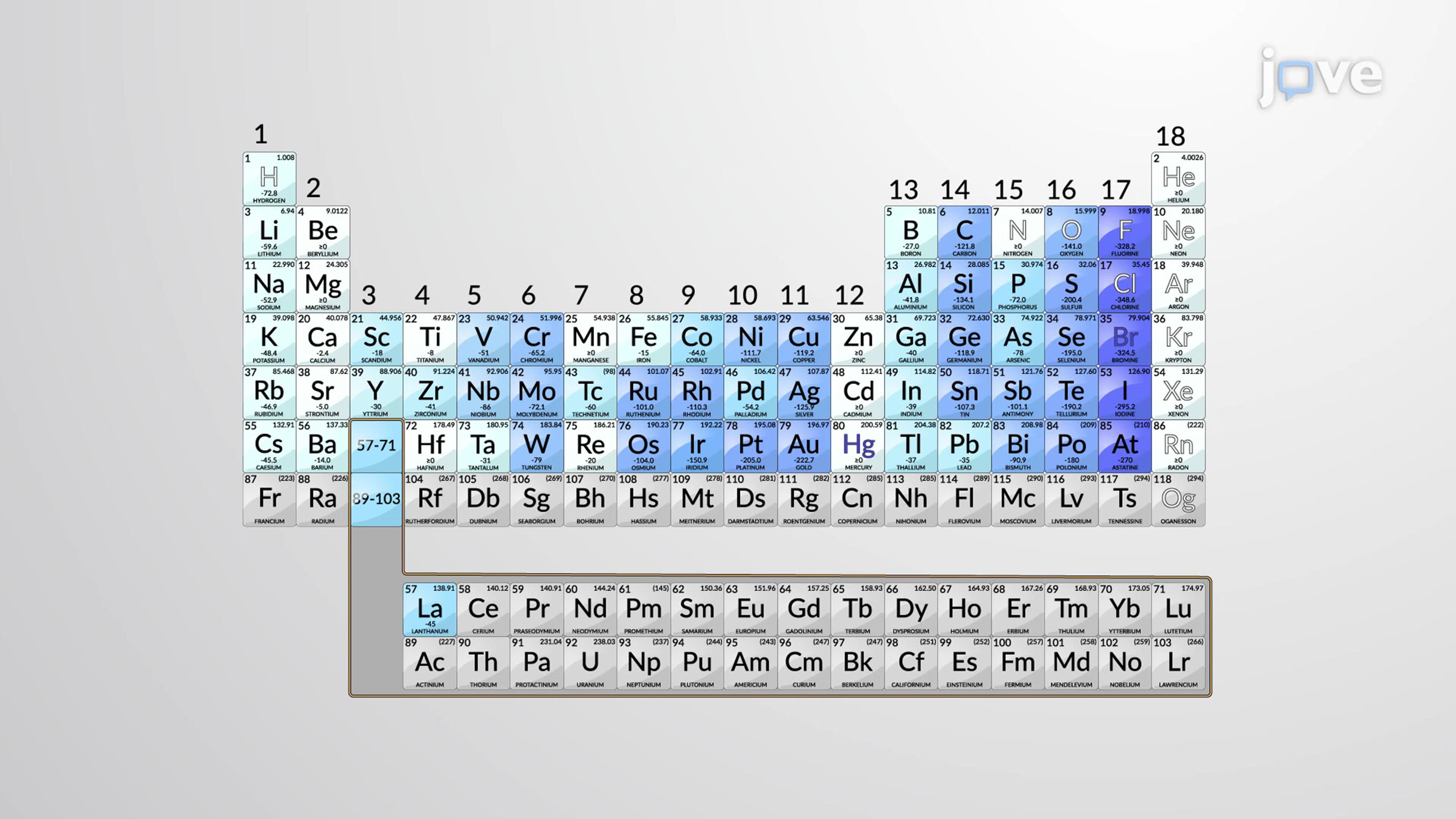
Moving down Group 1, clear periodic trends emerge that students encounter on AP Chemistry exams and college assessments. Atomic radius increases dramatically-lithium atoms are significantly smaller than cesium atoms. Simultaneously, ionization energy decreases, making it progressively easier to remove that lone valence electron. This explains why cesium reacts more violently with water than lithium, a concept frequently tested in SAT Subject Tests and MCAT practice questions.
Density generally increases down the group (with one exception-potassium is actually less dense than sodium), while melting points decrease. These trends help students predict physical properties and understand why cesium melts at just 28.4°C, barely above room temperature.
The exceptional reactivity of alkali metals stems from their low ionization energies and strong desire to achieve noble gas electron configurations. In American industries, this reactivity proves invaluable. Sodium production through the Dow process powers the chlor-alkali industry, producing sodium hydroxide (lye) essential for soap manufacturing companies like Procter & Gamble and Unilever's US operations.
Lithium's unique properties make it irreplaceable in rechargeable batteries powering everything from Tesla vehicles to smartphones manufactured by Apple and Samsung's US facilities. The lithium-ion battery industry, centered in states like Nevada and North Carolina, relies on lithium's ability to readily donate electrons while maintaining structural stability.
Due to their extreme reactivity, alkali metals require special handling procedures emphasized in laboratory safety courses at universities like MIT and Stanford. These metals must be stored under mineral oil to prevent oxidation and violent reactions with atmospheric moisture. The exothermic reactions with water can generate enough heat to ignite hydrogen gas, creating explosion hazards that chemistry students learn about in safety protocols.
This reactivity also enables qualitative analysis through flame tests, where characteristic colors-lithium's crimson red, sodium's yellow, potassium's violet-help identify unknown compounds in analytical chemistry labs across American universities.
Related Micro-courses