Loading subject page…


7,124 views

Video Summary: What Is Surface Tension of Fluid
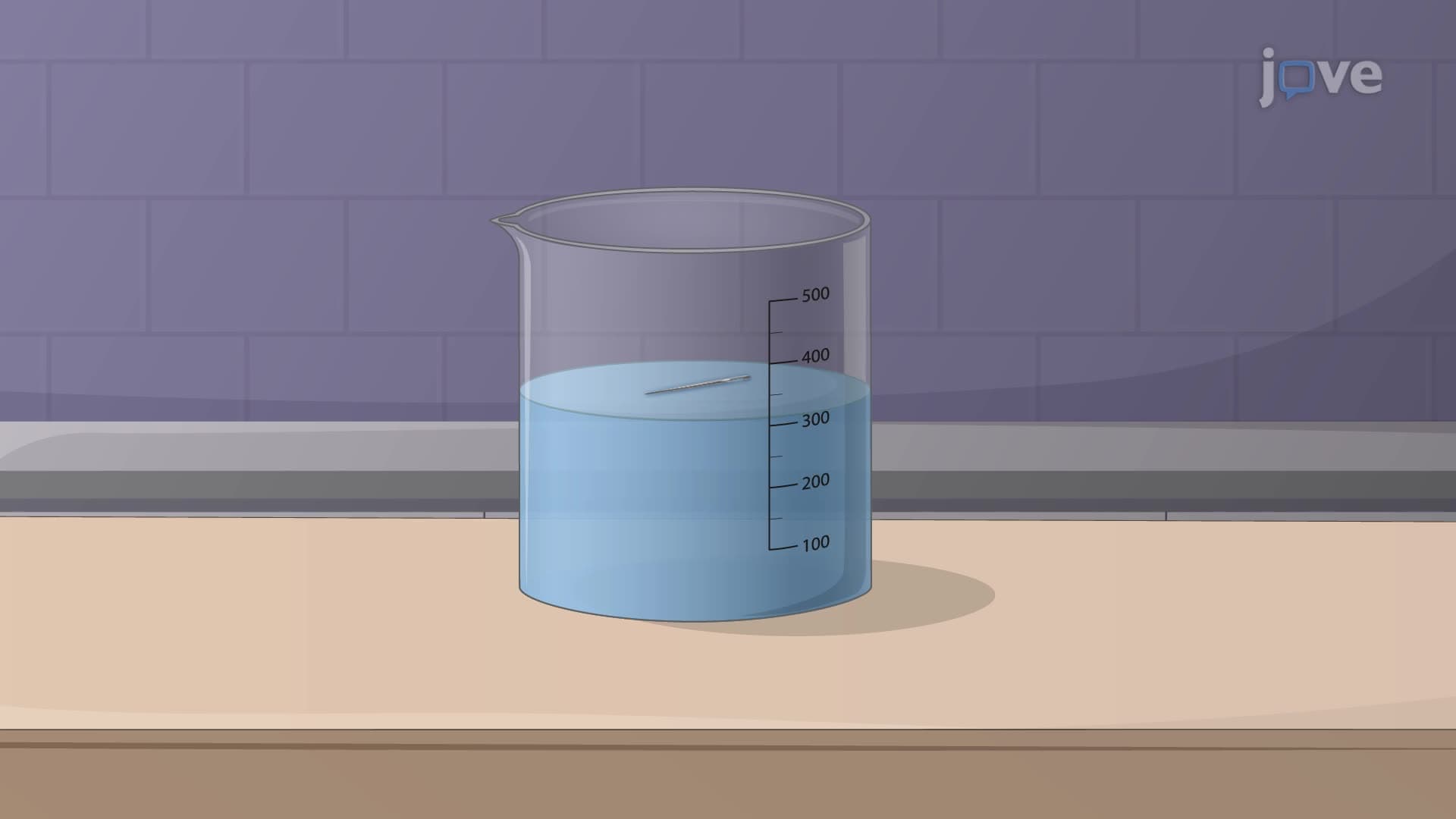
Ever wondered how a steel needle can float on water? The surface tension of fluid creates an invisible "skin" that can support lightweight objects, demonstrating one of nature's most fascinating properties. This phenomenon occurs when cohesive forces between liquid molecules create unbalanced forces at the surface, making it behave like a stretched membrane. From water droplets forming perfect spheres to medical devices utilizing surface tension in U.S. hospitals, this concept explains countless everyday observations. Understanding what is surface tension of fluid reveals the molecular forces that shape our world in remarkable ways. Watch the full video on JoVE Coach to master this concept with expert-led visuals and step-by-step explanations.
Surface tension of fluid represents one of the most important interfacial phenomena in physics and chemistry. At its core, surface tension arises from the imbalance of intermolecular forces experienced by molecules at the liquid surface compared to those in the bulk liquid. This fundamental concept appears frequently on AP Chemistry and Physics exams, as well as college-level physical chemistry courses.
The surface tension of fluid definition centers on cohesive forces between liquid molecules. In the liquid interior, each molecule experiences uniform attractive forces from surrounding neighbors in all directions. However, surface molecules lack neighbors above them, creating a net inward force. This imbalance causes surface molecules to be pulled toward the bulk liquid, minimizing surface area and creating the characteristic "skin" effect.
Water exhibits particularly high surface tension (72.8 mN/m at 20°C) due to hydrogen bonding between H₂O molecules. This explains why water forms nearly spherical droplets and why certain insects can walk on water surfaces. In contrast, organic solvents like ethanol have lower surface tension values because their intermolecular forces are weaker.
Surface tension of fluid decreases as temperature increases because higher thermal energy overcomes intermolecular attractions. This relationship follows a nearly linear trend for most liquids and appears in MCAT physical sciences sections. For example, hot coffee has lower surface tension than cold coffee, affecting how cream spreads and mixes.
Agricultural irrigation systems in states like California utilize surface tension principles for efficient water distribution. Sprinkler systems create water droplets that maintain their shape during flight, ensuring uniform coverage. Similarly, pharmaceutical companies design drug delivery systems that exploit surface tension to control droplet size and distribution.
Modern microfluidic devices, manufactured by companies like Dolomite Microfluidics in Massachusetts, rely on surface tension control for precise fluid manipulation. Medical diagnostic equipment uses surface tension effects in blood analysis, where red blood cell behavior in capillaries depends on surface tension interactions.
Understanding surface tension of fluid concepts proves essential for students pursuing careers in chemical engineering, materials science, or biomedical engineering. These principles appear in college fluid mechanics courses and form the foundation for advanced topics like wetting phenomena and interfacial thermodynamics.
Related Micro-courses