Loading video…


 9 Concepts
 7.1K views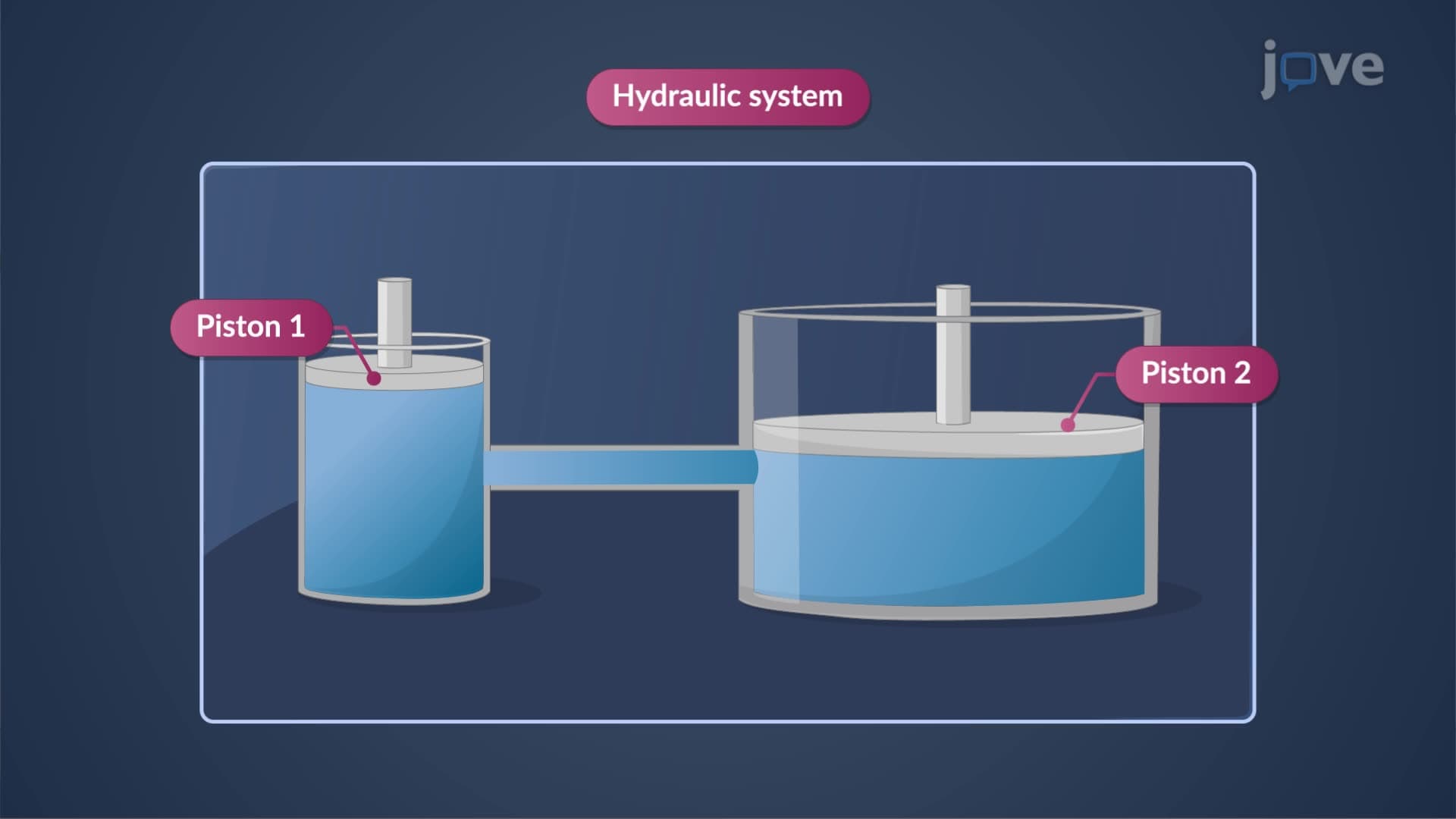

Video Summary: Density Specific Weight Specific Gravity Explained
Ever wonder why oil floats on water or how engineers design safe pipelines for transporting crude oil across Alaska? The answer lies in understanding density specific weight specific gravity - three interconnected fluid properties that govern everything from buoyancy to pressure calculations. These fundamental concepts help explain why a steel ship can float while a steel nail sinks, and they're essential for designing hydraulic systems in construction equipment used across American infrastructure projects. Watch the full video on JoVE Coach to master this concept with expert-led visuals and step-by-step explanations.
The study of fluid mechanics begins with three essential properties that define how fluids behave under various conditions. Density, specific weight, and specific gravity form the foundation for understanding fluid statics, dynamics, and the design of fluid systems ranging from municipal water distribution networks to aerospace fuel systems.
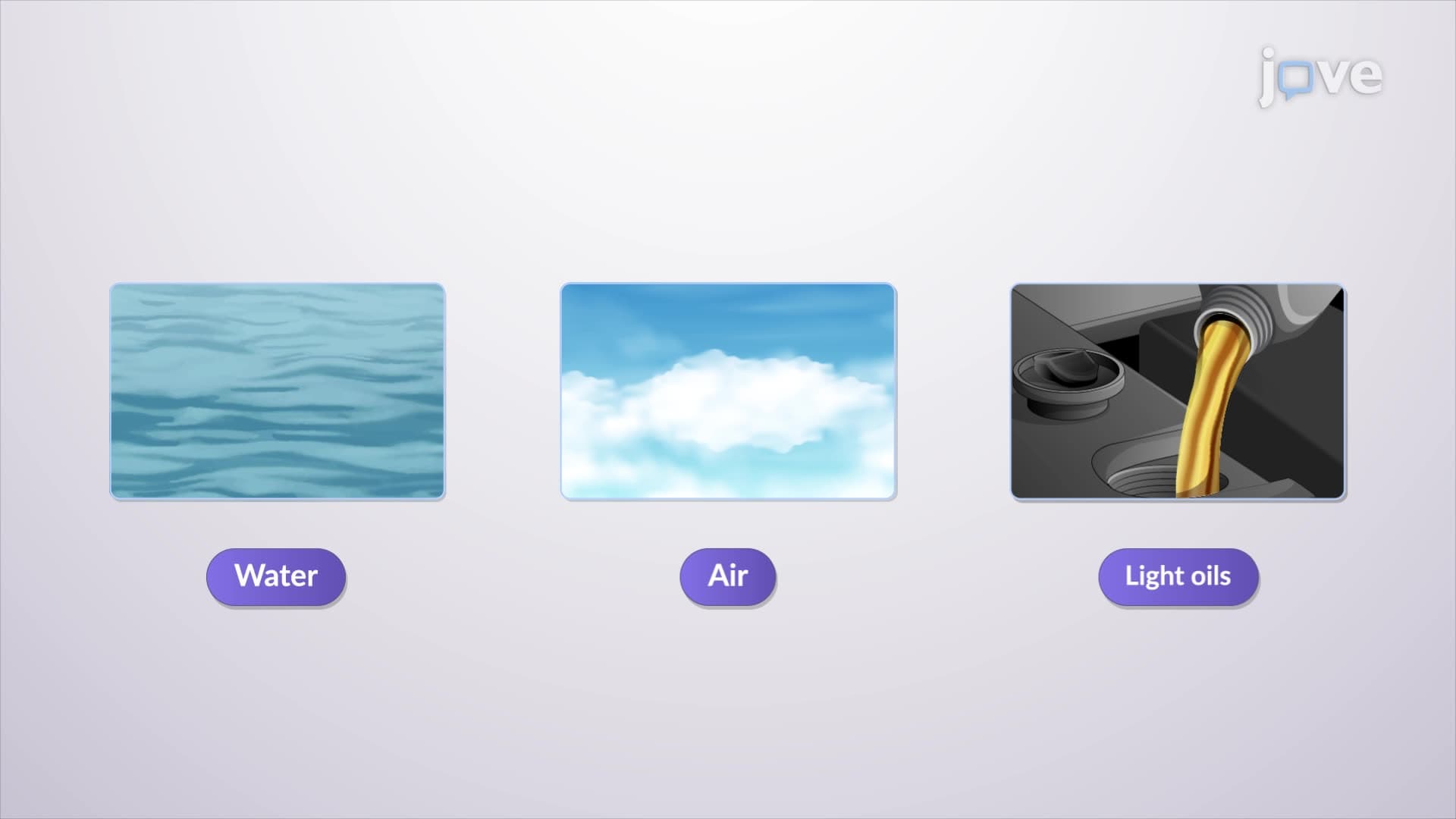
Density (ρ) represents the fundamental relationship between a fluid's mass and the volume it occupies, expressed in units of kg/m³ or lbm/ft³. This property directly influences how fluids interact with their surroundings and other substances. For instance, the density of gasoline (approximately 680-720 kg/m³) compared to water (1000 kg/m³) explains why fuel spills float on water surfaces during environmental cleanup operations.
Specific weight (γ) extends the concept of density by incorporating gravitational effects, calculated as γ = ρg, where g represents gravitational acceleration (9.81 m/s² or 32.2 ft/s²). This property proves particularly valuable in hydrostatic pressure calculations and structural engineering applications. When designing dam spillways or calculating water pressure in the Hoover Dam, engineers use specific weight to determine the force exerted by water at various depths.
The distinction between density and specific weight becomes crucial when working across different gravitational environments or when precise pressure calculations are required. While density remains constant regardless of location, specific weight varies with gravitational acceleration, making it essential for applications involving weight-dependent forces.
Specific gravity (SG) provides a dimensionless method for comparing fluid densities, calculated as the ratio of a fluid's density to water's density at standard conditions (typically 4°C). This property simplifies fluid selection processes in industrial applications. For example, hydraulic fluid manufacturers specify specific gravity values to help engineers select appropriate fluids for construction equipment operating in different temperature ranges across American job sites.
The dimensionless nature of specific gravity makes it particularly useful in quality control processes. Petroleum refineries use specific gravity measurements to classify crude oil grades and determine processing requirements for different fuel products distributed throughout the United States.
Bulk modulus quantifies a fluid's resistance to compression under applied pressure, with significant implications for hydraulic system design. Liquids typically exhibit low compressibility (high bulk modulus values), making them ideal for hydraulic power transmission in construction equipment, aircraft control systems, and industrial machinery. Conversely, gases demonstrate high compressibility, requiring different design approaches for pneumatic systems.
Understanding these compressibility characteristics proves essential for students preparing for AP Physics exams, where fluid mechanics problems frequently involve calculating pressure changes in hydraulic systems. College-level engineering courses expand on these concepts, requiring students to design systems that account for fluid compressibility effects in dynamic loading conditions.
Related Micro-courses