Loading video…


 9 Concepts
 7.1K views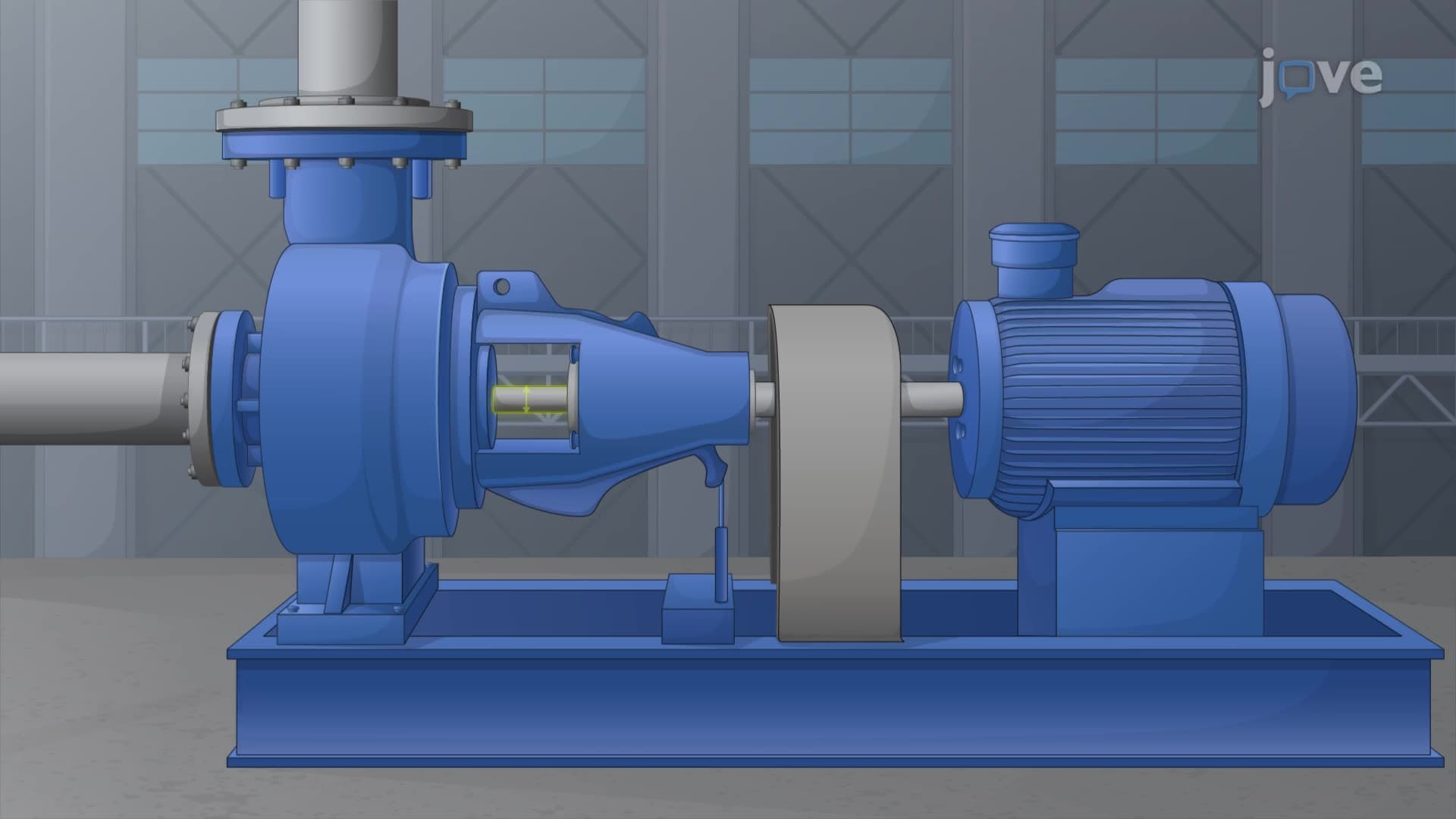

Video Summary: Design Example Deciding Thickness of Explained
Ever wonder why car engines don't seize up after thousands of miles of use? The secret lies in calculating the perfect lubricant thickness. This design example deciding thickness of process involves determining the exact fluid layer needed between rotating components, like the crankshaft bearings in a Ford F-150's engine. Engineers use tangential velocity, velocity gradients, and shear stress calculations to ensure optimal lubrication performance. Watch the full video on JoVE Coach to master this concept with expert-led visuals and step-by-step explanations.
The design example deciding thickness of lubricant calculation represents a critical engineering skill that bridges fluid mechanics theory with practical machinery design. This process involves determining the optimal thickness of lubricating fluid between a rotating shaft and its stationary housing to maintain proper shear stress levels and prevent mechanical failure.
The foundation of this calculation begins with converting rotational speed (typically measured in RPM) to angular velocity using the relationship ω = 2πN/60, where N represents revolutions per minute. The tangential velocity at the shaft surface equals the angular velocity multiplied by the shaft radius (v = ωr). This velocity represents the speed at which the shaft surface moves through the lubricant layer.
Consider a typical automotive application: a crankshaft in a Chevrolet Silverado's V8 engine rotating at 3,000 RPM with a 2-inch diameter main bearing. The tangential velocity calculation becomes crucial for determining proper oil film thickness to prevent bearing seizure during operation.
The velocity gradient across the lubricant represents the change in fluid velocity from the moving shaft surface to the stationary housing wall. This gradient equals the tangential velocity divided by the lubricant thickness (dv/dy = v/h). The resulting shear stress within the fluid follows Newton's law of viscosity: τ = μ(dv/dy), where μ represents dynamic viscosity.
Rearranging the shear stress equation yields the critical thickness formula: h = μv/τ. This relationship shows that lubricant thickness increases with higher viscosity and surface velocity but decreases with greater allowable shear stress. Engineering students encounter this calculation frequently in mechanical engineering courses and on the Fundamentals of Engineering (FE) exam.
Real-world applications extend beyond automotive systems to include turbine bearings in power plants, aircraft engine components, and precision manufacturing equipment. Understanding this concept proves essential for students pursuing careers in mechanical engineering, automotive design, or aerospace engineering.
Related Micro-courses