Loading…
Loading video…

1,195 views
Ever wondered how emergency responders find your exact location during a 911 call? GIS (Geographic Information System) technology makes this possible by combining GPS data with detailed mapping systems. When the National Park Service needs to document monument locations for preservation projects, surveyors use sophisticated GIS workflows called Design Example Identifying The Locations Explained to ensure centimeter-level accuracy. This process integrates satellite positioning, geodetic models, and correction algorithms to create precise spatial records that support everything from archaeological surveys to urban planning initiatives. Watch the full video on JoVE Coach to master this concept with expert-led visuals and step-by-step explanations.
GIS definition encompasses far more than simple mapping software—it represents a comprehensive framework for capturing, analyzing, and visualizing spatial data with scientific precision. When surveyors tackle monument location projects, they demonstrate what is GIS in detail: a sophisticated integration of hardware, software, and methodologies that transform raw satellite signals into legally defensible coordinate systems.
Professional GIS workflows begin with strategic planning that considers orbital mechanics and signal propagation physics. Surveyors analyze satellite constellation patterns to identify optimal observation windows, typically seeking PDOP values below 3.0 for survey-grade accuracy. This GIS overview principle appears frequently on Advanced Placement (AP) Environmental Science exams, where students must understand how satellite geometry affects measurement precision.
The Federal Aviation Administration (FAA) uses similar protocols when establishing GPS approach procedures at airports like Denver International, where elevation accuracy directly impacts flight safety. College surveying programs emphasize this connection between theoretical GIS concepts and practical applications in infrastructure development.
GIS basics include understanding how static observation techniques minimize random errors through extended data collection periods. The 30-minute observation standard reflects statistical requirements for achieving centimeter-level accuracy, a concept that appears in college-level Geographic Information Systems courses and professional licensing examinations.
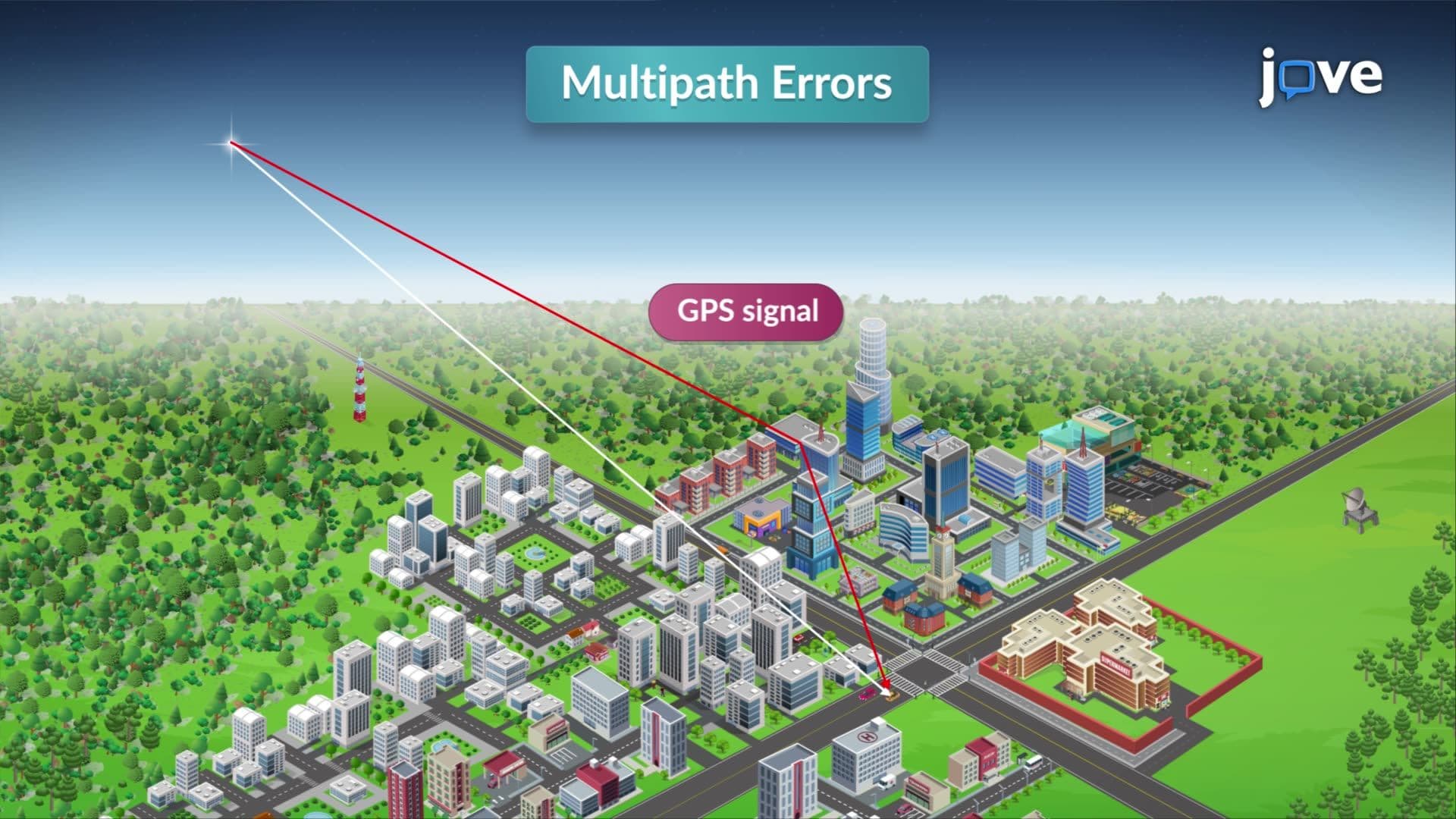
Correction software addresses systematic errors including ionospheric delays (caused by charged particles in Earth's upper atmosphere) and multipath effects (where signals bounce off nearby surfaces before reaching the receiver). The National Geodetic Survey employs these techniques when maintaining the National Spatial Reference System, which provides the coordinate framework for all US mapping activities.
Understanding GIS requires grasping the relationship between GPS ellipsoidal heights and practical elevation systems. The North American Vertical Datum of 1988 (NAVD 88) provides the reference surface for elevation measurements throughout the United States. Surveyors use geoid models like GEOID18 to convert GPS heights into elevations that match traditional surveying benchmarks.
This GIS concept frequently appears in SAT Subject Tests and college entrance examinations, where students must demonstrate understanding of coordinate systems and datum transformations. Engineering programs at universities like MIT and Stanford integrate these principles into coursework covering transportation planning, flood modeling, and construction surveying applications.
Frequently Asked Questions
Design Example Identifying The Locations Explained represents a comprehensive workflow that combines GPS technology, geodetic principles, and correction algorithms to determine precise monument locations. This process integrates mission planning, static observation techniques, and validation procedures to achieve survey-grade accuracy for legal and engineering applications. Professional surveyors use this methodology for property boundary determination, archaeological site mapping, and infrastructure development projects.
GIS in monument surveying detail encompasses hardware systems (GPS receivers, antennas), software tools (correction algorithms, coordinate transformation programs), and methodological procedures (static observation, error analysis) working together to establish precise spatial positions. The process involves base station setup, rover positioning, data collection, and validation against known control points. Results support legal documentation, preservation planning, and archaeological research initiatives.
AP Environmental Science exams frequently test understanding of GPS accuracy factors, including satellite geometry and PDOP values. Students must explain how surveyors optimize observation windows and interpret coordinate system transformations. Practice questions often involve analyzing surveying scenarios for National Park Service projects or environmental monitoring stations. The College Board emphasizes connections between GIS technology and real-world conservation applications.
Universities offer specialized coursework in Geographic Information Systems, Surveying Engineering, and Geomatics that cover professional GPS methodologies. Programs at schools like University of California Berkeley, Texas A&M, and Virginia Tech integrate theoretical principles with hands-on field experience using industry-standard equipment. Students learn mission planning, error analysis, and validation procedures that prepare them for professional licensing examinations and career opportunities in surveying, mapping, and spatial analysis fields.
Emergency response teams utilize Enhanced 911 (E911) systems that integrate GPS technology with GIS databases to pinpoint caller locations within meters of accuracy. Fire departments in cities like Phoenix and Seattle use mobile GPS units with real-time correction capabilities to navigate to incident locations and coordinate resource deployment. These applications demonstrate how professional surveying principles support public safety operations and disaster response coordination.
Basic algebra and geometry provide sufficient mathematical foundation for understanding fundamental GIS surveying principles. High school trigonometry helps with coordinate system concepts, while introductory statistics supports error analysis discussions. Most educational programs introduce these topics progressively, building from simple mapping concepts to advanced geodetic calculations. Students can master core principles before tackling specialized applications in professional surveying or engineering programs.
Focus on connecting theoretical principles with practical applications through case study analysis and hands-on exercises. Create concept maps linking GPS technology, coordinate systems, and error sources to reinforce understanding. Practice interpreting surveying scenarios and explaining accuracy requirements for different applications. Review professional examples from organizations like the US Geological Survey to understand real-world implementation of academic concepts.
Advanced studies include remote sensing integration, spatial analysis techniques, and database management for large-scale mapping projects. Explore applications in urban planning, environmental monitoring, and transportation engineering that build upon fundamental positioning concepts. Consider specialized areas like photogrammetry, LiDAR processing, or web-based GIS development that expand career opportunities in geospatial technology fields.
Related Micro-courses
Related Subjects
 Electrical Engineering 33 micro-courses›Mechanical Engineering 28 micro-courses›