Loading…
Loading video…

1,195 views
Did you know that your smartphone's GPS can be off by several meters even on a clear day? Understanding the geoid and ellipsoid relationship is crucial for grasping why GPS systems encounter systematic errors in positioning accuracy. The Federal Aviation Administration relies on precise GPS corrections to safely guide aircraft landings at major airports like LAX, where even small positioning errors could prove catastrophic. Errors in Global Positioning System Explained reveals how atmospheric interference, signal reflection, and satellite imperfections create measurement challenges that engineers must constantly address. Watch the full video on JoVE Coach to master this concept with expert-led visuals and step-by-step explanations.
GPS technology revolutionized navigation and surveying, but achieving centimeter-level accuracy requires understanding complex error sources. The geoid and ellipsoid relationship forms the foundation for understanding why GPS measurements differ from ground truth positions. The ellipsoid represents Earth's idealized mathematical shape, while the geoid approximates mean sea level's irregular surface affected by gravitational variations.
Atmospheric interference represents the largest GPS error source, particularly affecting students taking AP Physics or college-level surveying courses. The ionosphere, extending from 50 to 1,000 kilometers altitude, contains charged particles that slow GPS signals proportionally to electron density. Solar activity dramatically increases ionospheric interference—during the 2003 Halloween solar storms, GPS accuracy degraded by over 10 meters across North America. The troposphere causes additional delays through water vapor and temperature variations, with effects varying by geographic location and weather patterns.
Modern dual-frequency GPS receivers combat atmospheric errors by transmitting on both L1 (1575.42 MHz) and L2 (1227.60 MHz) frequencies. Since ionospheric delay varies inversely with frequency squared, comparing arrival times enables atmospheric correction calculations.
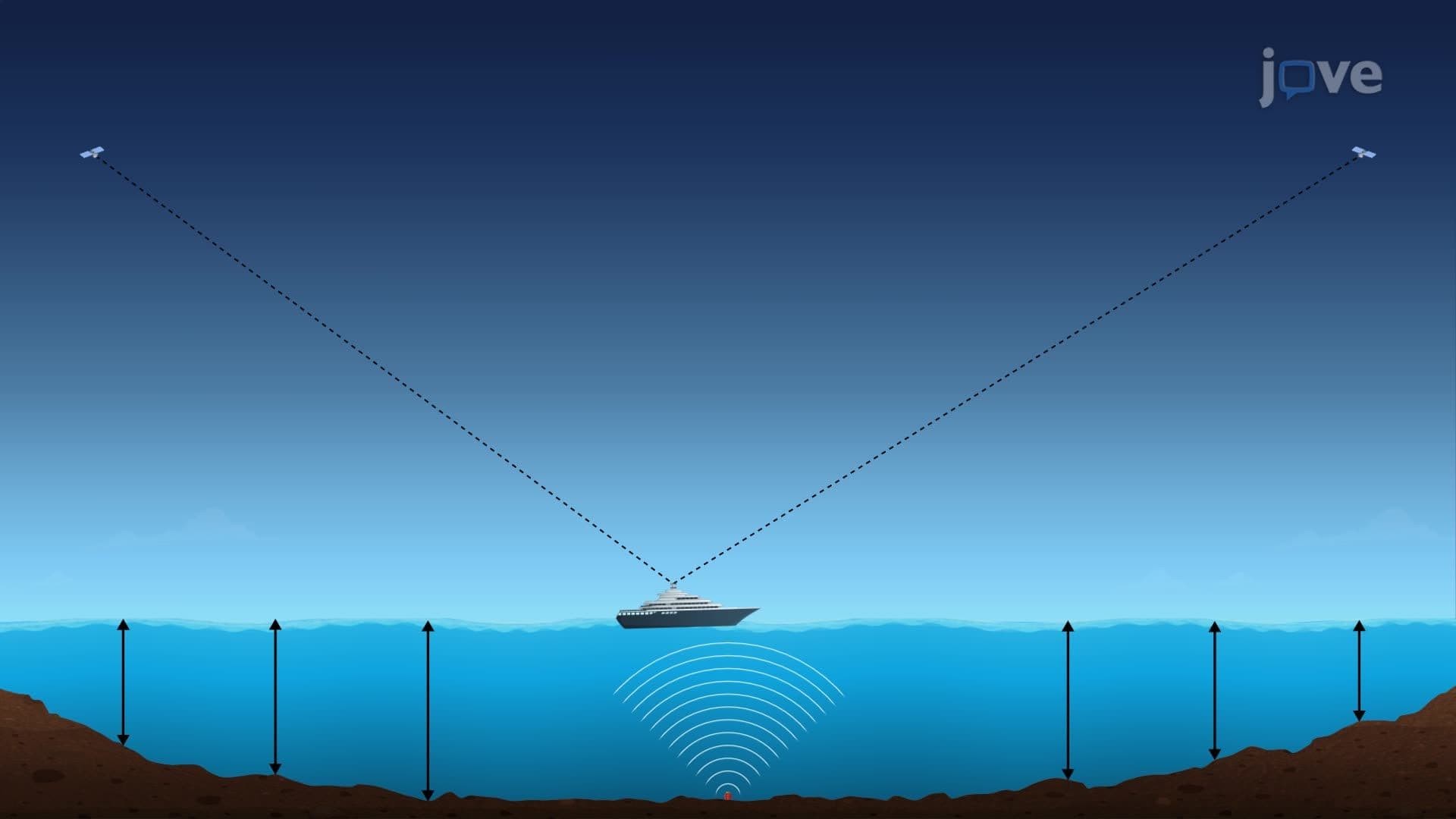
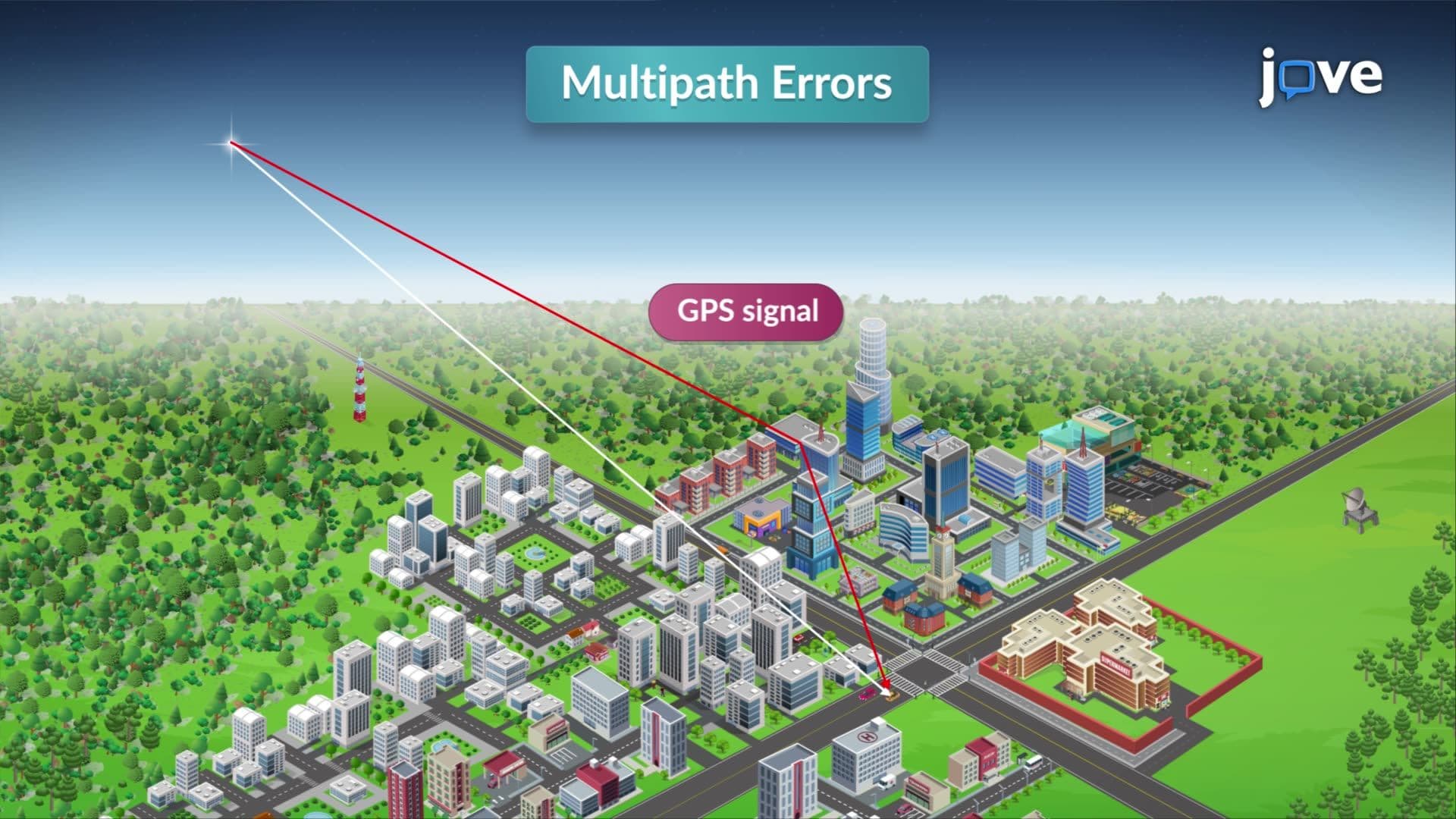
Multipath errors occur when GPS signals reflect off surfaces before reaching receivers, creating false distance measurements. Urban environments like downtown Manhattan create "urban canyons" where signals bounce between skyscrapers, potentially causing 5-15 meter positioning errors. Water bodies present unique challenges—surveys near the Great Lakes often require specialized techniques to minimize reflection-induced errors.
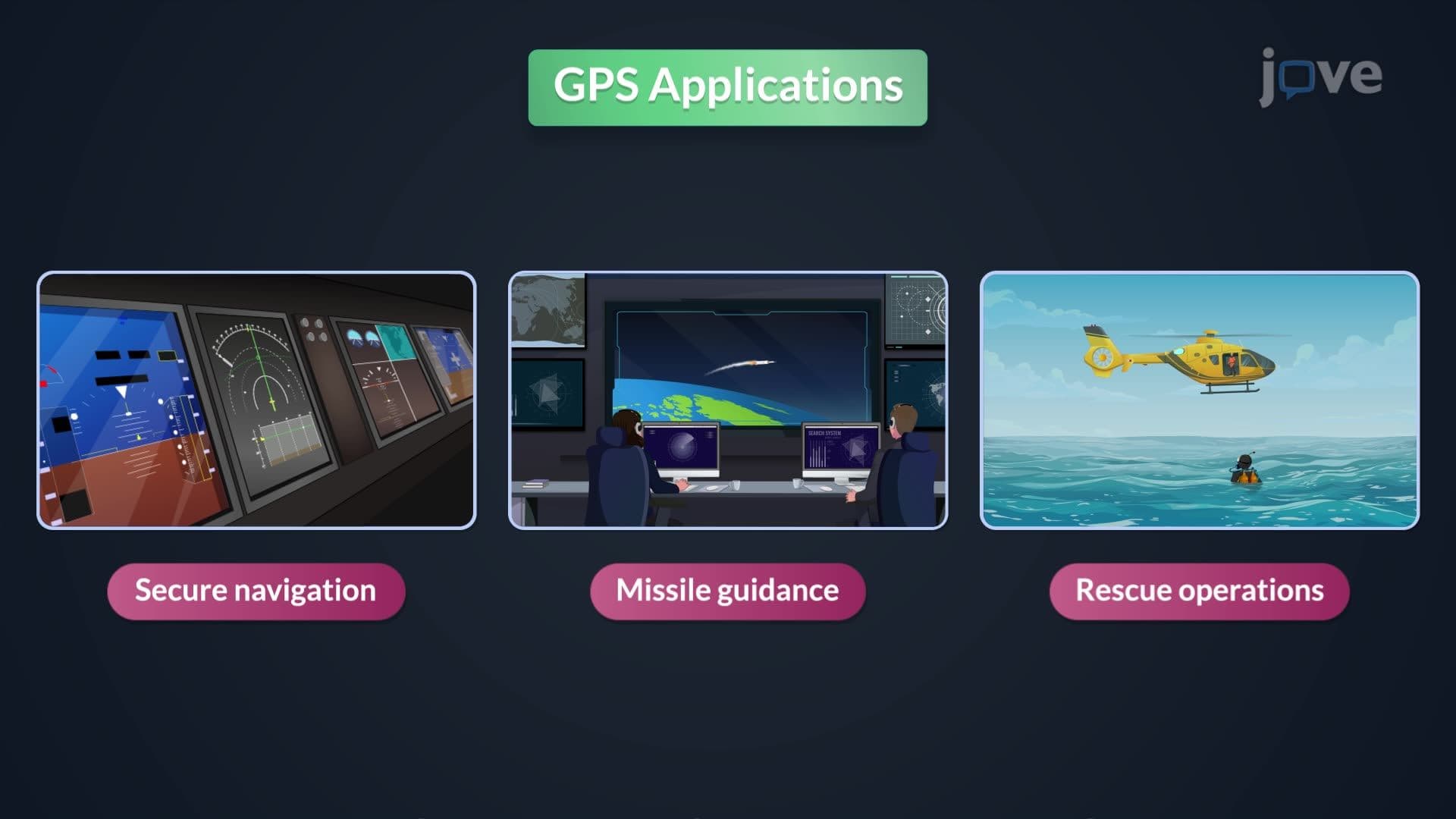
The US Coast Guard's Differential GPS (DGPS) system addresses multipath and other errors by broadcasting corrections from known reference stations. This system achieves 1-3 meter accuracy for maritime navigation along US coastlines.
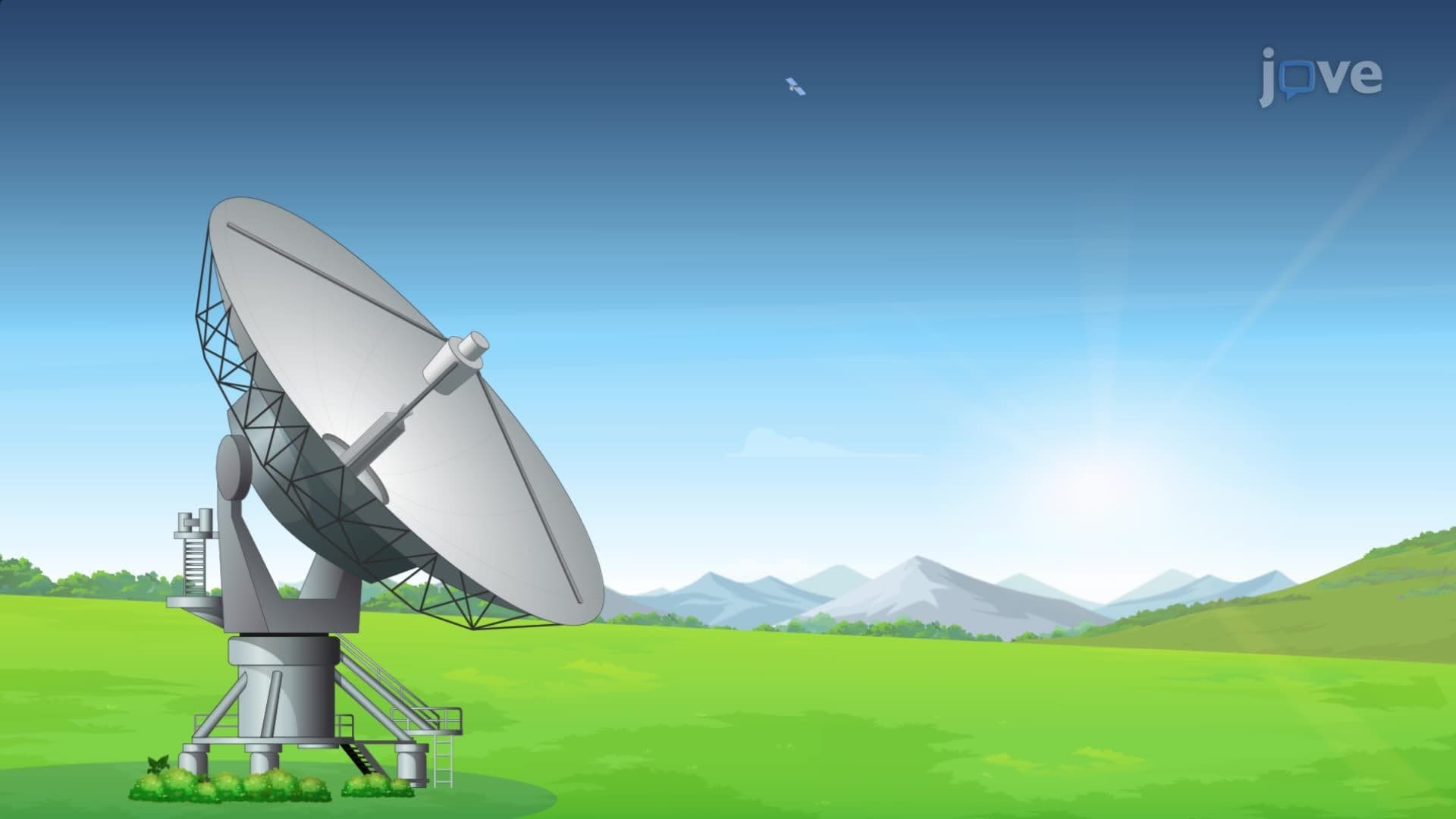
Satellite clock drift, though corrected to nanosecond precision, still introduces measurable errors. The GPS Control Segment, operated by the US Space Force from Colorado Springs, continuously monitors and corrects satellite clock discrepancies. Ephemeris errors result from imperfect orbital predictions—gravitational perturbations from the Moon, Sun, and Earth's irregular mass distribution affect satellite positions.
Professional surveyors often use Real-Time Kinematic (RTK) GPS systems, achieving centimeter accuracy for applications like precision agriculture in states like Iowa and Nebraska, where property boundaries worth millions per acre demand exceptional accuracy.
Frequently Asked Questions
GPS encounters five primary error types: atmospheric interference, multipath reflection, satellite imperfections, receiver limitations, and surveying setup mistakes. Atmospheric errors typically contribute 2-5 meters of uncertainty, while multipath can add 1-10 meters depending on environment. Modern correction systems reduce these errors to sub-meter accuracy.
The geoid and ellipsoid definition encompasses Earth's true gravitational surface versus its mathematical approximation, creating fundamental reference system differences. GPS satellites broadcast positions relative to the WGS84 ellipsoid, but practical applications often require conversion to local geoids like GEOID18 for accurate elevation measurements. This conversion process introduces potential errors if handled incorrectly.
AP Physics C and college physics courses typically cover electromagnetic wave propagation through atmospheric layers and signal interference principles. Surveying and geomatics programs examine differential correction methods, coordinate transformations, and error propagation calculations. Students should understand how atmospheric refraction affects signal timing and multipath mitigation strategies.
The Fundamentals of Engineering (FE) exam includes GPS principles in its surveying section, while the Professional Engineer (PE) surveying exam covers differential correction and coordinate systems extensively. Some MCAT physics sections include electromagnetic wave propagation concepts applicable to GPS signal behavior.
The Federal Aviation Administration uses Wide Area Augmentation System (WAAS) corrections for aircraft precision approaches at over 3,400 US airports. Agriculture relies on RTK-GPS for autonomous tractors achieving 2-centimeter accuracy in corn and soybean planting. Construction projects like California's high-speed rail require millimeter-level surveying accuracy using advanced GPS error correction techniques.
Basic GPS error principles require only algebra and introductory trigonometry, making them accessible to high school physics students. Advanced applications involve vector calculus and statistical analysis, but conceptual understanding focuses on cause-and-effect relationships between error sources and positioning accuracy. Students can grasp fundamental concepts before tackling mathematical derivations.
Focus on connecting each error source to its physical cause—atmospheric interference stems from charged particles, while multipath results from signal reflection geometry. Practice converting between different coordinate systems and reference datums. Work through numerical examples calculating error magnitudes and correction effectiveness to reinforce theoretical concepts.
Advanced topics include precise point positioning (PPP) techniques, network RTK systems, and integration with inertial navigation systems (INS). Geodetic applications involve understanding various reference frames like NAD83 and ITRF, while engineering applications explore GPS/GNSS integration with other positioning technologies for autonomous vehicle navigation.
Related Micro-courses
Related Subjects
 Electrical Engineering 33 micro-courses›Mechanical Engineering 28 micro-courses›